Hudson Hawk: 7 Wild Facts From May 24, 1991’s Bomb
Hudson Hawk hit American theaters on May 24, 1991 and immediately became the most spectacular Bruce Willis flop of the Die Hard era. The $65 million action-comedy about a cat burglar forced to steal Leonardo da Vinci’s gold-making machine — sung partly in Bing Crosby standards — earned just $17 million domestically, swept the 1992 Razzies, and quietly became one of the most beloved cult classics of the 1990s. Thirty-five years later, the punchline has aged into a cult-favorite curiosity, and the story of how it got made is even wilder than the movie itself.
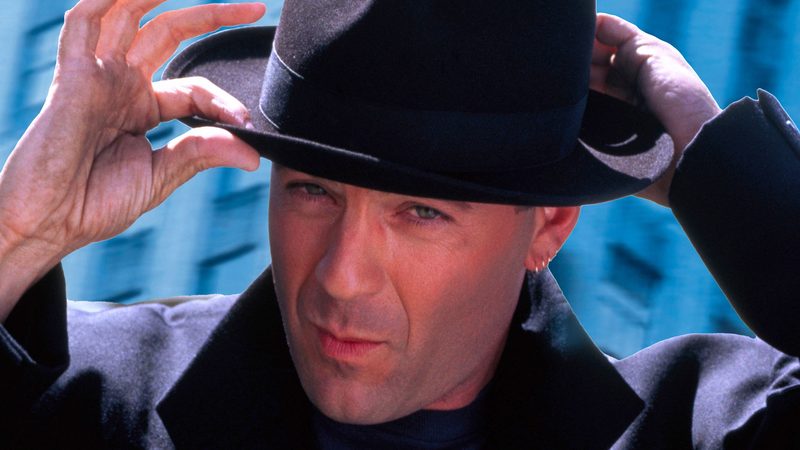
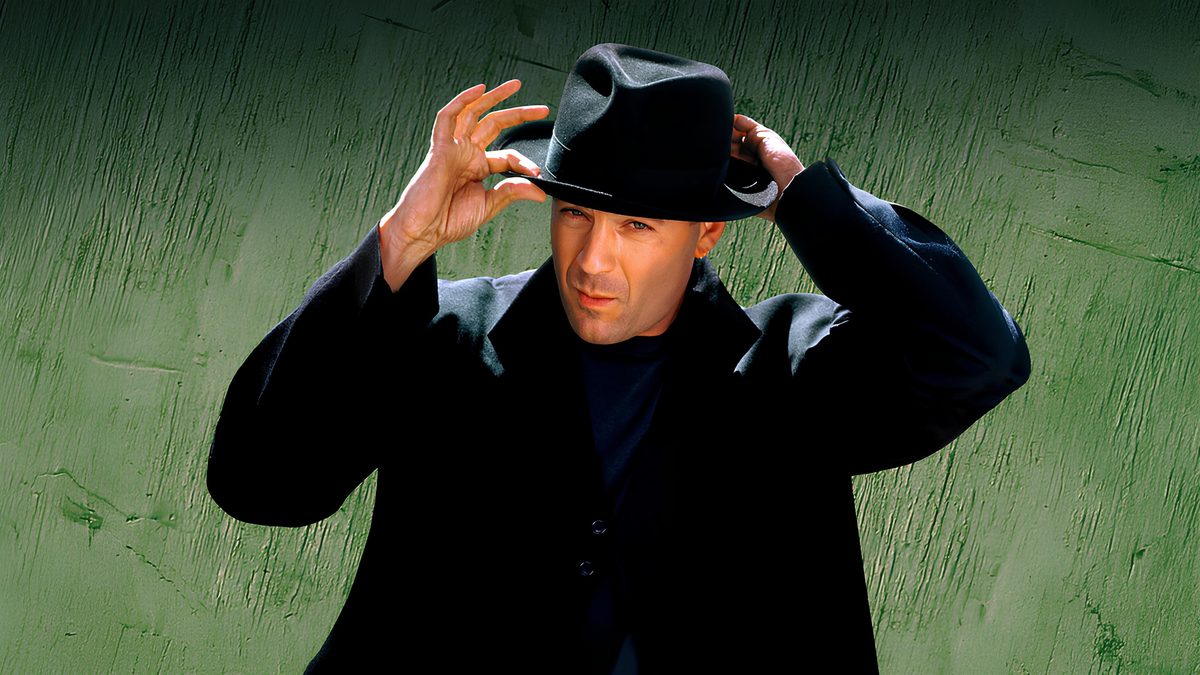
Bruce Willis as Eddie “Hudson Hawk” Hawkins, tipping the cat burglar’s signature fedora — May 24, 1991.
What Is Hudson Hawk? The Bruce Willis Movie Behind the Punchline
Hudson Hawk is a 1991 American action-comedy directed by Michael Lehmann (Heathers) and starring Bruce Willis as Eddie “Hudson Hawk” Hawkins, a master cat burglar fresh out of prison who wants nothing more than a perfect cappuccino. Within hours of his release, the CIA, a Mafia family, a Vatican operative played by Andie MacDowell, and a megalomaniac billionaire couple all force him back into the heist game to steal three Leonardo da Vinci masterpieces that hide the secret to making gold from lead.

If that one-line pitch sounds insane on paper, that is because it was. Willis co-wrote the story with songwriter Robert Kraft years before he was a movie star, back when both worked at a Greenwich Village piano bar. By 1991, fresh off two Die Hard blockbusters, Willis had the clout to push his weird little pet project into a tentpole summer release — and Hollywood discovered the hard way that not every action star’s passion project is Easy Rider.
A $65 Million Anti-James Bond: Inside Hudson Hawk’s Wild Premise
Producer Joel Silver — the man behind Lethal Weapon, Predator, and the first two Die Hard films — green-lit Hudson Hawk as what Willis called an “anti-James Bond.” Instead of a suave secret agent, the lead is a working-class New York burglar who sings doo-wop standards while picking locks. Instead of a clean three-act thriller, the script ricochets between cartoon slapstick, Da Vinci Code-style art history, and full musical numbers.

Eddie Hawkins mid-heist — Hudson Hawk’s action sequences were closer to Looney Tunes than Die Hard.
The budget started at $42 million. By the time TriStar wrapped principal photography in New York, London, Rome, Rimini, and Budapest, it had ballooned to roughly $65 million — colossal money for a 1991 comedy. For context, that same summer, James Cameron’s Terminator 2: Judgment Day cost $102 million and broke every box office record on the planet. Hudson Hawk cost two-thirds as much and grossed less in its entire domestic run than T2 earned on opening weekend.
The Hudson Hawk Cast: Andie MacDowell, Sandra Bernhard, and James Coburn Walk into a Disaster
If nothing else, the Hudson Hawk cast list is a perfect snapshot of who was hot in 1991 Hollywood. Bruce Willis headlines as Hawk. Danny Aiello, fresh off his Oscar nomination for Do the Right Thing, plays Tommy “Five-Tone” Messina, Hawk’s lifelong heist partner. Andie MacDowell — between sex, lies, and videotape and Groundhog Day — plays Anna Baragli, a Vatican secret agent posing as a candy-eating art historian.
Then it gets weird. Richard E. Grant and Sandra Bernhard play the villains, Darwin and Minerva Mayflower, as a pair of cartoon billionaires who shriek every line. James Coburn appears as CIA handler George Kaplan (a winking North by Northwest reference), commanding a team of henchmen named after candy bars — Snickers, Almond Joy, Kit Kat, and Butterfinger, the last played by future Mortal Kombat star Andrew Bryniarski. A baby-faced David Caruso, two years before NYPD Blue, plays Kit Kat as a mute mime.
This was a stacked ensemble. The movie cost a fortune. The trailer looked like Bruce Willis being Bruce Willis. There was no reason audiences should have stayed home — and yet, they did.
The Da Vinci Heist Plot: Leonardo, Crystal Geometry, and Gold

Hawk handles one of the Da Vinci crystals at the heart of the film’s lead-into-gold plot.
The mystery driving Hudson Hawk borrows from real Renaissance lore. The Mayflowers believe Leonardo da Vinci secretly built an alchemy engine — a machine capable of transmuting lead into gold — and hid the three key components inside the Sforza horse sculpture, the Codex Leicester, and a crystal model. Hawk gets blackmailed into stealing each one in turn, hopping from a Manhattan auction house to the Vatican vaults to Leonardo’s actual workshop in Italy.
Twelve years before The Da Vinci Code made the same conceit a global phenomenon, Hudson Hawk built an entire summer blockbuster around a Da Vinci conspiracy. Audiences in 1991 had no idea what to do with it. By 2003, Dan Brown’s novel sold 80 million copies on essentially the same premise — minus the showtunes.
Showtunes as Stopwatches: The Heist Gimmick That Defined Hudson Hawk
The single most Hudson Hawk thing about Hudson Hawk is the way the heists are timed. Hawk and Tommy don’t carry stopwatches — they sing. To execute a New York auction-house robbery with precise timing, Willis and Danny Aiello duet on Bing Crosby’s “Swinging on a Star” (2 minutes 53 seconds). For the Vatican break-in, they switch to Paul Anka’s “Side by Side” (2 minutes 18 seconds). When the songs end, the heist ends.
It is a genuinely clever idea, played in deadly earnest by two grown men in fedoras crooning Tin Pan Alley standards while cracking safes. It is also the moment most 1991 audiences mentally checked out. The same gag, ten years later, would have been a viral GIF set. In May 1991, surrounded by trailers for Terminator 2 and Robin Hood: Prince of Thieves, it landed like a thrown shoe.

Hawk’s running obsession — a perfect cappuccino — became one of the film’s most quoted cult callbacks.
Michael Kamen, who scored the Die Hard and Lethal Weapon franchises, co-wrote the music with Robert Kraft. The Hudson Hawk soundtrack — released by Varèse Sarabande in 1991 — bundles Kamen’s orchestral score with both Willis-Aiello showtune duets and the original Kraft–Willis bar-room composition “The Hudson Hawk.” Decades later, the soundtrack is the most-traded element of the film’s cult footprint.
Behind the Scenes Chaos: Why Hudson Hawk’s Production Imploded
Richard E. Grant, who played Darwin Mayflower, spent four months on Hudson Hawk and later devoted a long, withering chapter to it in his 1996 memoir With Nails: The Film Diaries of Richard E. Grant. According to Grant, Willis spent most of the shoot watching playback of his own close-ups on a video monitor and ordering rewrites between takes. Aiello, fresh off the Oscar buzz from Do the Right Thing, demanded last-minute changes to the climax to give his character more weight.
Original female lead Maruschka Detmers dropped out due to a back injury and was replaced by Andie MacDowell almost overnight. The script was being rewritten so aggressively that crew members described shooting in chronological scene order without knowing what the next day’s pages would look like. According to multiple reports, the on-set tension between Willis and director Michael Lehmann — who had just made the cult classic Heathers with Christian Slater and Winona Ryder — was so severe that Lehmann effectively lost control of the project to his star and producer.
Hollywood lore later claimed the budget hit closer to $70 million once reshoots and overruns were folded in, and that TriStar (then a young studio still finding its footing) needed Hudson Hawk to clear $150 million worldwide just to break even. It made $97 million globally and lost an estimated $30–40 million on first release.
The Critical Massacre: Roger Ebert, Janet Maslin, and the 1991 Reviews

Bruce Willis and Andie MacDowell as Hawk and Vatican agent Anna Baragli — one of 1991’s strangest screen pairings.
The Hudson Hawk reviews on opening weekend remain some of the most savage in modern Hollywood history. Roger Ebert gave it a flat thumbs down and wrote that he sat “in appalled silence” as “every line starts from zero and gets nowhere.” Janet Maslin in The New York Times called it “a colossally sour and ill-conceived misfire.” Rolling Stone‘s Peter Travers wrote that “a movie this unspeakably awful can make an audience a little crazy.”
Kenneth Turan in the Los Angeles Times twisted the knife by pointing out that Lehmann and co-writer Daniel Waters had previously made Heathers together — a sly, perfect dark comedy — and that Hudson Hawk “represents all that is most moribund” by comparison. Gene Siskel was nearly alone in seeing the bones of a better movie buried in the chaos, suggesting it might have worked if Willis and Aiello had been lone eccentrics surrounded by straight-faced foils. Rotten Tomatoes’ critical consensus still calls it a “surreal, baffling misfire.”
The dissent came from across the Atlantic. Empire magazine in the UK gave Hudson Hawk three stars out of five, with Jo Berry praising “Bruce Willis at his wisecracking best.” That split — American critics flaying it, British and European critics shrugging and enjoying themselves — would foreshadow the international box-office split that eventually kept the film from being a total financial wipeout.
How Hudson Hawk Swept the 1992 Razzies
At the 12th Golden Raspberry Awards in March 1992, Hudson Hawk was nominated in six categories and won three: Worst Picture, Worst Director (Michael Lehmann), and Worst Screenplay (Steven E. de Souza, Daniel Waters, and Bruce Willis as story credit). Willis, Richard E. Grant, and Sandra Bernhard all picked up acting nominations but did not win — that year’s acting Razzies went to Kevin Costner, Dan Aykroyd, and Sean Young.
The Razzie sweep cemented Hudson Hawk’s reputation as one of the worst summer movies of the decade in 1992, but it also did something the producers never anticipated. It turned the film into a known quantity — a name people remembered, even if they remembered it as a punchline. That mattered when the second life of the movie began on home video.
Hudson Hawk’s Cult Classic Comeback: Why Gen X Loves It Now

The Hudson Hawk visual language — pop-art backgrounds, round shades, fedoras — aged into pure 1990s nostalgia.
Hudson Hawk found its real audience on VHS, then DVD, then late-night cable. By 1995, home video and international rights had pushed the film into modest profit, and Willis himself reportedly started seeing residual checks from a project that had been, on paper, his biggest career embarrassment.
Then a strange thing happened. Gen X grew up. The kids who watched Hudson Hawk on a rented videocassette in 1992, with no critical baggage and no opening-weekend expectations, treated it like a deeply weird live-action cartoon. They loved the cappuccino jokes. They loved the candy-bar henchmen. They quoted “Swinging on a Star” at parties. In 2018, Sight & Sound critic Jane Lamacraft included Hudson Hawk in her list of cinema’s “Forgotten Pleasures of the Multiplex,” writing that the film’s failure to commit to a single tone was, in retrospect, its weirdest charm.
If you want the broader 1991 context that helped Hudson Hawk’s reputation rehabilitate, the same year produced the grunge explosion that rewrote popular music and a wave of cult-favorite oddities that critics dismissed in real time and audiences canonized later. The cult-classic-after-failure arc that defined the way Gen X reframed 1990s TV applied just as cleanly to films like Hudson Hawk. And while the movie did not crack any “best of” lists in 1991, it now sits comfortably in conversations about era-defining cult films that aged into nostalgia.
Hudson Hawk Trailer: Watch the Original 1991 Theatrical Promo
The original Hudson Hawk theatrical trailer, preserved by Rotten Tomatoes Classic Trailers, is itself a time capsule — the rapid-cut style, the brass-heavy score, and the now-iconic shot of Willis tipping the fedora.
Why Hudson Hawk Still Matters 35 Years Later

Eddie “Hudson Hawk” Hawkins — the doo-wop cat burglar who became a Gen X cult hero.
Hudson Hawk is the rare film whose reputation has only improved with distance. In 1991, it was a punchline — proof that a movie star at peak fame could not protect a project from its own indulgence. In 2026, it reads more like a sincere swing for something genuinely different. A musical action comedy about Da Vinci alchemy with cartoon villains and a cappuccino-obsessed hero is not a movie any studio would green-light today. It is exactly the kind of swing that only happens when one man with two Die Hard hits in a row gets handed the keys to a $65 million sandbox.
That is the real lesson of May 24, 1991. Hudson Hawk failed loudly and publicly, took home three Razzies, and became one of the most-quoted cult films of its decade anyway. The story of how a flop becomes a favorite — through home video, generational re-evaluation, and the slow erosion of the original critical consensus — is one of the most reliable arcs in modern movie history. Hudson Hawk is the patron saint of that arc.
Love the retro era? Browse our shop for vintage finds, retro clothing, and 80s/90s nostalgia gear.
Sources
- Hudson Hawk — Wikipedia — Production history, cast, budget, box office, and reception archive.
- Hudson Hawk (1991) on IMDb — Full cast, crew, release dates, and trivia.
- Roger Ebert’s 1991 Hudson Hawk review — The original “appalled silence” pan that helped sink the film.
- Hudson Hawk on Rotten Tomatoes — Critical consensus and aggregate score archive.
- The Golden Raspberry Awards (Razzies) — Official site — Source for the 1992 Worst Picture, Worst Director, and Worst Screenplay sweep.
- Hudson Hawk — AFI Catalog — American Film Institute’s authoritative production record.