
The Mic Belongs to Her: Queen Latifah, Lauryn Hill, and the Women Who Made the 90s
The narrative of golden age hip-hop — roughly 1990 to 1999 — gets told through a very specific lens. Boom-bap drums. Lyrical complexity. The East Coast versus West Coast fault line. The rise and fall of the cipher. But the story most people inherited is missing half its cast. The women who shaped that decade didn’t just participate in the Golden Age — in many cases, they drove it.
This isn’t a corrective footnote. It’s the main story. From Queen Latifah’s 1989 declaration on “Ladies First” through Lauryn Hill’s landmark 1998 solo debut, the women of 90s hip-hop moved between conscious rap, party anthems, hard-edged lyricism, and genre-dissolving artistry — often doing all four in the same year. What they built wasn’t a sidebar. It was the spine of the era.
Ladies First: The Foundation Was Already Being Poured
Before the 1990s officially started, the groundwork was already solid. MC Lyte released Lyte as a Rock in 1988 — a debut so technically sharp it made plenty of male MCs uncomfortable. She could battle. She could tell stories. She could switch registers mid-verse without losing a syllable. Her 1993 single “Ruffneck” became the first rap song by a solo female artist to go gold. That was not a footnote — that was a door being kicked open, and she kicked it with her name on the kick.
The Retro Almanac
A monthly roundup of "on this day" highlights from that month, decades back — plus first dibs on new retro merch drops. No spam, just the good stuff.
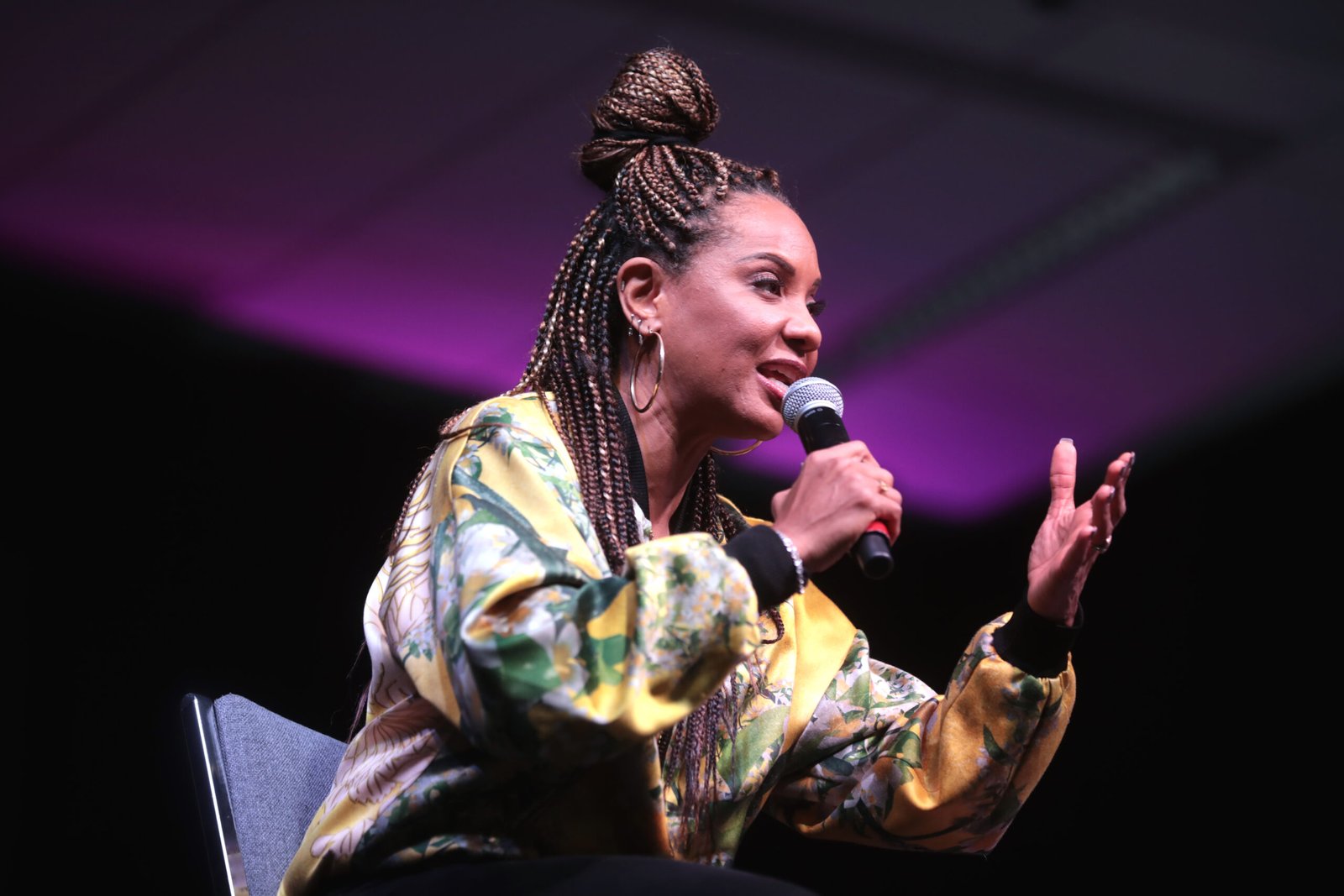
Queen Latifah had been building from the same era. “Ladies First” — from her 1989 debut All Hail the Queen — was explicitly political, featuring Monie Love and a video set against imagery of the African diaspora and the anti-apartheid movement. It wasn’t a request for inclusion. It was a statement of fact. By 1993, “U.N.I.T.Y.” had become a genuine anthem: a song about street harassment and women’s dignity that somehow cracked pop radio and sold on both coasts. Latifah won the Grammy for Best Rap Solo Performance that year — the first female rapper to take home the award. The precedent was set. The decade could begin.
Salt-N-Pepa Took It Mainstream and Made It Look Easy
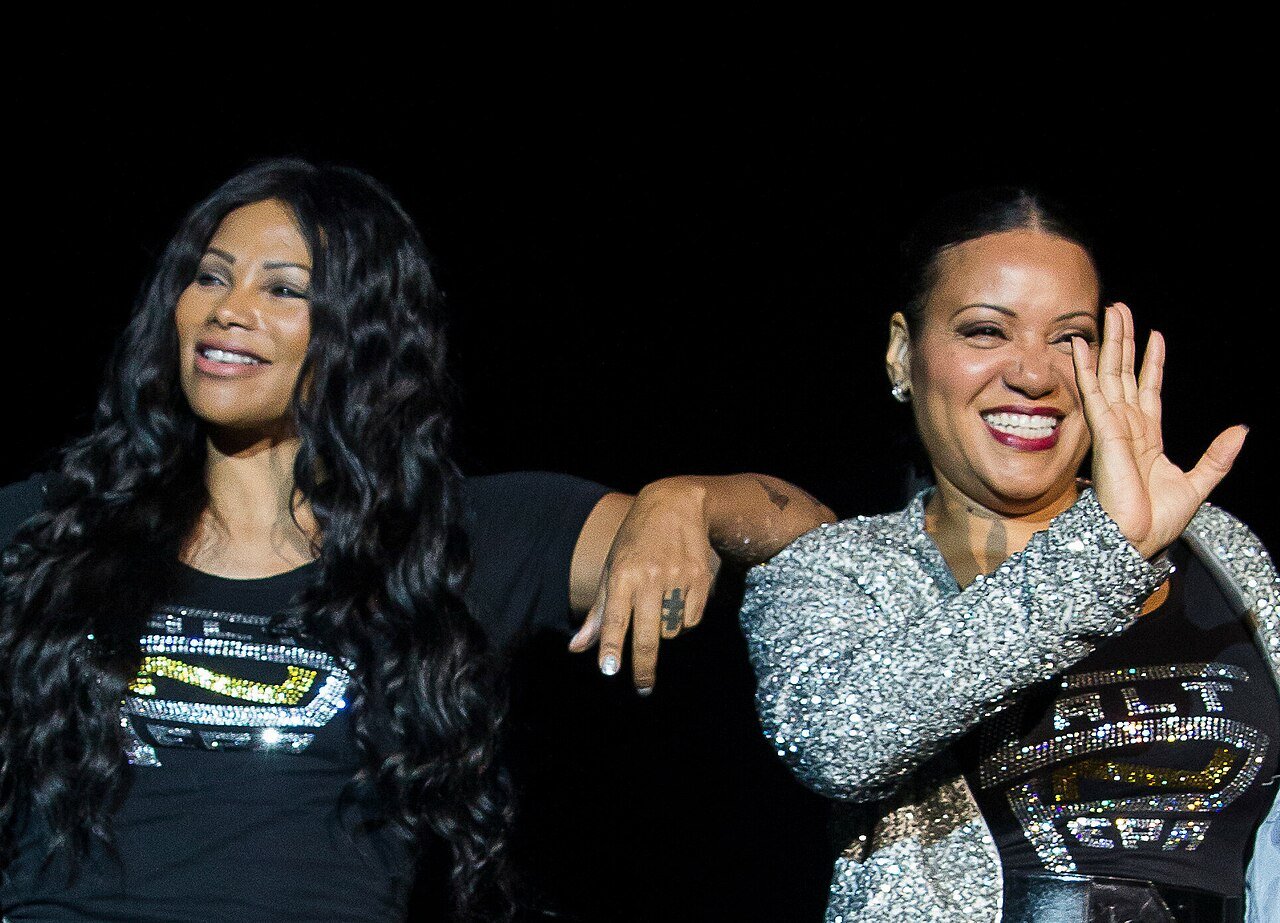
If Latifah and Lyte built the political and lyrical case for women in hip-hop, Salt-N-Pepa made it commercially undeniable. Their 1993 album Very Necessary sold over five million copies in the United States. For context, that number outpaced many of the critically lionized rap albums of the same year combined. “Shoop” hit number four on the Billboard Hot 100. “Whatta Man” — recorded with En Vogue — hit number three. The Recording Academy eventually created a dedicated rap Grammy category partly because acts like Salt-N-Pepa made the genre commercially impossible to keep ignoring.
What gets erased with distance is how genuinely radical their subject matter was. They were rapping about safe sex in 1987, in the middle of the AIDS crisis, while mainstream pop was still treating the topic as too hot to touch. They spoke about female desire from a position of confidence at a time when that perspective still generated real controversy in music. And they did it with enough style and energy to dominate MTV rotation, sell out arenas, and move units at the mall simultaneously. That is a specific kind of skill, and it shouldn’t be taken for granted.
The Fugees and the Year Everything Shifted
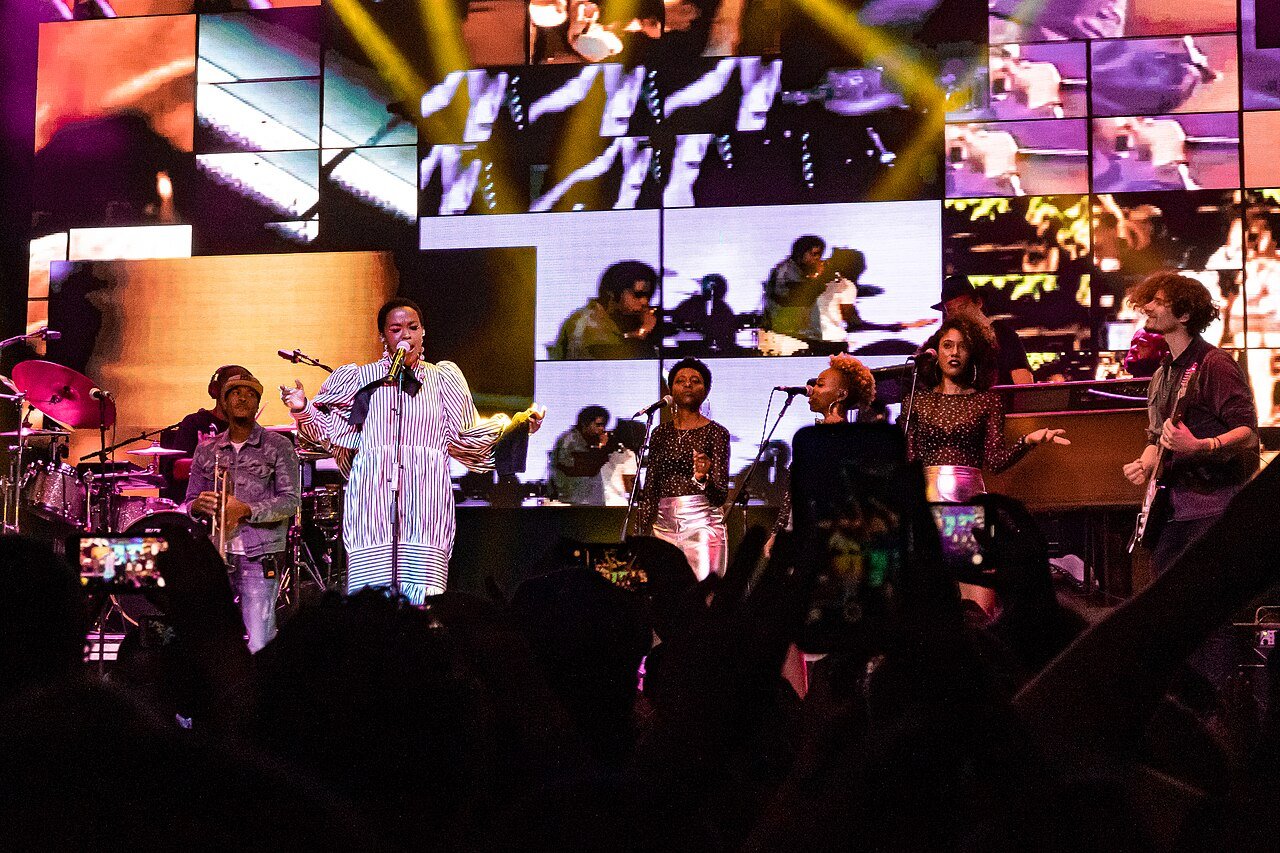
There are years in music history where you can almost feel the axis tilt. 1996 was one of those years in golden age hip-hop, and Lauryn Hill was at the center of it. The Fugees’ The Score dropped in February of that year and sold seventeen million copies worldwide. Their cover of “Killing Me Softly” brought a Roberta Flack deep cut into heavy pop radio rotation — a hip-hop trio making a crossover move that should not have worked and did so completely, largely on the strength of Hill’s voice acting as a bridge between genres and generations.
Hill’s role in the Fugees was never peripheral. She rapped, she sang, she co-wrote and co-produced. In 1998 she released The Miseducation of Lauryn Hill, and it remains one of the most critically and commercially successful albums in the history of recorded music. It debuted at number one, sold over eight million copies in the United States, and won five Grammy Awards — setting the record for most Grammys won in a single night by a female artist, a record that held for over a decade. It folded hip-hop, R&B, soul, reggae, and gospel into one document through the force of a single artistic vision. Nothing before it sounded quite like it. Almost nothing since has matched its scope.
Hard Core: Lil’ Kim, Foxy Brown, and the Explicit Turn
In 1996, two debut albums arrived within months of each other and detonated a conversation the industry wasn’t quite prepared for. Lil’ Kim’s Hard Core and Foxy Brown’s Ill Na Na were both explicit, aggressive, and written from a position of complete sexual authority. Neither was asking permission. Neither was softening itself for a mainstream audience that might be uncomfortable with the posture.
Kim had come up with the Notorious B.I.G. and Junior M.A.F.I.A., and her production choices reflected that lineage — boom-bap with Biggie-era grit. Hard Core debuted at number eleven on the Billboard 200 and went platinum. Foxy Brown had Jay-Z and Nas on Ill Na Na, which went gold within weeks of release. The conversation these albums sparked — about female sexuality in rap, about authenticity, about who gets to inhabit the aggressive posture that hip-hop had always permitted its male artists — never really ended. The albums just moved from being controversial to being foundational. The line between Lil’ Kim in 1996 and Nicki Minaj in 2010 is shorter than most people acknowledge, and it runs directly through Hard Core.
Missy Elliott Arrived and Refused to Be Categorized
In 1997, Missy Elliott released Supa Dupa Fly and immediately broke every unspoken rule about what a female rapper was supposed to look like, sound like, and talk about. Her partnership with Timbaland produced some of the most innovative beats to reach mainstream radio in years — syncopated rhythms that borrowed from electronic music and funk without sounding like either, over which Elliott’s delivery moved between melody and rap with a precision that made both feel like the natural mode.
Elliott was also unusual in the industry for the degree to which she controlled her own creative direction. She produced. She wrote for other artists — Aaliyah, Whitney Houston, Mary J. Blige — which meant her fingerprints were all over the sound of late-90s R&B even when her name wasn’t on the cover. Supa Dupa Fly debuted at number three on the Billboard 200. The videos she made with director Hype Williams became reference points for visual creativity in hip-hop. She was building something that would expand far beyond any single decade, and by 1997 she was already several moves ahead of most of the industry.
Da Brat and the Door Nobody Credits
West Coast hip-hop in the Golden Age is almost always framed around Dr. Dre, Snoop, and the Death Row machine. When the conversation turns to female artists of the era, it tends to pull back to New York or later to Atlanta. But Da Brat belongs in this story. Her 1994 debut Funkdafied, released on So So Def with Jermaine Dupri producing, made her the first solo female rapper to achieve a platinum certification. That milestone hadn’t been reached before her. She crossed it with a street rap style — hard cadences, aggressive delivery — that ran directly against the softer image the music industry often preferred to attach to women in the genre.
She rarely gets the critical attention her commercial achievement warranted. But going platinum in 1994, in the middle of a decade when the question of whether female rappers could move units was still being debated as if it were genuinely open, was not a small thing. She answered it clearly. The argument should have ended there.
What They Built and What Came After
The golden age of hip-hop produced some of the most technically accomplished and culturally resonant music of the twentieth century. The women who shaped that era didn’t inherit its reputation — they built it. Queen Latifah’s political framework, MC Lyte’s lyrical template, Salt-N-Pepa’s mainstream reach, the Fugees’ crossover architecture, Lauryn Hill’s unmatched solo achievement, Lil’ Kim and Foxy Brown’s refusal to be softened, Missy Elliott’s auteur vision, Da Brat’s commercial precedent: all of it runs directly forward into every female rapper who came after. Nicki Minaj, Cardi B, Megan Thee Stallion — each of them is building on a structure these women raised.
The 90s hip-hop canon has spent decades being assembled mostly by voices that weren’t always looking at the full picture. There’s no need to argue about it anymore — the albums are there, the chart positions are documented, the cultural impact is measurable. The record is complete. It just needs to be read more carefully.
Sources
Queen Latifah — Wikipedia | The Miseducation of Lauryn Hill — Wikipedia | Missy Elliott — Wikipedia | Salt-N-Pepa — Wikipedia | Da Brat — Wikipedia
The Retro Almanac
A monthly roundup of "on this day" highlights from that month, decades back — plus first dibs on new retro merch drops. No spam, just the good stuff.