80s Cartoons Were Illegal Before Reagan Changed One Law
If you grew up in the 1980s, your childhood was shaped by a government policy you never knew existed. Every afternoon, you’d race home from school, dump your backpack on the floor, and park yourself in front of the TV. He-Man raised his sword and screamed “I HAVE THE POWER!” Optimus Prime rolled out against the Decepticons. Duke led the Joes against Cobra Commander. Lion-O summoned the ThunderCats.
These weren’t just cartoons. They were 22-minute toy commercials — and they only existed because of one man, one policy change, and one very specific moment in American history that blew the doors off children’s television forever.
Before Reagan: The Era When Cartoons Couldn’t Sell You Stuff
Here’s something most people don’t realize — before the 1980s, what we think of as “normal” 80s cartoons were essentially illegal.
The Federal Communications Commission had been policing children’s TV since the late 1960s. Advocacy groups like Action for Children’s Television (ACT), founded by activist Peggy Charren in 1968, had spent over a decade pressuring the FCC and the networks to keep advertising out of kids’ programming. The rules were strict: you couldn’t create a show that existed primarily to sell toys. Period.
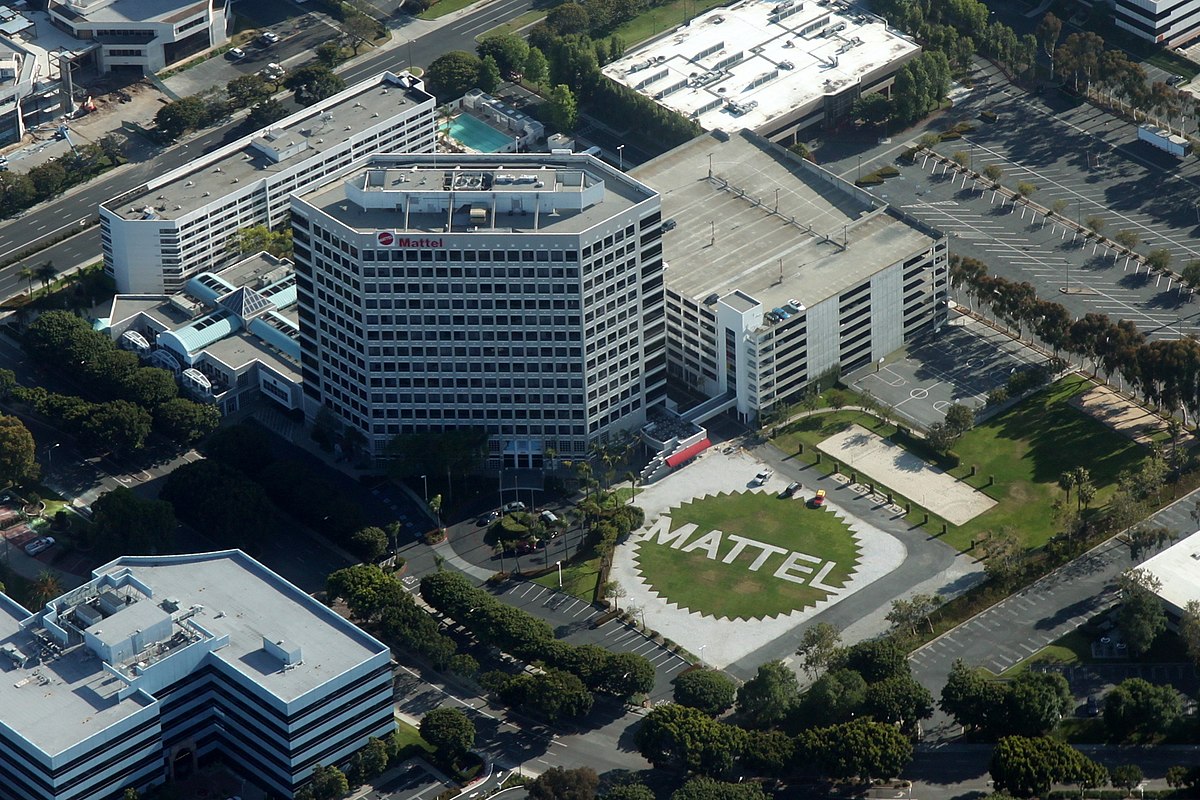
The FCC had already made an example out of Mattel back in 1969. Their Hot Wheels cartoon was deemed a “program-length commercial” — basically a 30-minute ad disguised as entertainment. The ruling sent shockwaves through the industry. Toy companies got the message loud and clear: make a show to sell your product, and the FCC will shut you down.
For over a decade, that’s how it worked. Saturday morning cartoons existed in their own bubble — Scooby-Doo, The Smurfs, Looney Tunes reruns. Educational segments like Schoolhouse Rock! ran during commercial breaks. Captain Kangaroo taught kids how to read. It was wholesome. It was safe. And for toy companies sitting on action figure goldmines, it was incredibly frustrating.

Mark Fowler and the “Toaster With Pictures” Philosophy
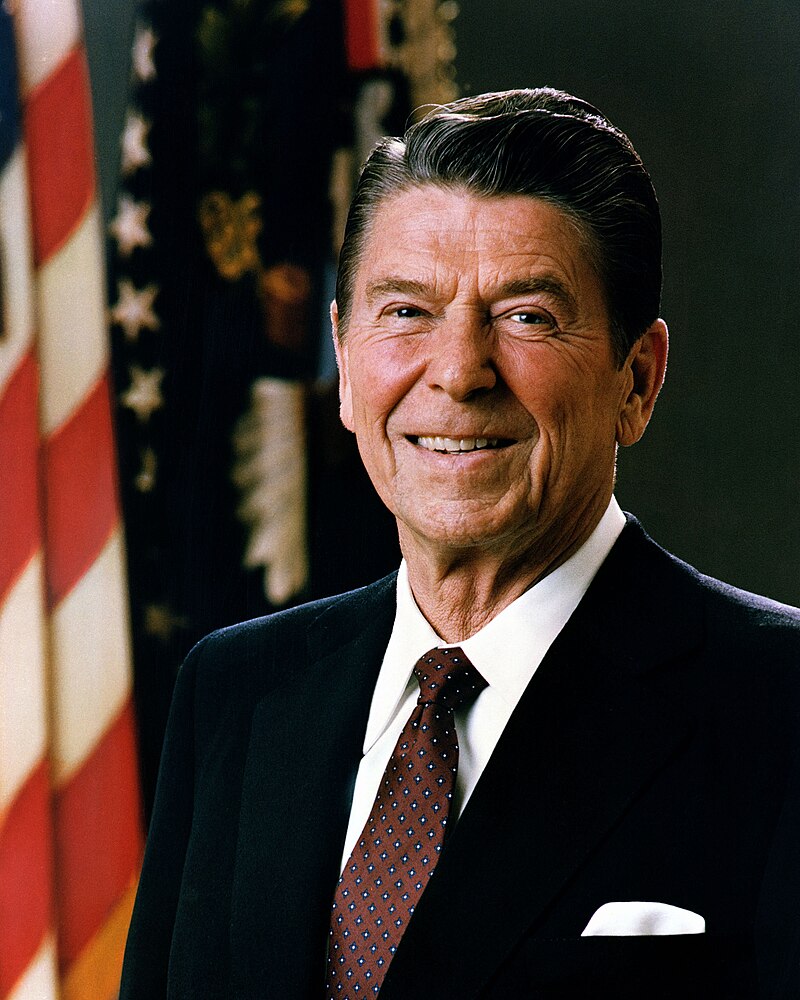
Everything changed in January 1981 when Ronald Reagan took office and appointed Mark S. Fowler as chairman of the FCC. Fowler was a deregulation zealot who famously described television as “just a toaster with pictures.” His philosophy was simple: the free market should decide what’s on TV, not the government.
Under Fowler’s leadership, the FCC systematically dismantled the regulations that had kept toy companies out of children’s programming. The ban on program-length commercials? Gone. Limits on how many minutes of advertising could air during kids’ shows? Relaxed. The requirement that stations serve the “educational needs” of children? Basically ignored.
The timing was perfect. In 1982, the U.S. government also took anti-monopoly action against the National Association of Broadcasters, ending their ability to enforce industry-wide advertising standards. With both the FCC and the industry’s self-regulatory body out of the picture, there was suddenly nobody telling Mattel, Hasbro, or any other toymaker that they couldn’t make half-hour toy commercials.
And that’s exactly what they did.
He-Man: The Show That Proved It Could Work
Mattel was first out of the gate, and they didn’t waste a single second. The toy company had been developing its Masters of the Universe action figure line since 1981, originally conceived as a tie-in to the Conan the Barbarian franchise. When the Conan deal fell through, they pivoted to an original character: He-Man, Prince Adam of Eternia, the Most Powerful Man in the Universe.
The toys hit shelves in 1982 and sold well, but Mattel wanted more. They partnered with Filmation Studios to create He-Man and the Masters of the Universe, an animated series that debuted on September 5, 1983. It was the first major cartoon produced specifically to sell a toy line in the post-deregulation era — and it was a monster hit.
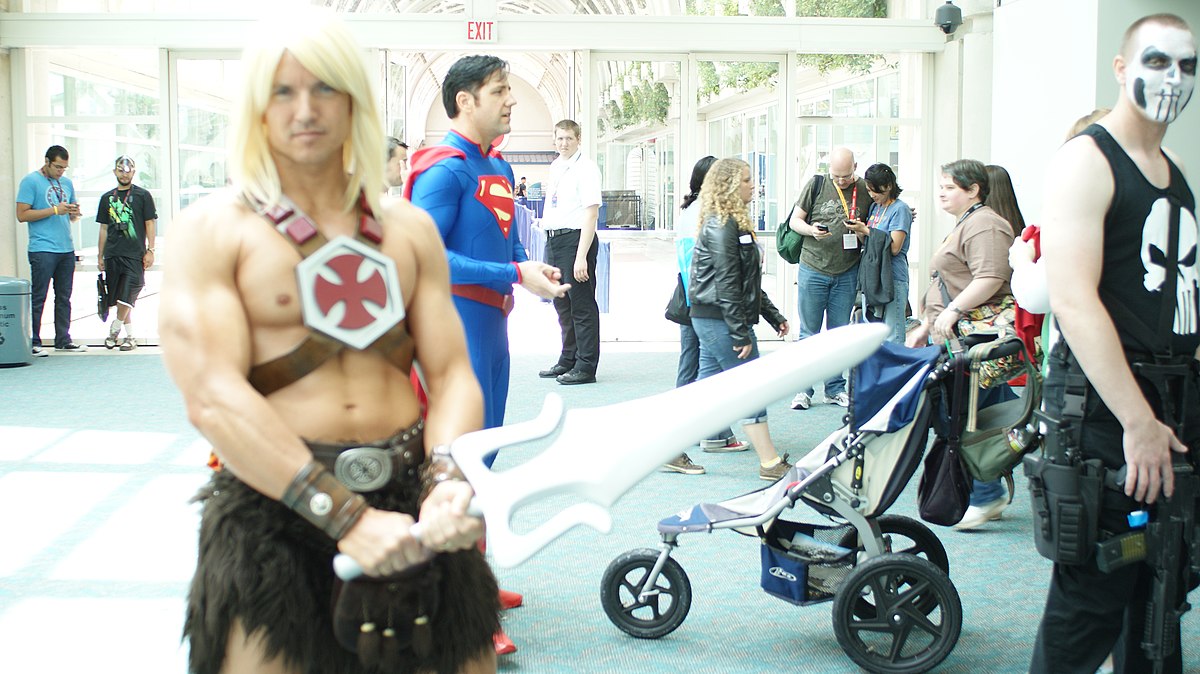
Within months, Masters of the Universe became the best-selling toy line in America. At its peak, the franchise was generating over $400 million annually. Every episode introduced new characters — Skeletor, Beast Man, Trap Jaw, Man-At-Arms — and every new character meant a new action figure on the shelf. Kids didn’t just watch He-Man. They collected him.
The genius of the arrangement was that the cartoon wasn’t just selling toys — it was creating an emotional connection. Kids developed relationships with these characters. They knew He-Man’s backstory, they understood his world, and they wanted to own a piece of it. The show was the commercial, and the commercial was the show.
To deflect criticism, Filmation added brief moral lessons at the end of each episode. He-Man would look directly at the camera and say something like, “Remember, it’s important to always tell the truth.” These segments became iconic in their own right, but make no mistake — they existed purely to give the show a veneer of educational content so the FCC wouldn’t come knocking.
The Floodgates Open: 1984-1986
Once Mattel proved the model worked, every toy company in America rushed to copy it. The next few years saw an absolute explosion of cartoon-toy franchises that would define an entire generation.
Transformers (1984) — Hasbro and Takara
Hasbro licensed a line of transforming robot toys from Japanese company Takara and teamed up with Marvel Comics to develop the lore. The Transformers premiered on September 17, 1984, telling the story of the heroic Autobots versus the evil Decepticons. It was an instant phenomenon. The cartoon ran for four seasons and spawned a theatrical film in 1986 that traumatized an entire generation by killing off Optimus Prime (spoiler alert for a 40-year-old movie).

G.I. Joe: A Real American Hero (1983) — Hasbro
Hasbro relaunched its classic G.I. Joe brand as a line of 3.75-inch action figures with an accompanying cartoon produced by Sunbow Entertainment and Marvel Productions. The show pitted the G.I. Joe team against the terrorist organization Cobra, and it gave us one of the most famous catchphrases in TV history: “Knowing is half the battle!” Each episode featured a different combination of Joes and Cobra operatives, conveniently rotating through the dozens of figures available at your local toy store.
ThunderCats (1985) — Rankin/Bass and LJN Toys
ThunderCats blended sci-fi and fantasy, following humanoid cat warriors led by Lion-O as they battled the mummified villain Mumm-Ra on Third Earth. LJN Toys produced the action figure line, and the show ran for 130 episodes across four seasons. The “Thunder… Thunder… ThunderCats, HO!” battle cry echoed through living rooms across America.
My Little Pony (1984-1987) — Hasbro
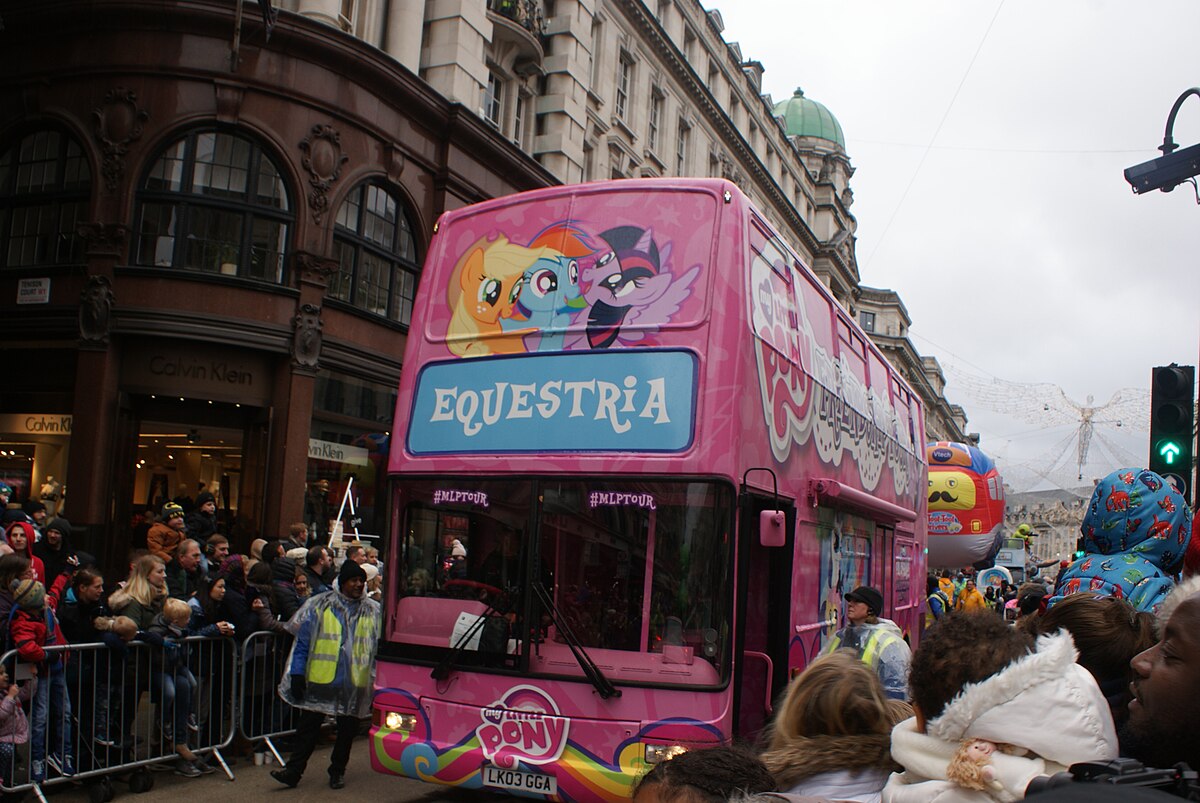
It wasn’t just boys getting the toy-cartoon treatment. Hasbro’s My Little Pony line launched in 1982, and the cartoon followed in 1984 with a TV special, then a movie in 1986, and finally a full series in 1986-1987. The pastel-colored ponies of Dream Valley proved that the toy-commercial-as-cartoon model worked across demographics.
Care Bears (1985) — Kenner (later Hasbro)
Originally created by American Greetings as greeting card characters in 1981, the Care Bears became a plush toy juggernaut under Kenner. The cartoon series launched in 1985, turning Tenderheart Bear, Grumpy Bear, and their cloud-dwelling friends into household names. A theatrical film, The Care Bears Movie, became the highest-grossing film based on a toy property at the time.
The list goes on: M.A.S.K., Voltron, She-Ra (He-Man’s twin sister — more toys to sell!), Jem and the Holograms, SilverHawks, BraveStarr, Visionaries, Sectaurs. Between 1983 and 1988, the number of toy-based cartoons on American television went from essentially zero to dominating the airwaves.
The Business Model That Changed Everything
The Saturday morning cartoon model of the 1970s was straightforward: networks produced shows, sold ad time during commercial breaks, and the shows themselves were unrelated to any product. The 80s flipped this completely on its head.
Here’s how the new model worked: The toy company would develop an action figure line first. Then they’d hire an animation studio to create a cartoon around those toys. The cartoon would air in weekday afternoon syndication — not Saturday mornings on the networks, but Monday through Friday, catching those latchkey kids coming home from school with nobody monitoring what they watched.
The toy company often provided the show to TV stations for free or at reduced cost. Why? Because the show itself was the advertisement. Each episode showcased the toys in action, introduced new characters (and new products), and built a mythology that made kids desperate to own the figures.
It was, objectively, brilliant marketing. Mattel’s Masters of the Universe line went from $38 million in sales in 1982 to over $400 million by 1985. Hasbro’s revenue doubled between 1982 and 1985, driven largely by Transformers and G.I. Joe. The program-length commercial wasn’t just profitable — it was the most effective toy marketing strategy ever invented.
The Backlash and the End of the Golden Age
Not everyone was thrilled. Peggy Charren and ACT campaigned relentlessly against what they called the “commercialization of childhood.” Parent groups, educators, and child psychologists raised alarms about the psychological impact of subjecting children to shows that were, at their core, extended advertisements.

Research showed that young kids couldn’t distinguish between entertainment and advertising. They didn’t understand that He-Man raising his sword was, fundamentally, a pitch to get their parents to buy a $5.99 action figure. To them, it was just an awesome show about a guy fighting a skull-faced wizard. Which, let’s be honest, it kind of was.
The pushback eventually reached Congress. In 1990, President George H.W. Bush signed the Children’s Television Act, which reimposed limits on advertising during children’s programming and required broadcasters to air educational content. The FCC followed up with stronger regulations in 1996.
By then, the damage — or the magic, depending on your perspective — was already done. The great toy-cartoon era had already peaked and faded. He-Man’s ratings dropped in 1985. Transformers ended its original run in 1987. New shows like Batman: The Animated Series proved you could make genuinely good cartoons that weren’t just toy ads, and the comic book revolution of the 90s took pop culture in a completely different direction. The market shifted, the moment passed, and an era ended.
Why This Matters (Beyond Nostalgia)
Here’s the wild part: that five-year window between 1983 and 1988 created franchises that are still printing money four decades later. Transformers has grossed over $5 billion at the box office across seven live-action films. My Little Pony got a massive reboot in 2010 that spawned its own cultural phenomenon. G.I. Joe keeps getting movies. Masters of the Universe has been rebooted multiple times on Netflix.
The entire toy-entertainment complex that dominates modern media — from Marvel’s merchandise machine to Star Wars’ endless product lines to Pokémon’s multi-billion-dollar empire — owes a massive debt to what happened when Reagan’s FCC said “go ahead” to Mattel and Hasbro in the early 80s.
Those of us who grew up in that era didn’t know we were part of a massive marketing experiment. We just knew that He-Man was awesome, that Optimus Prime was the greatest leader who ever lived, and that we needed — needed — those toys for Christmas. We didn’t understand deregulation or program-length commercials or FCC policy. We understood that Skeletor was a jerk and the Autobots were cool and Cobra Commander’s plans never worked.
And honestly? Forty years later, we wouldn’t change a thing. Those “22-minute toy commercials” gave us some of the most beloved characters, stories, and memories of our entire childhoods. Reagan may not have intended to create the golden age of 80s cartoons when he deregulated children’s television. But that’s exactly what happened. And an entire generation of kids — now in their 40s and 50s, buying vintage He-Man figures on eBay and arguing about which Transformers series was the best — is living proof that it worked.
By the power of Grayskull, it really worked.