1-900 Numbers and Party Lines: How We Socialized Before the Internet
Before DMs, before chat rooms, before email became a thing regular humans used, there was a number you could call. Usually it started with 1-900. Sometimes it was a local line that your phone company ran by mistake. Either way, you’d pick up a landline, dial a number, and suddenly you were talking to actual strangers — no screen names, no profile pictures, no algorithms. Just voices in the dark.
And it was wild.
The Party Line Was the Original Social Network
Long before 1-900 numbers became a national pastime, the party line was already turning the household telephone into something the phone companies never intended — a social platform. Through the 1940s, 50s, and into the 70s in rural America, a private home phone line was a luxury. So Bell System carved up a single physical circuit and stuck multiple households on it, sometimes four, sometimes eight, sometimes a dozen. That was your party line.
The Retro Almanac
A monthly roundup of "on this day" highlights from that month, decades back — plus first dibs on new retro merch drops. No spam, just the good stuff.
The rules were simple in theory. Pick up the phone, listen for a dial tone. If you heard a neighbor mid-conversation, you were supposed to hang up and try again later. Every house on the loop had a different ring pattern. Two short rings meant a call for the Johnsons. One long meant the Petersons. You learned your ring the way kids today learn their notification chimes — instantly, subconsciously, even from another room.
Nobody followed the rules. Picking up to “check the line” turned into picking up to listen — what came to be called “rubbernecking” in old phone-company training films. Husbands learned their wives were planning surprise parties. Teenagers heard their neighbors get into screaming matches. Entire small towns ran on overheard whispers transmitted by copper wire. The phone company at AT&T spent years printing etiquette pamphlets begging people to hang up. Nobody hung up.
If you ever wondered why growing up with only a home phone felt like growing up inside a small newspaper, that’s why. Information moved through that wire and everyone on the loop was a subscriber.
Then Came the Pay-Per-Minute Voice in Your Ear
The 1-900 number was the natural mutation of the party line idea — except this time, the phone company figured out how to charge by the minute. The Federal Communications Commission opened the 900 area code as a “premium rate” service in the early 80s. Businesses could lease a number, set their own per-minute rate, and split the take with the carrier. By 1992, the industry was pulling in roughly $1 billion a year, according to a New York Times business report, and most of it was being spent on services nobody wanted to admit they used.
The categories sprawled. Sports scores. Soap opera spoilers. Joke of the day. Horoscopes read in a sleepy voice that always sounded like it had just woken up. Recorded messages from your favorite band — Bon Jovi had one, Mötley Crüe had one, New Kids on the Block had a famously profitable one that reportedly cleared eight figures inside a year. If you were eleven years old in 1990 and the school bus dropped you off at an empty house at three thirty, that number on the back of Tiger Beat was a temptation engineered specifically to ruin your mother’s phone bill.
Then there were the hotlines that became cultural punchlines. The Psychic Friends Network — fronted by Dionne Warwick of all people — pulled in over $100 million in its early years selling cold readings to lonely callers at $3.99 a minute. Late-night cable filled with ads for chat lines, “live one-on-one,” “meet local singles,” every commercial dripping with that early-90s saxophone. Even more bizarre was the brief 1989 fad for “crying hotlines,” which Snopes later verified as a genuine product — you called, you listened to a stranger sob through a sad story, you hung up nine dollars poorer.
The Bedroom Was the Server Room
Picture the physical setup. Phone in the kitchen, twenty-foot coiled cord stretched into the hallway, then under the bedroom door, then the door closed on the cord so tight it left a permanent dent in the wood. The teenager on the other end of that cord was the only one in the world the call mattered to. There was no group chat, no Snap streak, no Discord server humming in the background. Just one voice, one ear, one impossibly twisted plastic spiral.
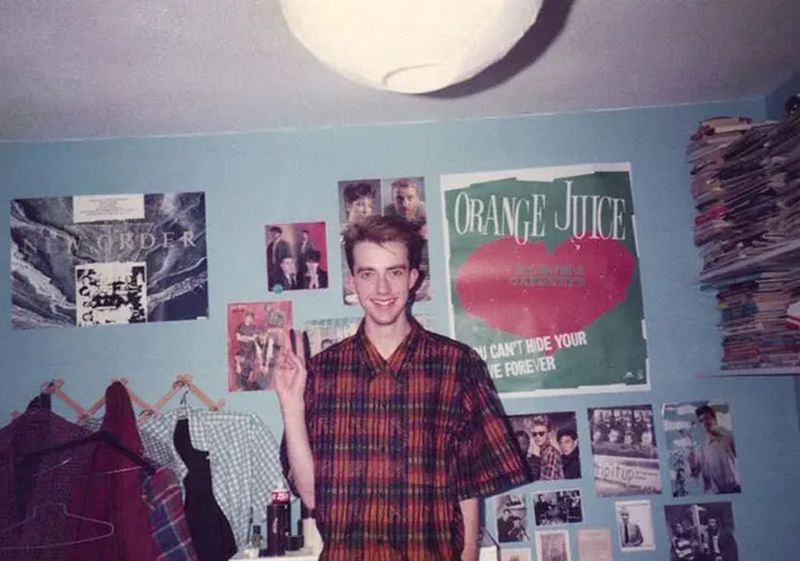
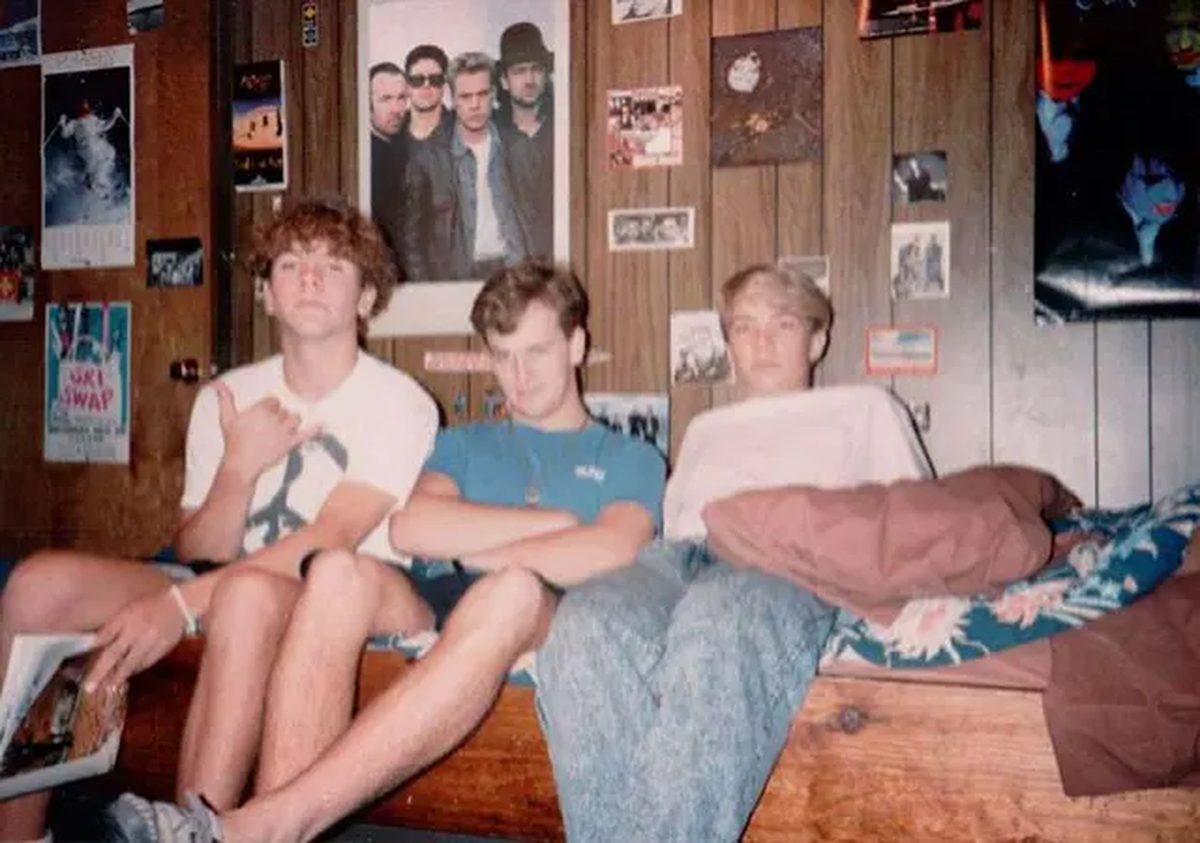
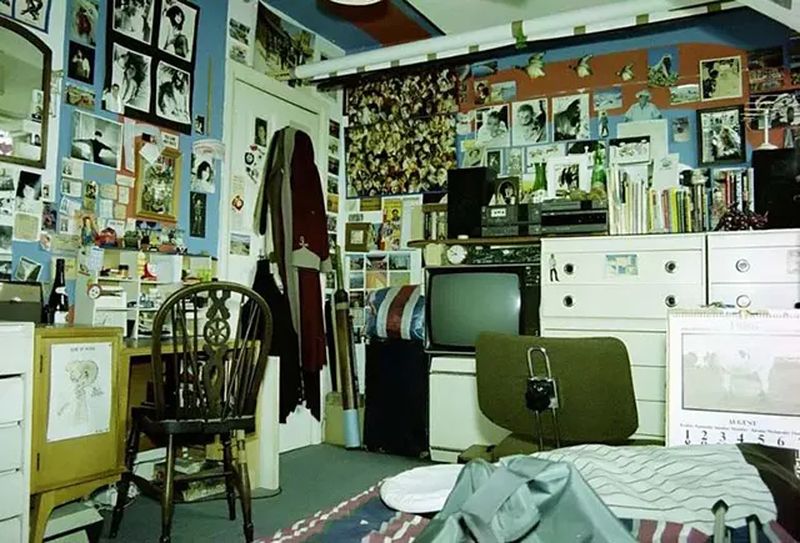
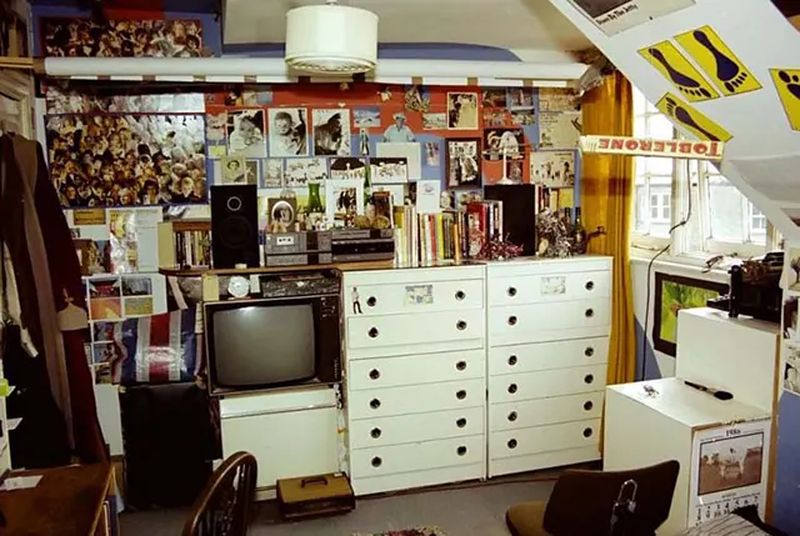
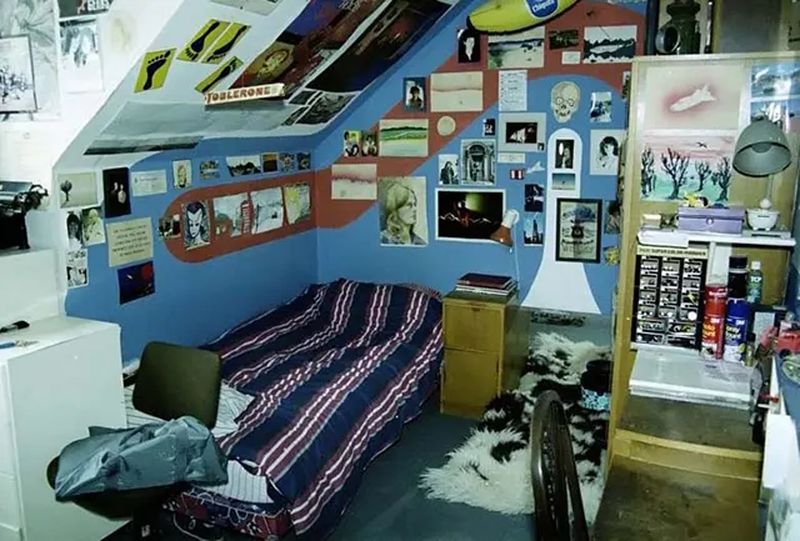
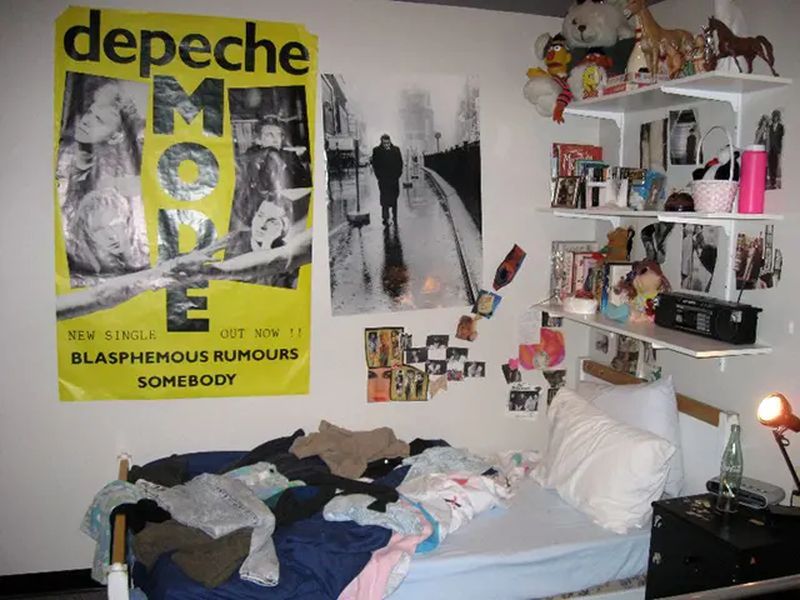
That bedroom — papered in posters, ringed with cassette towers, lit by a single desk lamp — was the original social environment. The phone call was the entire social layer. You could be locked in for hours with a friend who lived eight blocks away and you’d just talked to in person at school. The conversation wasn’t about anything. It was the medium itself, the act of being unobserved together, the slow architecture of teenage intimacy that the internet would eventually flatten into a thousand notifications.
And then your mother would pick up the kitchen extension and say “I need the phone” and the whole thing would collapse. The click. The pause. The mortification. The negotiation. That cord stretching back to the kitchen was a physical contract between you and the rest of the household, and you signed it every time you dialed.
How a Generation Memorized Phone Numbers
Ask anyone over forty for their best friend’s home phone number in 1991 and watch their eyes glaze over for a half second before the digits drop out of muscle memory. That wasn’t an accident. The pre-internet social system ran on memorization. You knew thirty, forty, sometimes a hundred phone numbers by heart, and you knew the family routines attached to them — Sarah’s mom worked Tuesdays so don’t call after seven, Mike’s stepdad answered on weekends and you should hang up immediately, the Donovans had Call Waiting and the rest of you didn’t.
Call Waiting itself was a small revolution. So was Caller ID, when it finally arrived in most markets by 1994. So was the *67 trick that killed prank calls forever. Each of these wasn’t just a feature — it was a renegotiation of the social contract that the home phone had quietly enforced for forty years. Suddenly your mom could see you’d called the boy across town nine times in one evening. Suddenly nobody had plausible deniability anymore.
The same thing happened in slow motion when pagers arrived. Suddenly your friends knew you weren’t ignoring them — you just hadn’t seen the message yet. The rise and fall of the beeper in the late 90s was the dress rehearsal for the cell phone — the first time a personal communication device became something you wore on your hip instead of something tethered to your wall.
The Underground Economy of Phone Phreaks and Free Calls
There was a counter-culture inside all of this. While suburban kids were ringing up $300 chat-line bills their parents would later discover with horror, a small ecosystem of teenage hackers — phone phreaks — were building tone generators in their garages and dialing for free. The most famous was the legendary “blue box” that a young Steve Wozniak and Steve Jobs were selling out of dorm rooms in the mid 70s, the criminal hardware that would later directly fund the first Apple computers.
By the 90s, phreaking culture had moved to bulletin board systems and the early Usenet — same kids, slightly newer technology. A lot of the energy that later became the open-source movement started in a kid’s basement, dialing 1-800 service numbers and listening for the tones. The phone company knew. They mostly looked the other way until the bills got embarrassing.
The 1-900-FUN-MATE ad that aired on Chicago TV at 2 a.m. on a Saturday in June 1991, preserved by the Museum of Classic Chicago Television, charged $9.95 a call. Adjusted for inflation that’s almost twenty-three dollars in 2026 money. People paid it. People paid it constantly. The volume of money flowing through those circuits is the only reason cable TV could afford to fill its overnight slots with that particular brand of grainy, suggestive, vaguely embarrassing content for nearly a decade.
The Mall, the Phone, and the Geography of Friendship
The phone was one node in a larger pre-internet social map. The other big one was the era when malls ruled everything. You’d be on the phone with your friend on Thursday night planning where to meet at the mall on Saturday — food court at one, Sam Goody by two, Orange Julius if anyone needed a meeting point. The phone wasn’t a substitute for hanging out. It was the booking system for hanging out, the ambient soundtrack between the actual physical encounters.
This is the part that’s hardest to explain to someone born after 1998. Your social world had a radius, and the radius was set by how far your parents would drive you. The phone extended that radius slightly — you could maintain a friendship with someone in the next town if their parents were also willing to dial long distance and risk the per-minute charges. But mostly your friends were people you saw in person and called on a phone connected to a wall, and that was the whole thing. There was no global feed, no parasocial relationship with a streamer, no group of online-only buddies you’d never met. The world was smaller and the phone was the thread that held it together.
When the Internet Arrived and Ate It All
The decline was fast once it started. AOL began carpet-bombing American households with those free-trial floppy disks the Smithsonian now archives in 1993, and within about four years the same teenager who used to spend two hours a night on the kitchen extension was instead camped in front of a beige Compaq, fighting their sibling for modem time. The party-line idea — strangers on a shared loop talking past each other — migrated almost intact into AOL chat rooms. The 1-900 horoscope hotline morphed into spam email promising the same horoscope for free. The phone bill stopped being the most explosive bill in the house and the AOL bill briefly took the title.
By 1999 the 900-number industry had imploded. New federal rules around disclosure killed off most of the predatory operators. Cell phones, when they finally became cheap enough to put in a teenager’s hand around 2003, finished the job. Nobody under thirty has ever called a 1-900 number, and nobody under twenty has ever been on a party line. The infrastructure is still down there somewhere — copper still buried under most American streets, central offices still running ancient switching equipment for the houses that haven’t cut over to fiber — but the social layer that ran on top of it is gone.
What we lost wasn’t the technology. The technology was always terrible. What we lost was the friction. Dialing a friend in 1989 was a small effort. You had to wait until you were home. You had to know the number. You had to tolerate the busy signal. You had to negotiate the family schedule. That friction kept the volume of communication low and the value of each call high. Today’s frictionless ambient connection — the always-on, always-pinging, always-half-paying-attention default — is the inverse. We talk to everyone constantly and somehow nobody is really there. The kid with the twisted cord and the closed bedroom door, hour three of a conversation about nothing, was paying attention in a way that’s almost extinct.
If you grew up missing the click and the dial tone, that’s not nostalgia for hardware. That’s nostalgia for a different kind of attention — the kind that fit through a copper wire one voice at a time. The 1-900 numbers were the carnival sideshow. The party lines were the village square. The bedroom phone calls were the real thing. And the internet, when it finally arrived to replace all of it, was the thing that turned out to be the loudest party line of all — except this time it’s the entire planet on the loop, and nobody ever hangs up. For the full story of what came next, see how AOL dial-up and Napster rewired the 90s.
Sources
- 1-900-FUN-MATE (Commercial, 1991) — Museum of Classic Chicago Television / Internet Archive
- “Were ‘crying hotlines’ from vintage TV ads real?” — Snopes fact-check on the 1989 crying hotline ads
- “10 Free Hours! Marketing and the World Wide Web in the 1990s” — Smithsonian National Museum of American History
- Psychic Friends Network — overview of the Dionne Warwick-fronted 1-900 phenomenon and its $100M+ revenue figures
- Party line (telephony) — background on shared-circuit telephone lines and ring-pattern signaling
- “When the 900-Line Bills Are Due” — The New York Times, December 23, 1992
Browse retro and vintage-inspired apparel at the RetroRadical shop →
The Retro Almanac
A monthly roundup of "on this day" highlights from that month, decades back — plus first dibs on new retro merch drops. No spam, just the good stuff.