Vintage Band Tees: The Ultimate Collector Guide
That faded Metallica shirt your dad wore to their 1988 Damaged Justice tour? It might be worth more than his car payment. Vintage band tees have exploded from thrift store afterthoughts into a legitimate collector market where rare shirts command thousands of dollars. A single original 1967 Grateful Dead promo tee crossed the auction block at $17,640 in 2024, and a Nirvana “Heart-Shaped Box” piece in mint condition recently changed hands for $13,544.
Collecting vintage band tees isn’t just an investment play. These shirts are wearable pieces of music history — each one tied to a tour, an album release, a club show that changed someone’s life. They carry their stories in faded ink, ringer collars, and worn-thin cotton that fits like nothing made today.
The Retro Almanac
A monthly roundup of "on this day" highlights from that month, decades back — plus first dibs on new retro merch drops. No spam, just the good stuff.
What Actually Makes a Band Tee “Vintage”?
In the collector world, “vintage” generally means shirts produced between the 1960s and early 2000s. The golden era spans from about 1975 to 1995, when tour merchandise was printed on high-quality single-stitch cotton tees with bold, often hand-drawn artwork. These weren’t mass-produced fashion items — they were sold at concert venues, often in limited quantities, by a kid in a folding chair behind the merch table.
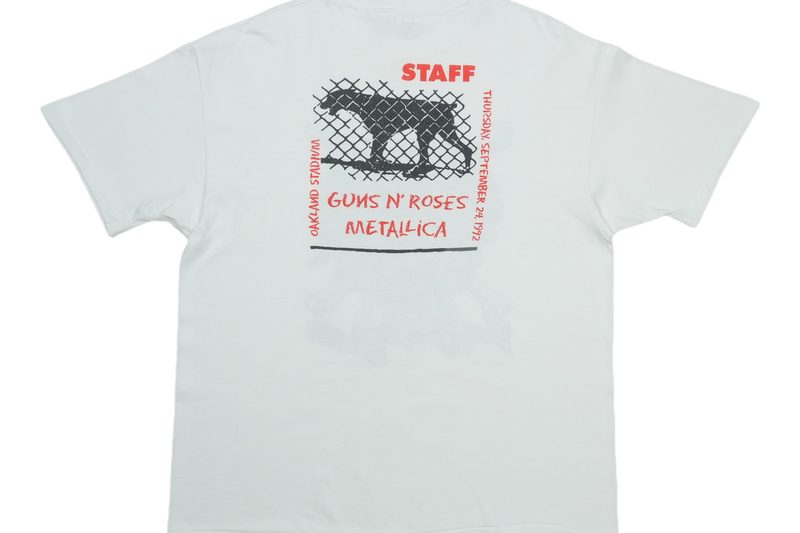
The most valuable shirts share a short list of traits. Single-stitch construction on sleeves and hems (double-needle hems became standard after the mid-90s). Specific brand labels like Screen Stars, Hanes Beefy-T, Anvil, or Brockum. Original tour-specific artwork that matches a documented date on the back of the shirt. The difference between an authentic 1987 Guns N’ Roses Appetite for Destruction tour tee and a modern reprint can be $2,000 or more — and the only thing separating them is a tag and the way the ink cracks.
The Numbers That Drive the Market
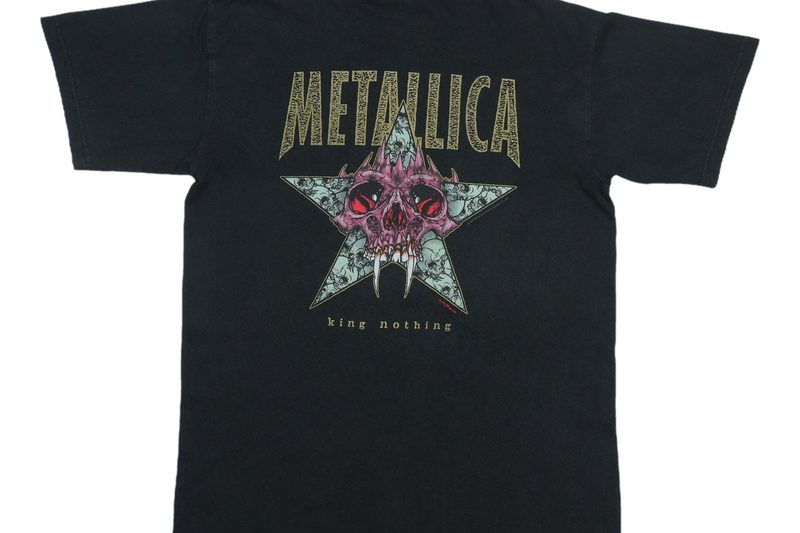
The vintage band tee market quietly became a real asset class. According to a 2024 Loudwire-cited study, Nirvana sits at the top of the value rankings, with shirts pulling an average resale of $278.51. Metallica’s 1996 Load-era “King Nothing” tee fetches up to $1,250 at auction. A 1994 Mexico-only Metallica bootleg has been verified at over $3,000.
But the headline numbers belong to grail pieces. The 1967 Grateful Dead “Mango Yellow” promo shirt that sold at Sotheby’s for $17,640 (about $19,300 with fees) set a record for the most expensive vintage t-shirt ever auctioned. A Nas shirt printed with his 1996 lyrics has been reported at $27,000 in private sale. Even the unremarkable tier matters now — a beat-up 1991 Sonic Youth tour tee that would have lived in the dollar bin twenty years ago will pull $400 today.
The Authentication Game
Reprints are everywhere. Urban Outfitters and Forever 21 have been selling reissued band graphics for fifteen years, and a surprising number end up on resale apps marked “vintage.” Spotting the difference isn’t hard once you know the tells, but it does take practice with shirts in your hands.
The neckline tag is your first checkpoint. Printed-on labels — where the brand and care instructions are stamped directly onto the cotton instead of sewn — were invented by Hanes in 2002. If a “1991 Pearl Jam Ten tour tee” has a printed inner label, it’s a reprint. Period. Look for woven Screen Stars tags with the SS logo, Hanes “Fifty-Fifty” or Beefy-T tags, Anvil, Sportswear, or Brockum. These were the workhorses of concert merch from the 70s through the early 90s.
Print quality tells the second half of the story. Authentic vintage shirts were screen printed with plastisol ink that hardens over decades, forming micro-cracks along the stress lines where the fabric bent over a shoulder blade or under a folded arm. Real cracking follows your body’s natural creases. Fake aging looks scattered and random, like someone hit a brand-new shirt with sandpaper — because that’s exactly what happened.
The shirt itself matters too. Pre-1995 cotton was thicker and rougher than what we wear now, but it softens with washing into a drape that brand-new shirts physically cannot replicate. If a 1984 tour tee feels like it just came out of a polybag, something’s wrong. The best authentication video walkthrough we’ve found comes from The Clothing Warehouse, which examines real tags side by side with their reprint counterparts.
The Bands That Move the Most Money
Not every band tee is worth the trip to the post office. The market is heavily weighted toward a handful of acts whose merchandise has been in continuous demand since the day it was printed.
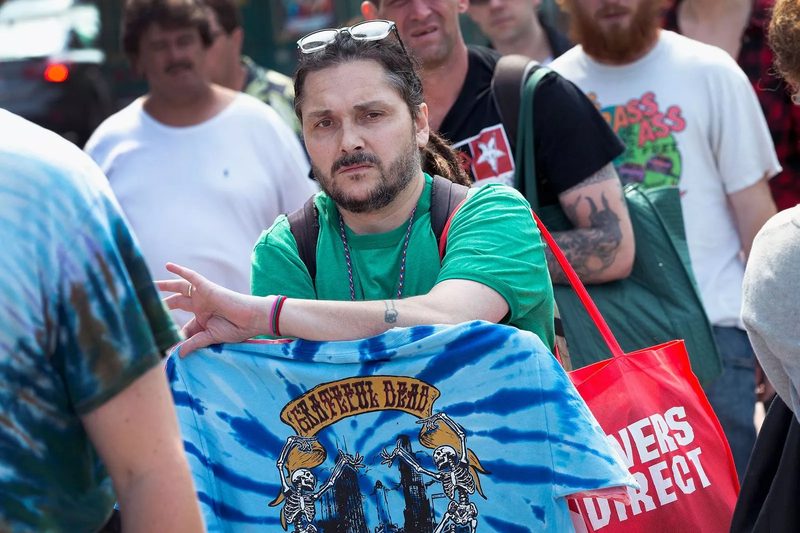
Nirvana, Metallica, Iron Maiden, Pink Floyd, the Grateful Dead, Pantera, Guns N’ Roses, and AC/DC anchor the top of the value list. Below them, a second tier of grunge, thrash, and early hip-hop has been climbing fast: Soundgarden, Alice in Chains, Slayer, Wu-Tang Clan, Tupac, and Notorious B.I.G. parking-lot bootlegs. The bootlegs are their own micro-market — unauthorized concert tees sold outside venues in the late 80s and early 90s are now considered legitimate folk art, and a 1994 Biggie/Tupac parking-lot shirt can pull more than the official press release tee from the same week.
A few names that never break out: cover bands, hair metal acts without staying power, and any band that aggressively reissued their old merch in the 2010s. The market punishes oversupply. If you can buy a “vintage” graphic from a band’s official online store today, the resale ceiling on the real version drops by at least a third.
Where Actually to Hunt Them
The romantic answer is your grandfather’s closet. The practical answer is that most great finds come from a short list of places.
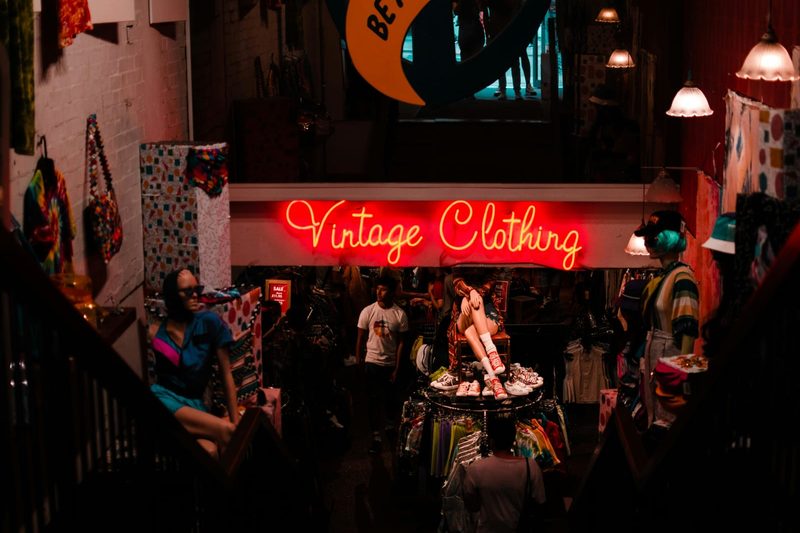
Estate sales remain the best risk-adjusted source. When a longtime concert-goer dies, their kids usually don’t know a 1979 Led Zeppelin tour tee from a 2010 Hot Topic graphic, and they price the box at $20. Goodwill and Salvation Army are picked over hard, but you’d be surprised how often a real one slips through — the volunteers sorting donations are not, by and large, metalheads. Curated vintage shops like WyCo, Get Lucky, Black Shag, and the bigger online dealers carry authenticated stock, but you pay 5-10x the thrift price for the verification.
eBay and Grailed are where most actual transactions happen, and where most fakes also live. Filter aggressively: search the band name plus “single stitch,” set your year range, and study the tag photos before you bid. If a seller doesn’t post a clear photo of the inside neckline tag, walk away. The good sellers know exactly what they have and document it.
Condition: The Quiet Difference Between $200 and $2,000
Two identical 1986 Iron Maiden “Somewhere in Time” tour shirts can be separated by an order of magnitude on price depending on condition. Holes in the armpits are forgivable. Holes in the graphic are not. A neckline that has been cut or stretched into a wide scoop kills the value of an otherwise pristine shirt — collectors want them how they came out of the factory, even if that means an uncomfortably tight crew neck.
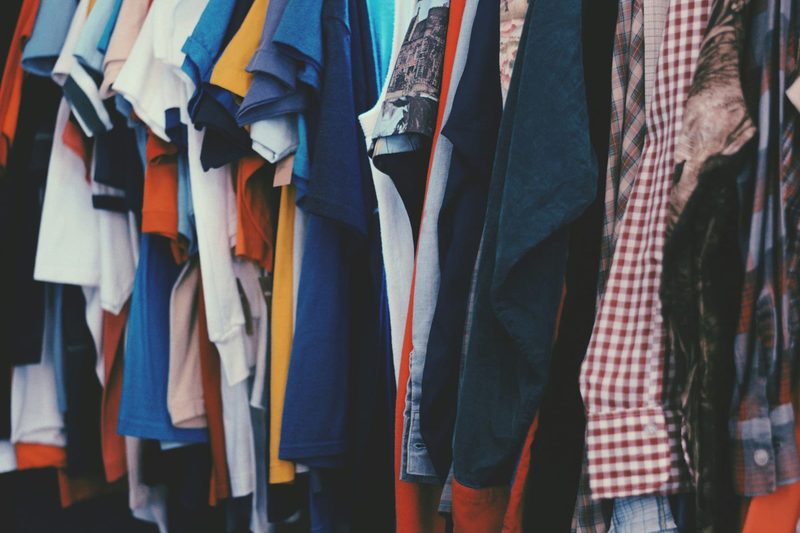
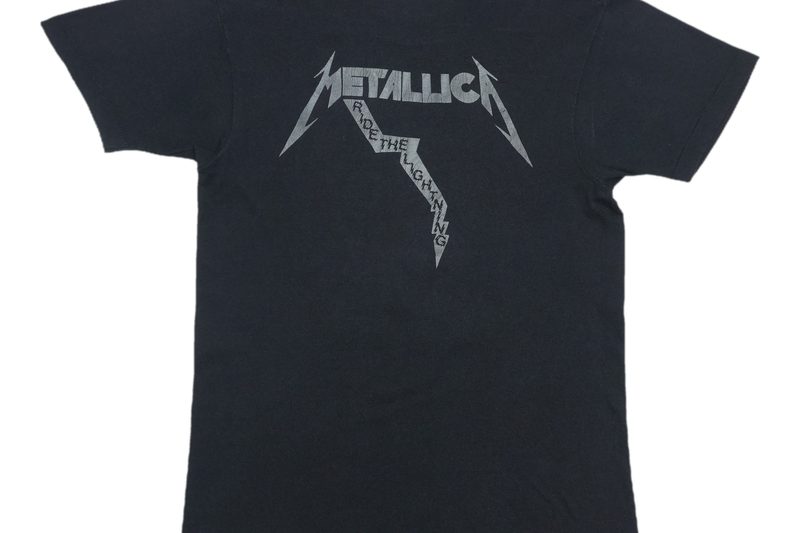
Fading, paradoxically, is fine and often desirable. A 1984 Ride the Lightning shirt that’s gone soft gray with thirty years of washing carries more emotional weight than one that somehow stayed factory black. The collector phrase is “honestly worn” — used hard, never abused. Pit stains will cost you 40% off the asking price. A faded back print can cost you 60%. Bleach spots, paint, or moth holes through the artwork will reduce a shirt to “wearable but worthless” in the eyes of serious buyers.
A lot of the visual language collectors use to talk about condition borrows from the world of Seattle’s grunge scene history, where wearing a beat-up tour shirt to its breaking point was the entire point. The same shirt that looked careless on Kurt Cobain in 1991 is now priced like a Rothko.
The Cultural Resurgence Driving Prices Now
What kicked the market into a higher gear wasn’t nostalgia. It was celebrity styling. When Kim Kardashian wore a vintage 1995 Metallica tee in 2017, search traffic for that specific shirt spiked 800% inside a week. The same dynamic played out with Travis Scott in a vintage Slayer crewneck, Hailey Bieber in a 1999 Korn tee, and the entire Kanye West ecosystem leaning hard into 90s-era band graphics from 2018 onward.

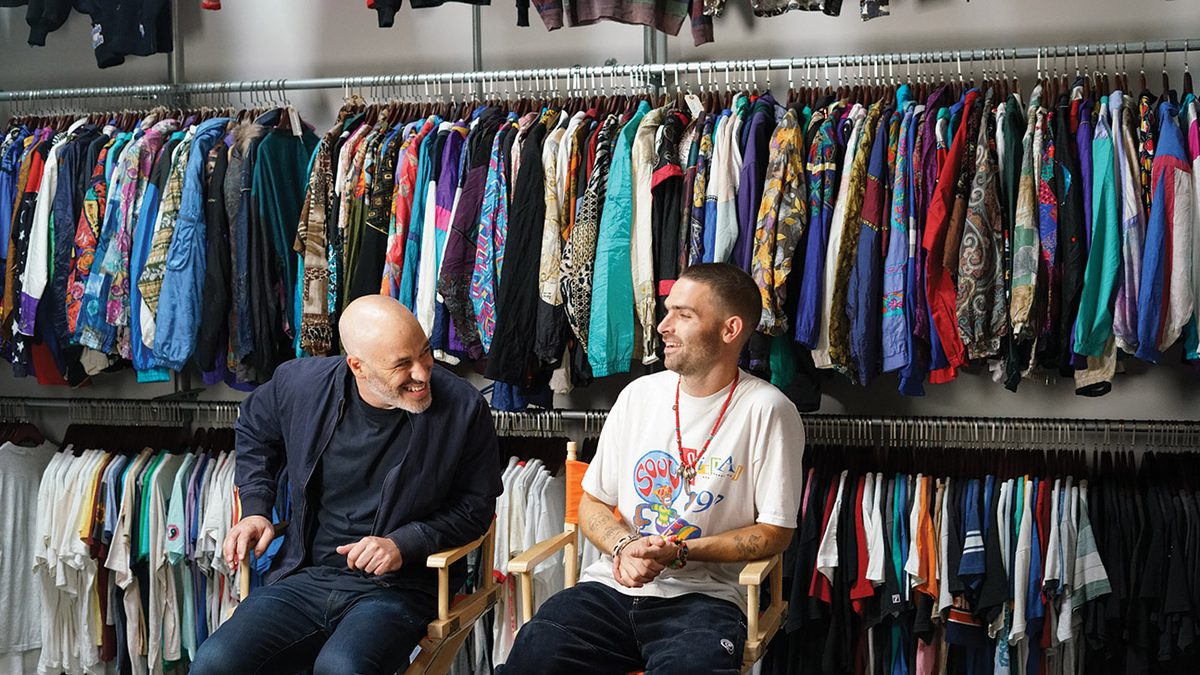
The trend isn’t slowing down. The grunge revival of the early 2020s — see also Kurt Cobain’s $334,000 MTV Unplugged cardigan, which set the auction record for any item of grunge clothing — has pulled an entire generation of Gen Z buyers into a market that used to be dominated by middle-aged former roadies. Vintage marketplaces like MNTGE, founded in 2022 by Nick Adler and Sean Wotherspoon, have professionalized what used to be a flea market business.
The truth is, most of the people paying $1,500 for a vintage band tee in 2026 have never seen the band live. They’re buying into a cultural moment they missed by being born ten years too late, and the shirt is a more honest souvenir than a Spotify playlist.
Starting Your Own Collection Without Going Broke
The smart entry point is the second tier of acts. Skip the Nirvana and Metallica grails — the ceiling on those is already priced in. Look for bands whose stock is climbing but hasn’t broken into mainstream auction headlines: Helmet, Quicksand, Faith No More, Sepultura, early Sublime, Cypress Hill before “Insane in the Brain” went radio. Shirts from these acts can still be found in the $40-$100 range with patience, and they have real long-term appreciation potential.
Buy from people who post tag photos. Set up saved searches on eBay for specific tour names, not band names. Befriend the people who run estate sales in your city — they’ll text you before they list the rock-and-roll boxes. And accept that you’ll buy at least one fake before you can spot them on sight. Everybody does. The shirt becomes a tuition fee for the rest of your collection.
One more piece of advice that nobody else will tell you: the shirts you actually wear lose 30% of their resale value the first time you put them through the dryer. If a shirt is worth more than $300, store it folded between sheets of acid-free tissue paper and accept that you bought a piece of art, not a t-shirt. If a shirt is worth less than $300, wear it until it falls apart. That’s what it was made for, and that’s what the people who paid retail in 1986 did with theirs.
For deeper context on how 80s and 90s music culture became a collector economy, see our breakdown of Pour Some Sugar on Me and the unlikely arc of Def Leppard — a useful case study in how a single tour’s merchandise can outlive the band that printed it.
Sources
- The Hollywood Reporter — “Would You Pay $27,000 for a Used Concert T-Shirt?” — Market overview, MNTGE showroom, and record auction figures.
- Loudwire — Study Shows Which Bands Have the Most Valuable Vintage T-Shirts — Source for Nirvana’s $278.51 average resale figure and band value rankings.
- Defunkd — Vintage T-Shirt Authentic Tag Dating Guide — Reference for Screen Stars, Hanes, Anvil, and Brockum tag identification across eras.
- Defunkd — The Most Expensive Vintage Nirvana T-Shirts — Documentation of the Heart-Shaped Box and Aragon Ballroom sale figures.
- Highsnobiety — Smells Like Merch Spirit: A Timeline of Nirvana’s Iconic T-Shirts — Historical timeline of Nirvana merch design.
Browse retro and vintage-inspired apparel at the RetroRadical shop →
Shop on eBay
Retro T-Shirts on eBay →
We may earn a commission when you shop through our eBay links.
The Retro Almanac
A monthly roundup of "on this day" highlights from that month, decades back — plus first dibs on new retro merch drops. No spam, just the good stuff.