80s Cartoons Were Illegal Before Reagan Changed One Law
If you grew up in the 1980s, your childhood was shaped by a government policy you never knew existed. Every afternoon, you’d race home from school, dump your backpack on the floor, and park yourself in front of the TV. He-Man raised his sword and screamed “I HAVE THE POWER!” Optimus Prime rolled out against the Decepticons. Duke led the Joes against Cobra Commander. Lion-O summoned the ThunderCats.
These weren’t just 80s cartoons. They were 22-minute toy commercials — and they only existed because of one man, one policy change, and one very specific moment in American history that blew the doors off children’s television forever.

The Retro Almanac
A monthly roundup of "on this day" highlights from that month, decades back — plus first dibs on new retro merch drops. No spam, just the good stuff.
Before Reagan: The Era When Cartoons Couldn’t Sell You Stuff
Here’s something most people don’t realize — before the 1980s, what we think of as “normal” 80s cartoons were essentially illegal.
The Federal Communications Commission had been policing children’s TV since the late 1960s. Advocacy groups like Action for Children’s Television (ACT), founded by activist Peggy Charren in Newton, Massachusetts in 1968, had spent over a decade pressuring the FCC and the networks to keep advertising out of kids’ programming. The rules were strict: you couldn’t create a show that existed primarily to sell toys. Period.
The FCC’s 1969 and 1974 policy statements explicitly banned what regulators called “program-length commercials.” If a toy company tried to build a Saturday morning show around its product, the network’s license was on the line. The system wasn’t pretty — kids watched a mix of Looney Tunes reruns, Hanna-Barbera filler like The Smurfs, and the occasional educational block — but it was the deal Charren and her army of suburban moms had wrung out of Washington over fifteen years of relentless lobbying.
Then Ronald Reagan walked in.
Mark Fowler and the Quiet Revolution of 1984
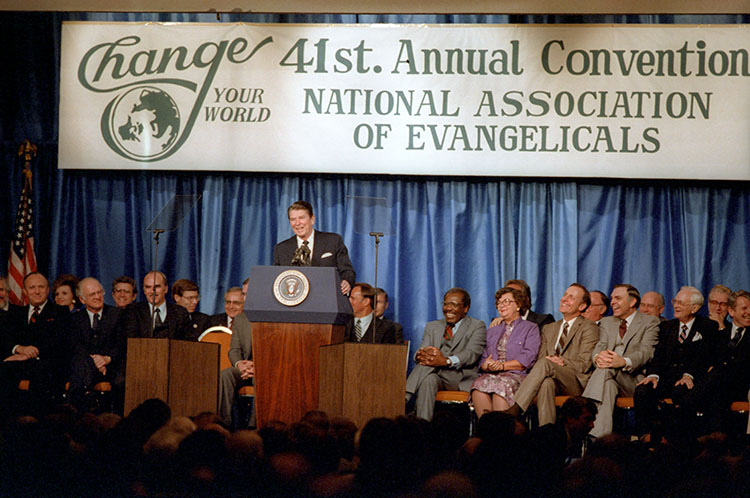
The man who actually pulled the trigger wasn’t Reagan — it was a Washington lawyer named Mark S. Fowler. Reagan had worked with Fowler on his 1980 campaign, and in May 1981 he installed him as chairman of the FCC. Fowler famously called television “a toaster with pictures” — meaning he saw broadcasting as an appliance, not a public trust, and he intended to deregulate it accordingly.
For three years, Fowler chipped away at advertising rules, ownership caps, and content guidelines. The big domino fell in December 1984. The FCC quietly dropped the old policy that capped commercial time on children’s programs at 9.5 minutes per hour on weekends and 12 minutes on weekdays. More importantly, Fowler’s commission killed the “program-length commercial” doctrine outright. If a show happened to feature characters that also existed as toys, that was now somebody else’s problem.
The change was buried in dense regulatory language. Almost nobody outside the broadcasting industry noticed at the time. But Mattel noticed. Hasbro noticed. So did every ad agency and toy executive who had been watching He-Man and the Masters of the Universe — which had been quietly testing the limits in first-run syndication since September 1983.
He-Man Was the Match That Lit the Fuse

Mattel had been sitting on the Masters of the Universe toy line since 1982. The figures sold fine. But Mattel’s executives wanted a cartoon to push them harder. Network TV wouldn’t touch the idea — too commercial, too obvious. So Mattel went around the networks entirely and sold the show directly to local stations through Group W Productions and Filmation.
That September 1983 debut of “The Diamond Ray of Disappearance” was the test case. The show wasn’t on ABC, NBC, or CBS — it ran in syndication, station by station, in afternoon slots networks didn’t care about. Within a year, Castle Grayskull was sold out at every Toys R Us in America. Mattel reported that the He-Man line did over $400 million in sales in 1985 alone, a number that would translate to well over a billion in today’s dollars.
Mattel had proven the model. Then Fowler killed the rule that was supposed to stop everybody else from copying it. The race was on.
The Cartoon Gold Rush That Followed
Between 1984 and 1987, the toy-to-cartoon pipeline went from a trickle to a flood. Transformers debuted in September 1984 — a Hasbro/Marvel co-production designed from day one to sell little plastic robots that turned into cars. G.I. Joe: A Real American Hero followed in 1985 with the same playbook: a five-part mini-series to test demand, then a full daily syndicated run once the figures flew off shelves.

Then came ThunderCats, M.A.S.K., Voltron, Silverhawks, Visionaries, Bionic Six, BraveStarr, Jem and the Holograms, She-Ra, My Little Pony, Care Bears, Strawberry Shortcake, Pound Puppies, Rainbow Brite, and a dozen others. Every cartoon you remember from after-school TV between 1985 and 1989 was designed to sell something on a Toys R Us shelf — including the ones aimed at your sister. Toy-based cartoons accounted for roughly 80% of new animated programming by 1987, according to industry tracking firms at the time.
This wasn’t a side effect of Fowler’s deregulation. It was the entire point. Networks no longer had to gatekeep. Toy companies could fund production directly. Ad agencies could write characters into existence and ship the action figures the week the pilot aired. The era of the cartoons that defined a generation was less a creative golden age than a four-year regulatory window where the moneymen got out of their own way.


Why Parents Lost Their Minds
If you remember the mid-80s as a Gen X kid, you probably remember the parental complaints too — the sense that there was something off about Saturday morning, that the adults around you were grinding their teeth every time you asked for the new G.I. Joe vehicle with the realistic missile launcher.
They weren’t wrong. Peggy Charren and ACT spent the entire decade screaming into the wind. By 1987, ACT’s research showed kids were watching an average of 27 hours of television per week, the majority of it on weekends, and the overwhelming share of that was now toy-based programming. Charren testified before Congress that the FCC had “abdicated its responsibility.” Conservative critics, religious groups, and pediatricians joined her. None of it moved Fowler’s commission.
Take a moment to register how strange that coalition was. The Reagan-era cartoon explosion united suburban moms, evangelical pastors, and the American Academy of Pediatrics against a Republican-appointed regulator. The story doesn’t fit any modern political template — which is part of why it gets forgotten.

The Children’s Television Act Tried to Slam the Door Shut
Congress finally caught up in 1990. The Children’s Television Act of 1990 reinstated commercial time limits on kids’ programming (10.5 minutes per hour on weekends, 12 minutes on weekdays) and required broadcasters to air “educational and informational” content for children as a condition of license renewal.
It was a partial walk-back. The bill specifically left the program-length commercial question fuzzy — and toy-tied shows kept running, just with slightly more breathing room around the ad breaks. President George H.W. Bush let the bill become law without his signature in October 1990, calling it well-intentioned but constitutionally problematic. By then the toy-cartoon model was so embedded in the industry that no piece of legislation was going to unwind it. The shows just got more careful about how they framed the pitch.
The harder push came in 1996, when the FCC under a Democratic president imposed a hard three-hour-per-week minimum on educational kids’ programming. That ushered in shows like Reading Rainbow revivals and animated history lessons — none of which kids actually wanted to watch. The toy-cartoon era was over by then anyway. Cable had eaten Saturday morning. Nickelodeon, Cartoon Network, and Disney’s afternoon block had made syndication obsolete.
Why It Still Matters (And Why It Worked)

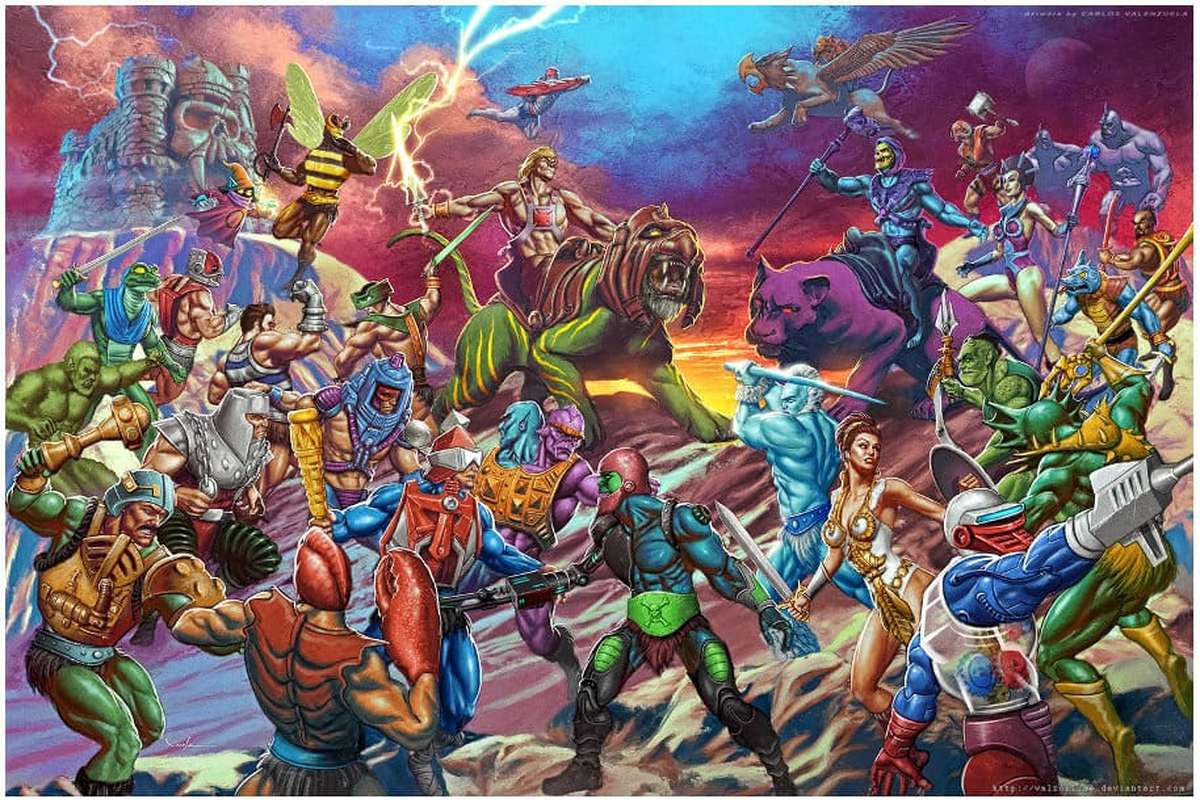
The honest answer about whether Fowler’s deregulation was good or bad depends on whether you were the kid or the parent. The parents were right that the shows were ads. The kids — meaning Gen X — got the most aesthetically distinct, weirdly creative, batshit-imaginative four-year run of animation American television has ever produced. Visionaries was a show about wizard knights with holographic shields who fought a snake-themed warlord. Nobody at NBC in 1979 would have greenlit that. Mattel-funded syndication in 1987 absolutely did.
The shows you grew up on weren’t accidents. They were the result of a specific policy choice — one chairman, one rule, one regulatory window — that flooded American television with weird, loud, deeply commercial product that has aged into pure nostalgia. Optimus Prime is in Hollywood movies now. Stranger Things sells more Eggos than any commercial ever could. The whole machinery of Gen X memory monetization runs on what Mark Fowler set loose in 1984.
If you spent your childhood arguing about whether Skeletor was scarier than Cobra Commander, you were part of an experiment. It was an experiment in what happens when you let toy companies write the children’s TV schedule. It worked exactly the way they hoped — and exactly the way the parents feared. The remarkable part is that it ever happened at all, and that almost nobody remembers the policy that made it possible. Compare this to the Saturday morning ritual that built a generation or the era when 80s toys turned into fortunes on the collector market, and the through-line is the same: deregulation built the playground, and Gen X kids never stopped paying admission.

Sources
- Ronald Reagan Presidential Library — Mark S. Fowler, FCC Chairman Topic Guide — Primary archive of Fowler’s appointment papers and deregulatory record.
- Museum of Broadcast Communications — Action for Children’s Television — History of Peggy Charren’s advocacy group and its lobbying campaigns.
- SYFY Wire — Oral History of He-Man and the Masters of the Universe — Industry insider accounts of how Mattel and Filmation built the show.
- Congress.gov — Children’s Television Act of 1990 (H.R. 1677) — Full text and legislative history of the 1990 reform bill.
- NewRetroWave — Cartoon Caravan: He-Man and the Masters of the Universe (1983) — Production background on the Filmation series.
- Mark S. Fowler — Biographical Overview — Career timeline and FCC tenure summary.
Browse retro and vintage-inspired apparel at the RetroRadical shop →
The Retro Almanac
A monthly roundup of "on this day" highlights from that month, decades back — plus first dibs on new retro merch drops. No spam, just the good stuff.