Wu-Tang Forever: How Nine MCs from Staten Island Rewrote the Rules of Rap
On November 9, 1993, nine men from the most overlooked borough in New York City walked into record stores and changed the trajectory of hip-hop. They didn’t arrive with industry backing or MTV rotation. They arrived with kung fu samples, chess metaphors, mathematics-laced verses, and a sound so raw it felt like a transmission from another dimension. The album was Enter the Wu-Tang (36 Chambers). The group was the Wu-Tang Clan. And nothing about Golden Age hip-hop was quite the same after that Tuesday.
Staten Island Was Never Part of the Plan
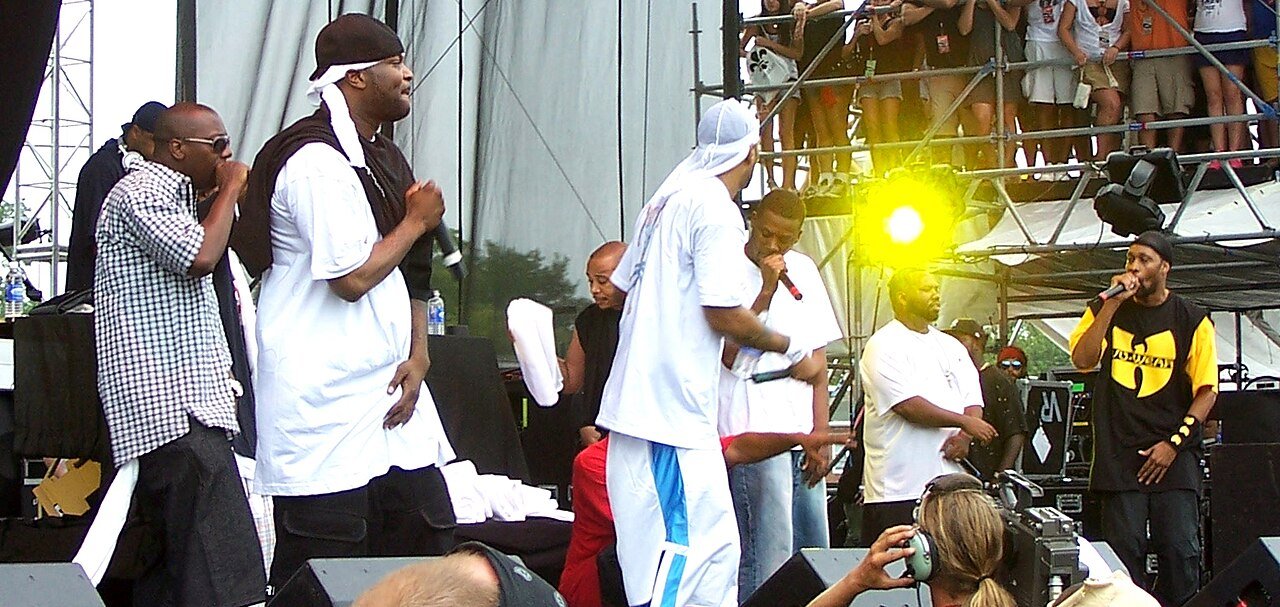
In the early 1990s, New York hip-hop had its geography locked. The Bronx was the birthplace. Harlem was the cathedral. Brooklyn had Biggie and the Boot Camp Clik waiting in the wings. Queens had already given the world Run-DMC, LL Cool J, and Rakim. Staten Island — the borough New Yorkers called the forgotten borough — was not supposed to matter. It was too removed from the narrative, too easy to overlook. Robert Diggs (RZA), Gary Grice (GZA), and Russell Jones (Ol’ Dirty Bastard) grew up in the Stapleton Houses and Park Hill projects, places where the pull of the streets was constant and the record industry felt as distant as the Manhattan skyline across the water.

What that exclusion produced was a particular kind of hunger. The nine founding members — RZA, GZA, ODB, Raekwon, Ghostface Killah, Method Man, Inspectah Deck, U-God, and Masta Killa — didn’t have the comfort of assuming the industry would discover them. They had to build something so undeniable it couldn’t be ignored. The man who drew up the blueprints was RZA, and his plan was bigger than any single album.
The Retro Almanac
A monthly roundup of "on this day" highlights from that month, decades back — plus first dibs on new retro merch drops. No spam, just the good stuff.
RZA Had a Blueprint and Five Years to Execute It
Before Enter the Wu-Tang hit shelves, RZA negotiated what would become one of the shrewdest business deals in hip-hop history. He signed the group to Loud/RCA Records as a collective — but retained the right for every member to pursue solo deals with any label they chose. This was unprecedented. Labels expected to own the artists they developed. RZA flipped the script: the group album was the launch pad, and the solo careers were the payload. His five-year plan was to use the collective brand as leverage, fan out into individual label deals, build affiliated acts and imprints, and turn Wu-Tang into a corporation rather than just a rap group.
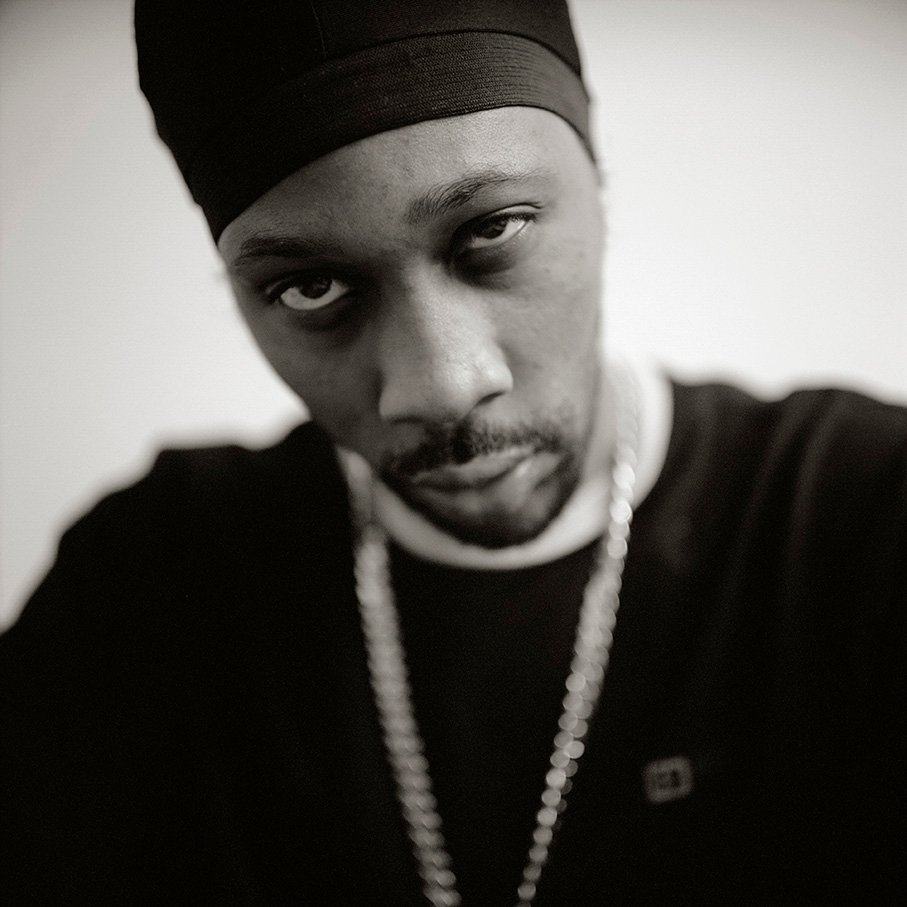
His production philosophy matched the business philosophy — unconventional and deliberate. While producers like Dr. Dre were building lush, synthesizer-driven soundscapes for G-Funk out west, RZA went the opposite direction. His beats were sparse, crackling, and strange: piano loops pitched down to a fog, strings that sounded like they were filtering through a broken television, drums that hit like they were recorded in a stairwell. “I wanted it to sound like the projects,” RZA said years later. “Grimy. Real.” The lo-fi aesthetic wasn’t a limitation. It was a choice.
Where Kung Fu Films Met the Five Percenters
The lyrical world Wu-Tang built was unlike anything else in the Golden Age of hip-hop. Most members were affiliated with the Five Percent Nation — an offshoot of the Nation of Islam that centered on a cosmological numerology and taught that Black men were the original gods of the earth. It gave Wu-Tang lyrics a theological density that rewarded obsessive listening. References to Supreme Mathematics, the Supreme Alphabet, and the cipher ran through their verses like coded scripture. Songs weren’t just songs. For those paying close attention, they were lessons.

Layer onto that an encyclopedic love of Shaw Brothers kung fu films. RZA had practically memorized titles like The 36th Chamber of Shaolin and Five Deadly Venoms, sampling their dubbed dialogue to open tracks and building a martial mythology around the collective. Every member adopted a Shaolin warrior name. The Wu-Tang logo — that now-iconic W — was designed to evoke a sword, a weapon, a mark. The world they created was dense, self-referential, and entirely their own. Nothing else in hip-hop looked or sounded anything like it.
Nine MCs and Zero Limits
Enter the Wu-Tang (36 Chambers) opens with a kung fu film snippet and then detonates. “Bring da Ruckus.” “Shame on a Ni**a.” “Can It Be All So Simple.” And then “C.R.E.A.M.” — Cash Rules Everything Around Me — a meditation on growing up broke while the streets offered the only available path to status. Raekwon and Inspectah Deck trade verses over a piano loop that sounds lifted from a church basement. Method Man delivers the hook with a vocal ease that could have made him a pop star if he’d wanted to be one.
What separated the debut from most Golden Age records was the sheer volume of distinct voices on a single project. GZA was the philosopher — precise, cold, surgical. ODB was chaos incarnate, genuinely unpredictable in the best possible way. Ghostface Killah spoke in a visceral, stream-of-consciousness rush that felt like testimony rather than performance. Raekwon was the street narrator, cinematic and specific. Method Man was the performer, the one who could make a room move with a single hook. Together, they didn’t just sound like a rap group. They sounded like a borough finding its voice.
C.R.E.A.M. and the Gospel That Crossed Over
No Wu-Tang record hit mainstream radio harder or more honestly than “C.R.E.A.M.” Released as a single in early 1994, it became the group’s defining crossover moment — not because it softened its edges, but because its central truth was universal. “I grew up on the crime side, the New York Times side / Staying alive was no jive.” Inspectah Deck’s opening verse was a generational statement. The song didn’t glamorize the hustle so much as bear witness to it, with a melancholy that gave it genuine weight. It sounded like a confession, not a boast.
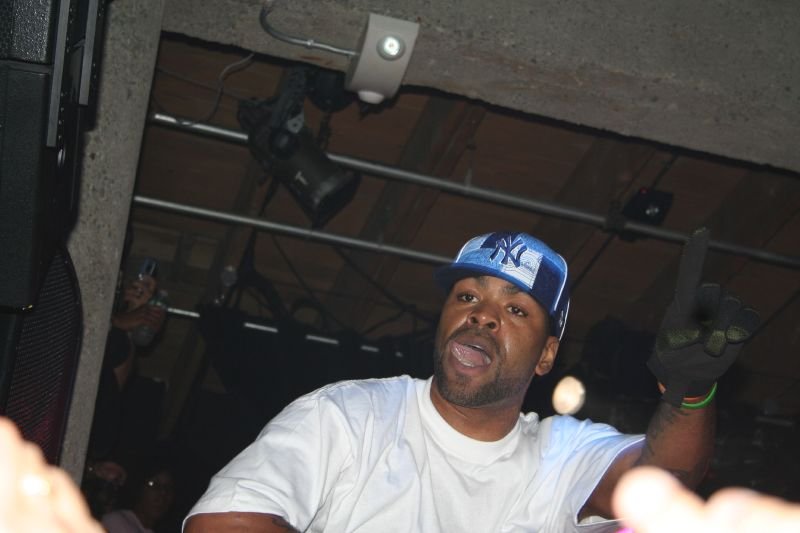
Method Man was the member with the most obvious crossover instincts, and “C.R.E.A.M.” confirmed why. His hook was magnetic, warm, and effortless — the kind of vocal performance that makes listeners feel recognized. He would go on to land a role on The Wire, join forces with Redman for a commercially successful partnership, and become the first Wu member to reach number one on the rap charts with a solo project. But in early 1994, he was still just a kid from Park Hill making music that felt too real to look away from.
The Solo Empire and How It Paid Off
RZA’s five-year plan unfolded almost exactly as designed. In 1994, Method Man’s Tical became the first Wu solo release and went gold. Then the catalog accelerated. Raekwon’s Only Built 4 Cuban Linx… arrived in 1995 — a Mafioso rap epic so cinematic in its street storytelling that it drew comparisons to a crime novel. GZA’s Liquid Swords, also 1995, was colder and more clinical: chess verses, sword imagery, RZA at his most disciplined. Ghostface Killah’s Ironman in 1996 added emotional rawness to the catalog. ODB’s Return to the 36 Chambers: The Dirty Version was a deliberately strange masterpiece that confirmed no one in hip-hop was operating on Wu-Tang’s frequency.

The combined catalog made Wu-Tang’s dominance feel structural rather than coincidental. Different labels, different co-producers, different subject matter — but an unmistakable collective identity threaded through all of it. Albums like Liquid Swords and Only Built 4 Cuban Linx… are routinely cited alongside Illmatic and Ready to Die as the defining records of the Golden Age. The brand had a gravity that no single member could have generated working alone. That was the plan from the beginning.
Why Wu-Tang Still Echoes Thirty Years Later
By the late 1990s, the centrifugal forces of fame and creative independence were pulling the collective in nine different directions. The 1997 double album Wu-Tang Forever was commercially massive but creatively sprawling — a statement that tried to hold nine distinct careers together as each member built their own separate momentum. The Golden Age was beginning its long twilight, and the bicoastal war that claimed Tupac and Biggie had cast a shadow over everything that followed.
But Wu-Tang survived the transition in a way that few acts from that era managed. The W logo appears on merchandise across every continent thirty years later. Producers in Kendrick Lamar’s orbit and artists like Tyler, the Creator have cited RZA’s sonic approach as foundational to their own work. The 2014 one-of-a-kind release Once Upon a Time in Shaolin — literally a single copy, eventually sold at auction for millions — confirmed that the Wu were still playing chess while everyone else was playing checkers.
What the Wu-Tang Clan gave the Golden Age of hip-hop was something harder to manufacture than a hit record: a proof of concept. You could come from the most dismissed corner of the most competitive city on earth, build your own mythology from scratch, negotiate your own terms with an industry designed to extract your value and return nothing, and create work that outlasted the moment it was made. Nine MCs from the borough nobody took seriously. An empire built on grimy beats, kung fu philosophy, and the refusal to accept the terms being offered. Cash rules everything. But legacy? Legacy lives forever.
Sources
The Retro Almanac
A monthly roundup of "on this day" highlights from that month, decades back — plus first dibs on new retro merch drops. No spam, just the good stuff.