Friday Movie 1995: How Ice Cube Changed Hood Comedy Forever
New Line Cinema was not confident about Friday. The script had been written in about two weeks, the budget was $3.5 million, and the director had never made a feature film. The studio released it anyway on April 26, 1995, and it earned $27.5 million domestically — on a budget so small that the film turned profitable in its first weekend. More than the money, it introduced the world to Chris Tucker, set F. Gary Gray on a path to direct Straight Outta Compton two decades later, and embedded itself into American language with a two-second neighbor interaction nobody planned for.
The Script That Almost Didn’t Get Written
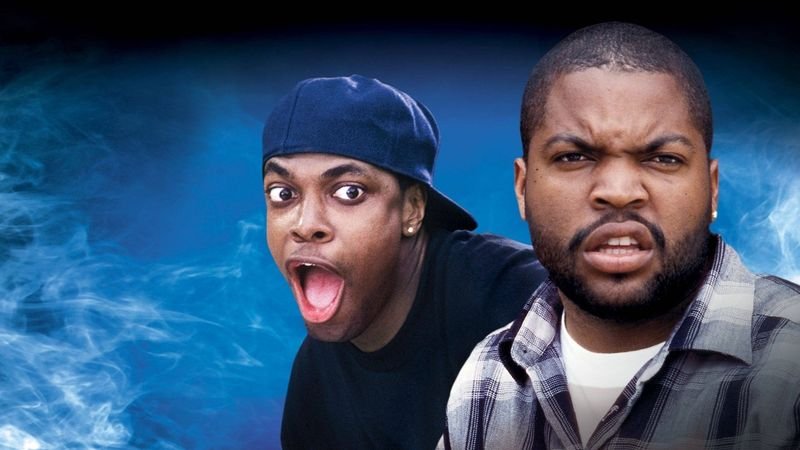
After NWA dissolved and Boyz N the Hood put Ice Cube on Hollywood’s radar, studios kept offering him the same character: the hard-edged street figure, the guy who delivers heavy dramatic lines about South Central. What Ice Cube actually wanted to make was a comedy — specifically, a comedy about what it’s like to just exist on a block in South Central on a day when nothing much happens.
The Retro Almanac
A monthly roundup of "on this day" highlights from that month, decades back — plus first dibs on new retro merch drops. No spam, just the good stuff.
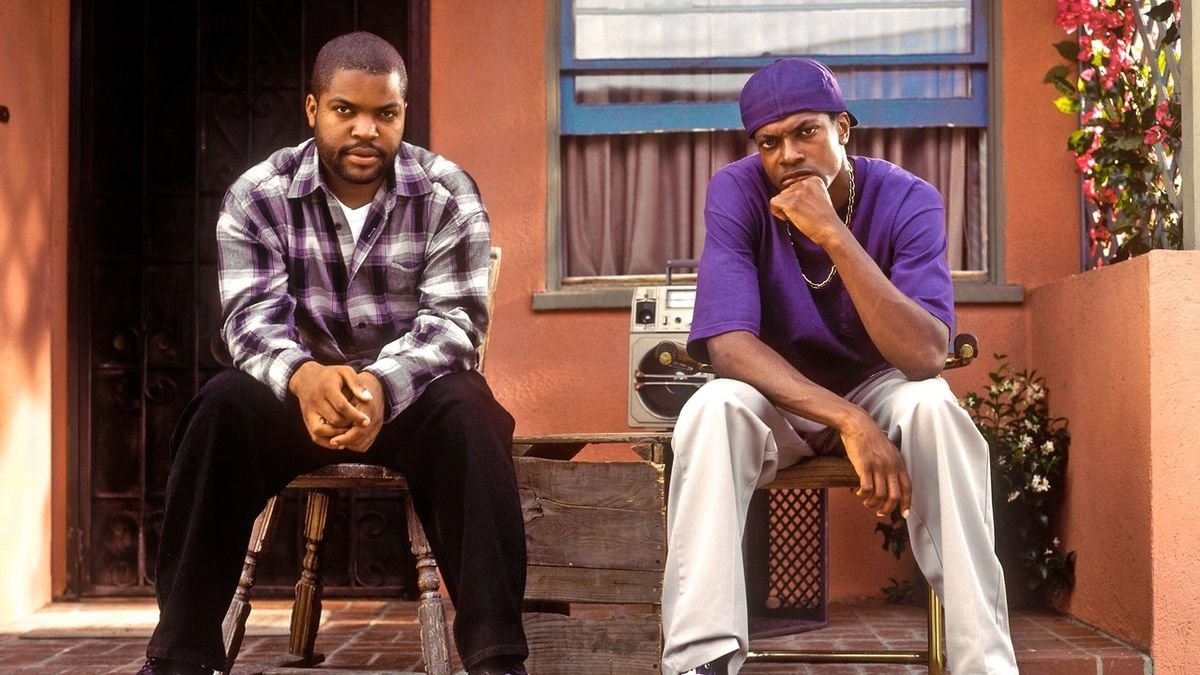
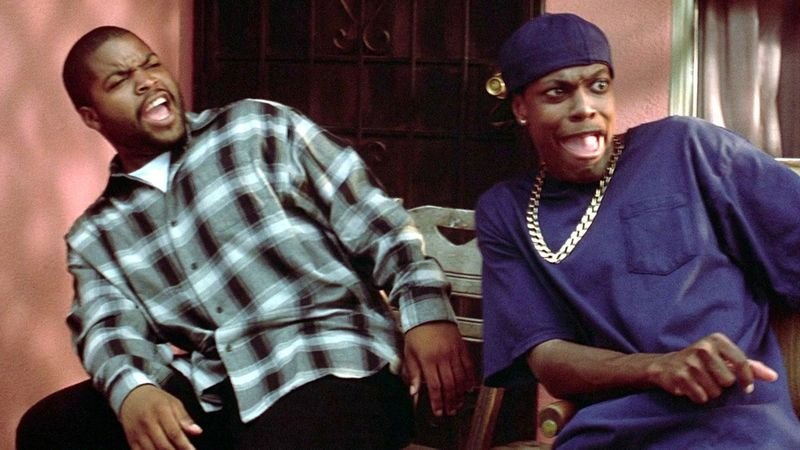
He and writing partner DJ Pooh produced a first draft quickly. The premise was deliberately spare: Craig Jones (Ice Cube) gets fired from his warehouse job on his day off — for allegedly stealing cardboard boxes — and spends a Friday afternoon on his front porch with best friend Smokey (Chris Tucker). No car chases. No heist. No murder mystery. Just two guys, a porch, and the particular cast of characters that circulates through any given neighborhood block.
New Line Cinema had reservations. The film lacked a traditional plot engine and leaned into comedy at a time when the dominant hood film template was tragedy. Ice Cube had to argue to keep the tone intact. The studio eventually agreed, and the production moved forward with a 20-day shoot on a $3.5 million budget that forced everyone to be efficient and specific.
F. Gary Gray: A Feature Film Debut at 24
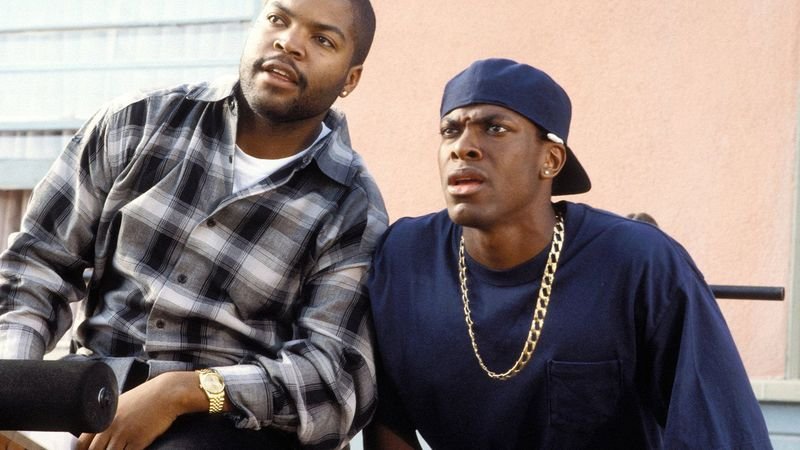
F. Gary Gray was 24 years old and had no feature film credits when he got the job. What he did have was a direct line to Ice Cube’s aesthetic sensibility — he had directed the “It Was a Good Day” music video in 1992, one of the most precise visual portraits of South Central life ever put to music. That prior collaboration established the trust that gave Gray the feature.
The approach Gray brought to Friday was rooted in simplicity. The porch set, which anchors nearly the entire film, became a stage where the neighborhood filtered through in a constant stream. Gray kept the camera at street level, used natural light, and made no effort to make the neighborhood look either grimly cinematic or tourist-presentable. The result looks like what it is: a real block on a real afternoon.
Gray’s subsequent career validated the choice. He directed Set It Off (1996), The Italian Job (2003), Straight Outta Compton (2015), and The Fate of the Furious (2017). The economic discipline of Friday — every shot had to work because there was no money to waste — shaped how he approaches much larger productions.
Chris Tucker Was Not the Plan for Smokey
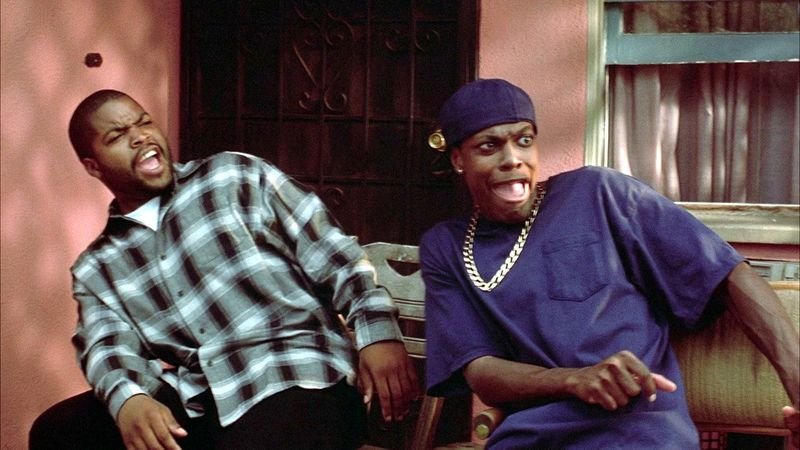
Ice Cube had originally written Smokey’s role with himself in mind, planning to play both Craig and Smokey before recognizing that the film needed two genuinely distinct lead performances. When Chris Tucker came in to audition, the decision was made quickly. Tucker’s improvisational energy, his ability to hold a scene at high volume without losing the audience, and his physical comedy — limbs that seemed to move independently of any plan — made him the obvious fit.
Tucker had done stand-up and appeared in House Party 3 (1994), but nothing that anticipated what he could do with the right material. Friday made him a name. Within two years he was in Luc Besson’s The Fifth Element (1997) and then Rush Hour (1998), where his pairing with Jackie Chan produced one of the more profitable buddy-comedy franchises in Hollywood history. The reported $25 million payday Tucker received for Rush Hour 3 placed him among the highest-paid actors in Hollywood at the time.

“Bye Felicia” — The Line That Took Twenty Years to Land
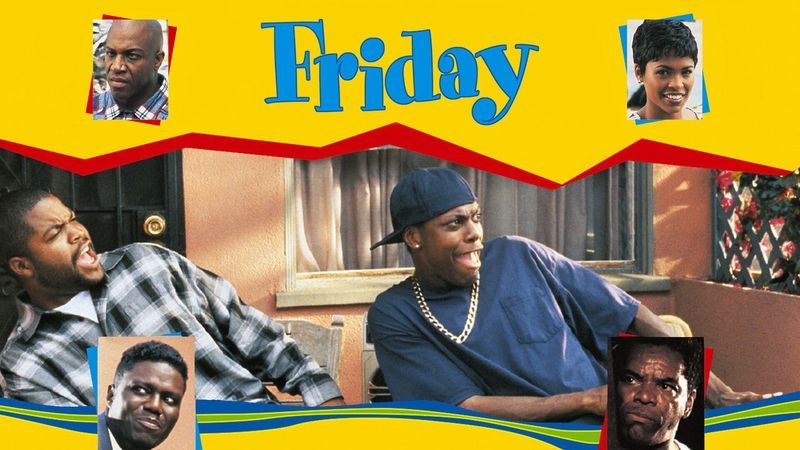
The scene runs about two seconds. A neighbor named Felicia (Angela Means) walks up to ask Craig and Smokey if she can borrow a car and some weed. Smokey responds, flat and final: “Bye, Felicia.” Nobody on set flagged it as a moment. Nobody in the audience in 1995 quoted it walking out of the theater. The line sat dormant for nearly two decades.
Around 2012-2013, “Bye Felicia” surfaced on Twitter and Tumblr as a shorthand dismissal — a clean, slightly theatrical way to signal that someone’s presence or opinion was unnecessary. By 2014 it had entered mainstream American slang. Many of the people using it didn’t know the origin. Angela Means, the actress who played Felicia, went years without significant recognition for the role before social media retroactively found her as the source.
The phrase’s durability is worth pausing on. Of all the lines in Friday — and there are many genuinely funny ones — the one that outlasted everything was an off-hand, barely-there exchange between minor characters. That’s the specific texture of the film’s comedy: the punchlines that land hardest are the ones that don’t announce themselves.
Deebo: The Neighborhood Bully With a Wrestling Career
Tommy “Tiny” Lister Jr. stood 6 feet 5 inches and weighed around 275 pounds when he played Deebo, the neighborhood enforcer who takes whatever he wants from whoever has it. The physical casting was deliberate but not the only reason he worked. Lister had a professional wrestling background — he performed as “Zeus,” the villain Hulk Hogan faced in No Holds Barred (1989) — and understood how to project menace in a way that read on camera without needing much dialogue.
Deebo became an archetype: enormous, arbitrary, local, and ultimately beatable once someone decides to stop absorbing the abuse. Ice Cube has discussed the film’s ending in multiple interviews as a conscious choice. In a genre where gun violence was the standard resolution for conflict, Craig beats Deebo with his fists. No weapons. The message was specific and Ice Cube was intentional about it.
Tommy Lister passed away on December 10, 2021, from cardiovascular disease. He was 62. Deebo remains his most recognized role.
The Supporting Cast Before They Were Famous
John Witherspoon played Mr. Jones, Craig’s father, with an intensity that made nearly every scene he appeared in quotable. He had been working in comedy since the 1970s and appeared in Boyz N the Hood (1991), but Friday is where most audiences first locked his face to a character. He reprised Mr. Jones in both sequels and remained a beloved presence in the franchise. He died on October 29, 2019, at 77.
Regina King played Dana, Craig’s girlfriend. She had been a regular on the TV series 227 and had appeared in Boyz N the Hood, but mainstream stardom came later. She won the Academy Award for Best Supporting Actress for If Beale Street Could Talk (2018). Nia Long, who played Debbie, had also appeared in Boyz N the Hood and would go on to roles in The Fresh Prince of Bel-Air and Soul Food (1997). Friday‘s supporting cast, taken together, looks like a preview of the next decade of prominent Black American acting talent — assembled by accident, or by the kind of instinct that a $3.5 million budget forces when you can’t afford to cast wrong.

The Sequels and Why Chris Tucker Walked Away
Next Friday arrived in 2000 with Ice Cube returning but without Chris Tucker. Tucker had become a committed Christian and was not comfortable with the drug content and language that defined Smokey. Rather than recast the role, Ice Cube and DJ Pooh wrote Smokey out: Craig is told his friend is in rehab. Next Friday earned $57 million on an $11 million budget. The franchise had legs without Tucker, commercially, but Smokey’s absence changed the chemistry in ways the box office couldn’t measure.
Friday After Next (2002) kept Ice Cube as a producer but shifted the lead to Mike Epps. A fourth film — Last Friday — has been discussed by Ice Cube for years without materializing. Tucker has never returned to the Smokey role. His choices in the years following Rush Hour 3 (2007) — selective, faith-informed, focused on projects that aligned with his values — meant one of the most distinctive comic voices of the 1990s stepped back from mainstream movies almost entirely.
Why Friday Still Holds Up Thirty Years Later
Most of the hood films that surrounded Friday in the early 1990s were built around tragedy. The genre’s major works — Boyz N the Hood, Menace II Society, Juice — took violence and consequence seriously, which was the right call for the stories they were telling. Friday came at the same streets and the same community from a completely different angle: what’s the comedy of just being there?
The answer, it turned out, was substantial. The film’s durability comes from specificity rather than universality. Craig is not aspirational. Smokey is not a cautionary tale. Mr. Jones is not wise in the way sitcom fathers are wise. They are particular people, recognizable in the way that good neighborhood comedy — from Spike Lee’s Do the Right Thing (1989) forward — is always recognizable across demographics and decades.
The $3.5 million that made New Line nervous was the right budget for the material. There was no money for production design that would have made South Central look cinematic rather than real. What ended up on screen was actual light on actual streets with actual people, and thirty years on it still reads that way. That’s the harder trick to pull off, and it’s the reason a two-second line about a neighbor named Felicia still circulates daily on the internet.
Sources
- Friday (1995 film) — Wikipedia — production history, box office, cast details
- Friday (1995) — Roger Ebert — contemporary critical reception on release
- Friday (1995) — IMDb — full cast and production data
- Bye, Felicia — Wikipedia — cultural history of the phrase and its spread as internet slang
The Retro Almanac
A monthly roundup of "on this day" highlights from that month, decades back — plus first dibs on new retro merch drops. No spam, just the good stuff.