Death Row and Bad Boy: The Labels That Ran Hip-Hop and Burned It Down
On August 3, 1995, at Radio City Music Hall, Suge Knight stepped up to the microphone to accept Death Row’s award at the Source Awards and delivered a line that didn’t belong in an acceptance speech. “Any artist out there that want to be an artist and stay a star, and don’t want to have to worry about the executive producer trying to be all in the videos, all on the records, dancing — come to Death Row.” Every person in the building knew exactly who he meant. The camera cut to Sean Combs in the front row, composed but calculating. That moment — watched, rewound, argued over in parking lots and classrooms across America — was the beginning of something that would define a decade of music and end in two murders that still haven’t been officially solved.
Two Coasts, Two Labels, One Collision Course
Death Row Records and Bad Boy Entertainment didn’t just happen to occupy the same era. They were mirror images of each other — two labels built by ambitious men who refused to work inside systems that didn’t respect them, built around artists who fundamentally changed what rap music could do, and eventually locked into a conflict that consumed everything around them.
Death Row was incorporated in 1991. Dr. Dre had left Eazy-E’s Ruthless Records under circumstances that remain disputed, but what wasn’t disputed was his vision. In partnership with Marion “Suge” Knight — a former football player who had worked as a bodyguard and music industry enforcer — Dre wanted to build something that could control not just the music but the entire aesthetic of West Coast rap. The chronic, the low-riders, the Long Beach summers. A sound that felt like Southern California even when it was describing things you’d never want your mother to know about.
The Retro Almanac
A monthly roundup of "on this day" highlights from that month, decades back — plus first dibs on new retro merch drops. No spam, just the good stuff.
Bad Boy came two years later, in 1993, born from a different kind of break. Sean Combs — known then as Puff Daddy, later as Puffy, eventually as Diddy — had been fired from his A&R position at Uptown Records after a tragedy at a City College concert he’d promoted left nine people dead. He was twenty-three years old and suddenly unemployed. Within months he’d signed a distribution deal with Arista Records and launched Bad Boy Entertainment out of New York City, with a sound that was tighter, glossier, and more radio-friendly than anything coming out of the West Coast.
Death Row and the Sound That Changed Rap Forever
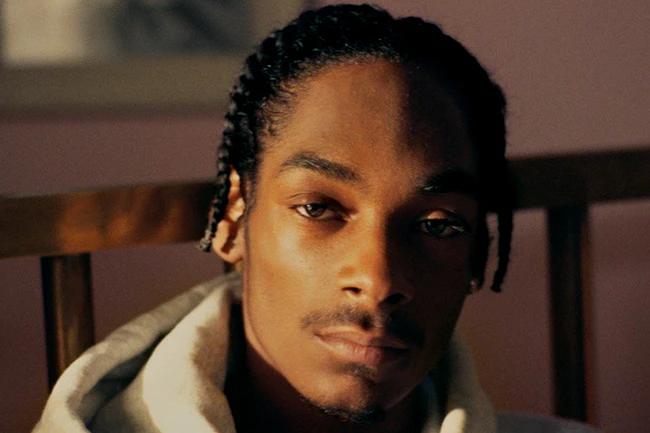
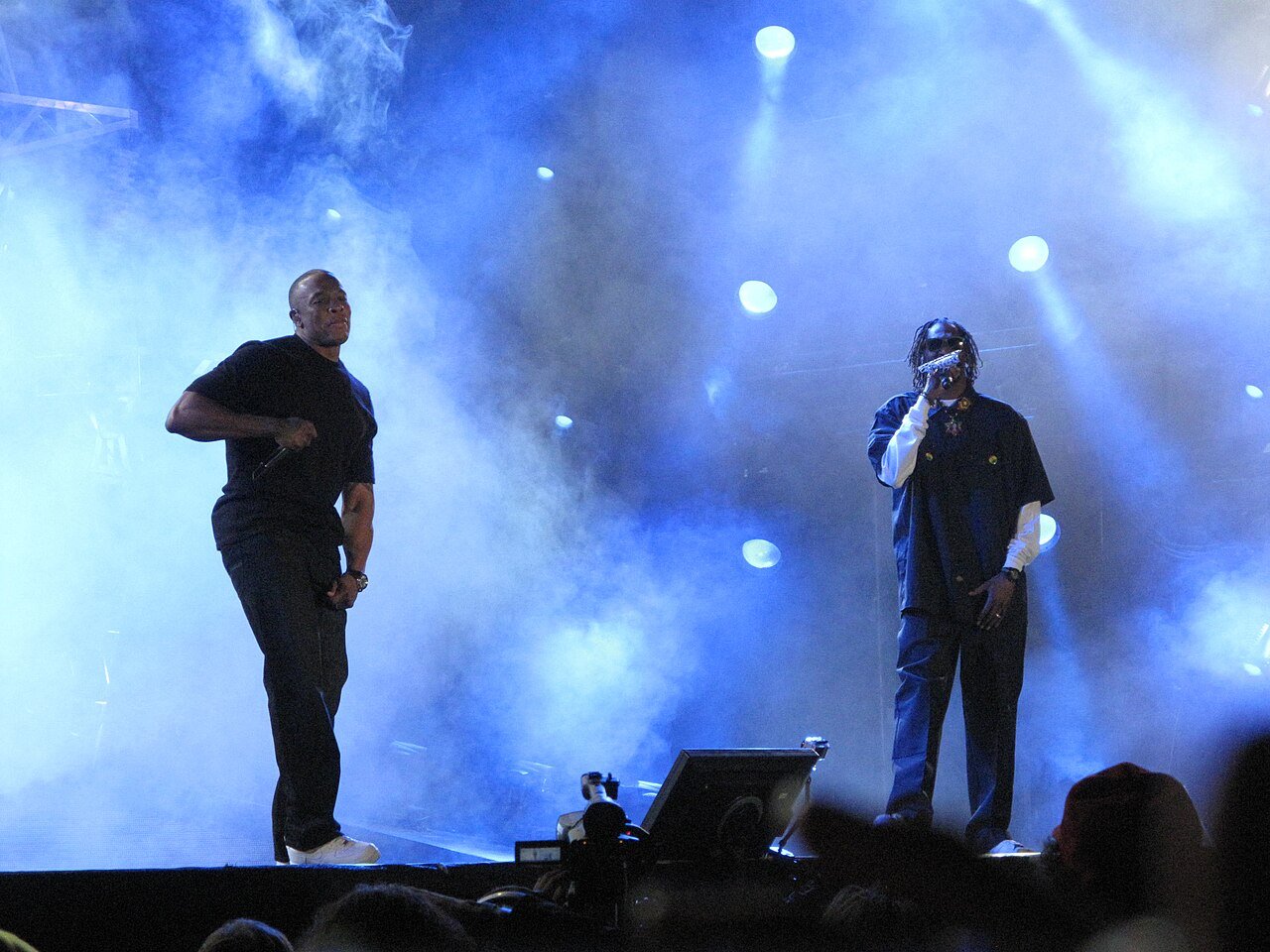
The Chronic, released December 15, 1992, didn’t announce itself modestly. Dre’s debut solo album laid out an entirely new musical template for rap: lush synthesized strings, slow-rolling bass lines borrowed from Parliament-Funkadelic, and a conversational delivery from both Dre and his protégé Calvin Broadus — Snoop Doggy Dogg — that made every verse feel like something you were overhearing rather than being shouted at. The album went triple platinum and launched a sound that record labels on both coasts immediately began trying to imitate.
Doggystyle followed in November 1993. Snoop’s debut sold 800,000 copies in its first week, a record for a debut artist at the time. Death Row was printing money and setting the agenda for what hip-hop could be. The label seemed untouchable. Then, in late 1995, they added the biggest name in the game to their roster, under circumstances that nobody in the industry had ever seen before.
Tupac Shakur had been convicted in 1994 on a sexual assault charge and was serving time at Clinton Correctional Facility in upstate New York when Suge Knight posted his $1.4 million bail. The price was a three-album deal with Death Row. When Tupac walked out in October 1995, he was angry, prolific, and looking for something to prove. The recordings he made over the next year — collected across All Eyez on Me (February 1996) and a catalog of material that would feed posthumous releases for decades — were among the most intense creative output of the entire Golden Age.
Suge Knight’s Empire
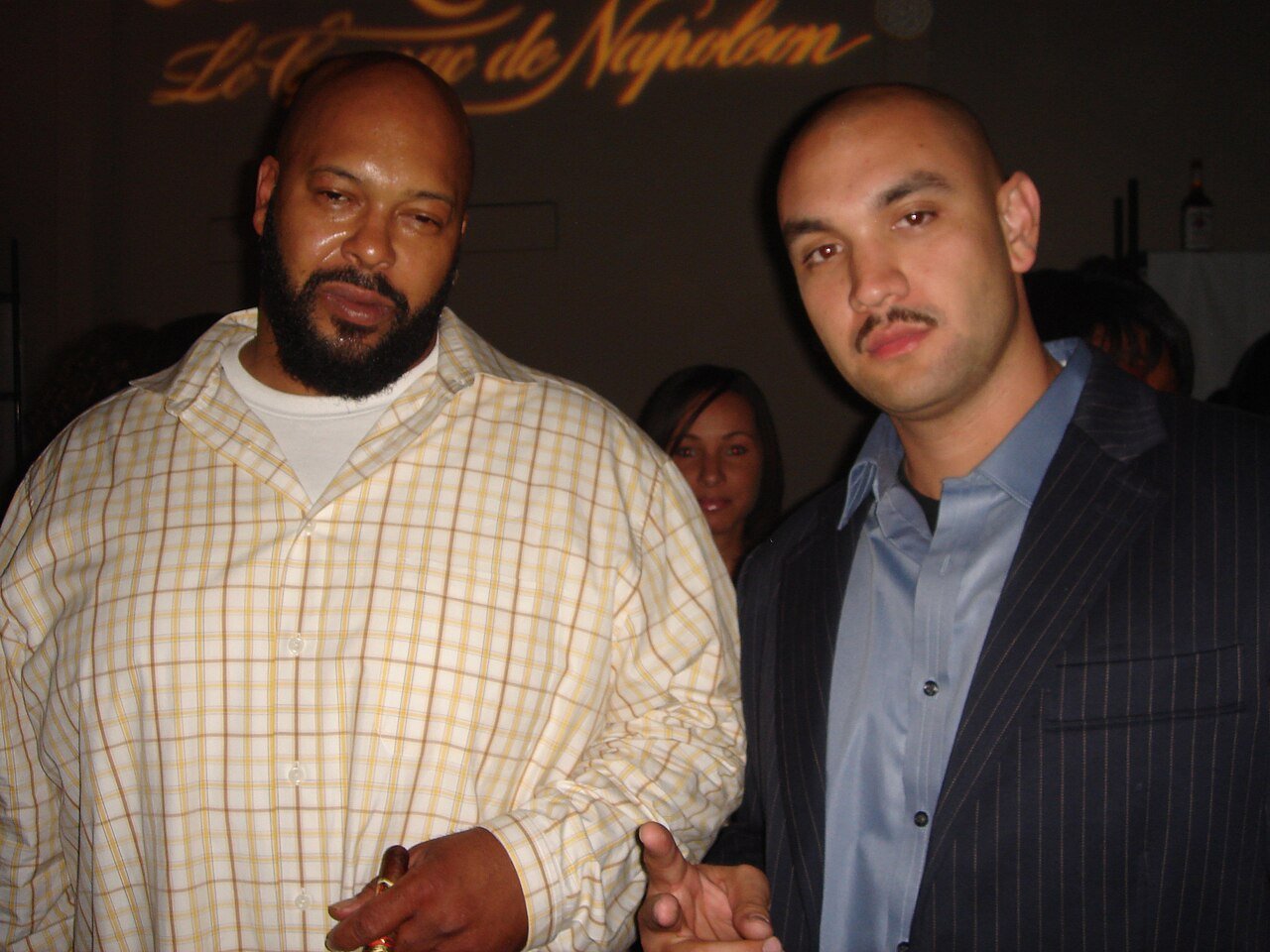
What made Death Row unique — and dangerous — was Suge Knight’s management philosophy. Suge didn’t run the label like a businessman. He ran it like territory. Artists who signed to Death Row found themselves in an ecosystem where creative output was expected constantly and where the boundaries between business and violence were deliberately blurred. Former Death Row engineer Mel-Man described recording sessions that could last three or four days straight. Former employees described an environment where Suge’s word was final on everything from which tracks got released to who was or wasn’t allowed in the building. It was an empire, and empires require enemies to justify their existence. Bad Boy — polished, New York, conspicuously Puff-branded — fit that role perfectly.
Bad Boy’s Hustle and the Sound of Brooklyn
While Death Row was building an empire on the strength of slow-rolling g-funk, Bad Boy was creating something that felt genuinely new for New York. The first Bad Boy single was Craig Mack’s “Flava in Ya Ear” in August 1994, which hit the Top 10. But it was the artist Puff had signed even before the label officially launched who would define everything that followed.
Christopher Wallace — the Notorious B.I.G., Biggie Smalls, Big Poppa — was twenty-one years old when Ready to Die was released in September 1994. The album was a cinematic, first-person account of growing up in Brooklyn’s Bedford-Stuyvesant neighborhood, moving drugs on the corner, and navigating the specific moral calculus of a life the rest of America was only just beginning to understand through music. Biggie’s delivery was technically unlike anything in rap: unhurried, deeply rhythmic, funny and brutal in the same breath. He could make a story about a robbery feel like a scene from a film you couldn’t stop watching. Critics reached for comparisons to literary fiction and came up short. There was no real precedent for what he was doing.
Puff’s New York
What Puff Daddy understood that most producers didn’t was that the package around the music was as important as the music itself. Bad Boy videos were expensive, stylish affairs. Faith Evans, the R&B artist who became Biggie’s wife in 1994, gave the label a legitimate pop-crossover presence. Acts like Total and 112 let Bad Boy straddle the line between street credibility and radio airplay in a way Death Row never quite managed. Puff was building a brand, not just a roster. The rivalry with Death Row — which he’d deny fueling in press interviews while clearly not backing down from it in the recording studio — gave Bad Boy exactly the friction it needed to stay sharp. The music that came out of that friction in 1994 and 1995 is the reason the Golden Age deserves the name.
From Cold War to Open Conflict
The Source Awards moment lit a fuse that took roughly a year to burn down to the powder. What began as competitive positioning hardened into genuine mutual hostility after a November 1994 incident at Quad Recording Studios in Midtown Manhattan, where Tupac was shot five times in the lobby while Biggie and Puff Daddy were recorded as being in the building. Tupac, recovering in his hospital bed, concluded that people connected to Bad Boy had orchestrated the shooting — an accusation Biggie always denied and for which no evidence was ever publicly produced. But Tupac’s conviction on the matter was absolute and permanent.
The response came in June 1996. “Hit ‘Em Up” was a seven-minute demolition of Biggie and Bad Boy that opened with Tupac claiming to have had sex with Faith Evans — Biggie’s wife — and escalated from there into something that made the word “diss track” feel inadequate. It was direct, personal, and deliberately designed to be unanswerable without escalating further. Radio stations played it. Retailers put it in their windows. The cold war between Death Row and Bad Boy had become something else entirely.
The Two Weeks That Ended the Golden Age
September 7, 1996. Tupac attended the Mike Tyson–Bruce Seldon heavyweight fight at the MGM Grand in Las Vegas, ringside with Suge Knight. After the fight, a confrontation in the hotel lobby led to Suge and Tupac’s entourage assaulting a known Crip gang member named Orlando Anderson. That evening, while Suge drove Tupac toward a party on the Strip, a white BMW pulled up alongside the car at a red light on Flamingo Road and opened fire. Tupac was hit four times. He died six days later, on September 13, 1996. He was twenty-five years old.
The hip-hop world went quiet in a way it never had before. Then, six months later, on March 9, 1997, Biggie Smalls was shot and killed in Los Angeles while leaving a Vibe magazine party after the Soul Train Music Awards. He was driving back to his hotel when a dark Chevrolet Impala pulled up alongside his SUV at a red light on Wilshire Boulevard and the driver fired into the vehicle. Biggie was twenty-four years old. His album Life After Death — a double-disc statement of a matured, expansive artistic vision — was released sixteen days after his death. It debuted at number one.
Neither murder has been officially solved. Investigations into both killings remain technically open. The suspects who have been named in books, documentaries, and civil lawsuits over the years were never charged. The cases became the longest-running unsolved homicides in American music history, and the unanswered questions became as much a part of the mythology as the albums themselves.
The World That Remained
Death Row didn’t survive the loss of Tupac. Suge Knight was sentenced to nine years in prison in 1997 on a parole violation connected to the Quad Studios incident, and with him gone and Dre long since departed — he’d left in 1996 to start Aftermath Entertainment — the label collapsed into legal disputes and back-catalog wrangling. Dr. Dre went on to sign Eminem, discover Kendrick Lamar, build Beats Electronics into a billion-dollar consumer brand, and become the most commercially successful figure in hip-hop history. Death Row’s catalog was sold multiple times over the decades before Snoop Dogg acquired it in 2022, completing a strange circle. The label that had defined an era ended up owned by the artist who had been its first superstar.
Bad Boy survived, evolved, and eventually became the story of Puff Daddy’s transformation into one of the most successful figures in music, fashion, and television. The label’s early roster — Biggie, Faith Evans, Mase, 112, Total — defined the sound of late-90s R&B-inflected rap and influenced everything from Kanye West’s production aesthetic to the entire era of shiny-suit music that dominated the late 90s before critics turned on it. But the creative center of Bad Boy died at that stoplight in March 1997. Puff knew it, even if he couldn’t say it publicly.
What Death Row and Bad Boy produced together — not as partners but as adversaries — is the core of what makes the Golden Age of hip-hop irreplaceable. The creative pressure of the rivalry forced both sides to reach. Dre’s production became more orchestral and ambitious. Biggie’s lyricism deepened with each verse. Tupac’s output, always prolific, became something close to feverish in his final year. The albums they made between 1992 and 1997 — The Chronic, Doggystyle, Ready to Die, All Eyez on Me, Life After Death — are still the benchmark against which everything that followed is measured. The tragedy is that the same rivalry that drove the music to its greatest heights was also the thing that burned it down. The Golden Age ended not with a fade but with two gunshots at two different red lights, six months and thirteen hundred miles apart.
Sources
Death Row Records — Wikipedia | Bad Boy Entertainment — Wikipedia | Tupac Shakur — Wikipedia | The Notorious B.I.G. — Wikipedia | Rolling Stone
The Retro Almanac
A monthly roundup of "on this day" highlights from that month, decades back — plus first dibs on new retro merch drops. No spam, just the good stuff.