We Don’t Drink Orange Juice Anymore: How 80s & 90s Breakfast Has Changed Forever
In 1998, Americans drank an estimated 1.5 billion gallons of orange juice. By 2022, that number had collapsed to under 450 million — a drop of nearly 70%, sustained over two decades of quiet consumer abandonment. No single food product in modern history has lost that much of its audience that completely, with that little drama. If you grew up in the 80s or early 90s, orange juice wasn’t a choice. It was the first thing that hit the table, every morning, before anything else touched it.
The Orange Juice Empire Nobody Talks About Losing
The Florida orange juice industry had the most effective food marketing machine of the 20th century. “A day without orange juice is like a day without sunshine” — that line, which the Florida Citrus Commission pushed from 1969 onward, turned juice from a treat into a daily obligation. By the time Reagan was in the White House, skipping OJ felt vaguely irresponsible, like forgetting a vitamin. The Florida Citrus Commission spent tens of millions on advertising through the 70s and 80s, and the product didn’t need to be particularly good. It just needed to be there.
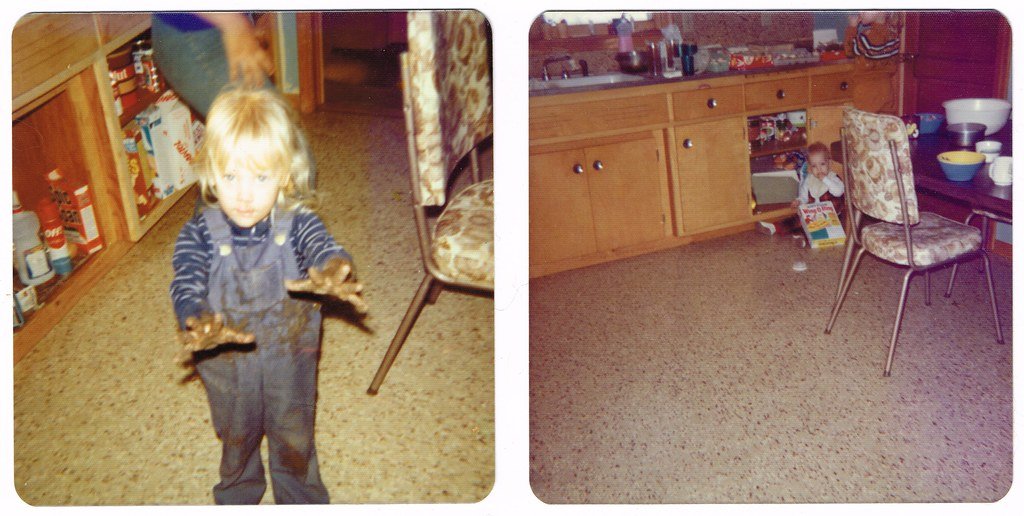
The actual product in most American fridges was Minute Maid or Tropicana concentrate — frozen orange cylinders you mixed with three cans of water. The result was close enough. It had vitamin C. The label said Florida on it somewhere. That was the deal. Fresh-squeezed was for restaurants and hotels, and maybe Sunday mornings if someone in the household had extra time and ambition.
The Retro Almanac
A monthly roundup of "on this day" highlights from that month, decades back — plus first dibs on new retro merch drops. No spam, just the good stuff.
Tang was always operating in a different lane. General Foods invented it in 1957, and it went nowhere until NASA used it on John Glenn’s Friendship 7 mission in 1962. The space connection was rocket fuel for marketing. Suddenly the powdered orange drink in the jar was what astronauts drank, and every 8-year-old in America wanted some. Never mind that the astronauts hadn’t exactly chosen it enthusiastically. The NASA endorsement made the product feel like science fiction you could pour from a spoon.
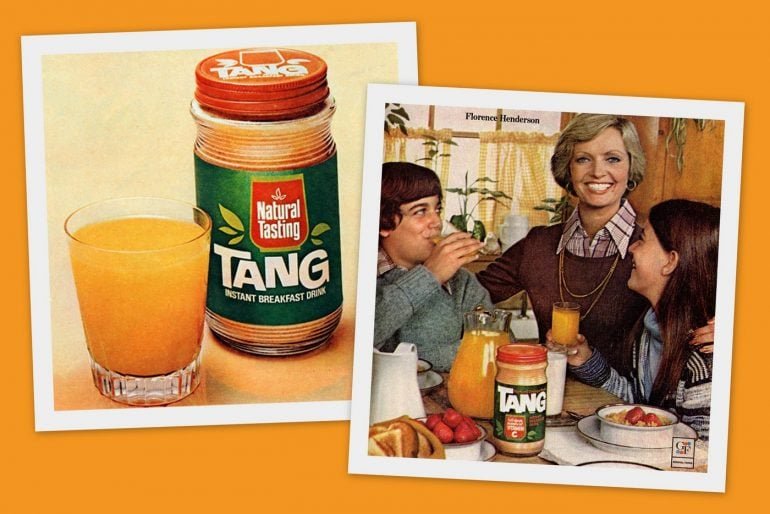
By the mid-80s, Tang had enlisted Florence Henderson — Carol Brady from The Brady Bunch — as their TV spokesperson. The strategy was deliberate: anchor the brand to the most recognizable TV mom in the country, and you anchor it to family mornings. It worked until the 90s, when “natural” and “fresh-squeezed” became the premium markers that could command real shelf prices. Tang’s manufactured cheerfulness became a liability almost overnight. The brand never fully recovered in North America, though it remains enormous across Asia and Latin America — a fact that would surprise anyone who still associates it primarily with Looney Tunes ads.
The Cereal Aisle Was Designed to Own You
Nobody walked into a grocery store in 1986 to buy cereal. Kids walked in and their parents spent twenty minutes in negotiation. The cereal aisle in a mid-80s American supermarket was a 50-foot wall of sugar, color, and cartoon characters engineered specifically to defeat parental resistance. General Mills knew what they were doing. So did Kellogg’s. So did Quaker Oats, which was an unlikely third major player in a children’s breakfast arms race that consumed enormous sums of money and produced some of the most effective advertising in American history.
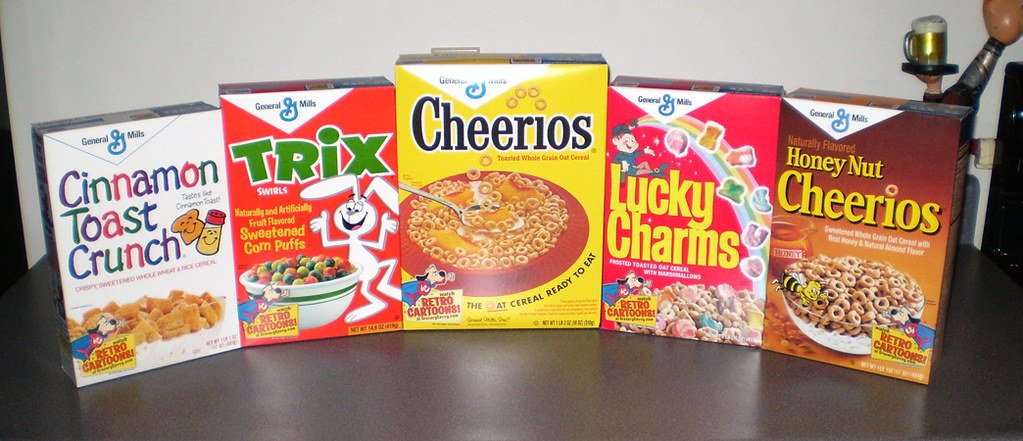
The mascot battle defined what a generation ate. Kellogg’s had Tony the Tiger (Frosted Flakes, 1952) and Toucan Sam (Froot Loops, 1963). General Mills had Count Chocula, the Trix Rabbit, and Sonny the Cuckoo Bird — who was visibly losing his mind over Cocoa Puffs in commercials that ran for forty years without anyone questioning how strange that was. The mascots were as famous as the cartoon characters appearing in the time slots around them, because they were essentially the same thing: animated characters designed to make children feel a specific desire.
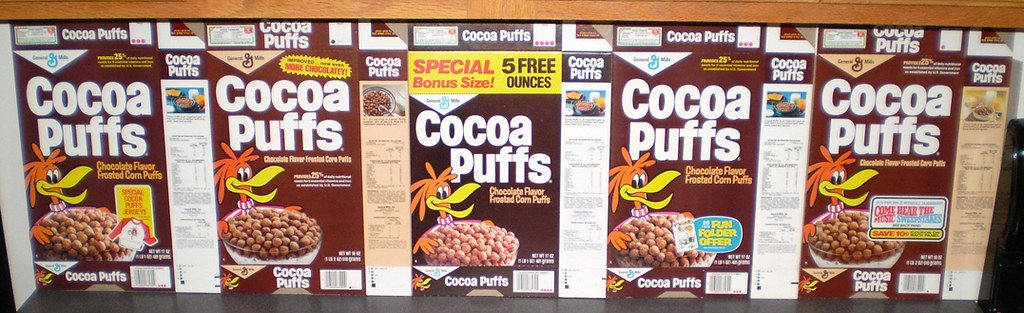
The prize inside the box was a separate economy operating in parallel. Decoder rings. Stickers. Temporary tattoos. Small folded puzzles. Miniature toy figures. The prize was rarely the actual point — it was the pretext. The cereal became the delivery mechanism for a toy you’d persuaded your parents to purchase indirectly, by choosing the box it came in. Most prizes were genuinely bad. None of that mattered to anyone who wanted one.
Character Cereals: When Movies Ate Your Breakfast
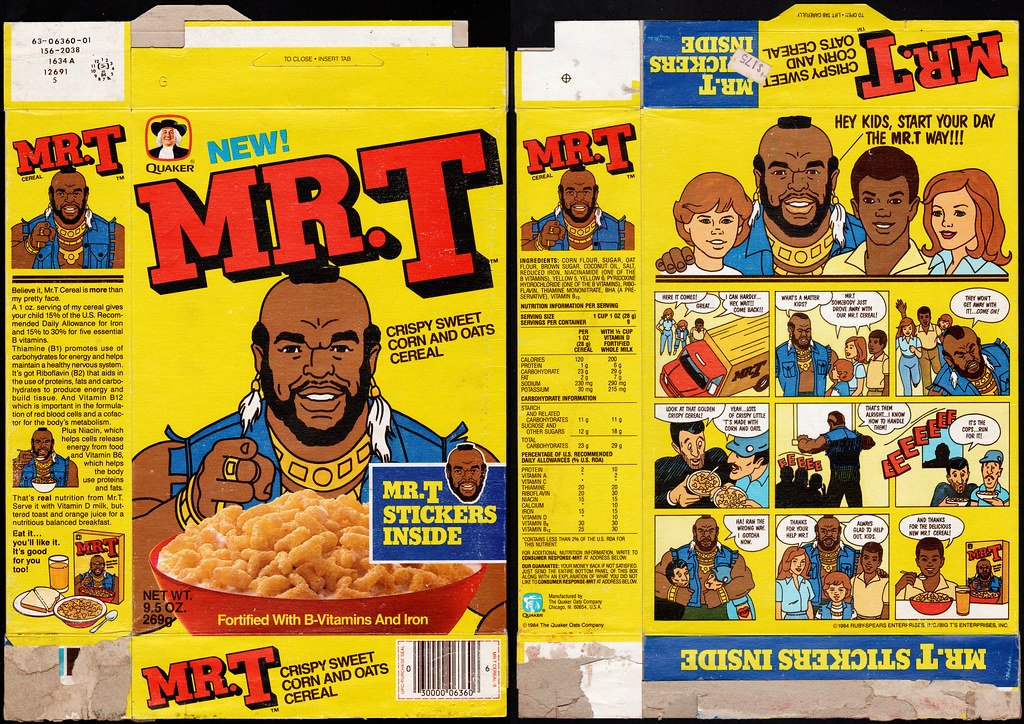
In 1984, Quaker Oats released Mr. T cereal, which was exactly what it sounds like. The pieces were T-shaped corn puffs, vaguely sweet, sold in a box featuring a cartoon version of Mr. T flexing at maximum intensity. It ran until 1993. It appeared, importantly, in Pee-Wee’s Big Adventure. Among the cultural artifacts the 1980s produced, it holds up better than most. The idea of putting a current celebrity’s face on a breakfast cereal was not new, but Mr. T cereal had the advantage of a celebrity who was completely, self-consciously himself at all times.
Every franchise with sufficient child appeal got a cereal in this era. E.T. The Extra-Terrestrial cereal. Ghostbusters cereal. C-3POs by Kellogg’s — shaped like interlocking rings and actually quite good by the technical standards of the category. The Smurfs had one. Gremlins had one. Teenage Mutant Ninja Turtles had one in the early 90s. The licensing logic was direct: kids were already watching these properties on Saturday morning, so you put the property in the bowl. The bowl was always waiting.

The character cereal era peaked around 1985 to 1990 and thinned quickly afterward. Licensing costs climbed. Nutritional skepticism crept into the conversation. The cereals that survived were the ones with mascots strong enough to outlast the franchise that created them — Tony the Tiger outlasted everything, the Trix Rabbit outlasted nearly everything, and Sonny the Cuckoo Bird is, improbably, still going.
Pop-Tarts and the Slow Death of the Sit-Down Morning
Kellogg’s launched Pop-Tarts in 1964, but they didn’t fully take over the American breakfast until the 80s. That’s when the dual-income household became normal rather than exceptional, and the economics of the sit-down morning meal stopped making sense. An adult with a 7:30 commute and a child who needed to be out the door by 8:00 had no real use for a breakfast requiring preparation, attention, or a clean pan.
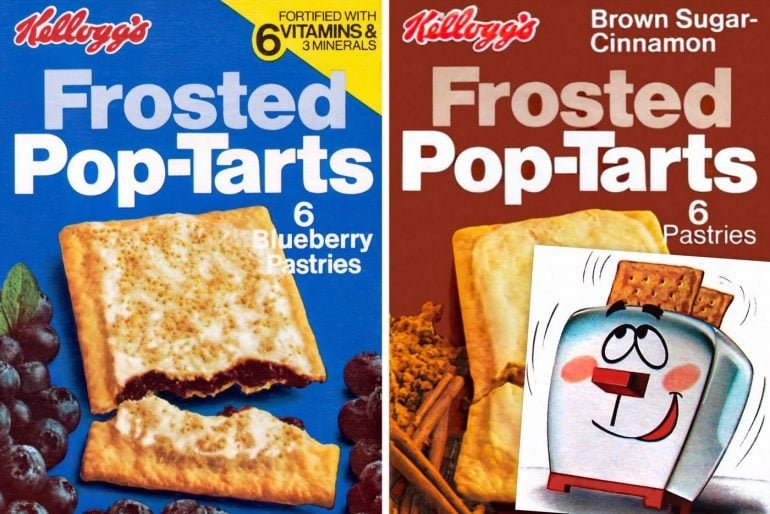
The toasted-versus-straight debate was real and had genuine believers on both sides. Some households toasted. Some ate them cold from the foil wrapper, on the bus, standing at the kitchen counter. Both camps were committed. The flavors grew more confident through the decade — frosted strawberry, frosted blueberry, brown sugar cinnamon, hot fudge sundae — and by the mid-90s, Wild Watermelon Pop-Tarts existed, which suggests either an inspired product team or one that had run out of obvious ideas and was free-wheeling.
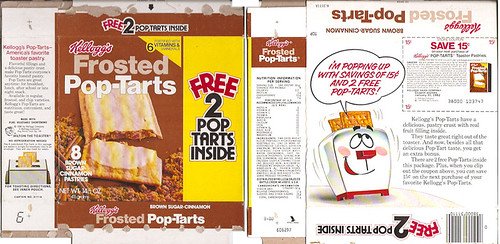
Pillsbury’s Toaster Strudel launched in 1985 and went for the jugular immediately. The commercials were unsubtle: this is what you eat when you’re past Pop-Tarts. Actual pastry. Icing you apply yourself with a small packet. The class positioning was built directly into the marketing. Many 80s households kept both — which may have been the point all along.
Saturday Morning Was a Religion
Between 1980 and 1992, the Saturday morning cartoon block was the most efficient child-targeting advertising system ever assembled. The networks understood that from 7 AM to noon on Saturday, every American child with access to a working television would be in front of it. What they filled those hours with — and who paid to be in the ad breaks — shaped what kids ate, what toys they wanted, and what cereals they’d fight for at the grocery store for the next seven days.
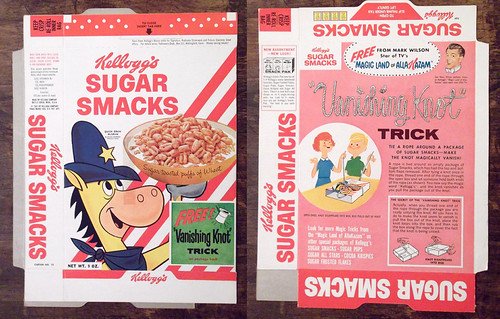
The ritual was consistent across households. Up before parents. Pour cereal from the box you’d negotiated into the cart last week. Sit on the carpet close to the screen. The lineup rotated by season — He-Man, Transformers, The Smurfs, Scooby-Doo, Alvin and the Chipmunks, GI Joe — but cereal commercials ran every third slot regardless, which often led to a second bowl before 9 AM and a mild sugar crash by noon that nobody in the household understood.
The Children’s Television Act of 1990 started the structural unraveling. Networks were required to air educational programming. Fox Kids and Nickelodeon absorbed much of what was left. By 1995, Saturday morning cartoons as a unified cultural institution were effectively over — like realizing a John Hughes film had documented your whole adolescence while you were still living it, you only understood the Saturday morning era properly once it was gone.
The Family Breakfast Table Was Already Disappearing
In Married with Children, Al Bundy’s morning routine was part of the joke from the first season. Nobody in the Bundy household was eating together. That was the whole point — the show was satirizing what the 80s actually looked like for working-class American families, not the version you’d find on a cereal box or in a Tropicana commercial. The gap between the advertising vision of American breakfast and the actual morning in most houses was already enormous.
McDonald’s had the other major influence. The Egg McMuffin launched in 1972 and spent twenty years training a generation to see breakfast as something you could pick up on the way somewhere. Once that idea normalized, the sit-down morning meal started looking like a category error rather than a meal. Carnation Instant Breakfast — a powder stirred into milk, marketed aggressively through the 80s — sold itself as nutrition. What it actually represented was permission to eat breakfast while doing something else.
By 1995, the American morning had fractured into three versions: the Saturday-morning cereal ritual for kids, the grab-and-go weekday solution for adults, and the compensatory weekend production of pancakes or eggs designed to make up for everything skipped the rest of the week. All three still exist. They’ve just been updated — cold brew instead of Tang, granola instead of Cocoa Puffs, avocado toast instead of Pop-Tarts — and the Saturday morning version has been replaced entirely by YouTube and streaming services that run cartoons on demand, without a schedule and without commercial breaks selling cereal to a captive audience.
Why the Morning We Had Then Isn’t Coming Back
The nostalgia for 80s and 90s breakfast isn’t really about the food. Nobody genuinely misses the from-concentrate orange juice or the 40% sugar content in a bowl of Cocoa Puffs. The adults who ate that as kids are now reading nutrition labels and paying premium prices for things that weren’t available in a standard 1988 grocery store. The nostalgia is for what the food was attached to: a block of time that didn’t belong to productivity or obligation.
Saturday morning didn’t have notifications. The orange juice on the table meant someone had gone to the store, had thought ahead, had planned what the family would eat. Even the sugary cereal represented a genuine negotiation — a small concession that made breakfast feel like something you’d won. None of that structure exists in the same form now, and no amount of nostalgic cereal reissues at the grocery store is going to reconstruct it.
Tang and Saturday morning aren’t coming back as a package deal. But the memory of pouring a bowl at 6 AM with the volume low so nobody woke up — that holds up. That was actually something.
Sources
- Statista — U.S. Per Capita Orange Juice Consumption — Long-term data on the collapse of OJ consumption in America
- Wikipedia — Tang (drink) — History of Tang’s NASA connection and General Foods development
- Wikipedia — Mr. T Cereal — Quaker Oats Mr. T cereal product history 1984–1993
- PBS Frontline — The Merchants of Cool: Children’s TV History — Regulatory and market forces that transformed Saturday morning programming
The Retro Almanac
A monthly roundup of "on this day" highlights from that month, decades back — plus first dibs on new retro merch drops. No spam, just the good stuff.