Wu-Tang Is Forever: How a Forgotten Borough Produced Hip-Hop’s Greatest Collective
Staten Island was always the afterthought. While the Bronx claimed the birth of hip-hop and Brooklyn and Queens had already put their MCs on the map by the late 1980s, the smallest of New York City’s five boroughs barely registered on rap’s radar as the Golden Age of hip-hop blossomed in the early 1990s. Then nine young men — connected by blood, neighborhood, and a shared obsession with kung fu films — decided to change that. What they built between 1992 and 1997 wasn’t just an album or a group. It was a movement, a philosophy, and a business model that the rest of the music industry is still trying to copy.
The Forgotten Borough Fights Back
New York in the early 1990s was a pressure cooker. The crack epidemic had reshaped entire neighborhoods. The city’s finances, after near-bankruptcy in the 1970s, had only partially recovered. Unemployment in the outer boroughs hit young Black men disproportionately hard. Hip-hop had emerged from exactly this kind of environment — in the Bronx two decades earlier, economic devastation had produced block parties, breakdancing, and the first MC battles. Staten Island’s particular neglect, both by the city and by the rap industry, created a specific hunger that one man understood how to channel.
RZA, born Robert Diggs, had been trying to break into the industry since the late 1980s as part of a Queens-based group called All in Together Now alongside his cousins GZA and Ol’ Dirty Bastard. A failed solo deal with Tommy Boy Records followed — enough rejection to clarify exactly what the industry was and how it operated. He brought that hard-earned perspective back to Staten Island, where eight more MCs were waiting: Gary Grice (GZA/The Genius), Russell Jones (Ol’ Dirty Bastard), Clifford Smith (Method Man), Corey Woods (Raekwon), Dennis Coles (Ghostface Killah), Jason Hunter (Inspectah Deck), Lamont Hawkins (U-God), and Elgin Turner (Masta Killa).
The Retro Almanac
A monthly roundup of "on this day" highlights from that month, decades back — plus first dibs on new retro merch drops. No spam, just the good stuff.
Nine MCs. One producer. One audacious plan to take over a borough that rap had forgotten — and from there, the world.
The Five-Year Plan That Changed Everything
RZA’s vision was precise enough to sound delusional: he would control all Wu-Tang production exclusively for five years. Every beat, every sample, every sonic decision on anything carrying the Wu-Tang name would run through him. That creative lock was the foundation. But the truly radical move was buried in the fine print of their deal with Loud Records, signed in 1993.
Wu-Tang Clan would sign as a group — but each member retained the right to sign individual solo deals with any other label. In an era when record contracts treated artists as owned property, this was revolutionary. It meant Def Jam, Epic, Elektra, and Priority Records would all compete to sign Wu-Tang members, spreading the collective’s sound and logo across the entire industry simultaneously. RZA had figured out how to use the major label system against itself.
He also built something no music executive could quantify: a mythology. Wu-Tang drew from Five-Percent Nation philosophy, chess terminology, and dozens of Shaw Brothers kung fu films watched in Staten Island basements and rented on VHS from corner stores. Every borough, every crew member received a name from this private universe. Staten Island became Shaolin. Brooklyn became Medina. Manhattan became Gotham. The collective invented a language that outsiders could learn but never fully own — which made even partial membership in it deeply desirable.

What 36 Chambers Actually Sounded Like
Enter the Wu-Tang (36 Chambers) arrived November 9, 1993. Recorded for a reported $36,000, it sounded like nothing else on radio — and that was precisely the point. RZA’s production favored dusty soul samples sliced into jagged, off-kilter loops, eerie horror-film strings, and a low-end boom that felt like it was coming through a blown speaker at maximum volume. The title referenced a Shaw Brothers martial arts classic of the same name, and the album carried that film’s grimy, hand-to-hand energy.
Nine distinct voices competed for attention across every track, and somehow the chaos cohered. Method Man’s melodic, charismatic delivery balanced GZA’s chess-master economy of words. Ol’ Dirty Bastard brought a freeform wildness that defied any existing category. Raekwon and Ghostface Killah traded crime-narrative verses dense with street-level specificity. “C.R.E.A.M.” — Cash Rules Everything Around Me — became the crossover hit that radio couldn’t ignore, its haunting piano loop carrying one of the decade’s most honest accounts of growing up broke in New York. Kids in the suburbs bought it. Kids in the projects already knew every word.
Rolling Stone would eventually rank the album among the greatest records ever made. At the time, the music press didn’t quite know how to process it. The Grammy committees looked the other way. Radio played it anyway.

The Blueprint Every Collective Since Has Borrowed
What made 36 Chambers so durable wasn’t just what it contained — it was the template it created. RZA proved that lo-fi could be an aesthetic choice rather than a budgetary limitation. He showed that a nine-person ensemble could function as a coherent artistic statement rather than a sprawling mess. He demonstrated that rap lyrics could carry the density of literary fiction without sacrificing street-level credibility. Every hip-hop collective that followed — from Odd Future to Griselda Records — owes something structural to what Wu-Tang solved in 1993.
The Solo Years and the Empire’s Expansion
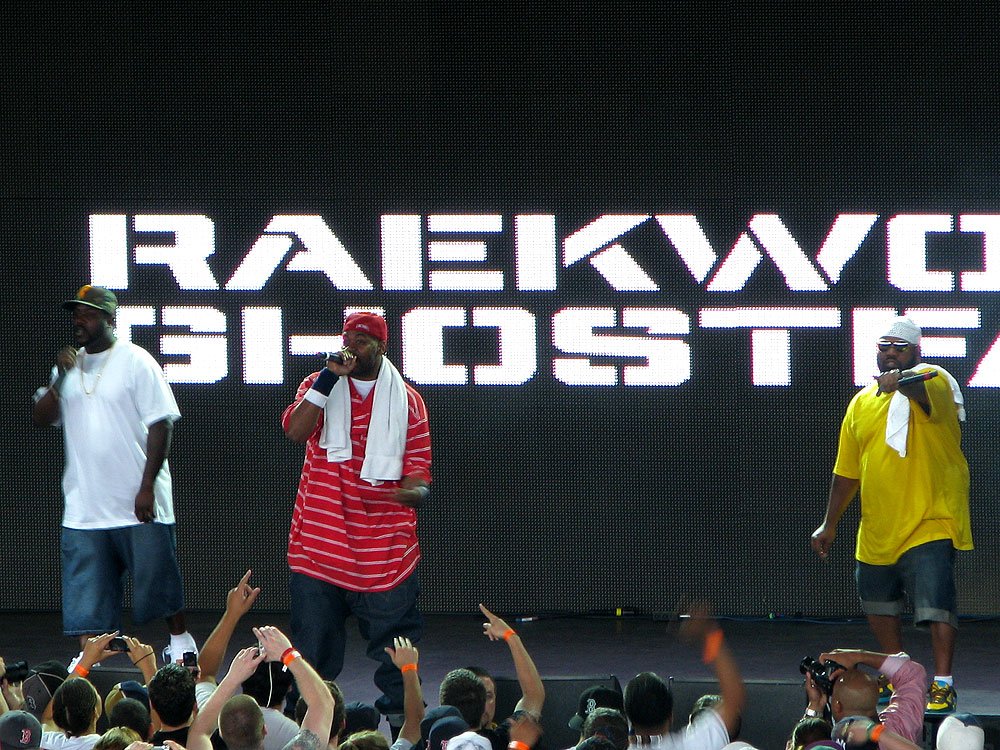
Between 1994 and 1996, the label clause kicked in and the Wu-Tang universe expanded at speed. Method Man signed to Def Jam and released Tical in 1994 — it went platinum on the strength of his raw presence and RZA’s increasingly experimental production. Raekwon’s Only Built 4 Cuban Linx… (1995) was a dense Mafioso crime narrative that hip-hop critics still rank among the greatest albums ever recorded. GZA’s Liquid Swords, also from 1995, was colder and more cerebral — a chess-obsessed meditation on survival that many consider the artistic high-water mark of the entire Wu-Tang catalogue.
Ol’ Dirty Bastard’s Return to the 36 Chambers: The Dirty Version (1995) introduced mainstream audiences to his genuinely singular personality. Ghostface Killah’s Ironman (1996) brought emotional texture to the Mafioso blueprint Raekwon had established. Inspectah Deck contributed verses to nearly every project without releasing his own debut until 1999, quietly cementing a reputation as one of the era’s most technically precise writers.

Each album was its own distinct world, but each carried the Wu-Tang logo, the shared mythology, the production fingerprints. Fans who discovered one member inevitably found the others — the label clause wasn’t just a business strategy, it was a distribution system for a shared cultural identity. By 1997, Wu-Tang had achieved something no Golden Age hip-hop collective had managed before: a legitimate genre within a genre, complete with its own lore, its own slang, and a sonic identity that listeners could identify within seconds of the first bar.
Wu-Tang Forever and the Mainstream Moment
Wu-Tang Forever, released June 3, 1997, debuted at number one on the Billboard 200 and sold over 600,000 copies in its first week. It went double platinum. For a collective that had started with a $36,000 recording budget and a deal most industry insiders viewed as a novelty, it was a staggering commercial statement.
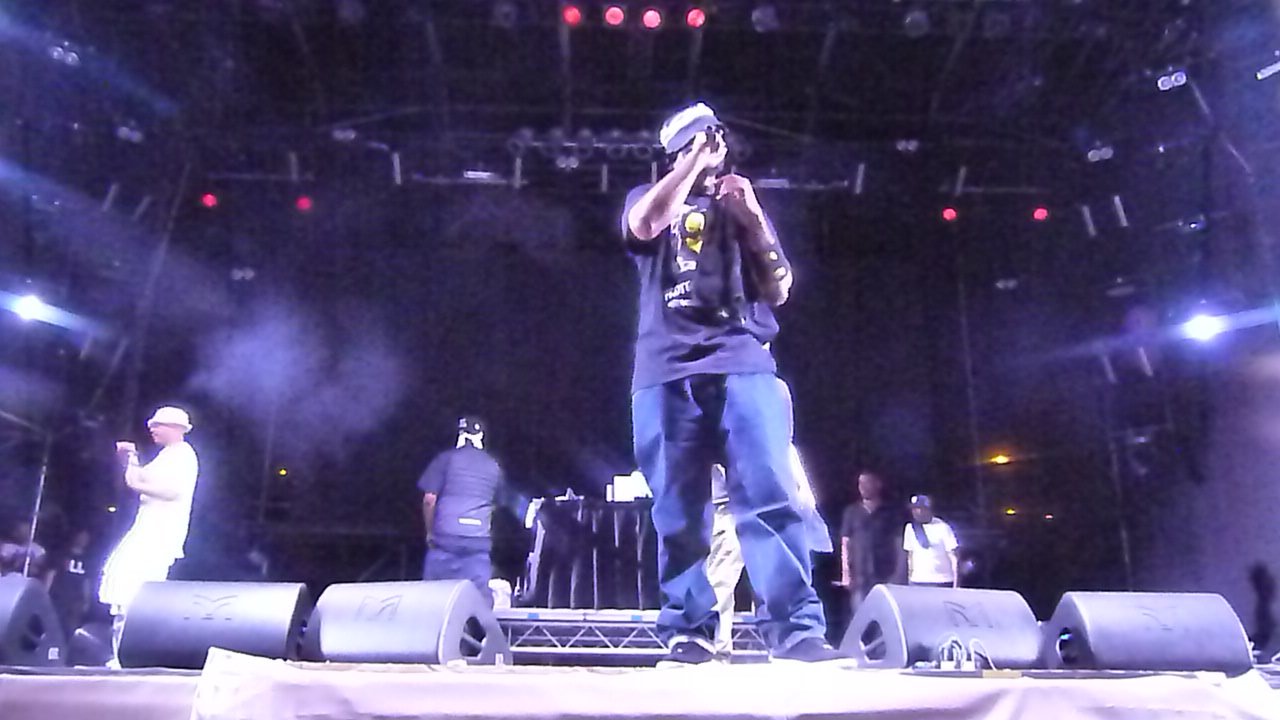
The album itself divided critics — sprawling and demanding at 27 tracks, it was more monument than pop record. That was the intent. Wu-Tang Forever rejected the commercial polish that was overtaking late-1990s rap radio. It doubled down on density and darkness at the exact moment the industry was pivoting toward radio-ready hooks. The audience that had tracked every solo album rewarded the stubbornness. The album refused to chase trends, and decades later, the trends caught up to it.
What Wu-Tang Left Behind
The Golden Age of hip-hop produced no shortage of masterworks — Illmatic, The Chronic, Ready to Die, ATLiens — but Wu-Tang Clan did something most of their contemporaries didn’t manage: they built an institution. The double-W logo, the kung fu mythology, the private language of Shaolin and chambers became a cultural shorthand that outlasted the decade, the century, and the careers of most of their peers.
The business model RZA engineered in 1993 looks prescient from a distance of thirty years. The solo deal clause was a precursor to the kind of artist-controlled, diversified revenue structures that modern musicians spend millions in legal fees trying to establish. RZA figured it out by necessity, not by business school, in a Staten Island basement before most people in the music industry knew such a thing was possible. Producers from Kanye West to Flying Lotus have cited RZA’s sample-based aesthetic as a formative influence. His approach — treating old soul and funk records as raw emotional material for new contexts — became a cornerstone of how hip-hop production would evolve through the 2000s and beyond.
Ol’ Dirty Bastard’s death in 2004 left a hole in the collective that nothing could fill, a reminder that the Golden Age wasn’t only about music — it was about specific human beings who happened to find each other at a specific moment in a specific overlooked place. The remaining members have regrouped and recorded in various configurations since, including the legally contested Once Upon a Time in Shaolin (2015), a single-copy album sold as a conceptual art piece that generated international headlines and ended up in federal court. They remain a cultural force precisely because they never settled into nostalgia. They kept pushing at what hip-hop could mean, what it could own, what it could become.
Staten Island was always the afterthought. Until nine people from there decided it wasn’t.
Sources
Wikipedia — Wu-Tang Clan | Wikipedia — Enter the Wu-Tang (36 Chambers) | Rolling Stone
The Retro Almanac
A monthly roundup of "on this day" highlights from that month, decades back — plus first dibs on new retro merch drops. No spam, just the good stuff.