On This Day: September 30, 1982 — Cheers Premieres on NBC
On September 30, 1982, NBC burned off a new half-hour sitcom in its Thursday night lineup. It had no stars, no big-name creator attached to hype it, and a premise that sounded almost too simple: a bar in Boston, and the people who never seemed to leave it. The show was called Cheers, and by the end of its first, quietly disastrous season, it would rank dead last in the Nielsen ratings among all prime-time programs on network television.
It would also go on to run for eleven seasons, win 28 Emmy Awards, launch the career of Ted Danson, make Kelsey Grammer’s Frasier Crane famous enough to earn his own spinoff, and become one of the most beloved sitcoms in American television history. The gap between that first Thursday night and everything that followed is one of the great underdog stories in TV.
A Bar, Not a Sitcom Formula
The show was the creation of brothers Glen and Les Charles, working with director James Burrows. All three had cut their teeth writing and directing on Taxi, and when that show wound down they wanted to build something different from the workplace comedies that dominated the era. Instead of an office or a garage, they picked a neighborhood bar — a “third place” where regulars showed up not because they had to, but because everybody there already knew their name.
The Retro Almanac
A monthly roundup of "on this day" highlights from that month, decades back — plus first dibs on new retro merch drops. No spam, just the good stuff.
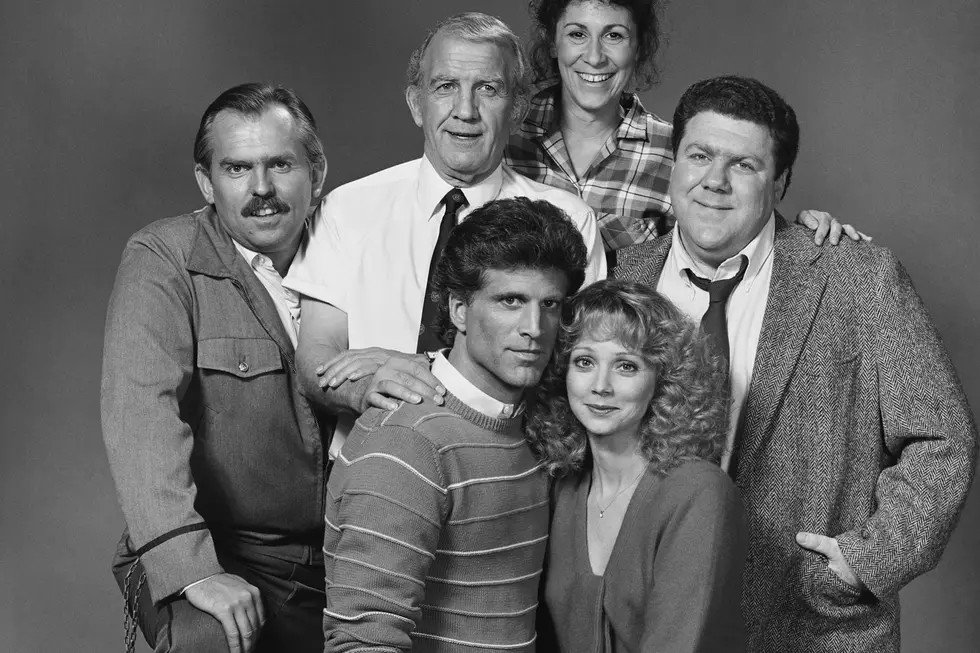
Casting was the hardest part. The Charles brothers and Burrows auditioned three different pairs of actors to play Sam Malone, the former Red Sox relief pitcher turned recovering-alcoholic bar owner, and Diane Chambers, the pretentious graduate student who gets stranded at his bar on her wedding day. Ted Danson and Shelley Long weren’t the obvious first choice, but the chemistry between them in the room was undeniable, and the roles were theirs.
The supporting cast filled out around them: Rhea Perlman as sharp-tongued waitress Carla Tortelli, Nicholas Colasanto as gentle, addled bartender Coach Ernie Pantusso, and George Wendt as barfly Norm Peterson. John Ratzenberger wasn’t even supposed to be in the show — he auditioned for Cliff Clavin, the blowhard mailman, after failing to land the part of Norm, and talked the producers into writing the character in permanently after his read-through made the room laugh.
“Give Me a Ring Sometime”
The pilot episode, titled “Give Me a Ring Sometime,” set up the whole premise in one afternoon at the bar. Diane’s fiancé abandons her at Cheers on the way to their wedding, leaving her broke and humiliated with nowhere else to go. Sam, amused and a little smitten, offers her a job waiting tables while she figures out her next move — and the will-they-won’t-they tension between the buttoned-up intellectual and the ex-jock bartender became the engine of the show’s first five seasons.
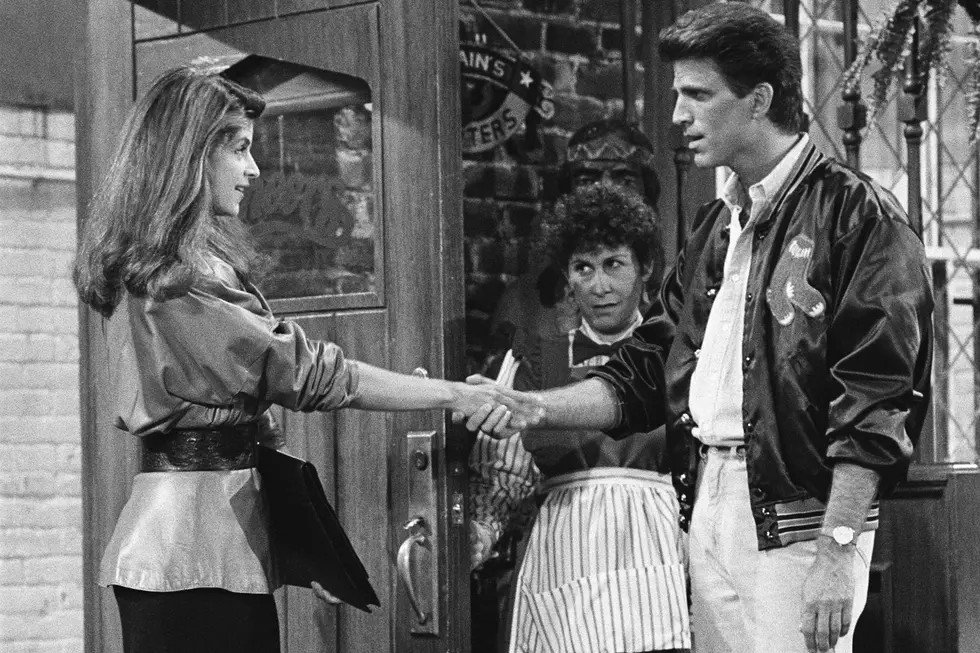
It’s easy to forget now, watching the pilot with the hindsight of eleven seasons and a cultural legacy behind it, how unremarkable that first broadcast actually looked to viewers in September 1982. There was no viral buzz, no advance word of mouth — just a strange little show about barflies that most of the country skipped in favor of whatever was on the other channel. By the time the numbers came in for the 1982-83 season, Cheers had finished 77th out of 77 shows ranked. Last place. NBC almost pulled the plug.
What saved it was critical support inside the network and a run of strong reviews. The Charles brothers and Burrows won the 1983 Emmy for Outstanding Writing in a Comedy Series for that very first episode — proof, even while the ratings were dismal, that the show was doing something genuinely sharp. NBC gave it a second season. Word of mouth slowly built. By its third year, Cheers was a top-20 hit, and it stayed there for most of the next decade.

The Real Bar Behind the Show
Almost every scene inside Cheers was shot on a Paramount soundstage in Los Angeles, but the exterior shot audiences saw in every episode’s opening and closing was real: the Bull & Finch Pub, a working bar in the basement of the Hampshire House at 84 Beacon Street in Boston’s Beacon Hill neighborhood, directly across from the Public Garden. The Bull & Finch had been open since 1969 as a quiet, low-key neighborhood spot before a location scout picked its facade for the show in 1981.
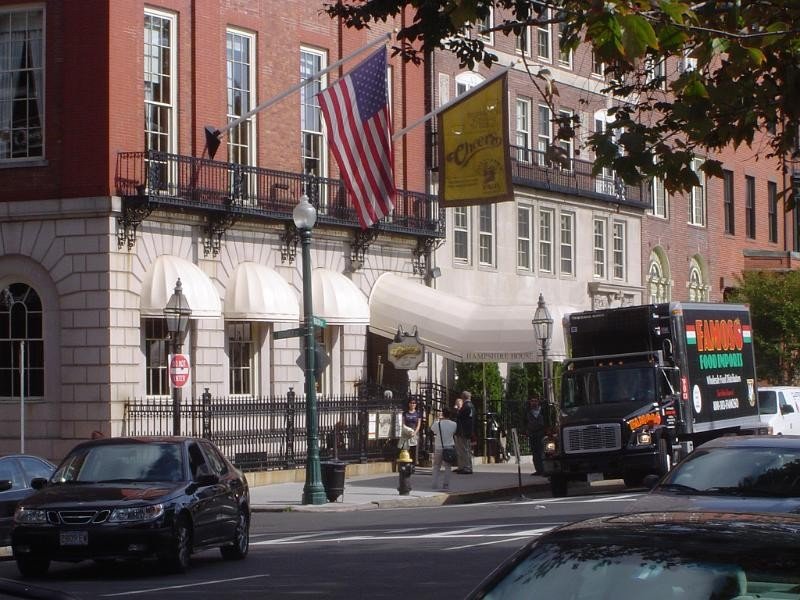
Overnight, an anonymous Boston watering hole became a tourist landmark. Fans flew in from around the world just to stand outside the white-awninged storefront they recognized from the opening credits, even though the bar inside looked nothing like the soundstage set. The pub eventually leaned into its fame, building an interior modeled after the TV set and, in 2002, officially changing its name to Cheers Beacon Hill. It’s still open today, still pouring drinks under the sign that made it famous.
Love the retro era? Browse our shop for vintage finds, retro clothing, and 80s/90s nostalgia gear.
The Theme Song Everyone Knows
Gary Portnoy and Judy Hart Angelo wrote “Where Everybody Knows Your Name” on spec after the Charles brothers rejected an earlier attempt — Portnoy has said the network wanted something that sounded less like a bar song and more like an anthem about belonging. It was recorded on August 13, 1982, just weeks before the Cheers premiere, and released as a single in January 1983. The song never charted especially high, but it outlasted almost every hit from that year: it’s been used in Cheers reruns, tribute specials, and countless “greatest TV themes” lists for over four decades.
From Last Place to Legacy
The turnaround wasn’t instant. NBC’s own research in late 1982 reportedly showed Cheers testing poorly with focus groups who found the characters unlikeable — a bar full of drinkers, an alcoholic lead, and a heroine viewers found insufferable. What kept the show alive was Thursday night scheduling next to established hits and a network president, Brandon Tartikoff, willing to bet on quality over overnight numbers. That patience is largely extinct in modern television, where a show with Cheers’s first-season ratings would be canceled within a month.
By the mid-1980s the show was a genuine cultural fixture, regularly finishing in Nielsen’s top five and sweeping the Emmys for Outstanding Comedy Series four times across its run. Kelsey Grammer’s Frasier Crane, introduced in season three as a short-term foil for the Sam-and-Diane storyline, tested so well with audiences that the producers kept extending his contract until “short-term” became eight seasons on Cheers and eleven more on his own spinoff, Frasier — one of the most successful character extensions in TV history.
Where the Cast Went Next
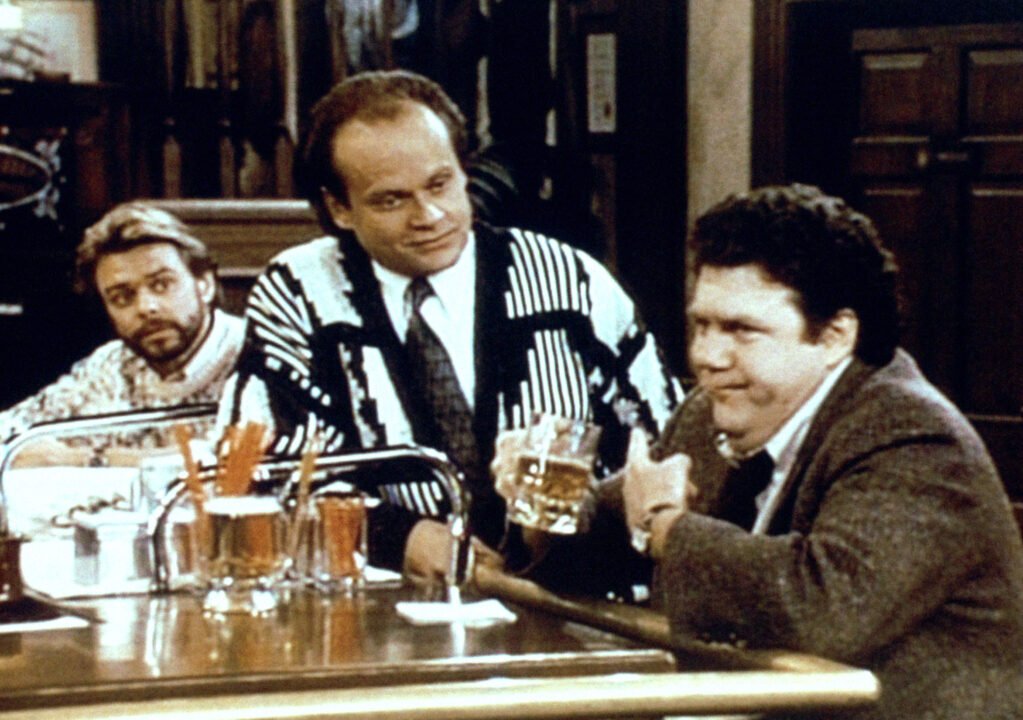
Nicholas Colasanto died of a heart attack in February 1985, partway through season three, and the writers wrote Coach’s death into the show rather than recast the role. His replacement behind the bar was a 23-year-old unknown named Woody Harrelson, cast as bartender Woody Boyd — a part that launched Harrelson into a film career that would eventually include Natural Born Killers, White Men Can’t Jump, and an Oscar nomination decades later. Shelley Long left after season five to pursue movies, and Kirstie Alley stepped in as no-nonsense bar manager Rebecca Howe, a role that won her an Emmy in 1991 before she went on to headline Look Who’s Talking and its sequels.
Ted Danson stayed for all eleven seasons and later carried the NBC sitcom Becker and, much later, The Good Place. Rhea Perlman’s Carla Tortelli appeared in more episodes than any character besides Sam. George Wendt’s Norm Peterson became so identified with his barstool entrance line — the whole bar shouting “NORM!” — that it’s still one of the most-referenced sitcom running gags of all time. When Wendt died in 2025, tribute coverage of Cheers singled out that entrance as the moment most viewers remembered him for.
Eleven Seasons, One Ending
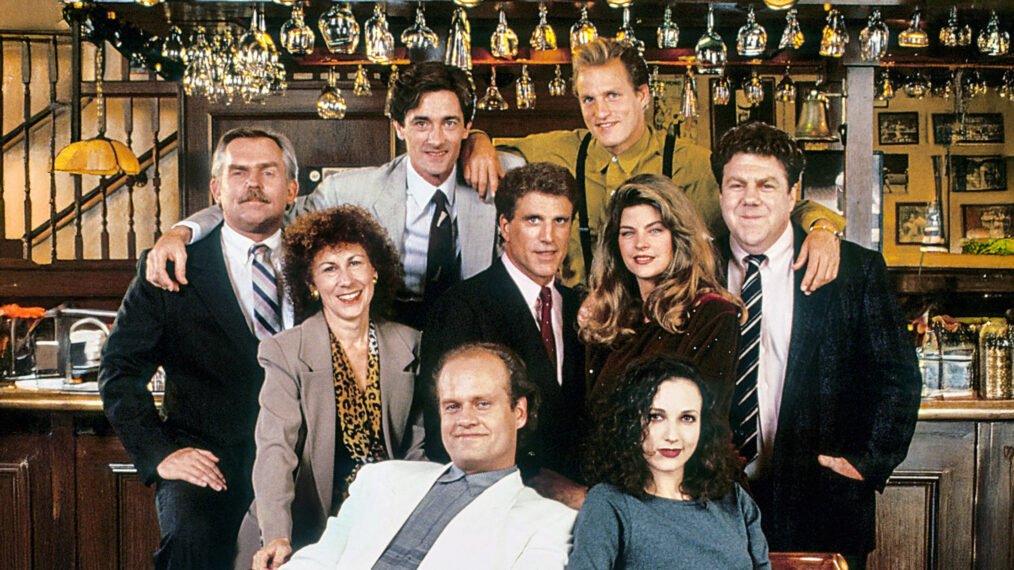
The cast changed over the years — Colasanto died during season three and was replaced by a young unknown named Woody Harrelson; Shelley Long left after season five and was replaced by Kirstie Alley as bar manager Rebecca Howe; Kelsey Grammer’s psychiatrist Frasier Crane, introduced as a season-three foil for the Sam-and-Diane storyline, stuck around long enough to headline his own spinoff for another eleven years. Through all of it, the bar itself stayed the constant, the one set where, as the theme song promised, everybody knew your name.
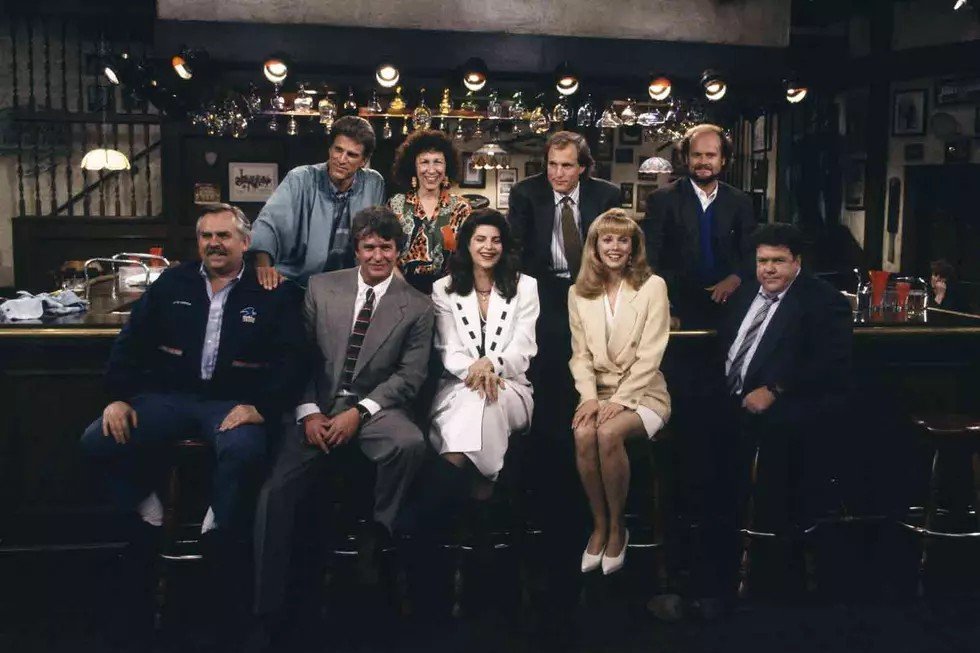
By the time the series finale, “One for the Road,” aired on May 20, 1993, Cheers was pulling in over 80 million viewers across roughly 42 million households — the second-highest-rated series finale of all time, behind only M*A*S*H. It’s one of the sharpest reminders in TV history that a show’s opening night rarely tells you anything about its ending. The Bull & Finch is still pouring drinks in Boston, the theme song still plays on classic-TV channels, and a sitcom that finished 77th out of 77 shows in its debut season is now permanently in the conversation about the best in the genre.
Sources
- Cheers — Wikipedia — overview of the show’s premiere, cast changes, ratings history, and finale.
- Cheers Beacon Hill — Wikipedia — history of the Bull & Finch Pub and its 2002 rename.
- “Where Everybody Knows Your Name” — Wikipedia — writing and recording history of the Cheers theme song.
- TODAY — Cheers cast remembers the show 30 years after its final episode — cast reflections and finale-era photos.
- REMIND Magazine — Things you never knew about the Cheers finale — production details on the show’s later seasons and finale.
The Retro Almanac
A monthly roundup of "on this day" highlights from that month, decades back — plus first dibs on new retro merch drops. No spam, just the good stuff.