The Rolling Stones 1981 American Tour: The Concert Juggernaut That Changed Rock History
When the Rolling Stones rolled into Philadelphia’s John F. Kennedy Stadium on September 25, 1981, they weren’t just launching a concert tour — they were detonating a cultural bomb that would reshape the entire music industry. Nearly four million Americans had mailed in postcards just for the chance to buy tickets. Ninety thousand fans crammed into JFK Stadium for the opening night alone, and another 90,000 the following evening. The Rolling Stones 1981 tour wasn’t merely the biggest rock tour of its year. It was, at that point in history, the most ambitious, highest-grossing, and most attended concert tour ever mounted.
By the time the final note rang out at the Hampton Coliseum on December 19, 1981, the Stones had performed 50 shows, drawn roughly 2.5 million fans, grossed $52 million in ticket sales (equivalent to over $184 million today), and permanently changed the economics and spectacle of live rock music. This is the full story of the tour that made everything bigger.
Background: Where the Stones Stood in 1981
The Rolling Stones entered 1981 in a curious position. On paper, they were the world’s greatest rock and roll band — a title they had held, debated, and arguably earned since the mid-1960s. But behind the scenes, the band was fractured. Mick Jagger and Keith Richards had been barely speaking for stretches of the late 1970s. Richards’ heroin addiction, which had reached its nadir with a 1977 drug arrest in Toronto that nearly ended the band entirely, had cast a long shadow over everything.
The Retro Almanac
A monthly roundup of "on this day" highlights from that month, decades back — plus first dibs on new retro merch drops. No spam, just the good stuff.
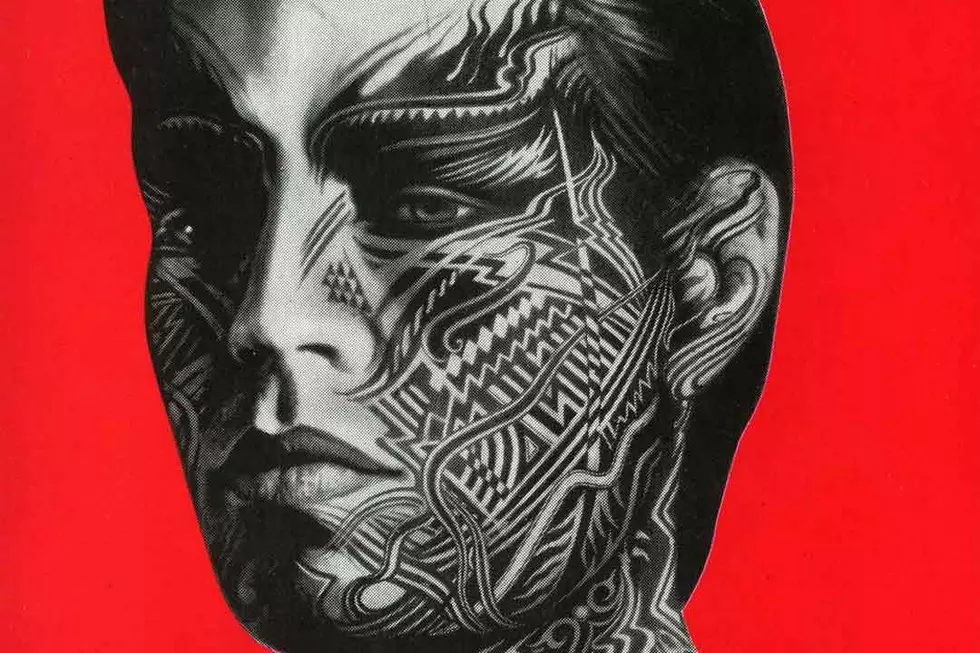
The 1981 tour’s catalyst was the album Tattoo You, released in August 1981. Ironically, this album that would drive the band’s triumphant return was built almost entirely from studio outtakes — rejected sessions dating back a decade. Associate producer Chris Kimsey later explained the album’s origins bluntly: “Tattoo You really came about because Mick and Keith were going through a period of not getting on. There was a need to have an album out, and I told everyone I could make an album from what I knew was still there.”
The result was a record that defied its patchwork origins. Tattoo You reached number one in the United States for nine consecutive weeks and was certified four-times platinum. Its opening track, “Start Me Up” — a relentless, churning riff that had been sitting unused since the 1970s — became one of the defining rock songs of the decade, hitting number two on the Billboard Hot 100. The album gave the Stones exactly what they needed: a reason to tour, and a new anthem to open with.
The Jovan Perfume Sponsorship: Rock’s Controversial Corporate Milestone
If one business decision defined the 1981 tour’s lasting legacy beyond the music, it was the partnership with Jovan Musk cologne. For $1 million, the American fragrance company placed its brand name on Rolling Stones concert tickets — becoming the first major corporation to sponsor a rock and roll tour at that scale.
The reaction was immediate and polarized. Business media fixated on the apparent absurdity: Jovan Musk was a brand built on images of romance and pleasant scent. The Rolling Stones were rock’s ultimate bad boys, the band that had sung “Street Fighting Man,” that had weathered Altamont, that carried decades of debauchery and controversy. How could these two worlds possibly coexist?
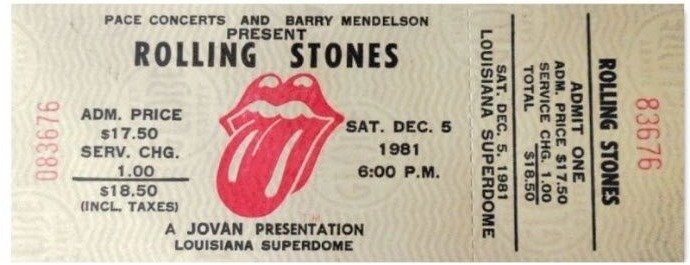
The answer turned out to be: quite profitably. The Stones, keenly aware of what was at stake, behaved with unusual professionalism throughout the tour. There was notably less backstage chaos than on previous tours — in no small part because Richards had turned a corner on his addiction. The Jovan deal worked, the tour was a success, and the corporate music sponsorship was born. Within a few years, brands from Budweiser to Pepsi would be plastering their logos across rock and roll, fundamentally transforming how tours were financed and marketed.
Critics who mourned the “selling out” of rock culture had a point. But the economics were undeniable: Jovan’s million dollars helped make the tour viable at an unprecedented scale, and the exposure benefited both parties handsomely. Whether the Jovan deal was a Faustian bargain or a shrewd modernization of rock economics depends entirely on your philosophical starting point — but either way, it changed everything.
Start Me Up: Kicking Off the Tour
“Start Me Up” — the locomotive riff that had been sitting on the shelf for years — became the defining anthem of the 1981 tour. Its official promo video, directed by Michael Lindsay-Hogg, went into heavy rotation on the fledgling MTV channel, introducing the Stones to a new generation of fans who had grown up on punk and new wave.
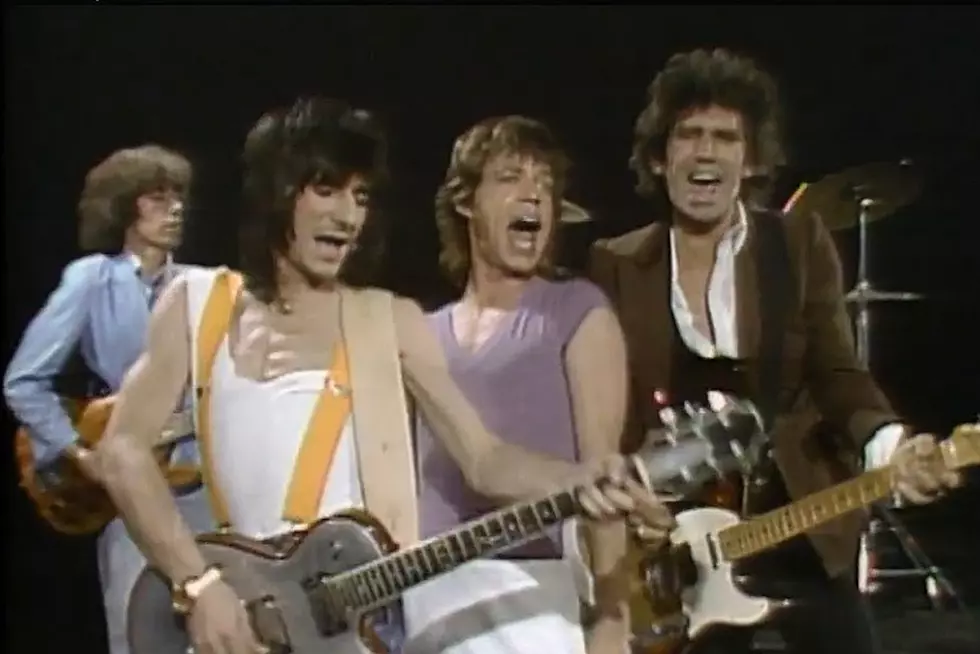
Live, the song was a powerhouse opener. The Stones would launch into it with Jagger prowling the stage like a man possessed, Richards anchoring everything with that immortal three-chord riff, and Ronnie Wood providing rhythm and texture. For a band accused of going through the motions in the late 1970s, “Start Me Up” proved they still had genuine fire.
The Venues: America’s Biggest Stages
The scale of the 1981 tour was unprecedented in rock history. The Stones chose stadiums and arenas that could absorb massive crowds — and then filled them beyond anyone’s expectations.
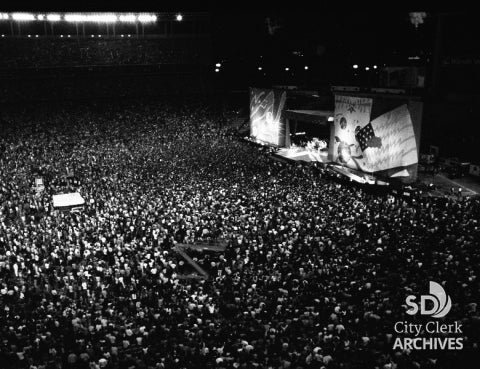
JFK Stadium, Philadelphia — The tour launched here with two consecutive nights on September 25 and 26, 1981. Each show drew 90,000 fans, for a combined attendance of 181,564 over the two evenings. The postcard ticket lottery had generated nearly four million responses — a staggering statistic that illustrated just how desperate Americans were to see the Stones in action.
Louisiana Superdome, New Orleans — The December 5 show here set an indoor concert attendance record of 87,500 that stood for 33 years. The Superdome’s cavernous interior became, for one night, the largest indoor rock concert venue in history.
Cotton Bowl, Dallas — 156,000 tickets were sold for the Dallas dates, another staggering number that underlined the Stones’ hold on American audiences.
Jack Murphy Stadium, San Diego and Los Angeles Memorial Coliseum — Multiple West Coast dates drew enormous crowds, including one of the tour’s most memorable controversies (more on that shortly).
Pontiac Silverdome, Michigan — The domed stadium accommodated massive indoor crowds in the Midwest.
Other stops included the Tangerine Bowl in Orlando, Sun Devil Stadium in Tempe, and the Hampton Coliseum in Virginia — which hosted the final show and made history as the first music concert ever broadcast via pay-per-view television.
The Stage: Kazuhide Yamazaki’s American Dream
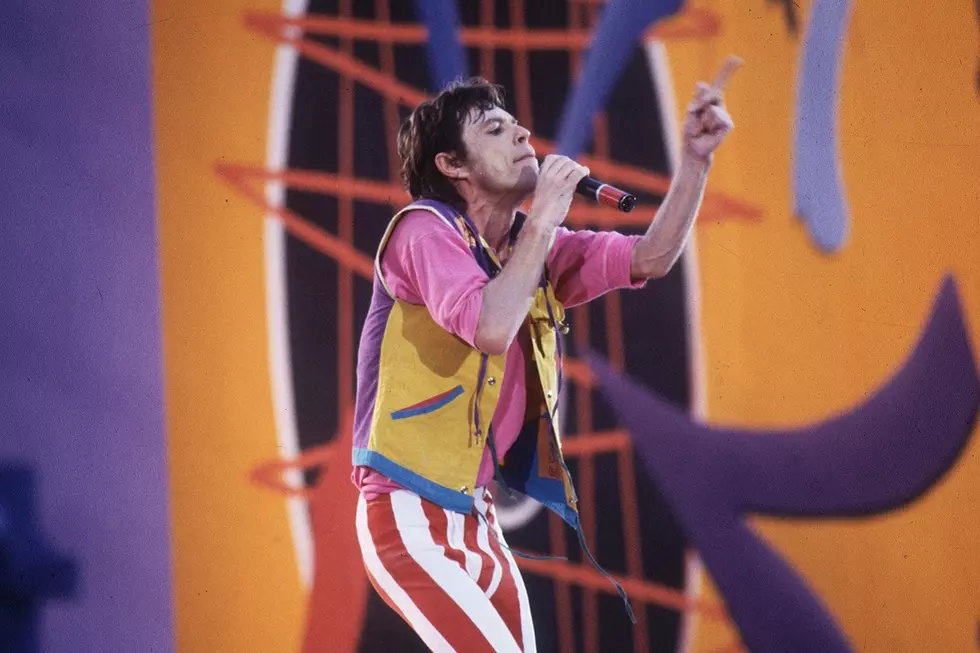
Japanese designer Kazuhide Yamazaki created a stage production that matched the tour’s ambitions. The elaborate, colorful set featured oversized pop-art images of guitars, cars, and records — pure Americana rendered on a monumental scale. “Most concerts that took place outdoors at the time were played during the day,” Jagger later explained, “so we had the bright, bright primary colors.” The design worked especially well for afternoon outdoor shows, where the bold colors could be seen clearly in daylight.
Later shows in the tour incorporated cherry pickers that lifted band members above the crowd, and balloon releases that transformed the arena into a spectacle. These were not subtle touches. The Stones understood that at stadium scale, subtlety is invisibility — you have to be enormous just to be seen from the back rows.
The Setlist: A Greatest Hits Tour With New Fire
The 1981 tour setlist balanced new material from Tattoo You with a deep catalog of Stones classics — a smart move given that most fans in those 90,000-capacity stadiums wanted to hear songs they already loved, delivered louder and longer than they’d ever heard them.
From Tattoo You, the setlist featured “Start Me Up,” “Hang Fire,” “Little T&A,” “Neighbours,” “Black Limousine,” and “Tops.” But the show’s emotional core was built around anthems that had defined rock for two decades: “Under My Thumb,” “Let’s Spend the Night Together,” “Shattered,” “You Can’t Always Get What You Want,” “Time Is on My Side,” “Jumpin’ Jack Flash,” “Brown Sugar,” and “Satisfaction.”
The shows typically ran two hours or more — extraordinarily long by stadium rock standards of the era. Jagger prowled every inch of the stage, using extended runway ramps to bring the performance closer to fans seated far from the main stage. His energy was ferocious. The New York Times noted that Richards “looks healthy, he is playing brilliantly” — a pointed reference to how dramatically the guitarist had turned his life around since the dark years of addiction.
Watch the official lyric video for “Start Me Up,” the song that defined the 1981 tour:
Keith Richards and Mick Jagger: Tension and Triumph
The internal dynamic between Jagger and Richards in 1981 was complex. Richards had pushed hard for the tour; it was he and Ronnie Wood who had advocated for returning to the road when Jagger had been reluctant. Richards had overcome his heroin addiction and was playing with a renewed clarity and power that impressed even seasoned observers.
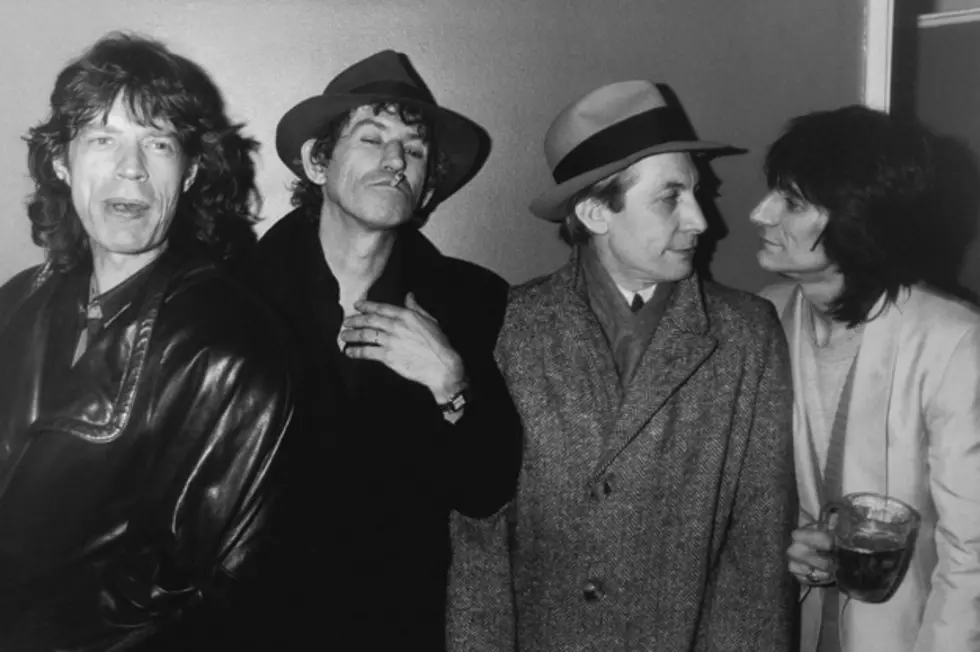
The New York Times review of one of the early shows noted that Richards’ backup vocals were “often so lusty that they drown out Mr. Jagger” — a remarkable observation suggesting that Richards was, at times, out-performing the man who was nominally the frontman. This would turn out to be the final tour on which Richards provided the majority of backing vocals; in subsequent years, the balance shifted.
The Jagger-Richards tension that had been brewing throughout the late 1970s and early 1980s would eventually explode in the mid-1980s, leading to what Richards would later call “World War Three” between the two men. But in 1981, the music was holding it together — and holding it together magnificently.
Opening Acts: A Who’s Who of Rock Royalty
The supporting lineup for the 1981 tour reads like a rock festival bill from a different era: Journey, George Thorogood & the Destroyers, The J. Geils Band, Heart, Van Halen, ZZ Top, Tina Turner, Iggy Pop, and a young artist named Prince.
Prince’s inclusion was Mick Jagger’s doing — Jagger was already a fan of the Minneapolis musician’s early work and wanted to give him exposure at the biggest possible platform. What happened at the Los Angeles Memorial Coliseum shows became legendary for all the wrong reasons. Prince and his band barely made it through three songs before being overwhelmed by boos, jeers, and flying vegetables from the impatient Stones crowd. His androgynous stage persona, dressed in a trench coat and bikini briefs, was still unfamiliar to mainstream rock audiences, and the reaction was brutal.
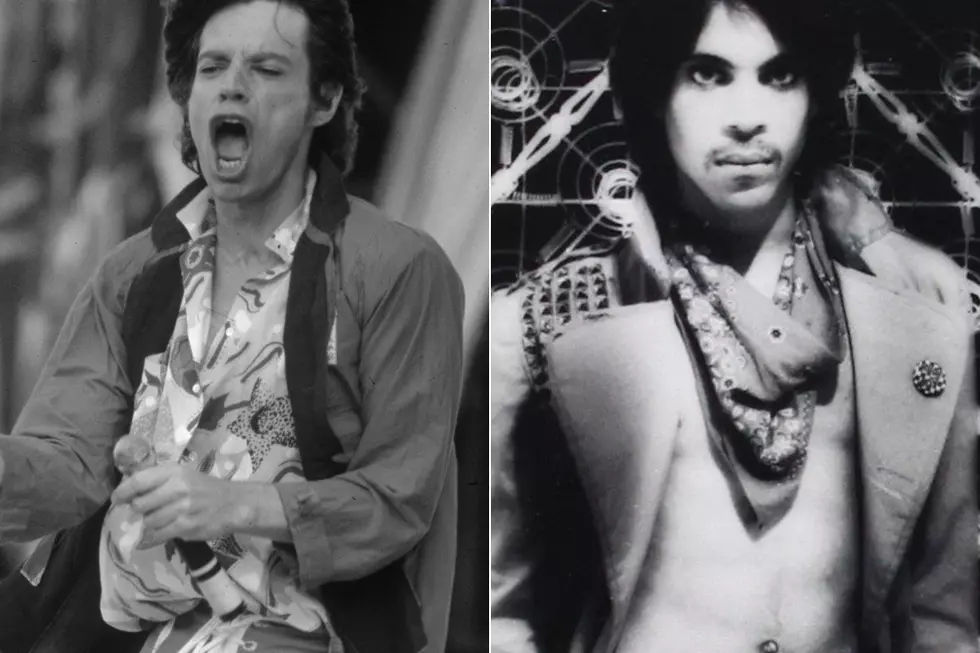
Prince did return for the second night — a remarkable act of courage and determination. His subsequent transformation into one of music’s most dominant forces over the following years gave the incident a retrospective irony: the crowd that booed Prince at the LA Coliseum in 1981 would later claim to have loved him all along.
Controversies and Memorable Incidents
Beyond the Prince incident, the tour generated several moments that lodged themselves in rock history.
The Worcester Warm-Up Disaster — Before the official tour launch, the Stones played a warm-up show in Worcester, Massachusetts, billed enigmatically as “Little Boy Blue & The Cockroaches.” Word leaked, and 11,000 fans descended on a venue with a 300-person capacity. Boston’s mayor, asked for comment, responded that the appearance was “not necessarily in the public interest.” It was chaos — and excellent advance publicity.
Keith Richards’ Birthday Concert — The December 18 show at Hampton Coliseum fell on Richards’ 38th birthday. More significantly, this was the first music concert ever broadcast via pay-per-view and closed-circuit cinemas, marketed as “The World’s Greatest Rock’n’Roll Party.” During the show, a fan rushed the stage and Richards responded by striking him with his guitar — a thoroughly rock and roll ending to a historic night.
Mick Taylor’s Guest Appearance — On December 14 in Kansas City, former guitarist Mick Taylor joined the Stones onstage. Ronnie Wood was less than enthusiastic about the performance, later suggesting Taylor was “bulldozing through parts of songs that should have been subtle” — a rare moment of public friction between band members.
The Rockford Petition — When it appeared Rockford, Illinois would not be on the tour itinerary, a local radio station launched a petition that collected over 35,000 signatures. The Stones added a show at the MetroCentre on October 1. It was the kind of fan passion that no marketing budget could manufacture.
The Concert Film: “Let’s Spend the Night Together”
Director Hal Ashby — the acclaimed filmmaker behind Harold and Maude, The Last Detail, and Shampoo — was brought in to document the 1981 tour on film. The result, Let’s Spend the Night Together, was released to cinemas in 1983.
Ashby filmed primarily at two venues: the Brendan Byrne Arena at the Meadowlands Sports Complex in East Rutherford, New Jersey (November 5–6, 1981) and Sun Devil Stadium in Tempe, Arizona (December 13, 1981). He deployed 20 cameras and the most advanced 24-track stereo recording technology available at the time — a technical undertaking as ambitious as the tour itself.
The film captured performances of “Under My Thumb,” “Time Is on My Side,” “You Can’t Always Get What You Want,” “Shattered,” “Hang Fire,” and of course “Start Me Up,” among others. Critics were divided: some found Ashby’s directorial choices (including some abstract visual sequences) jarring, while others praised the film’s energy and the quality of the concert footage. As a document of the Stones at their 1981 peak, it remains invaluable.
Experience the complete 1981 Philadelphia concert — one of the defining nights of the tour:
The Financial Impact: Changing Rock’s Economics
The numbers from the 1981 Rolling Stones tour were, by any measure, staggering for their time. Total box office gross: $52 million (roughly $184 million in today’s dollars). Average ticket price: $16. Total attendance: approximately 2.5 million fans across 50 shows. The band’s estimated net income after expenses: approximately $22 million. And that was before the Jovan sponsorship money, merchandise sales, and other revenue streams were factored in.
The New York Times declared the tour “the most profitable in the history of rock & roll” with “staggering” scale. It wasn’t hyperbole. No band had ever made this much money from live performance. No tour had ever drawn this many people. The Stones had not merely set records — they had established a new paradigm for what rock touring could be.
The financial model the 1981 tour demonstrated — massive stadiums, premium ticket pricing, corporate sponsorship, pay-per-view broadcasting, professional film documentation — became the blueprint for every major rock tour that followed. When U2 launched their Zoo TV tour in 1992, or the Rolling Stones themselves did the Voodoo Lounge tour in 1994 or the A Bigger Bang tour in 2005–2007 (which broke the 1981 tour’s records), they were working from a template the Stones had written in 1981.
The Still Life Album: Preserving the Tour
The 1981 tour was professionally recorded throughout its run, and selected performances were released the following year as Still Life (American Concert 1981). The live album’s cover — a painting by the same Kazuhide Yamazaki who designed the tour’s stage — captured the Stones in peak form, documenting performances from venues including the Hampton Coliseum and the Meadowlands. It reached the top ten in both the United States and the United Kingdom.
Decades later, the Hampton Coliseum pay-per-view show was released as part of the band’s “From the Vault” series — the first title in that series, reflecting the show’s historical significance as the first pay-per-view music concert. Newly restored and remixed, it gave new generations access to the performance that closed the most important rock tour in history.
Legacy: How the 1981 Tour Changed Rock Touring Forever
The Rolling Stones 1981 American Tour stands as a watershed moment in the history of live music. Its legacy operates on multiple levels:
Corporate sponsorship became standard. The Jovan deal opened the door. Within a decade, virtually every major tour would have corporate partners. For better or worse, the sponsorship model that fans today take for granted was born on the 1981 Stones tour.
Stadium touring became the industry’s gold standard. Before 1981, stadium tours were novelties. After the Stones demonstrated that 90,000 fans would pay good money to watch a rock show in a football stadium, every major band in the world started booking arenas and stadiums. The economics of stadium touring — higher gross, higher production cost, higher risk — became normalized.
Pay-per-view concerts became viable. The Hampton Coliseum broadcast proved that fans would pay to watch concerts on television. This insight eventually led to the streaming revolution in live music — a direct descendant of what the Stones pioneered in December 1981.
The Stones themselves redefined late-career relevance. By 1981, many observers had written off the Stones as a nostalgia act, a band coasting on reputation. The 1981 tour demolished that narrative. A band in their late thirties, playing to 2.5 million people across three months, earning $52 million — that was not nostalgia. That was dominance.
Crucially, this would be the last Rolling Stones tour of America until 1989. The Jagger-Richards tensions that had been simmering finally boiled over in the mid-1980s, with both men pursuing solo careers and exchanging bitter public statements. The 1981 tour thus takes on an additional poignancy in retrospect: it was the last great hurrah before the storm, a magnificent final statement before the partnership nearly collapsed entirely.
When the Stones returned to American stages in 1989 for the Steel Wheels tour, they were playing catch-up to their own legend — and specifically to the standards they had set in 1981. Few bands have ever managed to exceed their own mythology. For one extraordinary autumn and winter, the Rolling Stones didn’t just meet theirs. They obliterated it.
FAQ: Rolling Stones 1981 Tour
What album did the Rolling Stones 1981 tour support?
The 1981 American Tour supported Tattoo You, the Stones’ sixteenth studio album released in August 1981. Despite being largely composed of decade-old outtakes with new overdubs, Tattoo You reached number one in the United States for nine weeks and spawned “Start Me Up,” which became the tour’s defining anthem.
How much did the Rolling Stones make on the 1981 tour?
The Rolling Stones 1981 American Tour grossed approximately $52 million in ticket sales — equivalent to over $184 million in today’s money. After expenses, the band netted an estimated $22 million. The tour also benefited from a $1 million corporate sponsorship from Jovan Musk cologne, making it the first rock tour to secure major corporate backing at that scale.
Who were the opening acts on the Rolling Stones 1981 tour?
The 1981 tour featured an extraordinary roster of opening acts, including Journey, George Thorogood & the Destroyers, The J. Geils Band, Prince, Heart, Van Halen, ZZ Top, Tina Turner, and Iggy Pop. Prince’s two performances at the Los Angeles Memorial Coliseum became infamous when the crowd booed him off stage — an incident made ironic by Prince’s subsequent domination of 1980s music.
What was the Jovan perfume sponsorship on the Rolling Stones 1981 tour?
Jovan Musk cologne paid $1 million to have their brand name placed on Rolling Stones concert tickets — the first time a major corporation had sponsored a rock and roll tour at that scale. The deal was controversial at the time due to the perceived clash between the fragrance brand’s image and the Stones’ bad-boy reputation, but it proved successful for both parties and established corporate sponsorship as a permanent fixture of major rock tours.
Was a concert film made of the Rolling Stones 1981 tour?
Yes. Director Hal Ashby — known for acclaimed films including Harold and Maude and Shampoo — filmed the tour using 20 cameras at the Meadowlands in New Jersey and Sun Devil Stadium in Arizona. The resulting film, Let’s Spend the Night Together, was released to cinemas in 1983. Selected concert recordings were also released on the live album Still Life (American Concert 1981) in 1982.
What records did the Rolling Stones 1981 tour set?
The 1981 tour set multiple records: it was the highest-grossing rock tour in history at the time ($52 million); the December 5 show at the Louisiana Superdome set an indoor concert attendance record of 87,500 that stood for 33 years; the JFK Stadium opening nights drew 90,000 fans each; the Hampton Coliseum December 18 show was the first music concert broadcast via pay-per-view television; and the total tour attendance of approximately 2.5 million fans was unprecedented for a rock tour.
The Retro Almanac
A monthly roundup of "on this day" highlights from that month, decades back — plus first dibs on new retro merch drops. No spam, just the good stuff.