On This Day: November 7, 1991 — Magic Johnson Announces He Is HIV Positive
On the morning of November 7, 1991, Magic Johnson was still just a basketball player to most of America — the smiling, no-look-pass genius who’d carried the Los Angeles Lakers to five championships in the 1980s. By that afternoon, he was something else entirely: the most famous person in the world to say the words “HIV positive” out loud, and in doing so, change how an entire country talked about AIDS.
A Routine Physical, a Phone Call, and a Season Cut Short
Earvin “Magic” Johnson was 32 years old and in training camp with the Lakers that fall, gearing up for his 13th NBA season. A standard life-insurance physical flagged something unusual, and follow-up testing confirmed it: Johnson had tested positive for HIV, the virus that causes AIDS. At the time, an HIV diagnosis was widely treated as a death sentence — effective combination antiretroviral therapy was still years away, and public understanding of the virus was clouded by fear and stigma.
The Retro Almanac
A monthly roundup of "on this day" highlights from that month, decades back — plus first dibs on new retro merch drops. No spam, just the good stuff.
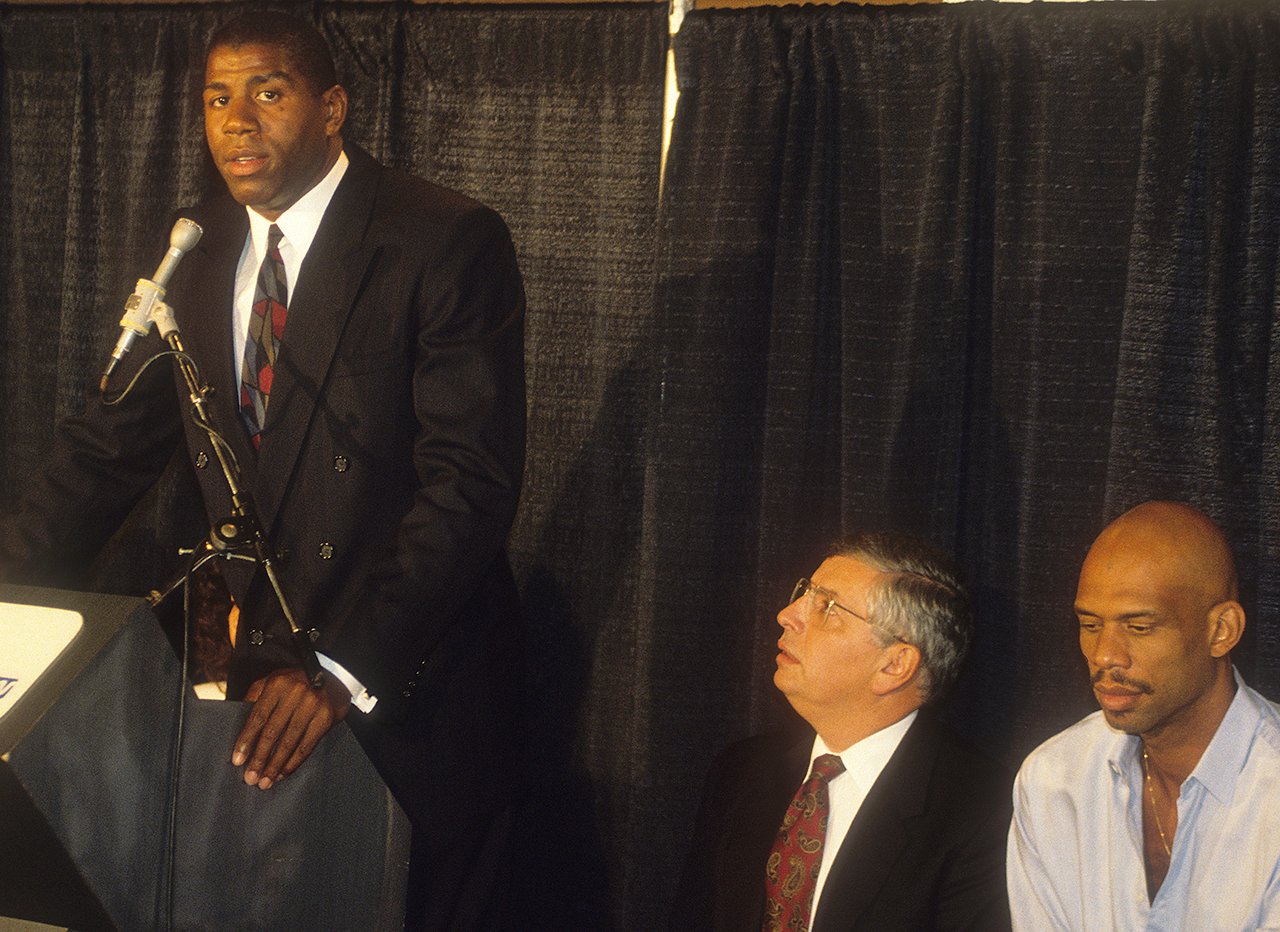
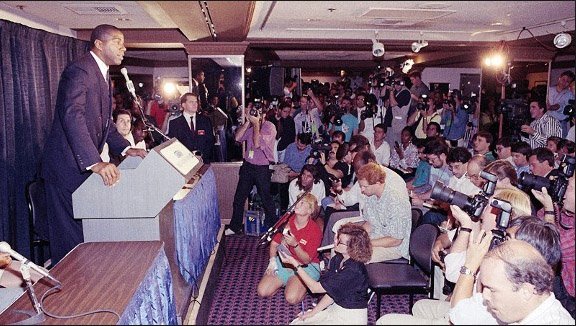
Johnson learned the results days before the press conference. The Lakers called a hastily arranged media availability at the Forum Club inside the Great Western Forum in Inglewood, California, for the afternoon of November 7. Reporters who showed up expecting an injury update or a minor roster note instead found a room packed shoulder to shoulder with cameras, with NBA commissioner David Stern and Lakers legend Kareem Abdul-Jabbar seated behind the podium.
“I Will Have to Retire”
Johnson stepped to the microphone in a dark suit and calmly delivered the news himself. “Because of the HIV virus that I have attained, I will have to retire from the Lakers today,” he said. He was careful to draw a distinction that most of the country didn’t yet understand — he had HIV, not AIDS — and he made clear he intended to keep fighting. “I plan on going on, living for a long time, bugging you guys like I always have,” he told the room.
He also used the moment as a public-health pivot, telling young people watching that “safe sex is the way to go,” turning his own diagnosis into one of the first mainstream, non-judgmental messages about HIV prevention that millions of Americans had ever heard from a sports hero. Research published decades later found a measurable spike in HIV testing among American men in the months after his announcement — Magic Johnson’s press conference didn’t just make headlines, it changed behavior.
Before Johnson faced the cameras, he faced his own teammates. The Lakers were in Utah for an exhibition game that week when word came down to fly back to Los Angeles for a mandatory meeting at the Forum. According to longtime Lakers trainer Gary Vitti, the locker room was gutted — some players assumed they were about to watch their teammate die. By most accounts it was Johnson himself who held the room together, going person to person reassuring his teammates before he ever stepped out to reassure the country.
Love the retro era? Browse our shop for vintage finds, retro clothing, and 80s/90s nostalgia gear.
The Player Behind the Headline
It’s worth remembering what, exactly, the world thought it was losing that day. Johnson arrived in the NBA in 1979 as a 6-foot-9 point guard who passed like a guard and rebounded like a center, and he spent the next decade redefining the position. He won five NBA championships with the Lakers (1980, 1982, 1985, 1987, 1988), three regular-season MVP awards, and was the engine of the “Showtime” Lakers — the fast-break, highlight-reel dynasty that also included Abdul-Jabbar, James Worthy, and head coach Pat Riley.
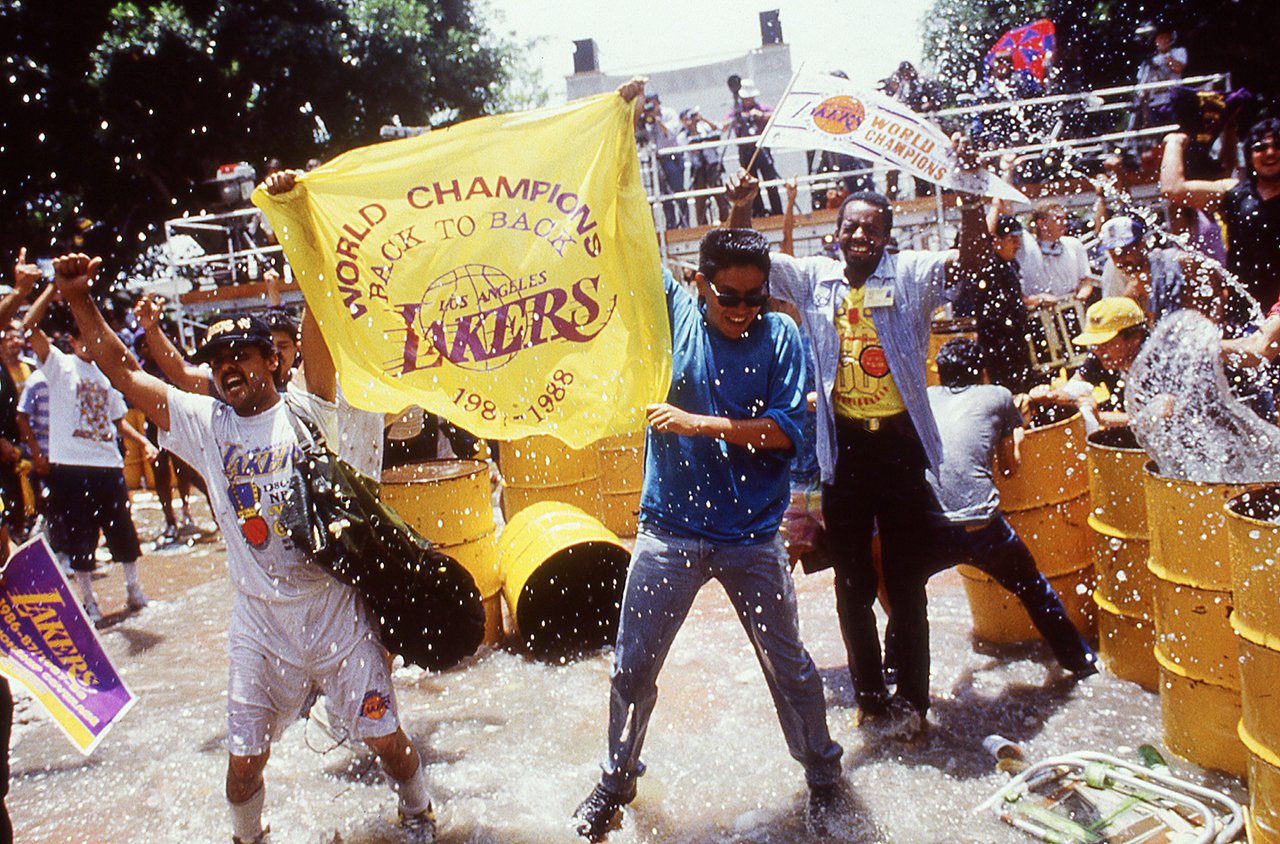
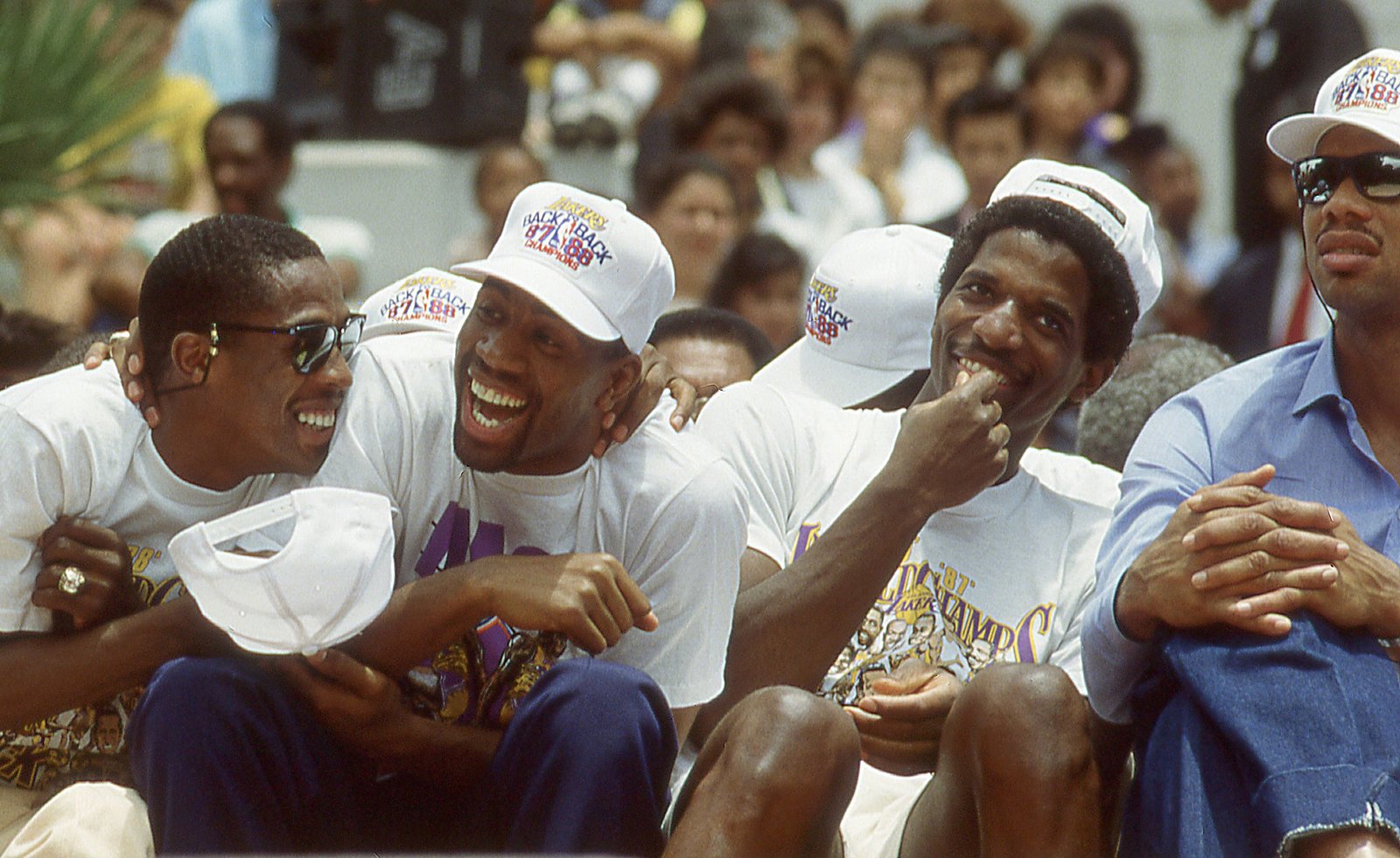
The back-to-back titles in 1987 and 1988 were the high-water mark of that run — the Lakers became the first team in nearly two decades to repeat as champions, and Johnson was named Finals MVP in ’87. He’d entered the 1991-92 season still playing at an All-Star level, which is part of why the announcement landed so hard. This wasn’t a star in decline quietly stepping away. It was arguably the league’s best all-around player walking off the court mid-career, for a reason nobody in the arena that day fully understood yet.
The Comeback Nobody Expected
Johnson’s story didn’t end at the podium. He was voted a starter for the 1992 All-Star Game by fan ballot and won the MVP award in that game despite having “retired” months earlier. He suited up for the gold-medal-winning “Dream Team” at the 1992 Barcelona Olympics, briefly returned to the Lakers bench as head coach in 1994, and came back for one more playing season in 1995-96 before retiring for good. Off the court, he became one of the most visible and effective HIV/AIDS advocates in the world, founding the Magic Johnson Foundation, which has since funded tens of thousands of free HIV screenings nationwide.
More than three decades later, November 7, 1991 is remembered less as the day basketball lost its biggest star and more as the day one of the most famous athletes on the planet used his own diagnosis to drag a stigmatized disease into the daylight — and showed, over the following thirty-plus years, that living with HIV didn’t mean the story was over.
The Retro Almanac
A monthly roundup of "on this day" highlights from that month, decades back — plus first dibs on new retro merch drops. No spam, just the good stuff.