Clockers 1995: The Hood Film Scorsese Left
Martin Scorsese was supposed to direct Clockers. Robert De Niro was supposed to star in it. Neither of them ended up in the finished film.
That swap — one of the stranger handoffs in 90s filmmaking — is the reason Clockers exists as the movie people actually remember: a 1995 Spike Lee joint about a 19-year-old street dealer named Strike, caught between a murder investigation and a drug boss who wants the crime pinned on him. It bombed in theaters that September. Three decades later, it’s the one “hood film” from that era that writers for The Wire point to as the blueprint.
What Is Clockers (1995) About?
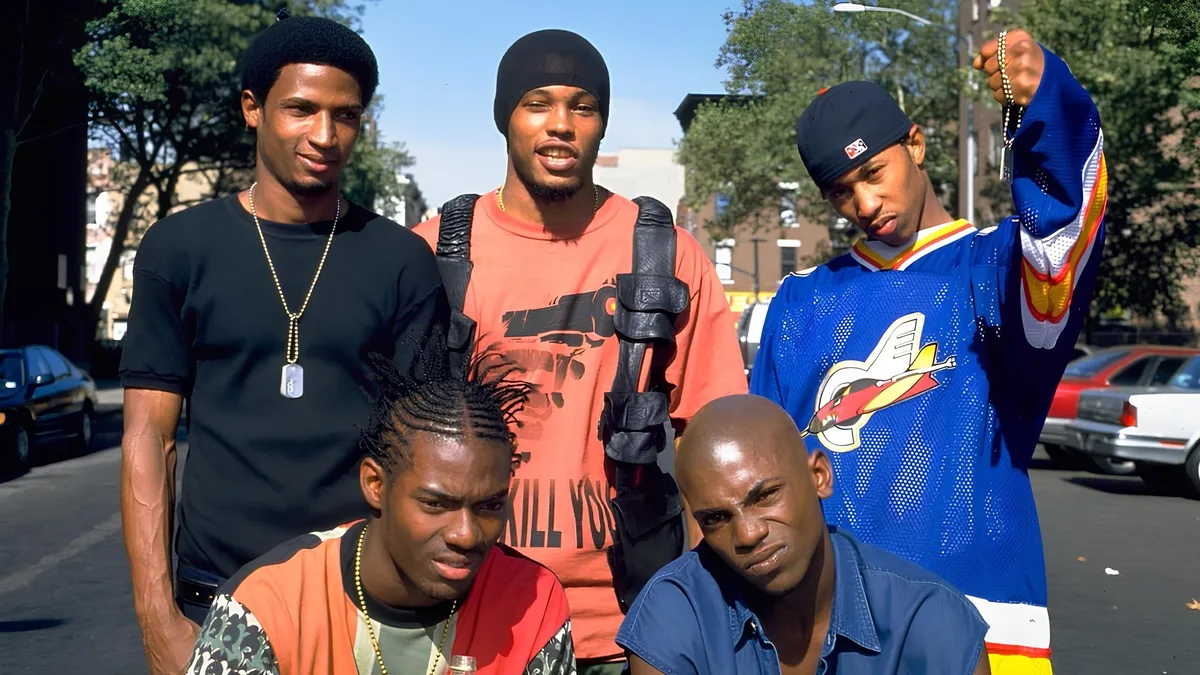
Clockers follows Ronald “Strike” Dunham (Mekhi Phifer), a teenage crack dealer — a “clocker,” named for working long shifts on a Brooklyn housing project corner — who gets pulled into a murder investigation after a man he knows is shot dead outside a fast-food stand. Detective Rocco Klein (Harvey Keitel) is convinced Strike’s straight-arrow older brother confessed to protect him, and spends the movie trying to prove it. The story is based on Richard Price’s 1992 novel of the same name, and it’s less a whodunit than a slow unraveling of exactly how trapped Strike really is — by his boss Rodney (Delroy Lindo), by Rocco, and by a block that’s already decided who he’s going to become.
The Retro Almanac
A monthly roundup of "on this day" highlights from that month, decades back — plus first dibs on new retro merch drops. No spam, just the good stuff.
The Night Scorsese Walked Away From His Own Movie
Scorsese had the project first. He optioned Price’s novel with De Niro set to play Rocco Klein, and the plan was for Scorsese to direct it as a companion piece to his other New York crime work. Then Casino came together, De Niro went with Scorsese to Las Vegas instead, and Scorsese needed someone else to take Clockers off his hands. He called Spike Lee.
Lee didn’t just inherit a script — he tore it up. Price’s original draft centered Rocco, a white detective working through a midlife crisis; Lee rewrote it to put Strike at the center, turning a cop story into a story about the kid the cops were building a case against. Scorsese stayed on as executive producer and let Lee run with it, which is the only reason Clockers reads the way it does: a hood film shot by the one director in Hollywood who’d lived in the neighborhoods it was about.

Casting got messy too. Lee wanted John Turturro to play Rocco and a young Michael Imperioli as his partner, Mazilla — Universal said no to Turturro in the lead. Scorsese suggested Harvey Keitel instead, which bumped Turturro down into the Mazilla role he’d originally been passed over for. It’s a strange bit of movie-trivia trivia, but it’s also why the Rocco/Mazilla double act has the weirdly specific chemistry it does: these were two actors who’d already been cast as each other.
Mekhi Phifer Had Never Acted Before This
Strike carries almost every scene in Clockers, and the actor playing him had zero film credits when shooting started. Mekhi Phifer tagged along with an actor cousin to an open casting call, not expecting much, and ended up going through roughly ten rounds of callbacks against something like a thousand other hopefuls before Lee cast him as the lead. Clockers was his first movie, full stop — no student films, no bit parts, no soap opera walk-on to warm up on.

What makes the performance work isn’t polish — it’s the opposite. Strike spends the whole movie chain-drinking Moo & Oink chocolate milk to manage a stomach ulcer brought on by stress, flinching at every interaction with Rodney, and looking perpetually younger than the responsibility he’s been handed. A trained actor might have smoothed that over. Phifer, new to the job himself, let it sit there raw, which is exactly what the role needed.

The Color Trick That Makes Clockers Look Like a Fever Dream
Cinematographer Malik Hassan Sayeed shot much of Clockers on Kodak 5239 — a high-speed Ektachrome reversal stock built for TV news crews, not feature films. It wasn’t designed for this, and that’s exactly why Lee and Sayeed wanted it: the stock blows out reds into something almost radioactive and pushes blacks into deep, inky shadow, giving the daylight street scenes a slightly sick, overheated look that regular film stock doesn’t produce. Critics at the time compared it to The French Connection‘s grime, but it’s doing something more specific — making a sunny Brooklyn afternoon feel like it’s running a fever.

They Filmed Inside the Real Housing Projects
Most of Clockers was shot at the Gowanus Houses in Boerum Hill, Brooklyn — renamed the fictional “Nelson Mandela Houses” for the film, a detail sharp enough that it reads as commentary rather than a throwaway. Lee didn’t bus in a cleaned-up backlot version of a housing project; actual Gowanus Houses residents appear on screen alongside the cast, and the corners, benches, and courtyards are the real thing. That choice is why the movie still holds up as a document, not just a drama — the geography on screen is the geography the story is actually about.


🎮 Shop: Nelson Mandela Portrait Art T-Shirt →
Clockers Wasn’t Trying to Glamorize Anything
By 1995, hood films had a problem: some of them were starting to look cool. Spike Lee built Clockers as a direct answer to that drift. He opened the movie with crime-scene photos of real gunshot wounds, over the credits, before a single character shows up on screen — not a stylistic flourish, a statement of intent. Lee has said gun violence and black-on-black crime were, in his words, “the two great unsolved issues facing African Americans,” and he wanted a movie where the drug-dealer life looked like exactly what it is: exhausting, paranoid, and short.

Strike isn’t written as an antihero you’re meant to root for. He’s a kid who got put behind a kiddie-ride pony as a cover for selling drugs, who can’t keep food down from the stress, and who spends the entire movie looking for a way out that never quite opens up. That’s the opposite of the gun-glamour some of its contemporaries flirted with, and it’s a big part of why Clockers aged into the more respected film.
It Flopped. Then The Wire Happened.
Universal released Clockers on September 15, 1995. Roger Ebert gave it three and a half stars out of four and called it a work of “mournful maturity.” Audiences didn’t show up — the film grossed roughly $13 million against a $25 million budget, a quiet failure next to splashier 1995 crime dramas. It’s held 75% on Rotten Tomatoes in the years since, the kind of score that tells you critics were right and the box office just didn’t care yet.
The bigger afterlife came through television. Richard Price, who wrote the novel and co-wrote the screenplay, later joined The Wire as a writer for its third, fourth, and fifth seasons, and David Simon has said directly that The Wire‘s early seasons drew on the groundwork Clockers laid — the corner-level economics, the cops who are just as trapped by the system as the dealers, the refusal to let anyone be purely a villain. Price even ported specific scenes from the novel into the show almost unchanged. A movie that couldn’t find an audience in 1995 ended up rewriting the grammar of the genre it belonged to.


🎮 Shop: Public Enemy Hip Hop Logo T-Shirt →
FAQ: Clockers (1995)
Is Clockers based on a true story?
No — it’s based on Richard Price’s 1992 novel of the same name, a work of fiction. Price spent years researching Jersey City housing projects and riding along with real police before writing it, which is why the details feel reported rather than invented.
Why did Scorsese give up directing Clockers?
He didn’t give it up so much as trade it — Scorsese chose to direct Casino instead, took Robert De Niro with him, and handed Clockers to Spike Lee, staying on as executive producer.
Was Clockers a box office success?
No. It made about $13 million against a $25 million budget. Its reputation grew almost entirely after release, through critical reassessment and its influence on The Wire.
Sources
- Clockers (film) — Wikipedia — production background, box office, and cast details.
- Roger Ebert’s 1995 review of Clockers — contemporary critical reception.
- American Society of Cinematographers on Clockers — Malik Hassan Sayeed’s film stock and visual approach.
- ScreenRant on The Wire’s debt to Clockers and Richard Price — the Richard Price / David Simon connection.
The Retro Almanac
A monthly roundup of "on this day" highlights from that month, decades back — plus first dibs on new retro merch drops. No spam, just the good stuff.