Easy-Bake Oven: The Toy That Taught Kids to Cook With a Lightbulb
A Turquoise Box That Changed Childhood Forever
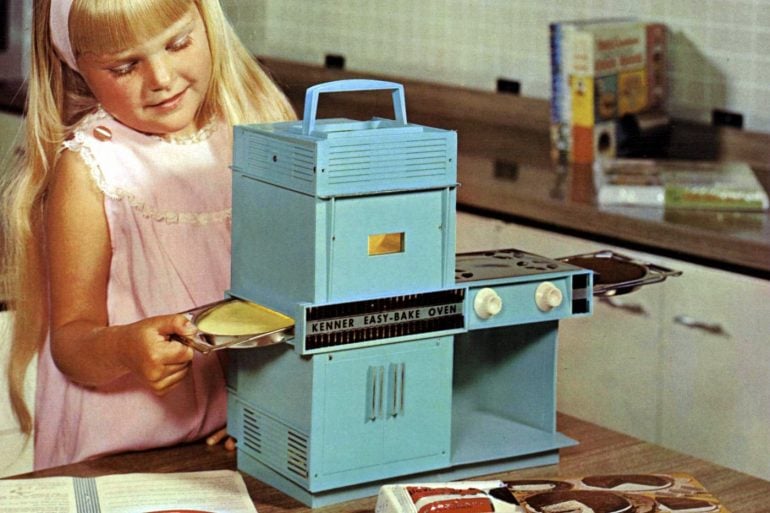
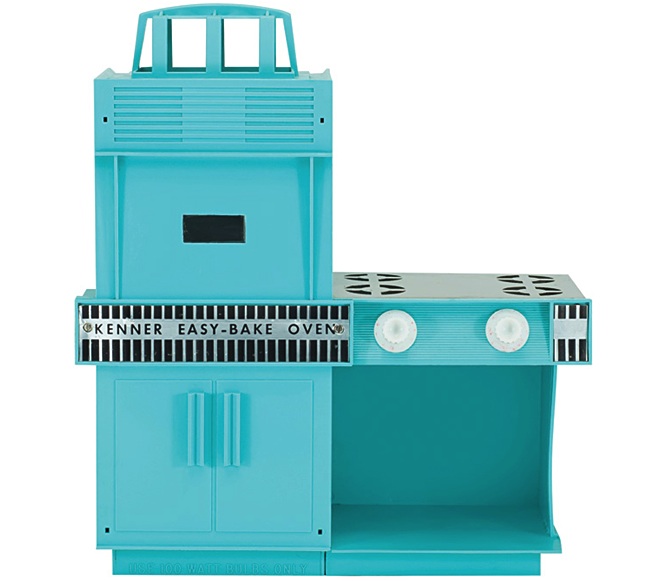
It looked like something out of a Jetsons kitchen — a turquoise and pale yellow box with a slot on one side, a window to peek through, and a handle on top. But inside that unassuming toy was a secret weapon that Kenner Products bet big on in 1963: two ordinary 100-watt incandescent lightbulbs that could actually bake a cake.
The Easy-Bake Oven didn’t just become a toy. It became a rite of passage. For generations of kids — mostly Gen Xers and Millennials — this miniature oven represented the first taste of independence in the kitchen. The first time you could make something real, something edible, without a grown-up hovering over your shoulder. Sure, the cakes came out the size of hockey pucks and tasted like sugary cardboard. But you made them yourself, and that was everything.
Born in the Streets of New York City
The Easy-Bake Oven’s origin story is pure mid-century American hustle. A Kenner Products salesman named Norman Shapiro was demonstrating toys at Macy’s Herald Square in New York City when he stepped outside and spotted a pretzel vendor working the sidewalk. Something clicked. If a street vendor could cook pretzels for crowds, why couldn’t kids cook treats for themselves?
Shapiro brought the idea back to Kenner’s headquarters in Cincinnati, where the Steiner brothers — Albert, Philip, and Joseph — ran the company. They loved the concept, though they pivoted quickly from pretzels to cakes and cookies. The real genius move came from the engineering team: instead of using a traditional heating element (which had given other toy ovens a sketchy safety reputation), they would power the oven with two standard 100-watt incandescent lightbulbs.
It was a stroke of marketing brilliance. Parents already had lightbulbs in every room of the house. They weren’t scary. They weren’t exotic. They were just… lightbulbs. Never mind that the interior of the Easy-Bake Oven reached temperatures around 350°F — roughly the same as a standard kitchen oven. Kenner originally wanted to call it the “Safety-Bake Oven,” but advertising regulators shut that down since the product hadn’t yet established a safety track record.
Half a Million Ovens and a Christmas Frenzy
The Easy-Bake Oven hit store shelves in November 1963, priced at $15.95 — the equivalent of over $160 today. Kenner managed to manufacture 500,000 units before the holiday rush, and every single one sold out. Parents were literally fighting over them in stores, making it one of the hottest toys of the Christmas season.
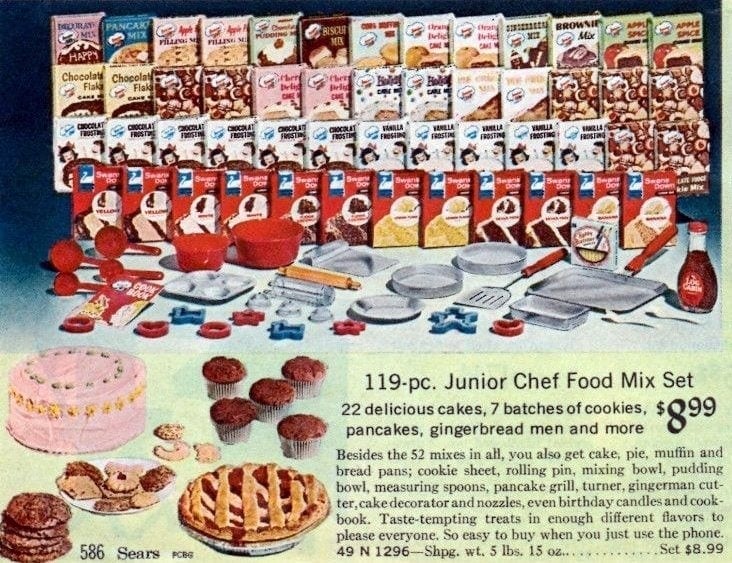
Kenner tripled production in 1964 and couldn’t keep up with demand. Within a few years, more than a million ovens had been sold along with 20 million packets of mix. The company quickly released 25 different mixes and mix sets — chocolate cake, yellow cake, brownies, cookies, even candy bars. The mixes were packaged in aluminum foil laminated with polyethylene, giving them an almost two-year shelf life (though vintage collectors on eBay today strongly advise against trying the ones you find in old boxes).
The advertising blitz was massive. Easy-Bake commercials didn’t just run during Saturday morning cartoons — they aired during prime-time shows like I Love Lucy and Hogan’s Heroes. Print ads with taglines like “Just like Mom’s — bake your cake and eat it, too!” appeared in women’s magazines and Archie comics.
The Science of Lightbulb Baking
Here’s the thing about incandescent lightbulbs that made the whole Easy-Bake concept work: they were fantastically inefficient at producing light. Only about 5% of the electricity flowing through a standard incandescent bulb actually produced visible light. The other 95%? Pure heat. That “waste” energy was exactly what Kenner needed to bake tiny cakes.
The original oven design was elegantly simple. You’d slide a small metal pan loaded with batter into a slot on one side. The pan would pass through an enclosed baking chamber heated by two 100-watt bulbs, then emerge on the other side into a cooling chamber. While one pan baked, another cooled, and you could push a third pan in to keep the assembly line going. Baking times ranged from about 6 to 16 minutes depending on what you were making.
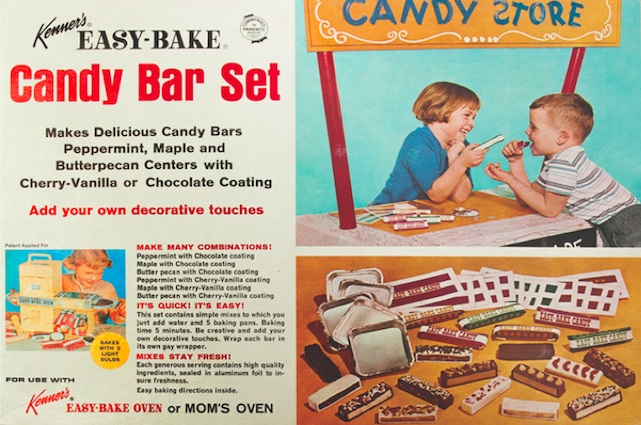
The recipes were intentionally foolproof. Every mix was “just add water” — no eggs, no oil, no measuring cups beyond what came in the box. The results were… well, let’s be honest. They were small, dense, and only vaguely cake-like. But to a seven-year-old, pulling a warm chocolate cake out of a toy oven felt like actual sorcery. The National Museum of Play describes them as “delicious — okay, edible — confections,” which is probably the most diplomatic way to put it.
Every Decade Got the Easy-Bake It Deserved
Part of what kept the Easy-Bake Oven relevant for over six decades is that Kenner (and later Hasbro) redesigned it constantly to mirror whatever was happening in American kitchens. The toy always reflected the era.
The 1960s: Turquoise Dreams and Betty Crocker
The original turquoise model had a fake stovetop with faux burners on the cooling chamber side — because in the early ’60s, every kitchen had a range. By 1969, Betty Crocker branded mixes became available, giving kids an even more “authentic” baking experience. By the end of the decade, more than 3 million ovens and 50 million mixes had been sold.
The 1970s: Avocado Green and Harvest Gold
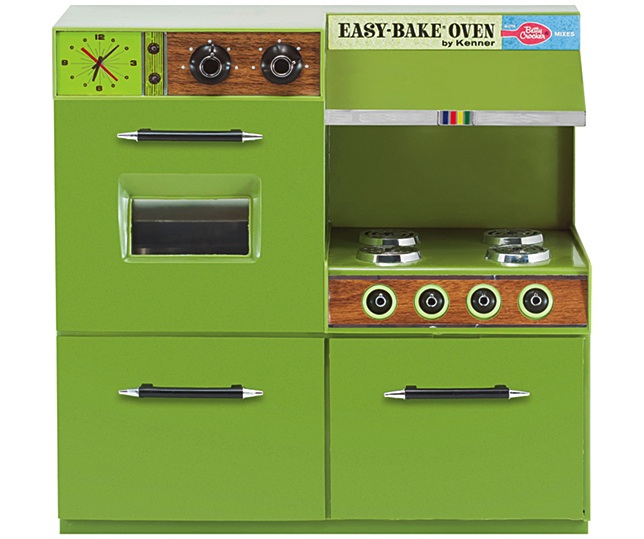
Like every kitchen appliance in the ’70s, the Easy-Bake Oven went full harvest gold and avocado green. The “Contemporary” model introduced in 1971 featured stylized flower decorations and became the first version powered by a single 60-watt bulb. The Super-Easy-Bake Oven added a working 20-minute timer and double-sized pans. By the mid-’70s, the Betty Crocker partnership was in full swing with branded oven models featuring faux-wood grain panels — because nothing says “1970s kitchen” like fake wood on everything.
The 1980s: Enter the Mini-Wave
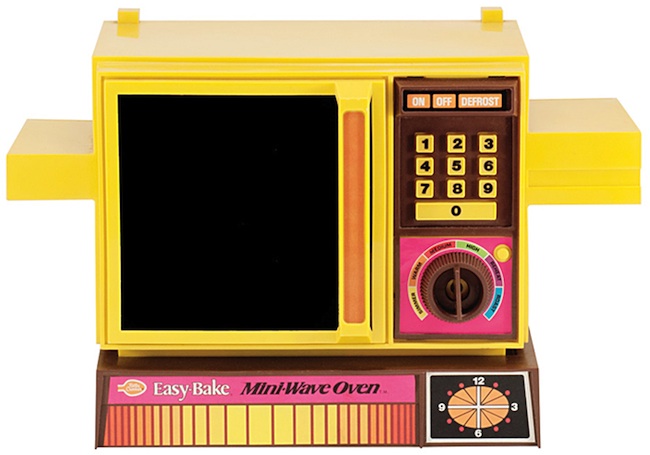
When microwave ovens started replacing traditional ranges in American homes, the Easy-Bake Oven followed suit. The 1978 “Mini-Wave” model ditched the range look entirely for a boxy microwave design. By 1981, it had been refined into the model that millions of Gen X kids remember — the yellow microwave-style box that still used a single 100-watt lightbulb inside. The 1983 Dual-Temp model even gave kids a “high” and “low” temperature option via a lever. Kenner also branched out during this decade — the Holly Hobbie Bake Oven offered a cast-iron stove aesthetic, and competitors like the Tyco Tastybake tried to grab market share.
The 1990s: Snack Centers and Purple Everything
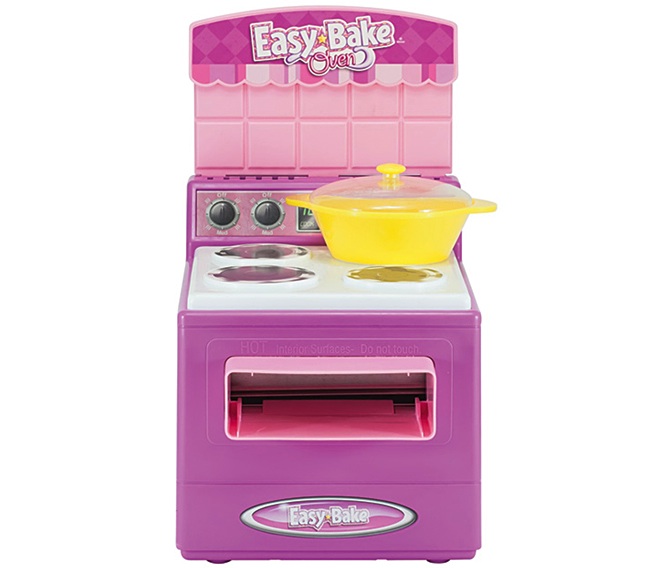
When Kenner was absorbed into Hasbro after a series of acquisitions (first by Tonka in 1988, then Hasbro in 1991), the Easy-Bake Oven survived the corporate shuffle. The 1993 Easy-Bake Oven and Snack Center — celebrating the toy’s 30th anniversary — reflected ’90s design sensibilities with rounded edges and brighter color palettes. By 1998, more than 16 million ovens and 100 million baking sets had found their way into kitchens and playrooms worldwide.
The Mixes: Hockey Puck Cakes and Questionable Brownies
Ask anyone who owned a vintage Easy-Bake Oven about the food, and you’ll get one of two responses: either misty-eyed nostalgia about warm chocolate cake, or an honest confession that everything tasted like sweet chalk. Both are correct.
The original mixes were simple — cake, cookies, and frosting in flavors like chocolate fudge, yellow cake, and devil’s food. Over the decades, the menu expanded wildly. By the 2000s, you could make pizza, pretzels, cheese crackers, red velvet cupcakes, and something called “Dirt Cake” that was exactly as appealing as it sounds. There were even Easy-Bake mixes for candy bars and popcorn.
The real secret to Easy-Bake success was managing expectations. If you followed the instructions exactly — measured carefully, didn’t overfill the tiny pans, and waited the full baking time — you got a passable miniature cake. If you improvised (as most kids did), you got a gooey, half-raw disaster. Todd Coopee, author of Light Bulb Baking: A History of the Easy-Bake Oven, says he heard countless stories of kids substituting mud for cake mix and still trying to serve it to younger siblings.
Why Every Kid Wanted One
The Easy-Bake Oven tapped into something primal: the desire to do what adults do. Kenner’s operating philosophy was to “make toys that allowed kids to do the same things they saw adults do,” and baking was the perfect canvas. Unlike other pretend-play kitchen toys, the Easy-Bake Oven produced real food. You mixed real ingredients. You waited for real baking time. You ate real cake. The play literally made its own reward.
There was also the independence factor. You didn’t need Mom or Dad to operate the oven (at least, that was the pitch). The enclosed baking chamber, the slide-through pan system, and the lightbulb heat source all worked together to create a relatively safe, self-contained baking station. For kids growing up in the ’70s and ’80s — an era when children roamed free and parents weren’t helicoptering — that autonomy was intoxicating.
The Gender Wars
From the very beginning, the Easy-Bake Oven had a complicated relationship with gender. Early packaging actually showed boys and girls baking together, and Kenner was always looking for ways to market the toy to boys. But by the 1970s, advertising leaned heavily into “little homemaker” territory — one 1973 ad literally said “More than 5 million little girls like you baked their first cake in an Easy-Bake Oven!”
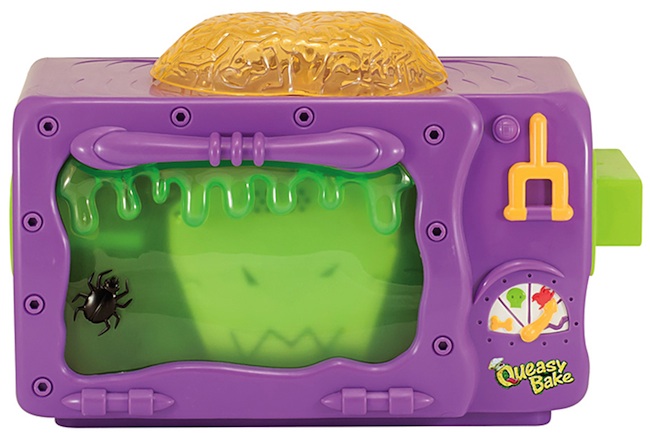
Hasbro tried to course-correct in 2002 with the magnificently named Queasy Bake Cookerator, a version decked out with spiders, skulls, and bones that was explicitly marketed to boys. It let kids make “gross” treats like “Mud ‘n’ Crud Cake” and “Bugs ‘n’ Worms.” But the biggest shift came in 2012, when 13-year-old McKenna Pope launched an online petition asking Hasbro to make a gender-neutral Easy-Bake Oven and include boys in their advertising. The petition garnered over 40,000 signatures, and Hasbro responded by releasing the oven in silver and black alongside the traditional pastel colors.
Safety Controversies and the Death of the Lightbulb
For all the nostalgia, the Easy-Bake Oven’s history isn’t spotless. The interior reached genuine baking temperatures, and over the decades, there were reports of burns — mostly from kids sticking their fingers into the baking slot or touching hot pans. The most serious incident came in 2007, when Hasbro recalled nearly one million Easy-Bake Ovens manufactured between May 2006 and July 2007 after a 5-year-old girl suffered a severe burn when her finger got caught in the oven’s opening.
But the biggest threat to the Easy-Bake Oven came from an unlikely source: energy legislation. The Energy Independence and Security Act of 2007 mandated that all lightbulbs be at least 25% more energy efficient, effectively phasing out the 100-watt incandescent bulbs that had powered Easy-Bake Ovens for decades. Hasbro had already been experimenting with heating elements as alternatives, and by 2012, the Easy-Bake Ultimate Oven was released with a true heating element, officially ending the lightbulb era.
Toy Hall of Fame and Lasting Legacy
In 2006, the Easy-Bake Oven was inducted into the National Toy Hall of Fame at the Strong National Museum of Play in Rochester, New York — joining icons like the Teddy Bear, Barbie, and LEGO. By that point, more than 23 million ovens had been sold worldwide. The number now stands at over 30 million ovens and 150 million mix refills.
The Easy-Bake Oven has woven itself deep into pop culture. It’s been referenced on Friends, Fringe, Queer as Folk, and countless other shows. Professional chefs have credited childhood Easy-Bake sessions as their first spark of culinary curiosity. There’s even a National Easy-Bake Oven Day celebrating the toy’s enduring legacy.
The toy is still in production today. In 2024, Just Play took over the license from Hasbro and released a new model alongside the Freezy-Bake Ice Cream Maker. The design and technology keep evolving, but the core promise remains exactly what it was in 1963: a tiny oven that makes real food, operated by a kid who doesn’t need any help, thank you very much.
That Warm, Slightly Burnt Smell of Memory
If you grew up with an Easy-Bake Oven, you remember the smell. That particular combination of warm cake batter and hot lightbulb that filled whatever room you’d set up shop in. You remember the impatience of watching through that tiny window as your cake slowly, impossibly slowly, transformed from wet batter into something that was almost a cake. You remember the pride of presenting your creation to a parent who smiled and took a bite and said it was delicious, even though you both knew it wasn’t, not really.
The Easy-Bake Oven worked because it wasn’t pretend. It was a real appliance that produced real results, even if those results were tiny and questionable. In an era before iPads and smartphones, before kids had access to every recipe on YouTube, the Easy-Bake Oven was a gateway to creativity, independence, and the simple magic of making something with your own hands. Sixty-plus years later, that magic hasn’t faded one bit.
And honestly? Those hockey puck cakes still taste pretty good in our memories.