80s Arcade Games: The Golden Age That Built Modern Gaming
The quarter was the gateway drug. By 1982, the average American teenager fed roughly five dollars in coins into arcade cabinets every week, and the U.S. coin-op industry pulled in more revenue than every Hollywood movie, every pop album, and Major League Baseball combined — roughly $8 billion at the peak. 80s arcade games weren’t a hobby. They were the social spine of an entire generation, the place where you went after school, where you spent your allowance, and where you found out who in the neighborhood was actually the kid to beat at Donkey Kong.
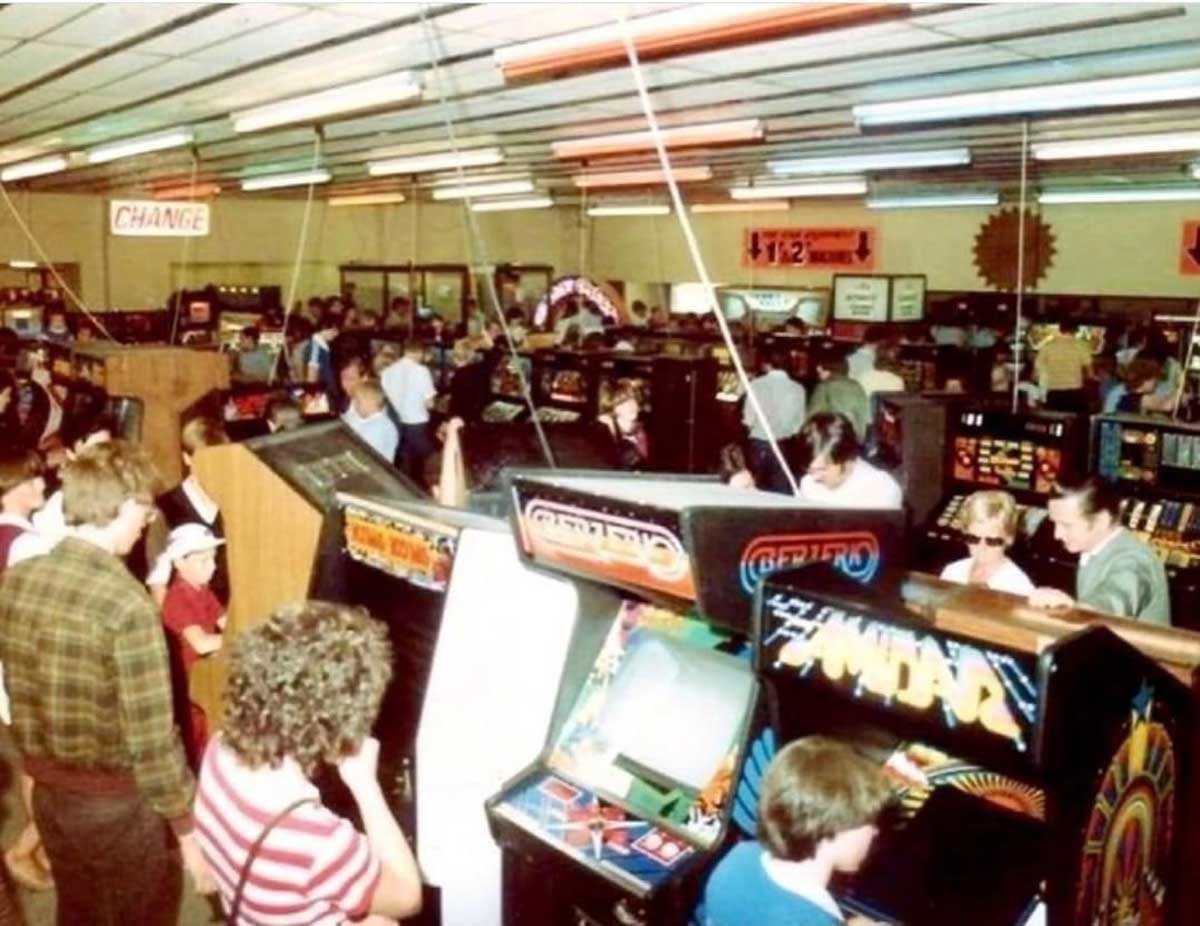
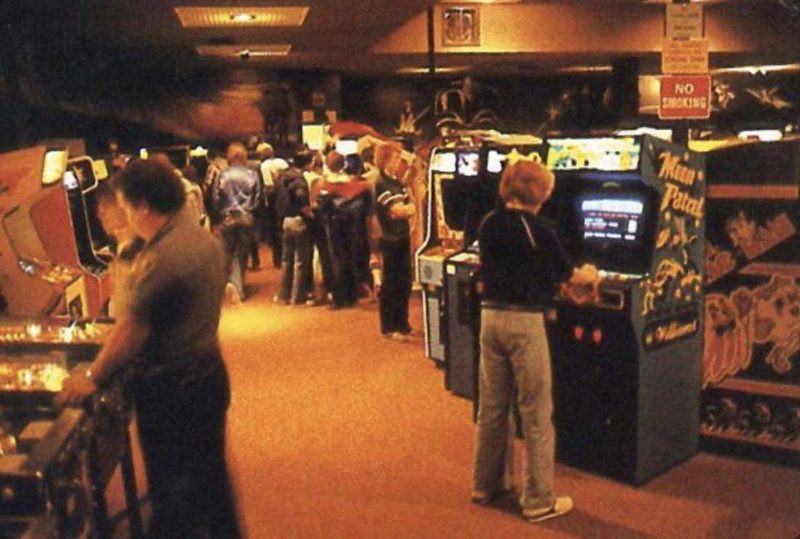
Walking into a dimly lit arcade in 1983 felt like crossing a border. Outside was Reaganomics, parachute pants, and homework. Inside: forty machines arranged in a horseshoe, the bass-throb of Tempest looping in stereo, the smell of carpet glue and pizza grease, and a kid in a Tron T-shirt holding court at Robotron with a line three deep behind him.
The Retro Almanac
A monthly roundup of "on this day" highlights from that month, decades back — plus first dibs on new retro merch drops. No spam, just the good stuff.
The Quarter That Started Everything
It started with a yellow circle eating dots. When Toru Iwatani’s Pac-Man landed in American arcades in October 1980, nobody at Bally Midway expected what came next. Space Invaders had already turned the country into a coin-shortage panic two years earlier — Japan literally ran low on 100-yen coins in 1979 because every available one was being dropped into Taito cabinets. Pac-Man took that energy and aimed it at people who didn’t think of themselves as gamers. Girls played. Office workers played. Grandmothers played. By the end of 1982 the game had grossed more than a billion dollars in quarters and inspired a Top 10 single, a Saturday morning cartoon, and a line of lunchboxes that practically ran the school yard.
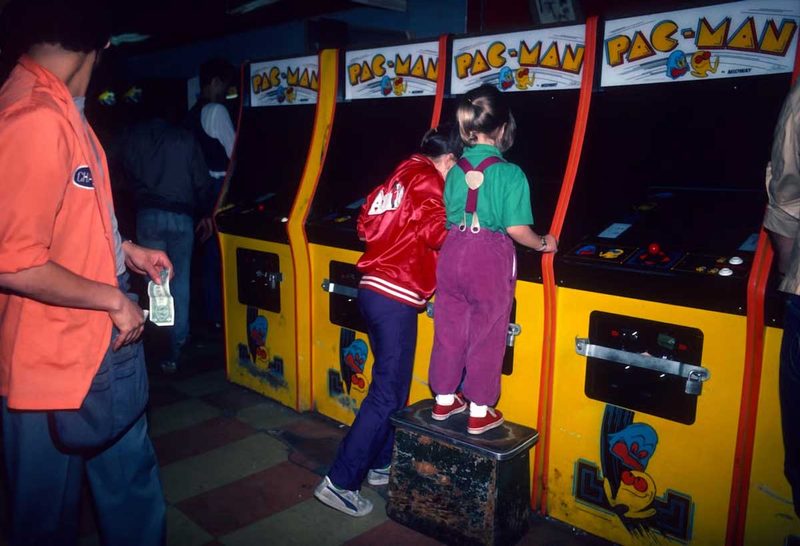
Pac-Man also did something no game had attempted at scale: it gave the player a personality to push against. The ghosts had names — Blinky, Pinky, Inky, Clyde — and they actually behaved differently. Blinky chased you. Pinky tried to ambush from the front. Inky pulled tricky angles. The result was the first arcade game that felt like a story rather than a target-shooting exercise. The maze became a personal landscape the way pinball tables had been for the previous generation, except now the maze remembered exactly how you usually screwed up.
Why the Cabinets Looked Like Spaceships
The hardware was theatre. Tron’s cabinet had a backlit translucent floor that pulsed blue. Discs of Tron came with a custom joystick housing shaped like an identity disc. Asteroids glowed with crisp vector lines that the era’s home TVs could not reproduce — the only way to see those graphics was to walk into an arcade. Cabinet artwork was hand-painted by guys like Larry Day and George Opperman using the same brush technique you found on circus posters and movie one-sheets. The cabinets weren’t furniture. They were attraction signs.
Operators understood the math behind the gloss. A standard upright cost an arcade owner about $2,500 in 1982 dollars. A popular one paid for itself in six to eight weeks. Pac-Man machines paid themselves off in three. The cabinet had to scream across a dark room and convince a kid with sixty cents in his pocket to spend it here instead of on Frogger two cabinets down. Every neon strip, every chrome trim piece, every blinking LED on the front bezel was a sales pitch — the same kind of attention-grabbing chrome that lived in the broader 80s technology boom reshaping the country.
Inside the Pizza Parlor Ecosystem
You didn’t really go to ShowBiz Pizza for the pizza. The food was a tax you paid to get into the room with the games, the same way the era when malls ruled everything turned shopping into something kids did socially instead of transactionally. Chuck E. Cheese, ShowBiz, Aladdin’s Castle, Funland — every American suburb had its arcade circuit, and each room had its own pecking order. The kid who could clear Donkey Kong on a single quarter was famous in a six-block radius. The kid who held the Galaga high score for two weeks straight got nodded at by older kids he’d never spoken to.
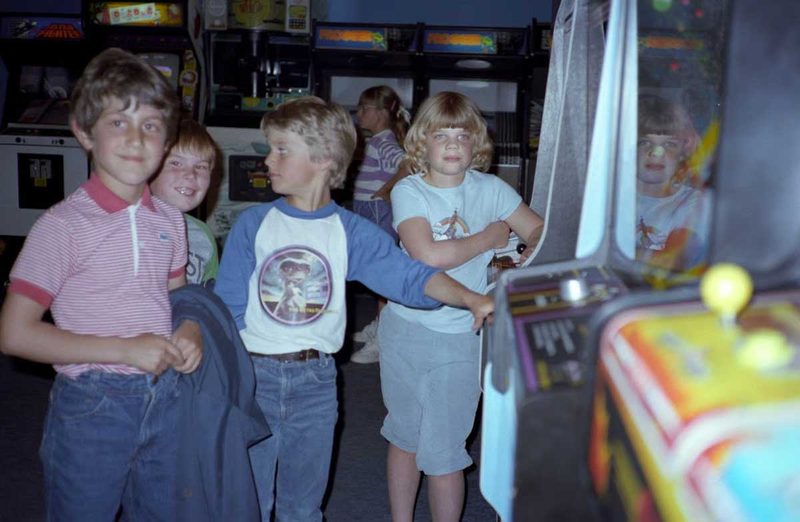
The arcade was also one of the few rooms in 80s America where the usual social pecking order came apart cleanly. The honor roll kid and the kid who got held back twice could stand at the same Joust cabinet and discover that one was a pterodactyl whisperer and the other couldn’t survive the second wave. Money helped — quarters were still quarters — but skill was the universal language. Nobody cared what Trapper Keeper you had if you couldn’t get past the first kill screen.

When Donkey Kong and Galaga Made Strangers Friends
Donkey Kong’s importance is hard to overstate. Shigeru Miyamoto designed it under nearly impossible constraints: Nintendo had a warehouse of unsold Radar Scope cabinets stranded in America and needed a game that would fit the existing hardware. He invented Jumpman (later renamed Mario), gave him a tragic motivation (rescue Pauline from a giant ape), and built the first arcade game to tell a story across multiple screens. It earned Nintendo $180 million in its first 18 months and turned a struggling Kyoto playing card company into the most important entertainment brand of the next forty years — a line that runs straight from the Donkey Kong cabinet to the NES launch four years later.
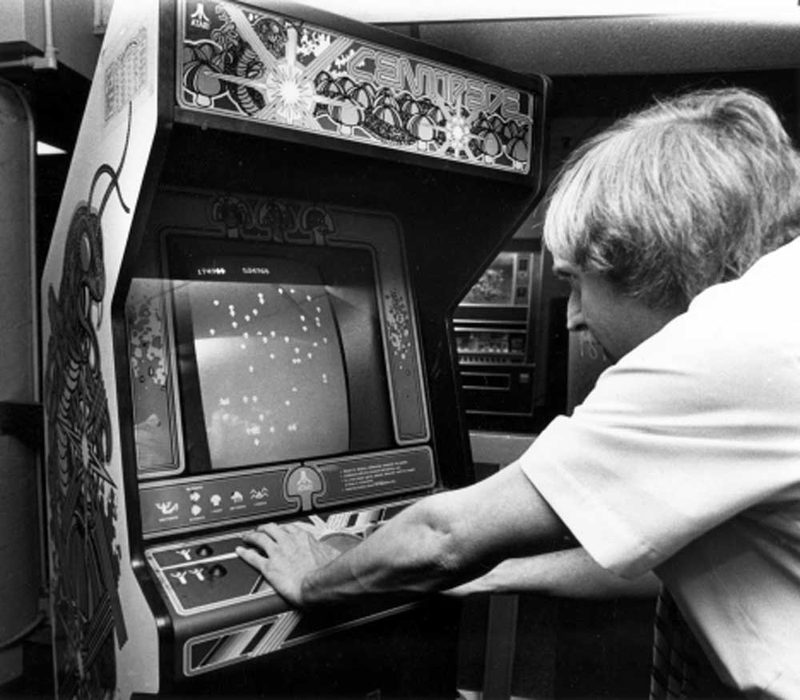
Galaga did something else important. Released by Namco in 1981, it perfected the dual-fighter mechanic — let yourself get captured by the alien tractor beam, then rescue your ship to fire twice the bullets. It was the first arcade game that rewarded losing on purpose with massive scoring upside, and it created a community of players who treated optimal play like a tournament chess opening. The Galaga high score chase produced the first wave of competitive gamers, the people who would later become Twin Galaxies record-keepers and eventually the speedrunners who dominate Twitch. Centipede, Defender, Asteroids, Tempest — every game on the floor had its own subculture of obsessives, and trading tips between them was the closest thing the suburbs had to a guild system.
The Score That Refused to Die
Walter Day opened Twin Galaxies in Ottumwa, Iowa in 1981 — a tiny arcade with a giant idea. Day decided someone needed to keep records of who actually was the best player in the world at each game, and his logbook turned into the Guinness Book of World Records’ official source for video game scores by 1984. The arcade as cultural object was now the arcade as competition arena, too. Billy Mitchell got famous for being the first person to roll Pac-Man, clearing all 255 perfect levels until the game’s split-screen kill bug stopped him cold. Steve Wiebe spent years chasing the Donkey Kong record. The documentary The King of Kong turned that obsession into a cult film in 2007.
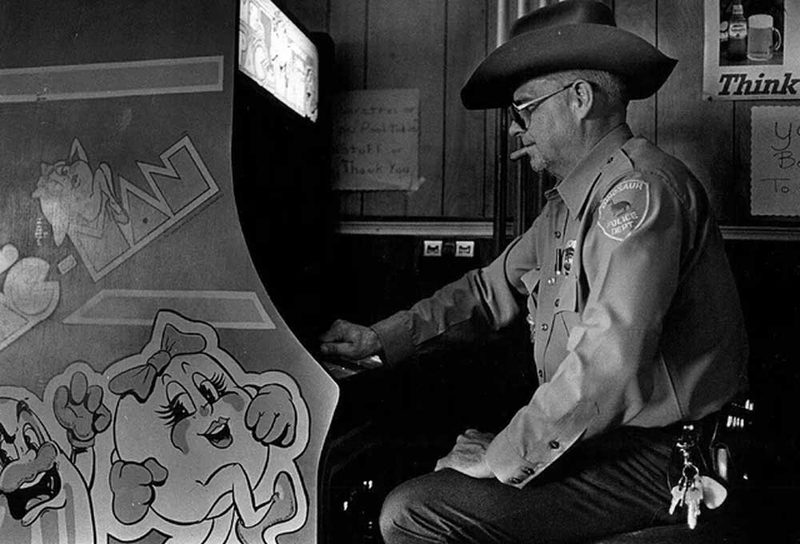
What’s striking is that the score chase outlived the arcade itself. The format moved to home consoles, then to Twitch, then to retro tournaments at Magfest and the Portland Retro Gaming Expo. The records are still being broken. As of 2024, the Donkey Kong world record sat above 1,272,000 points, set by John McCurdy. The cabinet is older than most of the people now trying to beat it, and the leaderboard refuses to settle.
How the 1983 Crash Saved the Arcade
Everybody talks about the 1983 video game crash as a console story. Atari took a billion-dollar hit, unsold E.T. cartridges got buried in a New Mexico landfill, and the home market collapsed so completely that big retailers like JC Penney refused to stock video games for two years. But here’s the part the headlines skipped: the crash actually helped the arcade. With consoles gone from store shelves, the arcade became the only legitimate venue for the country’s gaming itch. The cabinets that had to compete against an Atari 2600 in 1982 had no competition at all by 1984.

The arcade industry used those wilderness years to push hardware that home consoles simply could not match. Dragon’s Lair launched in 1983 with full-motion cartoon animation by ex-Disney animator Don Bluth that wouldn’t be possible at home until the CD-ROM era a decade later. Hang-On gave players the first force-feedback motorcycle in 1985. Out Run let kids drive a Ferrari Testarossa across digital Europe with a real steering wheel and gear shifter. The arcade kept the medium alive long enough for Nintendo to rebuild the console market with the NES launch on October 18, 1985. Without the arcade absorbing the medium between 1983 and 1985, gaming might have died as a fad.
What the Mall Arcade Left Behind
The American arcade business never really came back. By 1991 the average mall had lost half its arcade cabinets. By 1999 the form was effectively dead in the United States, killed by home consoles that finally caught up, by the PC, and by mall rents that no quarter-fed cabinet could pay. What survived migrated into Dave & Buster’s-style entertainment centers and adult barcades. Japan kept the format alive longer through gachapon centers and rhythm games, but American suburbia let it go without much of a fight — which is exactly the same story the rise and fall of the 80s arcade follows in slow motion.
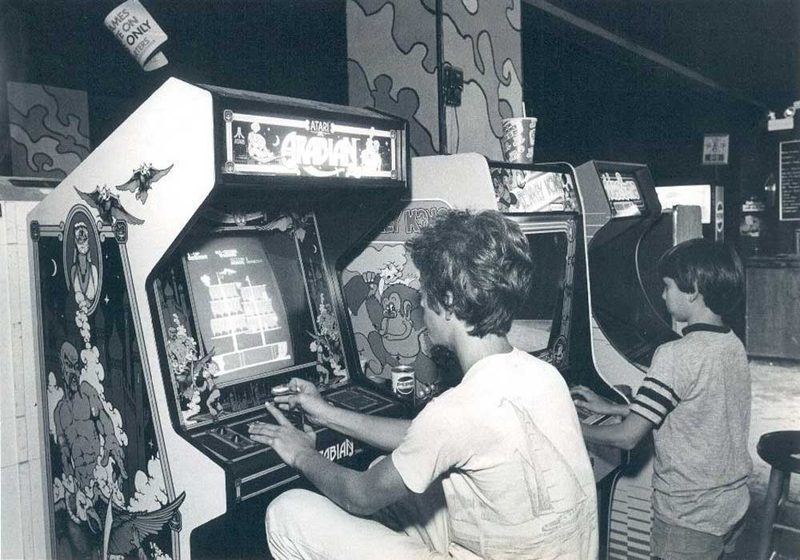
What’s left is a small but stubborn restoration scene — collectors paying $4,000 for a working Tempest cabinet, museums like the Strong National Museum of Play in Rochester preserving original units, and arcades like Ground Kontrol in Portland and Barcade in Brooklyn that turned the form into a destination experience for people who never played the originals. The cabinets refuse to die because they remember a kind of attention that doesn’t exist on a phone screen: you walked up, you put in a quarter, and you played until you died. No notifications. No saves. No friends list. Just you and the screen, until the screen won. That’s why a kid born in 2010 will still stop dead in front of a Galaga machine at a brewery and feed it singles until last call.

Sources
- BBC Culture: Pac-Man at 40, the game that changed the world — coin-op revenue and global impact context
- Twin Galaxies — official high score record-keeper from 1981 onward
- The Strong National Museum of Play — arcade cabinet preservation and the World Video Game Hall of Fame
- The International Arcade Museum (KLOV) — cabinet specs, release dates, and operator price history
- Smithsonian Magazine: arcade history and the King of Kong era — competitive scoring culture
Browse retro and vintage-inspired apparel at the RetroRadical shop →
The Retro Almanac
A monthly roundup of "on this day" highlights from that month, decades back — plus first dibs on new retro merch drops. No spam, just the good stuff.