Marshall Applewhite Heaven Gate: 39 Souls Believed They Would Board UFO Behind Hale-Bopp Comet
The Day That Shocked the World
On March 26, 1997, police officers responding to an anonymous welfare check discovered one of the most bizarre and heartbreaking crime scenes in American history. Inside a sprawling $1.6 million mansion in Rancho Santa Fe, California, lay 39 bodies arranged with chilling precision on bunk beds and mattresses. Each victim wore identical black clothing and brand-new Nike Decade sneakers. Purple shrouds covered their faces. In their pockets: exactly $5.75 — a five-dollar bill and three quarters.
They weren’t murder victims. They were members of Heaven’s Gate, a UFO cult led by Marshall Herff Applewhite, who believed that by ending their lives, they could shed their “human containers” and board a spaceship trailing the Hale-Bopp comet. Twenty-seven years later, their story remains one of the most disturbing examples of how charismatic leaders can manipulate desperate people searching for meaning.
The Unlikely Prophet from Texas
Marshall Herff Applewhite Jr. seemed an unlikely candidate to become America’s most infamous cult leader. Born in 1931 to a Presbyterian minister in Spur, Texas, he was a gifted performer who sang opera and acted in college productions. He served in the Army Signal Corps, married, had two children, and built a respectable career as a music professor at the University of Alabama.
But beneath the surface, Applewhite struggled with his sexuality in an era when being gay could destroy a career. His marriage fell apart. He was hospitalized for a “nervous breakdown” in 1970. It was there, according to reports, that he met Bonnie Lu Nettles, a nurse who would become his spiritual partner and co-founder of Heaven’s Gate.
Nettles, a mother of four with interests in astrology and the occult, believed the voices Applewhite heard might be communications from a higher realm. Together, they convinced themselves they were “The Two” witnesses mentioned in the Book of Revelation — divinely appointed to lead humanity to the next level of existence.
From “Bo and Peep” to Marshall Applewhite
In 1975, calling themselves “Bo” and “Peep,” the duo began recruiting followers for what they initially called Human Individual Metamorphosis (HIM). They traveled across the country holding meetings in community centers and hotels, promising people they could learn to transcend human existence and travel to heaven in a literal spaceship.
Their message found traction during the spiritual searching of the 1970s. Early followers included searching souls from the counterculture movement, people disillusioned with traditional religion, and those fascinated by the UFO phenomenon. At one point, the group camped in the Oregon desert, waiting for a UFO that never came.
When Nettles died of liver cancer in 1985, Applewhite was devastated. He renamed himself “Do” (pronounced “Doe”) and claimed that “Ti” (Nettles) had successfully graduated to the Next Level ahead of the group. Her death only strengthened his resolve to prepare his remaining followers for their own “transition.”
Life Inside the Heaven’s Gate Commune
By the 1990s, the group had settled into an increasingly regimented lifestyle. Members lived together in rented houses, sharing everything and following strict rules that included celibacy, identical clothing, and short, androgynous haircuts. At least eight male members, including Applewhite himself, underwent castration to eliminate sexual desires.
The group supported itself through “Higher Authority,” a web design business that was surprisingly successful. They created websites for clients while maintaining their own elaborate site that detailed their beliefs about Earth’s impending “recycling” and the spacecraft that would rescue true believers.
Members gave up their names, identities, families, and possessions. They called each other “brother” and “sister,” adopted new names ending in “-ody,” and followed schedules that included hours-long indoctrination sessions. Former member Rio DiAngelo later described it as “living like we were in a monastery.”
Hale-Bopp: The “Marker” They’d Been Waiting For
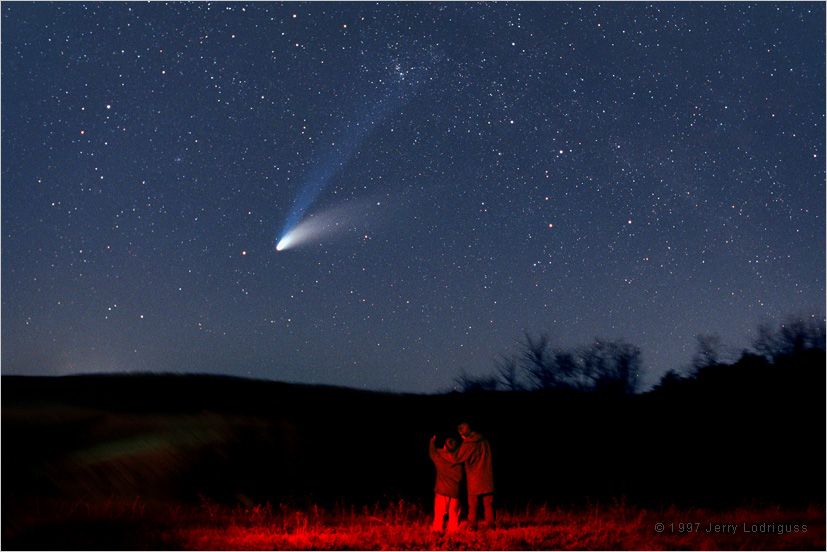
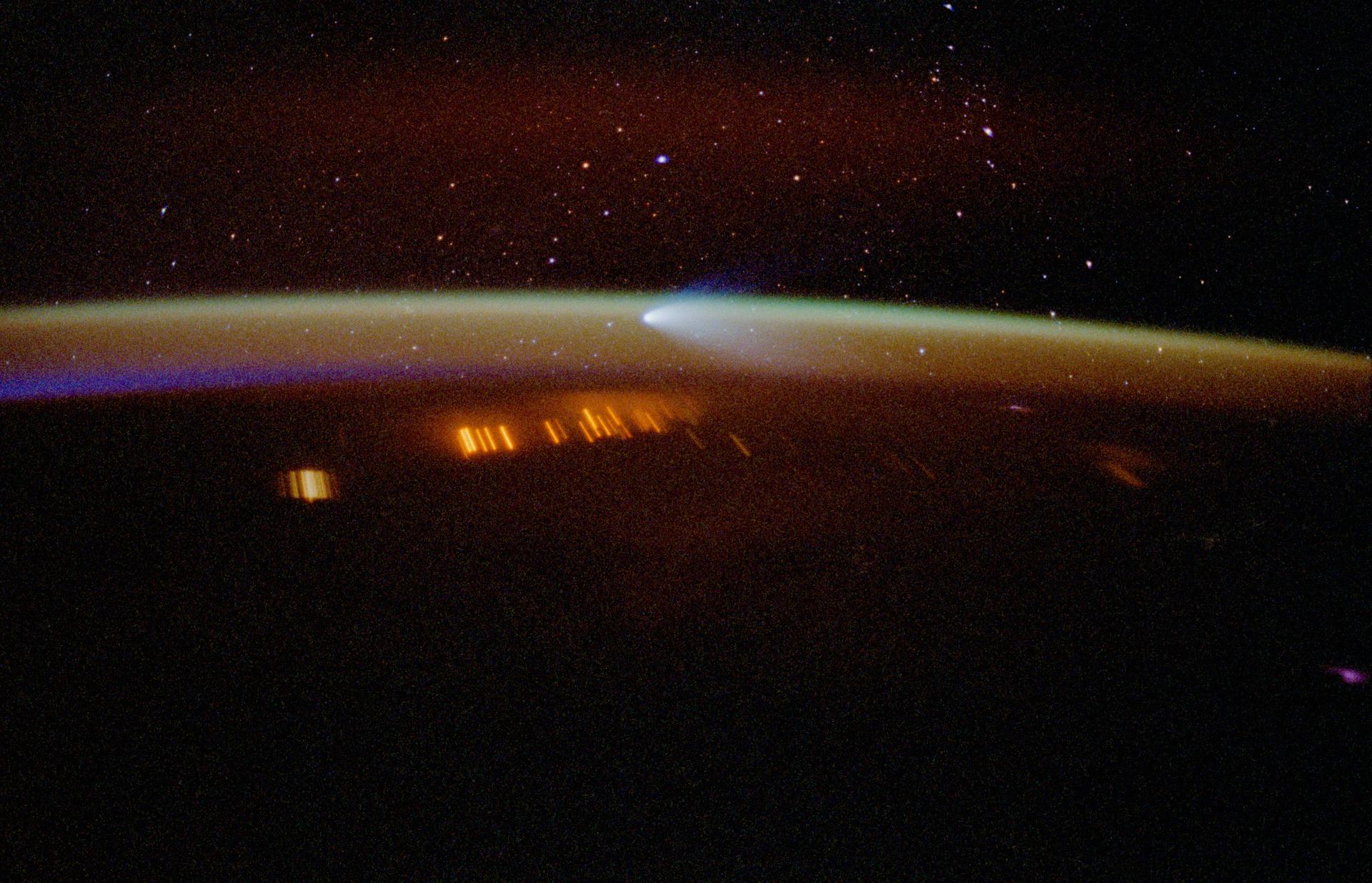
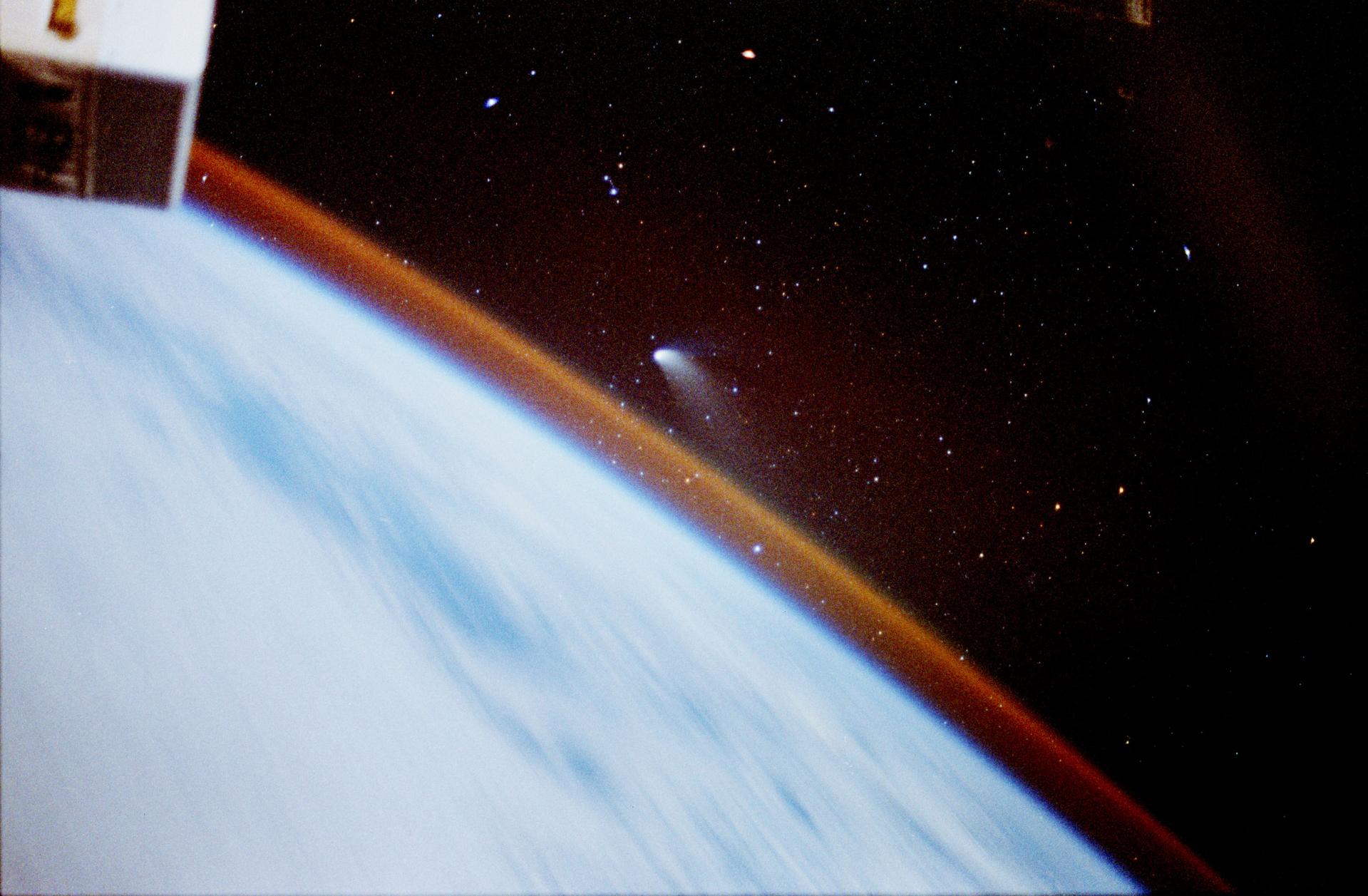
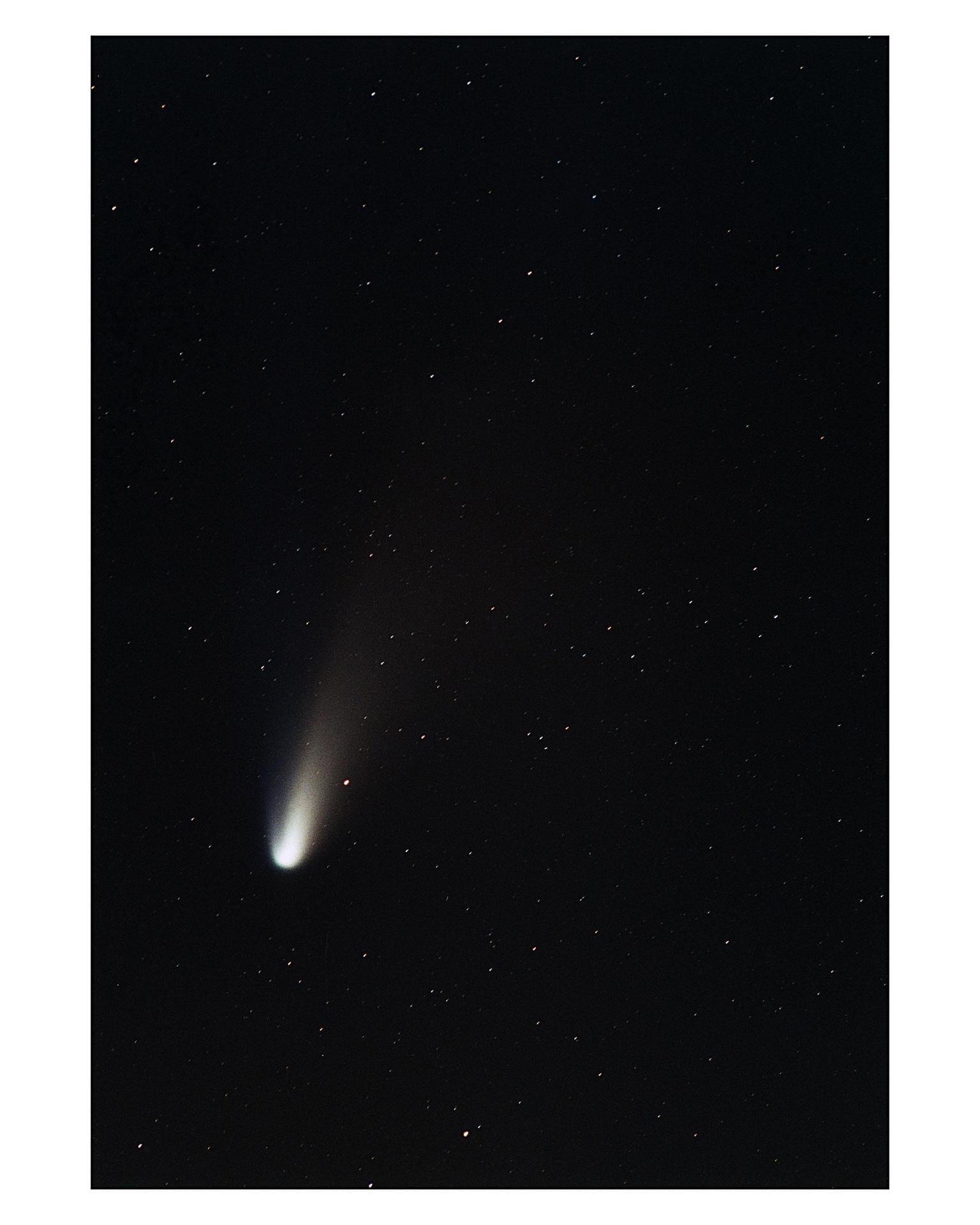
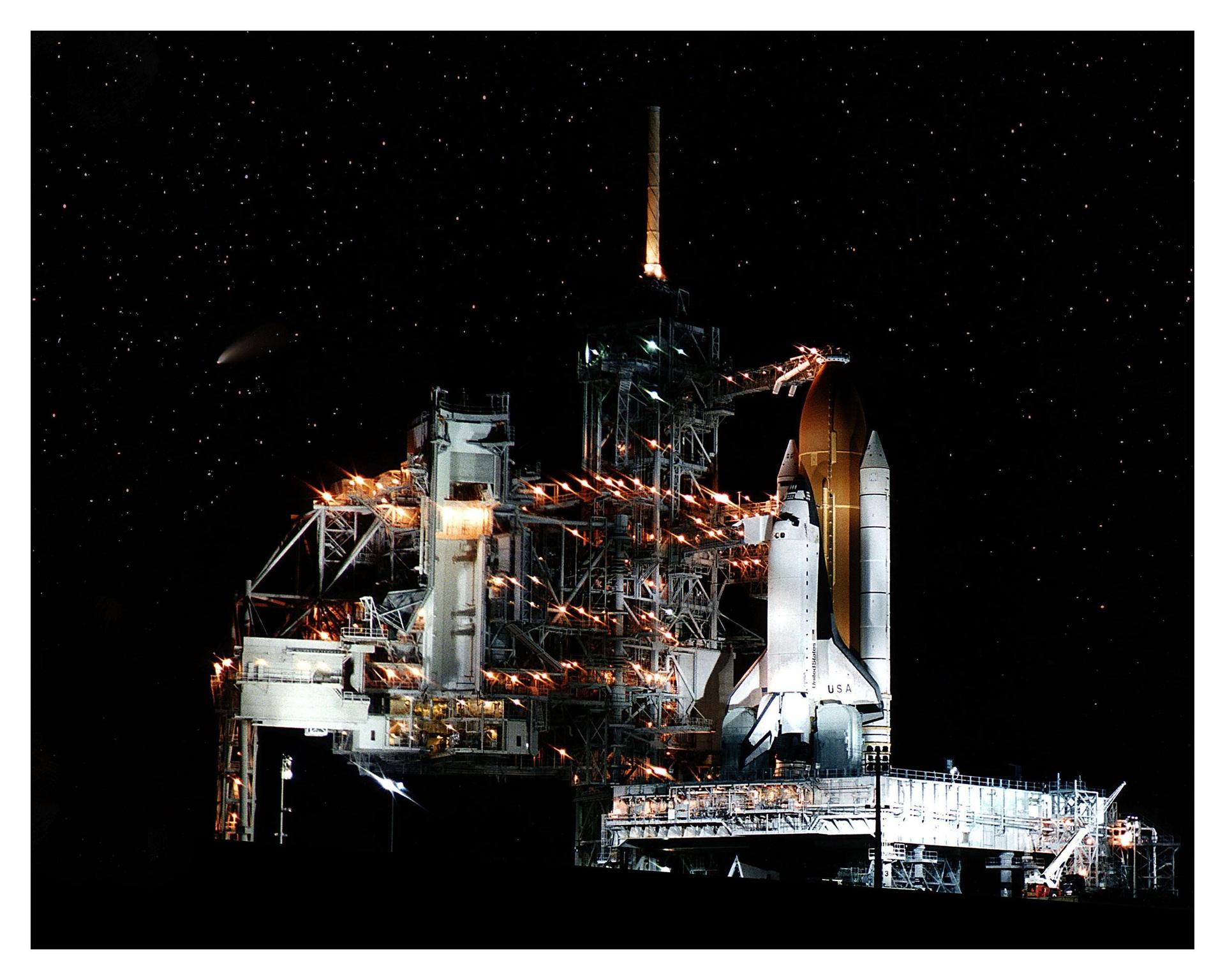
When Comet Hale-Bopp blazed across the night sky in late 1996 and early 1997, becoming one of the brightest comets in recorded history, Applewhite saw it as the sign he’d been waiting for. Amateur radio claims that a UFO was following the comet (later debunked) convinced him that the “Next Level” had finally sent the promised spacecraft.
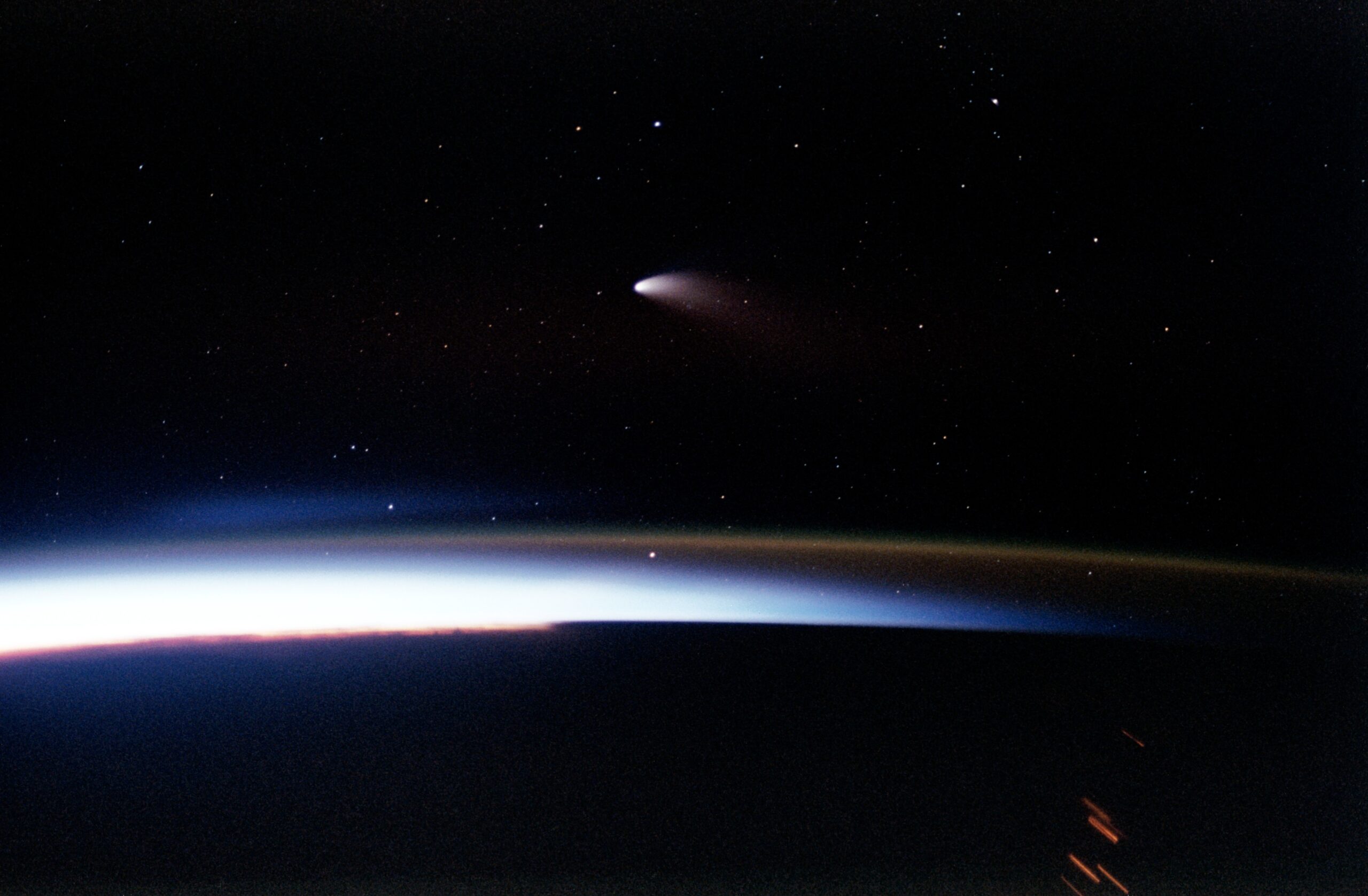
The comet’s closest approach to Earth was March 22, 1997 — just days before the mass suicide. To Applewhite and his followers, this was proof that their “graduation” time had arrived. They believed that by leaving their human bodies, their souls would join the crew of the extraterrestrial vessel hidden in the comet’s wake.
In March 1997, the group made their final preparations. They recorded farewell videos, with members speaking calmly about their excitement to leave Earth. “We are happily prepared to leave this world,” said one member. Another added, “I couldn’t be happier.”
The Final Three Days
The Heaven’s Gate mass suicide didn’t happen all at once. Over three days — March 24, 25, and 26, 1997 — the 39 members died in carefully orchestrated shifts. Fifteen died on the first day, fifteen on the second, and nine on the final day.
The method was sickeningly methodical. Members mixed phenobarbital (a powerful sedative) with applesauce or pudding, washed it down with vodka, then lay down on beds or mattresses. As each person slipped into unconsciousness, survivors would place a plastic bag over their head to ensure death, then cover the body with a purple shroud.
All wore identical black shirts, sweatpants, and brand-new black-and-white Nike Decade sneakers that the group had purchased in bulk for $548.45 on March 1, 1997. Each had exactly $5.75 in their pocket — money for their journey to the Next Level. The Nike Decades, originally released in 1993 as a budget running shoe, became forever associated with the tragedy.
The Cultural Shockwave
When San Diego County Sheriff’s deputies discovered the bodies on March 26, the scene was unlike anything they’d encountered. The methodical arrangement, the identical clothing, the purple shrouds — it looked like something from a science fiction film, not a California suburb.
The story exploded across global media. News crews descended on Rancho Santa Fe from around the world, including teams from Germany and Japan who had been covering the Academy Awards in nearby Hollywood. The footage and photographs from the scene are still among the most haunting images of the 1990s.
Nike faced uncomfortable questions about their unintended connection to the tragedy. “The Heaven’s Gate incident was a tragedy. It had nothing to do with Nike,” company spokesperson Jim Small told AdWeek. Saturday Night Live ruthlessly mocked the Nike connection with a fake commercial using the Beatles’ “Revolution,” the same song Nike had used in a famous 1987 ad.
The Internet Connection
Heaven’s Gate was among the first cults to fully embrace the internet. Their website, launched in the mid-1990s, was sophisticated for its time, featuring their complete doctrine, recruitment materials, and even streaming video — cutting-edge technology for 1997.
Remarkably, the Heaven’s Gate website remains online today, maintained by surviving former members Mark and Sarah King. Visiting it feels like stepping into a digital tomb — a perfect preservation of 1990s web design containing the final thoughts of people who believed they were about to transcend human existence.
The site includes detailed explanations of their beliefs, photos of members, and even practical information like the exact details of their Nike purchase. When Complex magazine contacted the site’s maintainers in 2015 to ask about the sneakers, they received a prompt reply explaining that “Do and the Class” chose the Nike Decades because they “were able to get a good deal on them.”
The Survivors and the Aftermath
Not everyone died that March. Rio DiAngelo, who had left the group three years earlier, was chosen to stay behind and spread the group’s message. It was DiAngelo who made the anonymous call to police after receiving the group’s farewell videotapes in the mail.
Two other former members, Wayne Cook and Charlie Humphreys, initially survived but committed suicide within months to “catch up” with their friends. Their deaths underscored the lasting psychological damage inflicted by Applewhite’s manipulation.
The families left behind struggled to understand how their loved ones had been drawn into such a destructive belief system. Many described their relatives as intelligent, caring people who had been searching for meaning and purpose when they encountered Heaven’s Gate.
The 90s Context: Why Heaven’s Gate Happened
The Heaven’s Gate tragedy didn’t occur in a vacuum. The 1990s were a time of millennial anxiety, UFO mania, and spiritual seeking. The decade that brought us pagers and early internet culture also saw an explosion in alternative spirituality, conspiracy theories, and New Age beliefs.
Television shows like “The X-Files” and movies like “Independence Day” reflected a cultural fascination with UFOs and government cover-ups. The approaching millennium created anxiety about the end times. The internet, still in its infancy, allowed fringe beliefs to spread faster than ever before.
Heaven’s Gate combined all these elements: end-times Christianity, UFO beliefs, internet savvy, and the promise of transcendence through technology. For people feeling disconnected in an increasingly complex world, Applewhite offered simple answers and the ultimate escape.
The Lasting Impact
Twenty-seven years later, Heaven’s Gate remains a cultural touchstone for understanding how ordinary people can be drawn into extraordinary delusions. The case influenced everything from cult exit counseling techniques to social media platform policies about dangerous content.
The Nike Decades have never been retroed, partly due to their dark association. The Rancho Santa Fe mansion was demolished, and even the street name was changed to help the community move on from the tragedy.
But perhaps the most chilling legacy is how eerily modern some of Heaven’s Gate’s ideas seem today. Their belief in uploaded consciousness, digital immortality, and transcendence through technology feels less like 1990s fringe thinking and more like contemporary Silicon Valley futurism.
Remembering the Victims
Behind the sensational headlines and cultural impact were 39 real people with families, dreams, and stories. They included a former circus performer, computer programmers, nurses, and students. The youngest was 26; the oldest was 72. Many had college degrees. Most came from middle-class backgrounds.
What united them wasn’t stupidity or mental illness, but a very human need for meaning, community, and hope. Marshall Applewhite exploited these universal desires, convincing intelligent people that death was actually a graduation ceremony.
Today, as we navigate an era of QAnon conspiracies, social media echo chambers, and digital radicalization, the Heaven’s Gate tragedy serves as a sobering reminder of how dangerous charismatic leaders can exploit our deepest vulnerabilities. The 39 people who died believing they would board a spaceship to paradise instead became cautionary tales about the dark side of faith without reason.
On this anniversary of that terrible March day, we remember not just the shocking nature of their deaths, but the human stories of lives manipulated, families destroyed, and dreams perverted by a man who convinced others to die for his delusions. Their tragedy echoes still, a warning from the past about the price of surrendering our critical thinking to those who claim to have all the answers.
Sources
- NBC San Diego. “Heaven’s Gate Mass Suicide Remembered 25 Years Later.” March 27, 2022.
- ABC News. “Heaven’s Gate survivor reflects on the cult’s mass suicide 25 years ago.” March 12, 2022.
- Complex Magazine. “Remembering the Nike Sneaker That Took One Cult to Heaven.” March 26, 2015.
- Historic Mysteries. “The Heaven’s Gate Cult.” July 15, 2024.
- San Diego County Sheriff’s Department. “Heaven’s Gate Case.” Official Record.
- NASA Astronomy Picture of the Day. “Hale-Bopp: The Great Comet of 1997.” March 31, 2007.
- Distractify. “The Heaven’s Gate Website Is Still Around — Is the Cult Active Too?” April 23, 2021.