On This Day: October 7, 1985 — Achille Lauro Hijacking
Four men walked onto the Achille Lauro that morning carrying Czech-made assault rifles hidden in suitcases, planning to disembark in Ashdod, Israel, and shoot their way off the ship during a port stop. The Israeli port visit got canceled. Their plan fell apart, and instead of a carefully staged attack on land, 320 crew and roughly 80 remaining passengers found themselves hostages on open water.
A Mediterranean Cruise Turns Into a Siege
Most of the ship’s 750-odd passengers were ashore in Alexandria, Egypt, touring the pyramids, when the gunmen moved. Led by 23-year-old Youssef Majed Molqi, the hijackers rounded up everyone still aboard and radioed demands: Israel had to release 50 Palestinian prisoners, including Samir Kuntar. The ship turned south along the Egyptian coast, trailed by an international fleet of warships and a press corps that had no idea what was actually happening belowdecks.
It was a strange year for high-profile assaults on people who’d done nothing to deserve them — four years after a gunman tried to assassinate Pope John Paul II in St. Peter’s Square, political violence still felt like something that happened to famous people in famous places, not tourists on a cruise. Cruise ship hijackings weren’t a category of crime most people had a mental file for in 1985. The Achille Lauro, a 23,000-ton former Dutch liner that had already survived a 1965 engine room fire and years of financial trouble, became the first instance anyone could point to. That alone made the story impossible for American newspapers to look away from.
The Retro Almanac
A monthly roundup of "on this day" highlights from that month, decades back — plus first dibs on new retro merch drops. No spam, just the good stuff.

The MS Achille Lauro, a 23-year-old Italian liner, was carrying roughly 750 passengers and crew when PLF gunmen seized it.
The Murder of Leon Klinghoffer
When the Egyptian government stalled, the hijackers picked a hostage to kill as a warning. They chose Leon Klinghoffer, a retired appliance manufacturer from New York who used a wheelchair after two strokes. Molqi shot him in the head and chest, then ordered crew members to throw his body and his wheelchair into the sea. His wife Marilyn, who was being treated for cancer in a separate part of the ship, wasn’t told he was dead until after the siege ended — the hijackers and later even the Egyptian government concealed the killing for days to keep negotiations alive.
That detail is the part that should stop anyone treating this as a straightforward adventure story. A man who couldn’t walk was murdered and dumped overboard specifically because he couldn’t fight back, and his family spent the next several days believing he was still alive. The hijacking only gets remembered as a geopolitical chess match if you skip past that.
A Deal, a Getaway, and an Intercept
PLO negotiator Abu Abbas talked the hijackers into surrendering the ship at Port Said on October 9 in exchange for safe passage out of Egypt, with assurances the gunmen would face Palestinian justice rather than Egyptian or American courts. Egypt put the hijackers and Abbas himself on an EgyptAir Boeing 737 bound for Tunis. President Reagan, who had just learned about Klinghoffer’s murder, authorized the Navy to go get them.
F-14 Tomcats launched from the USS Saratoga, found the airliner over the Mediterranean south of Crete, and flew close enough to confirm the registration number by eye before forcing it to land at NATO’s air base in Sigonella, Sicily. It was one of the only times an American carrier air wing has intercepted and diverted a civilian airliner in flight.
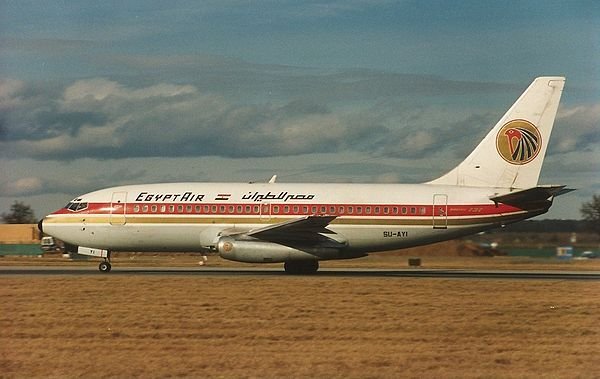
An EgyptAir Boeing 737 like the one carrying the hijackers out of Egypt — U.S. jets forced it down at NAS Sigonella on October 10.
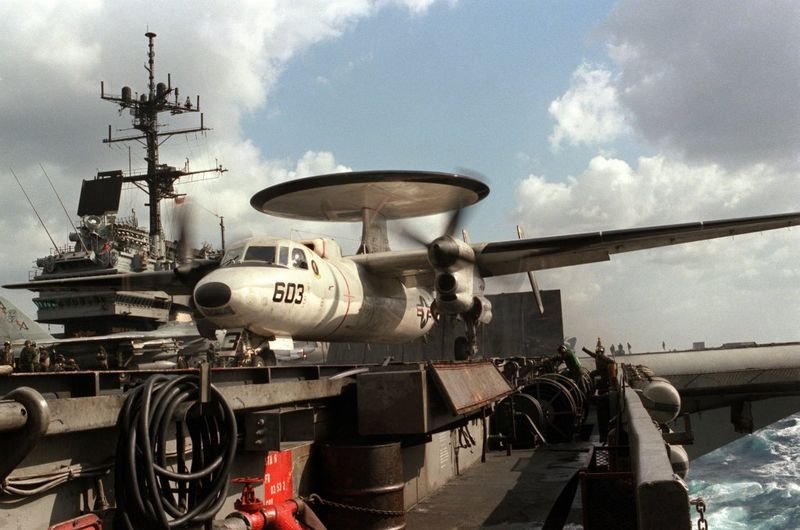
USS Saratoga, deployed in the Mediterranean, launched the F-14s that intercepted the hijackers’ escape flight.
Reagan’s Problem: Two Allies, One Runway
Forcing the plane down didn’t end anything cleanly — it just moved the standoff onto a runway in Sicily. American Delta Force troops surrounded the jet, then found themselves surrounded in turn by Italian soldiers who refused to hand the hijackers over to U.S. custody on Italian soil. Five tense hours later, Washington backed down and let Italy take jurisdiction, a decision that infuriated the White House but avoided a shootout between two NATO allies on a runway.
It got worse from there. Italian authorities let Abu Abbas, who the U.S. wanted for orchestrating the hijacking, board a Yugoslav airliner and leave the country entirely, citing diplomatic immunity. Reagan’s National Security Advisor Robert McFarlane briefed him on the fallout while the president was on an unrelated campaign stop at the Sara Lee plant in Deerfield, Illinois — a strange, ordinary-looking setting for a conversation about an international hostage murder. It’s a different kind of standoff than the one Reagan picked four years earlier when he fired every striking air traffic controller in the country, but the same instinct is visible in both: hold the line in public, let the fallout sort itself out later.

Reagan gets briefed by NSA Robert McFarlane on the Achille Lauro crisis, October 10, 1985.
Abbas’s escape also helped topple a government: Italian Prime Minister Bettino Craxi’s coalition partners were furious enough that it contributed to his cabinet’s collapse months later. Egypt’s President Mubarak, meanwhile, felt publicly humiliated that the U.S. had forced down a plane carrying his country’s own diplomatic guarantee of safe passage. One hijacking, two strained alliances.
Why October 7, 1985 Still Echoes
Molqi and his three accomplices were convicted in Italy — Molqi got 30 years, though he was later released early and recaptured after fleeing to Spain. Abu Abbas was convicted in absentia and lived freely until U.S. forces captured him in Iraq in 2003, where he died in American custody the following year. Klinghoffer’s daughters spent years afterward pushing Congress toward tougher laws against maritime terrorism, and the case became a standard reference point anytime hostage negotiations involve a hijacked vessel.
The hijacking also outlived the headlines in a stranger way: composer John Adams turned it into the 1991 opera “The Death of Klinghoffer,” which is still fought over today for how it portrays the hijackers. 1985 already had a complicated relationship with international diplomacy — the same summer, a Maine schoolgirl named Samantha Smith had been the country’s most famous unofficial Cold War peacemaker, and within weeks that same year’s optimism ran straight into a hostage’s body in the Mediterranean. Forty-one years on, the Achille Lauro remains the case study for what happens when a cruise ship becomes a hostage situation on open water, with no coast guard able to simply surround the building.
You can trace a straight line from this one week in 1985 to the airport security and maritime law overhauls that followed — most hostage-rescue playbooks written since have a line item for “what if it’s a ship.” That’s not a trivial legacy for four men with smuggled rifles and a plan that fell apart on day one.
Sources
- Achille Lauro hijacking — Wikipedia — Timeline, casualties, and trial outcomes.
- Informal Exchange With Reporters on the Achille Lauro Hijacking Incident — Reagan Presidential Library — Reagan’s own October 10, 1985 remarks on the capture.
- U.S. Navy fighter jets intercept Italian cruise ship hijackers — History.com — Account of the Sigonella intercept.
- When U.S. Navy F-14 Tomcats Intercepted the EgyptAir 737 — The Aviation Geek Club — Details on the F-14 intercept from USS Saratoga.
The Retro Almanac
A monthly roundup of "on this day" highlights from that month, decades back — plus first dibs on new retro merch drops. No spam, just the good stuff.