
On This Day: Tara Lipinski, Youngest World Skating Champion
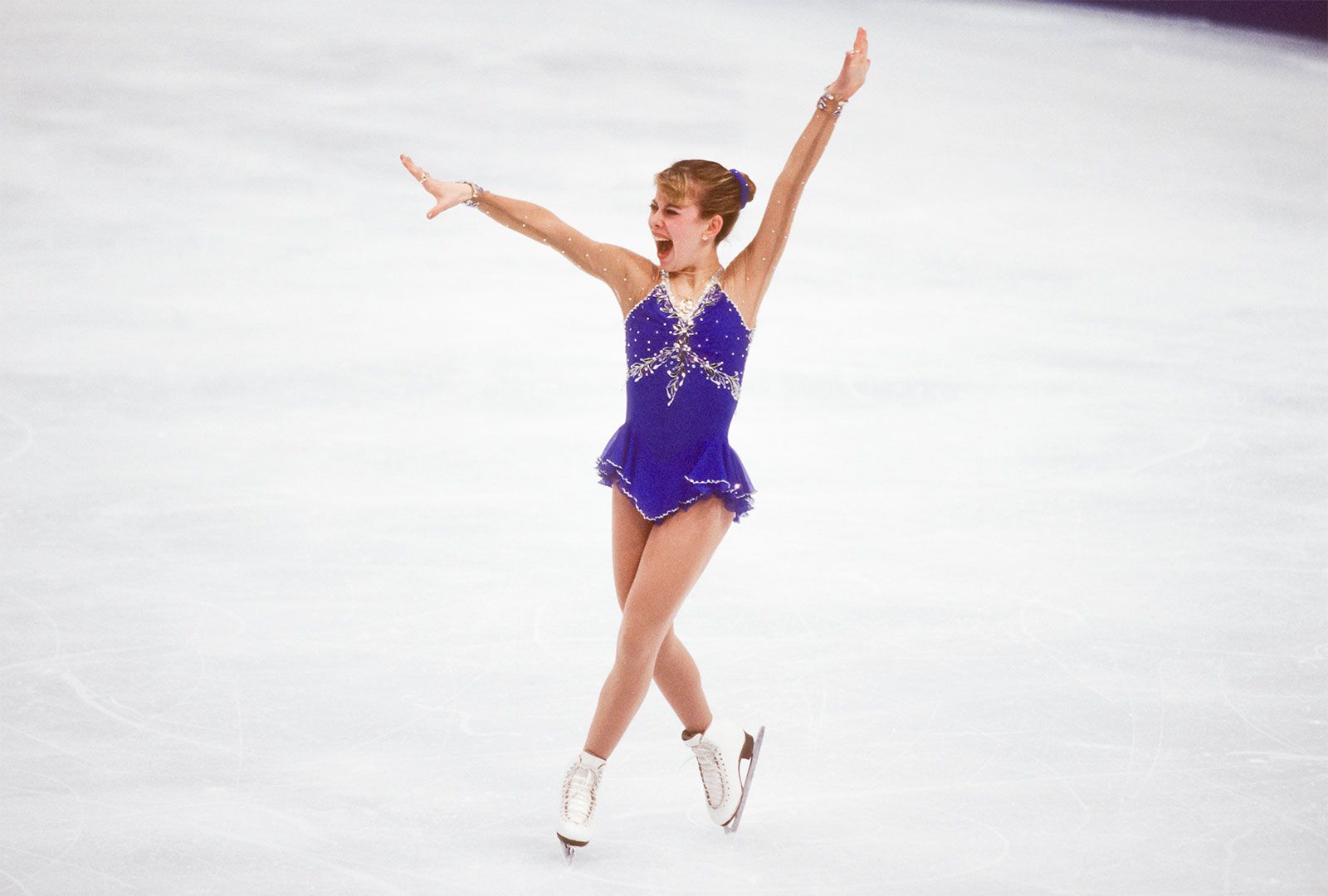
The CIG de Malley arena in Lausanne, Switzerland was buzzing with anticipation on March 22, 1997. Thousands of figure skating fans packed the stands, television cameras were rolling for a global broadcast, and a tiny 14-year-old from Texas was about to do something that hadn’t been done in 70 years. When Tara Lipinski stepped off the ice that evening, she had shattered Sonja Henie’s long-standing record to become the youngest women’s World Figure Skating Champion in history.
It was one of those moments that defined the 1990s — a decade when young prodigies seemed to appear everywhere, from the tennis courts to the ice rinks, reminding us that greatness doesn’t wait for permission.
From Roller Rinks to Ice Rinks
Tara Kristen Lipinski was born on June 10, 1982, in Philadelphia, Pennsylvania. Her journey to the top of the figure skating world began not on ice, but on wheels. As a young girl, Tara was a roller skating prodigy, winning the national championship in her age group at just nine years old. But she had already been taking ice skating lessons for about three years by then, and when her family relocated to Sugar Land, Texas — a suburb of Houston — she turned her full attention to the ice.
The dedication required was staggering. Most mornings, young Tara was on the ice by 4:00 AM, and she spent her summers training with coaches in Delaware. In 1993, she and her mother moved to Delaware full-time so she could get the elite coaching she needed, while her father stayed behind and visited on weekends. Two years later, they moved again — this time to the Detroit suburbs — where she began training under coach Richard Callaghan, the man who would guide her to the top of the world.
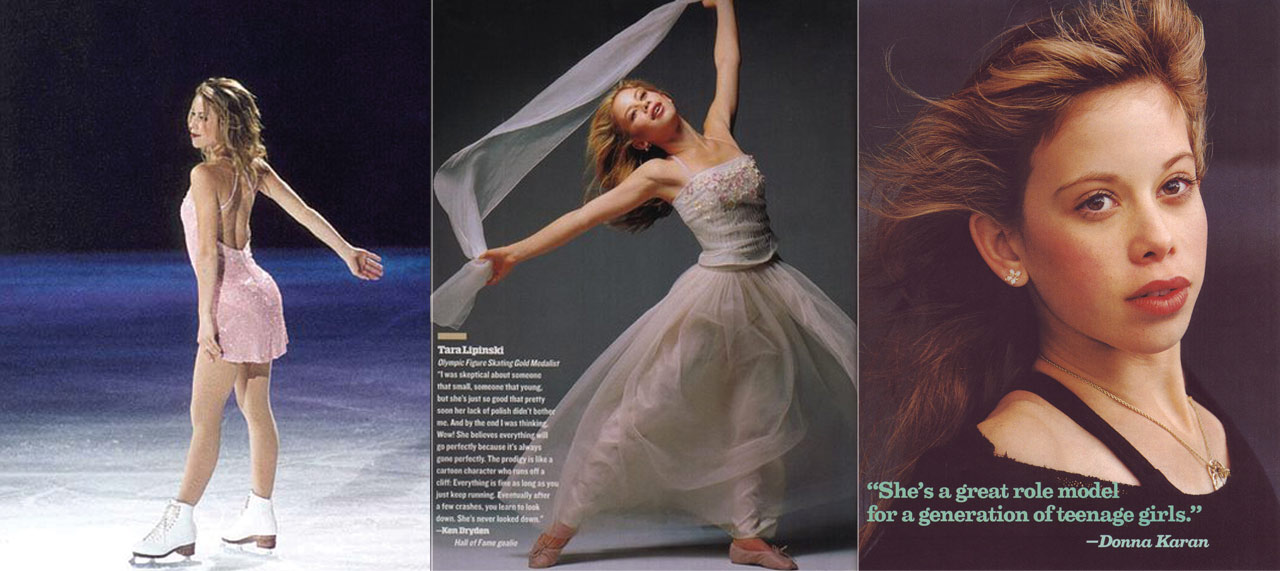
The sacrifices paid off almost immediately. In 1994, at age 12, Lipinski became the youngest female gold medalist at the U.S. Olympic Festival. She was climbing the ranks at a pace that made even seasoned skating observers do a double-take. By 1996, competing at the senior level for the first time at the U.S. Championships, she placed third. She finished 15th at the World Championships that year — a respectable showing for a 13-year-old, but it was merely a warm-up for what was to come.
The Road to Lausanne
The 1996-97 season was when Tara Lipinski announced herself to the world in spectacular fashion. During the ISU Champions Series, she finished second at Skate Canada, third at the Trophée Lalique, and second at the Nations Cup. Then she won the gold medal at the Champions Series Final, defeating none other than the reigning star of American figure skating, Michelle Kwan.
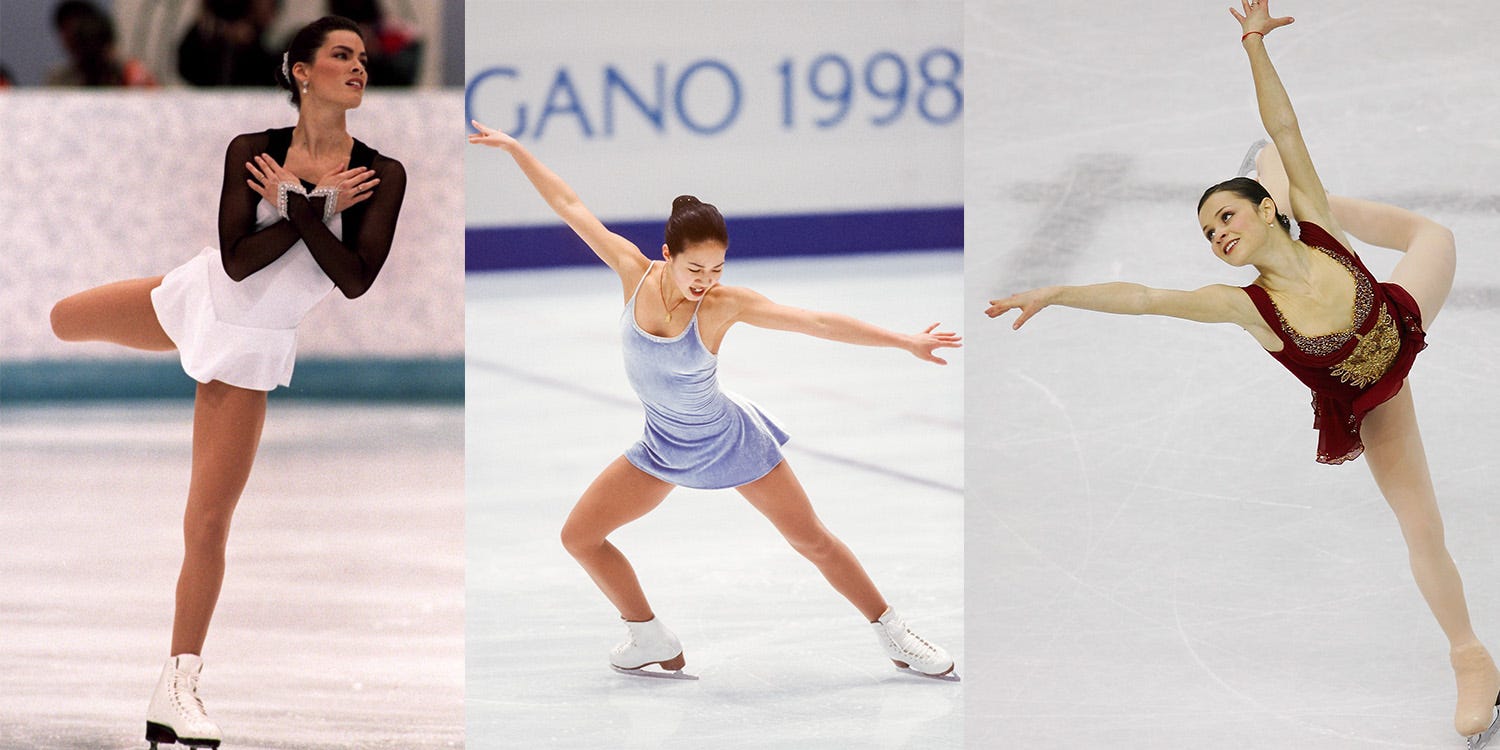
In February 1997, just weeks before the World Championships, Lipinski won the U.S. National Championships in Nashville, Tennessee, becoming the youngest skater ever to claim that title. She was the first woman in competition history to land the triple loop-triple loop combination — a jump sequence so technically demanding that many skating experts thought it was beyond the capability of someone her size and age. But Tara Lipinski was not most skaters.
She arrived in Lausanne, Switzerland in March 1997 as the U.S. champion, the Champions Series Final winner, and with a reputation as the most electrifying young talent in figure skating. The question on everyone’s mind: could a 14-year-old really win the world title?
Seven Triple Jumps and a Shattered Record
The 1997 World Figure Skating Championships were held at the CIG de Malley arena in Lausanne from March 16-23. The ladies’ competition came down to two American skaters — Lipinski and Michelle Kwan — with Russia’s Irina Slutskaya lurking as a dangerous contender. It was the first time in years that the U.S. had two legitimate gold medal favorites at the same competition.

Lipinski struck first in the short program, delivering a clean and technically brilliant performance choreographed by Sandra Bezic. She landed every element with precision and earned first place, giving herself a crucial advantage heading into the free skate. Kwan, the more experienced and artistically polished skater, was right behind her.
The free skate was where it all came together. Lipinski was the last skater to perform, and she delivered what reporter Jere Longman described as “a light, airy performance” that was “composed and nearly flawless.” She completed seven triple jumps, including her signature triple loop-triple loop combination — the jump that had already made history earlier that season. Her jumps were described as “the cleanest and surest in women’s figure skating,” though one rival coach couldn’t help noting that “you couldn’t have put a piece of paper under them” — a backhanded compliment about the relatively low height of her jumps, but an acknowledgment of their technical perfection.
The results were incredibly close. Kwan actually received more first-place votes in the free skate alone, but Lipinski’s victory in the short program gave her the edge she needed in the overall standings. When the final scores were tallied, Tara Lipinski was the new World Champion. Kwan took silver, and Slutskaya earned bronze.
At 14 years and 9 months old, Lipinski had broken a record that had stood since 1927, when Norwegian legend Sonja Henie won the World Championship at age 14. Henie was roughly a month older than Lipinski at the time of her win. It was the first time the United States had finished first and second at the World Championships since Kristi Yamaguchi’s era in 1992.
Breaking Sonja Henie’s Record
To understand the magnitude of what Lipinski accomplished, you have to appreciate the record she broke. Sonja Henie was the most dominant figure skater in history — a three-time Olympic gold medalist (1928, 1932, 1936) and ten-time consecutive World Champion (1927-1936) who went on to become a Hollywood movie star. When Henie won her first World title in 1927, she was 14 years old and became the youngest woman to ever do so.
That record stood unchallenged for seven decades. Multiple generations of the greatest women’s skaters in history — from Peggy Fleming to Dorothy Hamill to Katarina Witt — came and went without anyone breaking it. Then along came a teenager from Texas who trained before sunrise and dreamed of Olympic gold since she was old enough to stand on skates.
What makes this record even more remarkable is that it may never be broken again. The International Skating Union (ISU) later raised the minimum age for competing at the World Championships, making it virtually impossible for anyone younger than Lipinski to compete at that level. Her record is frozen in time — much like the ice she dominated.
The Rivalry That Defined an Era
The Lipinski-Kwan rivalry was the defining storyline of 1990s figure skating. Michelle Kwan was everything the skating establishment loved — graceful, artistic, mature beyond her years, and a master storyteller on ice. Lipinski was the opposite — an explosive jumper, a fearless technician, and an energy ball who attacked every program with the enthusiasm of a kid at a 90s birthday party.
Their rivalry pushed both skaters to extraordinary heights. Kwan would go on to win five World Championships and become arguably the greatest American figure skater of all time. But on that March evening in Lausanne, it was Lipinski who stood on top of the podium.
Years later, Lipinski reflected on the rivalry with deep respect. “I’m so lucky to have Michelle competing against me — she pushed me and made me a better skater,” she said. Kwan returned the sentiment, noting that while the media built up an intense rivalry, “there was a deep respect for one another.”
From World Champion to Olympic Gold
If anyone thought the 1997 World Championship was the peak of Lipinski’s career, they were wrong. Less than a year later, at the 1998 Winter Olympics in Nagano, Japan, she would do it again — this time on the biggest stage in sports.
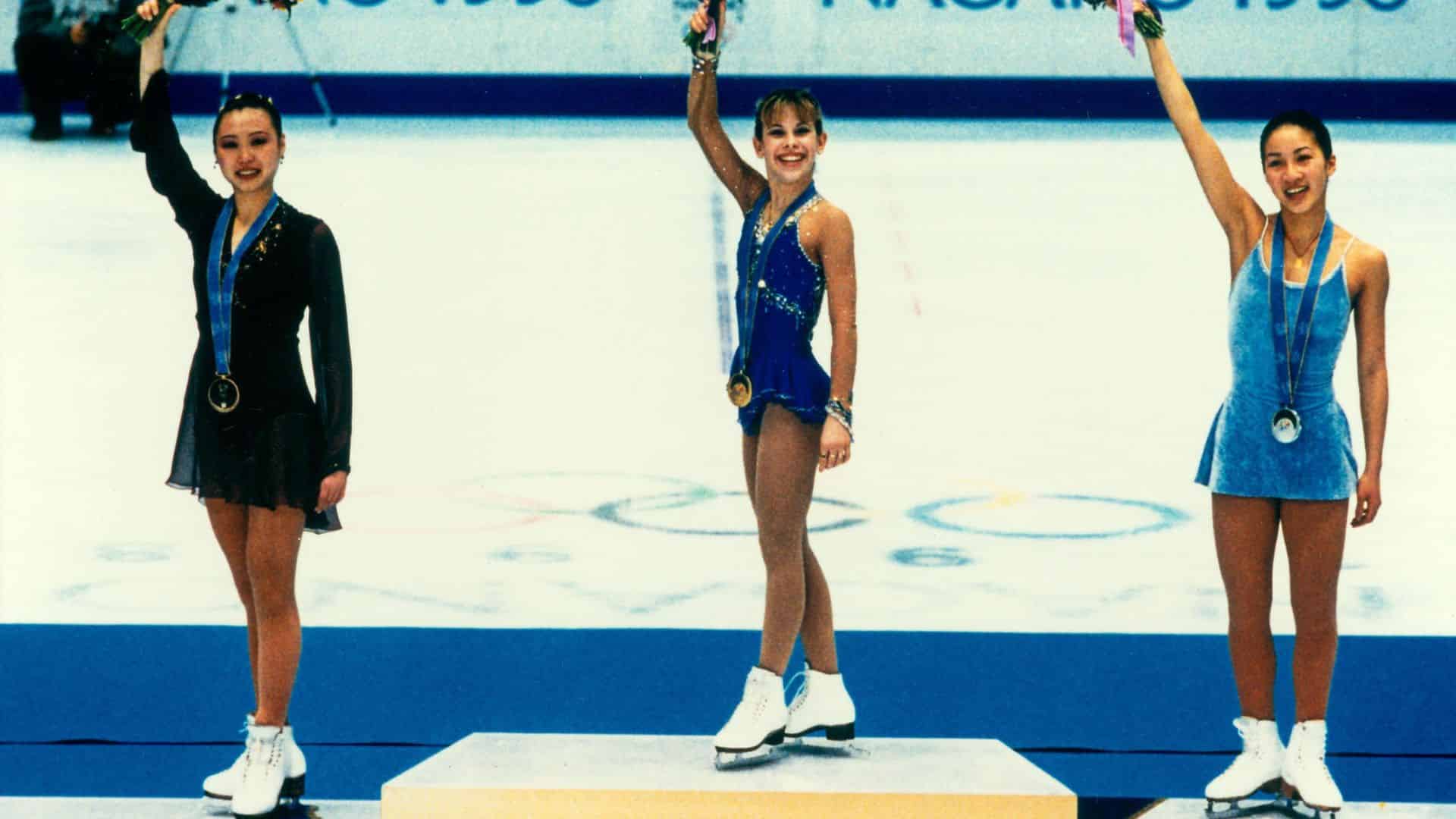
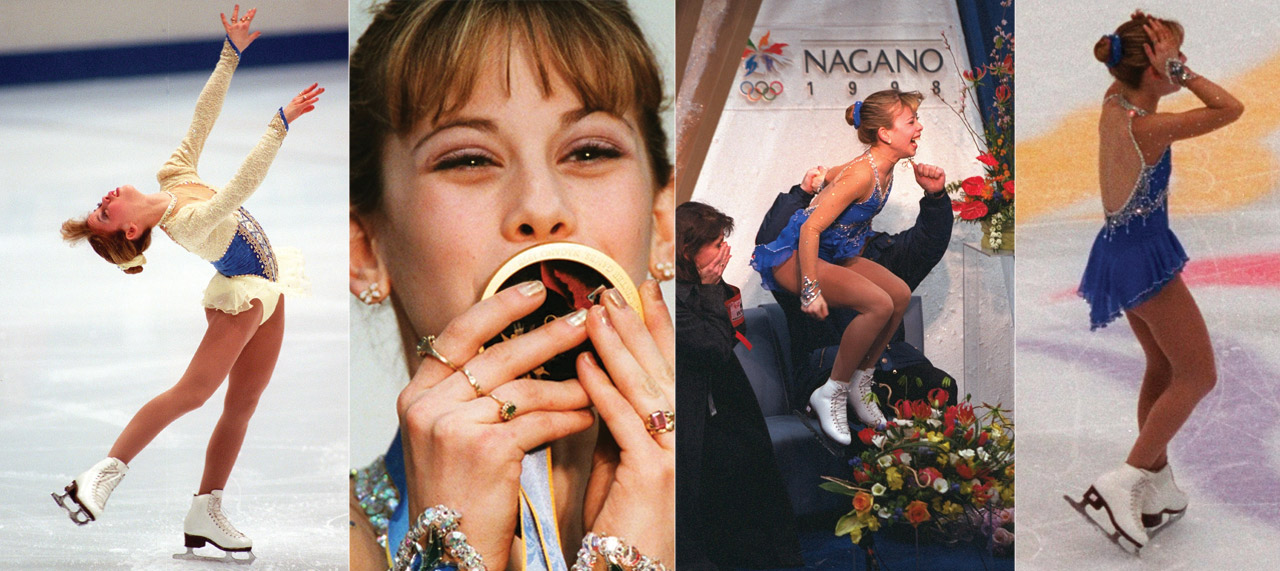
The 1998 Olympic women’s figure skating competition was one of the most-watched sporting events of the decade. Kwan led after the short program, but Lipinski’s exuberant free skate — featuring seven triple jumps including her trademark triple loop-triple loop and a difficult triple toe loop-half loop-triple Salchow combination — won her the first-place votes of six of the nine judges. At 15 years and 255 days old, she became the youngest individual gold medalist in Winter Olympic history, once again breaking Sonja Henie’s record.
It was the performance of a lifetime, delivered by someone who wasn’t even old enough to drive.
Life After the Ice
Following her Olympic triumph, Lipinski decided not to defend her World Championship title and turned professional in April 1998. She headlined major tours like Stars on Ice and Champions on Ice, performing in over 300 live shows across North America. Her professional career was hampered by a series of hip injuries, but she transitioned seamlessly into broadcasting.

Starting in 2009, Lipinski began working as a figure skating commentator, and by 2014, she had joined NBC alongside fellow former skater Johnny Weir. The pair quickly became one of the most popular broadcasting duos in sports, known for their expert analysis, genuine enthusiasm, and undeniable chemistry. They’ve covered multiple Winter Olympics together, bringing the same energy and passion to the broadcast booth that Lipinski once brought to the ice.
In 2006, Lipinski became the youngest skater ever inducted into the U.S. Figure Skating Hall of Fame — yet another “youngest” record to add to her remarkable collection.
A Moment Frozen in Time
On this day in 1997, a 14-year-old girl from Sugar Land, Texas stood in front of the world and proved that records exist to be broken. Tara Lipinski’s victory at the World Figure Skating Championships in Lausanne wasn’t just about athletic achievement — it was about the pure, unbridled joy of a young person doing exactly what she was born to do.

The 1997 World Championships were also notable for Elvis Stojko winning the men’s title and the somber news of Scott Hamilton’s testicular cancer diagnosis. But it was Lipinski’s breakthrough that captured the world’s imagination and set the stage for one of the most memorable Olympic moments of the following year.
Nearly three decades later, Lipinski’s record as the youngest World Figure Skating Champion still stands — protected by new age requirements that ensure no one will ever be quite as young, quite as fearless, or quite as remarkable as Tara Lipinski was on that unforgettable March evening in Switzerland. It’s a record that belongs not just to her, but to an entire era when the 1990s showed us that anything was possible.