90s Hip-Hop Fashion That Defined Street Style
In 1986, an Adidas executive watched 40,000 fans inside Madison Square Garden hold their sneakers in the air on cue from Run-DMC. The next morning, the brand cut the first million-dollar endorsement deal hip-hop had ever seen. That moment did not just change sneaker marketing — it set the rules for a decade of 90s hip-hop fashion that rewired how America got dressed.
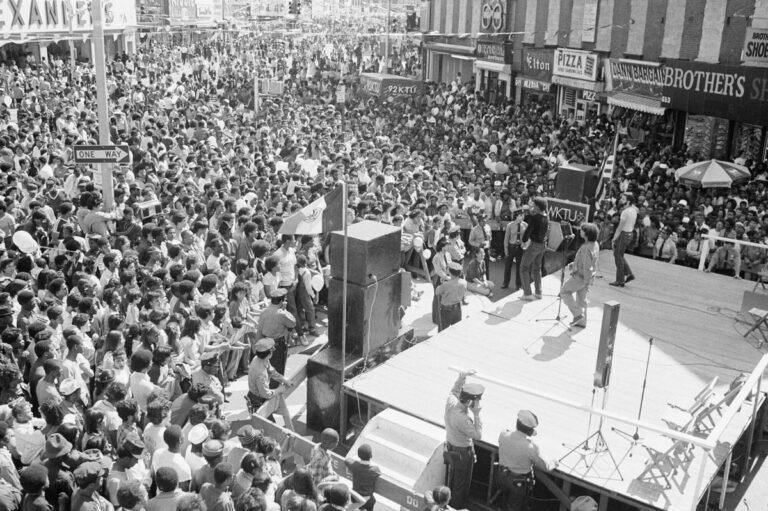
The look that took over the 90s started on stoops in Queens, parking lots in Compton, and corner stores in the Bronx. By the time it landed on Paris runways, the people who built it had been doing it for years on $40 budgets. The decade turned streetwear from a regional uniform into the loudest commercial force in fashion, and most of it got there without permission from anyone who normally decides what is cool.
The Retro Almanac
A monthly roundup of "on this day" highlights from that month, decades back — plus first dibs on new retro merch drops. No spam, just the good stuff.
The Run-DMC Blueprint
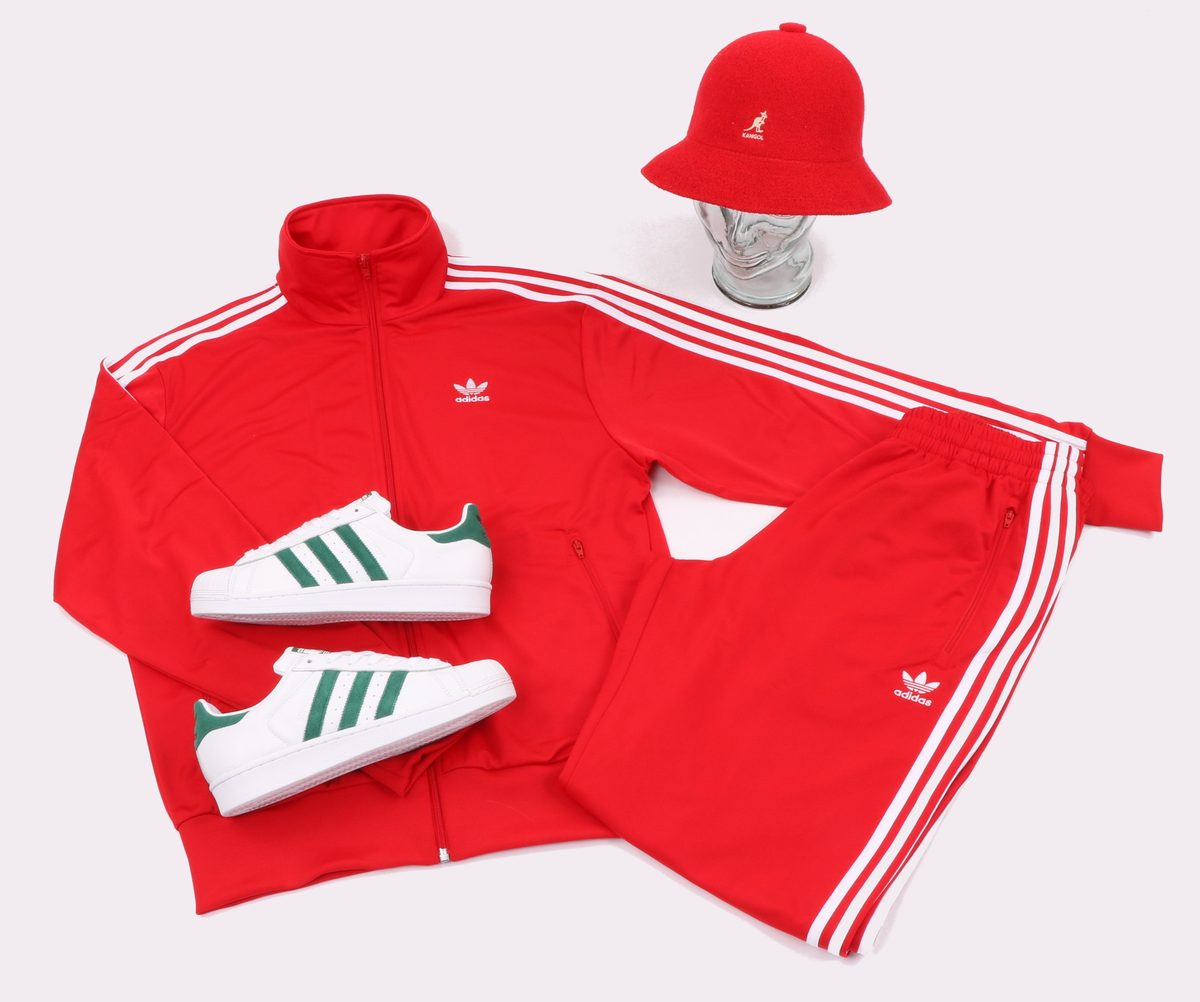
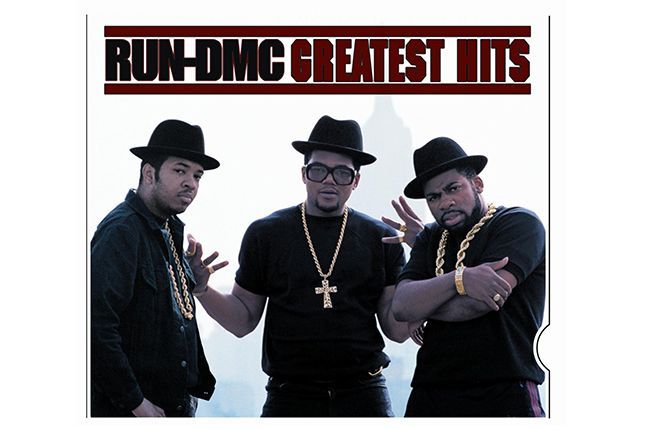
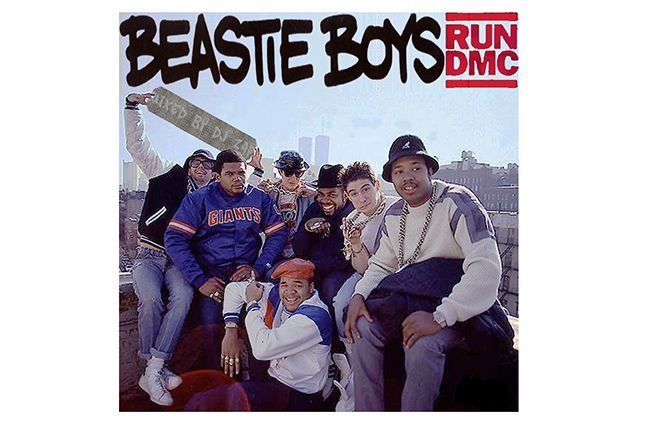
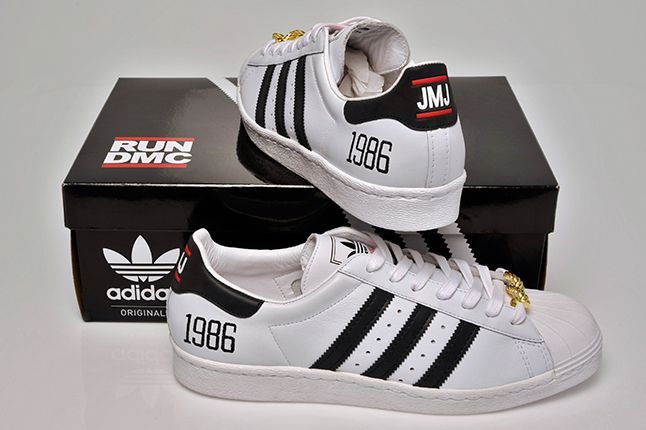
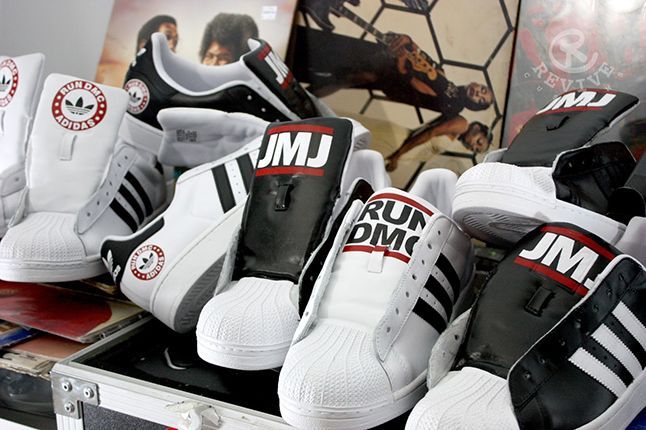
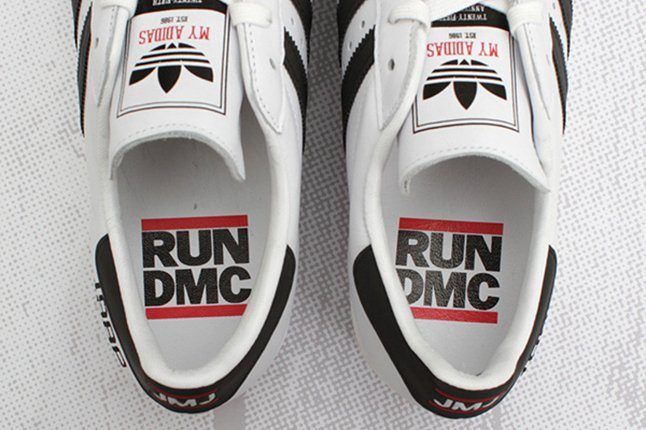
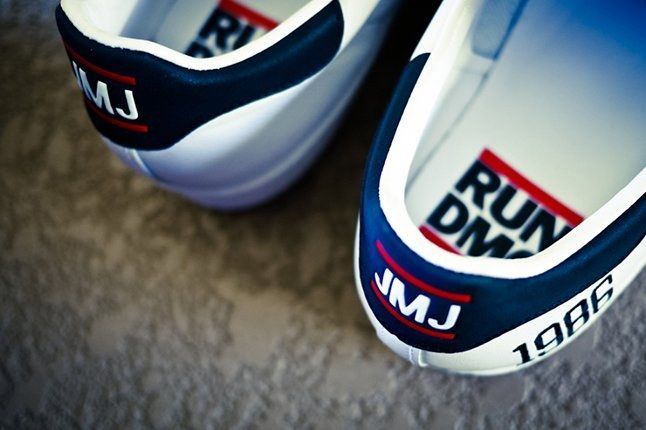
Before there was a 90s look, there was the Hollis, Queens uniform: black Adidas tracksuit, fat laces pulled out of unlaced Superstars, a Kangol bucket on top, and a gold dookie rope chain heavy enough to leave a mark. Run-DMC built it, and the entire decade copied it. The 1986 release of “My Adidas” turned a piece of athletic gear into a political statement — a refusal to switch to whatever sneaker the suburbs had decided was acceptable that year.
The trio’s deal with Adidas, as documented by Business of Fashion, was the first time a corporation paid a hip-hop act to endorse a product without trying to repackage them as something safer. That handshake opened the door for every brand collaboration that followed, from Tommy Hilfiger to Versace. If you want the full origin story of the genre that birthed the style, the block-party origins of hip-hop in the Bronx are where the look first started to take shape.
Baggy Jeans, Cross Colours, and the Karl Kani Effect
The single biggest silhouette of the decade was the baggy jean — and that silhouette had a name attached to it. Karl Kani told Billboard that he started designing oversized denim after watching Black customers buy jeans two sizes too large just for the drape. He kept the waist proper but blew out the leg, and the result became the standard rapper silhouette of the 90s. Tupac, Dr. Dre, Snoop, and Nas all wore Kani. Diddy wore Kani. The Source put Kani on covers. By 1994 the label was doing $59 million in revenue.
Cross Colours opened the door first, with its “Clothing Without Prejudice” tag and color-blocked rugby shirts that Will Smith wore through every season of Fresh Prince. Together the two brands proved Black-owned streetwear could move at scale without a department-store cosign. Their wins set up what came next: FUBU, Phat Farm, Mecca, Enyce, Ecko — labels that did not exist before 1992 and were doing nine-figure numbers by 1998.
Sneakers Became the Loudest Thing You Wore
For the first time in fashion history, a kid in the projects and a kid in the suburbs were obsessing over the exact same object: a pair of shoes. Air Jordans dropped a new colorway and lines formed at sunrise. The Penny Hardaway Foamposites hit and resale prices doubled at the door. The Adidas EQT Basketball, the Reebok Pump, the Nike Air Max — the 90s decided sneakers were not accessories. They were the loudest signal in the outfit.
Run-DMC’s “My Adidas” had cracked the door open in 1986. The 90s kicked it off the hinges. Sneaker culture as a hobby — as a thing with rules, a release calendar, a resale market, magazine coverage — is a 90s invention, and hip-hop is the reason. The same kids buying Kani jeans and FUBU jerseys were the kids deciding which silhouettes lived and which died at retail.
Logos, Luxury, and the Coogi Sweater Era
The 90s collapsed the wall between luxury and street, and most of the bricks were thrown by rappers wearing things their old labels would have been mortified to put on. Biggie wore Coogi knits with the sleeves still tagged. Raekwon wore Polo Ralph Lauren on the cover of Only Built 4 Cuban Linx. Ghostface put the rare Snow Beach pullover into the canon for life. Tommy Hilfiger flipped its preppy yacht-club image overnight after Snoop wore a Tommy rugby on Saturday Night Live in 1994, and the brand reportedly sold out of the shirt across the country the following Monday.
Aaliyah signed on as the face of Tommy Jeans in 1996 alongside Mark Ronson, wearing baggy low-rise jeans, a logo bandeau, and a red windbreaker. The campaign sold the look back to the same suburban kids who had been borrowing it for free for years. None of this was an accident. It was the first wave of luxury houses figuring out that hip-hop was their best advertising department, and they had not been paying for it.
FUBU, Phat Farm, and the Black-Owned Boom
Daymond John started FUBU in his mother’s house in Hollis, Queens, in 1992. He stitched the first batch of hats by hand, paid LL Cool J nothing to wear a FUBU cap in a Gap commercial in 1997, and watched the brand do over $350 million in worldwide sales the next year. “For Us, By Us” was the entire marketing strategy and it worked because nobody else had said it out loud yet.
Russell Simmons launched Phat Farm in 1992 as the grown-up companion to baggy youth gear. Damon Dash and Jay-Z would follow with Rocawear in 1999. Sean Combs launched Sean John in 1998 and won the CFDA Menswear Designer of the Year four years later — the first Black designer to ever take the prize. The wave that started with Karl Kani in 1989 ended the decade as a billion-dollar industry inside the mall — the same mall culture that defined the 80s got rebuilt around streetwear by the late 90s.
The Women Who Refused the Rules
The 90s had two simultaneous and contradictory looks for women in hip-hop, and both of them stayed in the conversation. TLC wore baggy denim overalls with one strap unbuckled, condoms pinned to the front like brooches, oversized plaid, and Timberlands. Lisa “Left Eye” Lopes and Chilli spray-painted their own overalls in the basement. T-Boz said the look came from going straight to the men’s department, which most of their fans did the next day.
On the other end, Lil’ Kim and Foxy Brown weaponized luxury — Versace catsuits, fur stoles, and rhinestoned everything. Aaliyah split the difference with crop tops and baggy bottoms. Mary J. Blige introduced the world to the matching tracksuit and combat boot. Salt-N-Pepa wore eight-ball jackets and giant door-knocker earrings. None of those silhouettes had a runway pedigree before 1992. Every one of them has one now.
Gold Chains, Door-Knockers, and Pieces You Could See From a Block Away
The 90s did not invent the gold chain — Slick Rick and LL Cool J had already turned it into a personality trait in the 80s. But the 90s scaled it. Dookie ropes got fatter. Jesus pieces got bigger. Cuban links replaced rope chains by mid-decade. Door-knocker earrings, nameplate necklaces, and four-finger rings turned jewelry into a literal language — you could read a rapper’s biography off their chest.
The point was never subtlety. Hip-hop jewelry in the 90s was about being visible from across a parking lot. It was about announcing that you had made it, and making sure nobody who had been around in 1988 had a reasonable doubt about it. By the end of the decade, the look had jumped genres entirely — every pop star with a deal was wearing a chain, and the people who built the language were already onto something else.
Why the Look Still Sells in 2026
Walk into any teenager’s room in 2026 and you can see the 90s on the floor: a Cross Colours rugby someone bought on Depop, a pair of vintage Karl Kani jeans pulled from a thrift in Brooklyn, a real Coogi from eBay that cost more than the original retail. The 90s hip-hop look did not get nostalgic. It got reissued. Karl Kani relaunched the original baggy jean in 2017 and sold out. FUBU returned with new drops in 2024. The Tommy Hilfiger flag rugby goes for $300 on the resale market in good condition.
The reason the look survived is the same reason it landed in the first place. It was built by the people wearing it, on a budget, with a clear point of view — and it sold every other style movement of the decade short on volume and on cultural reach. The 90s also produced a parallel anti-fashion universe in Seattle that ran on its own rules; the 90s grunge style playbook is the closest comparison, but grunge was about wearing what your dad wore by accident. Hip-hop fashion was about wearing what nobody had given you permission to wear yet.
For more context on the era that built it, the complete 90s nostalgia guide walks through everything that mattered, from Run-DMC’s “Walk This Way” crossover to the parallel rise of 90s internet culture that would eventually move all of it online. The clothes were never just clothes. They were a way to be loud in a country that had spent the previous decade asking everyone to be quiet.
Sources
- Billboard — Karl Kani Revisits His Revolutionary Baggy Jean of the 1990s — Interview covering the origin of the baggy denim silhouette and brand revenue figures.
- Business of Fashion — Run-DMC’s Adidas and the Birth of Hip Hop Sneaker Culture — Documentation of the 1986 Madison Square Garden moment and the first million-dollar endorsement deal.
- Red Bull — Hip-Hop Streetwear History: The Iconic Karl Kani Brand — Brand history covering Cross Colours collaboration and 90s rapper endorsements.
- Coogi — One Memorable Look: Biggie Smalls’ Coogi Sweaters — Brand archive on the Notorious B.I.G. Coogi era.
- Goodhood — Wu-Tang Clan in Street Fashion — Background on Ghostface’s Snow Beach pullover and Raekwon’s Tommy Hilfiger era.
- The Haute People — How FUBU Shaped the Fashion of the 90s — FUBU history and 1998 sales figures.
- University of Fashion — Aaliyah’s Famed 90s Hilfiger Ad — Context for the 1996 Tommy Jeans campaign with Aaliyah and Mark Ronson.
Browse retro and vintage-inspired apparel at the RetroRadical shop →
The Retro Almanac
A monthly roundup of "on this day" highlights from that month, decades back — plus first dibs on new retro merch drops. No spam, just the good stuff.