Reagan’s Star Wars Speech: The Night SDI Changed the Cold War Forever
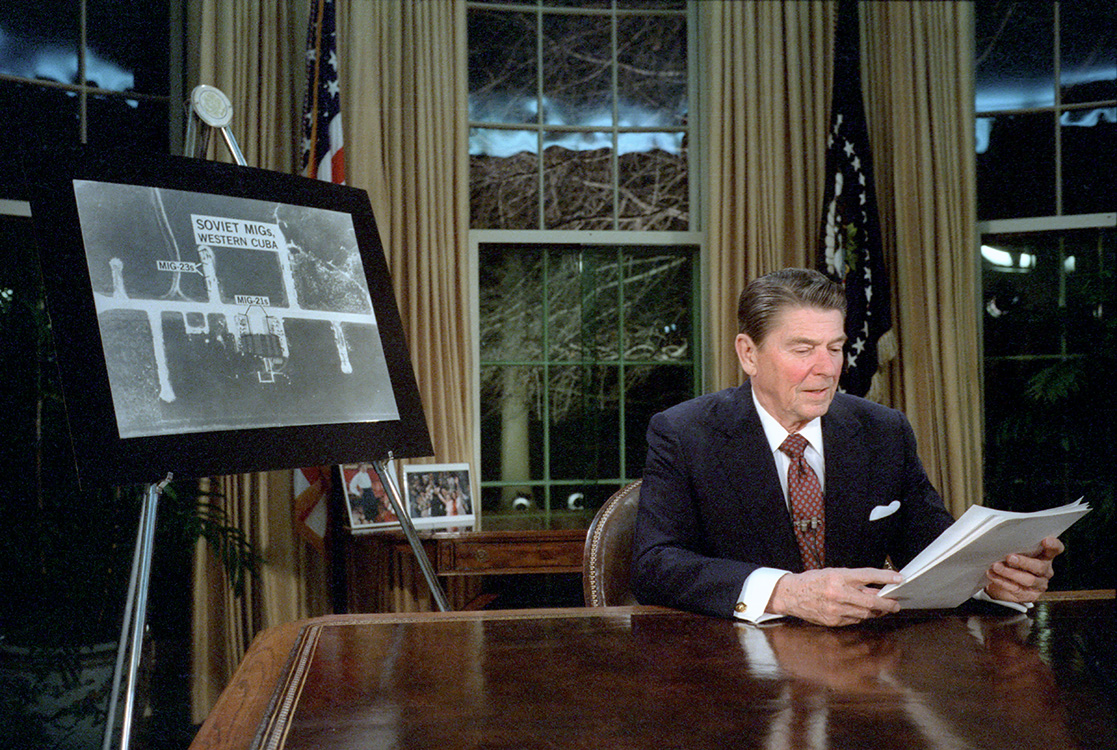
On March 23, 1983, President Ronald Reagan sat behind his desk in the Oval Office and delivered a televised address that would reshape the Cold War, terrify the Soviet Union, and earn one of the most famous nicknames in military history. In a speech ostensibly about defense spending, Reagan stunned the world by announcing the Strategic Defense Initiative (SDI) — a sweeping proposal to build a space-based missile defense system capable of shooting down Soviet nuclear warheads before they could reach American soil.
Critics immediately dubbed it “Star Wars” after George Lucas’s blockbuster film franchise, and the name stuck. But behind the Hollywood nickname lay a deadly serious gamble that would cost billions of dollars, push the boundaries of known science, and ultimately help bring the Cold War to its end. This is the full story of the night Ronald Reagan challenged America’s scientists to make nuclear weapons “impotent and obsolete.”
The Seeds of an Idea: From Governor to Commander-in-Chief
Reagan’s fascination with missile defense technology didn’t begin in the White House. It traced back to 1967, when he was still governor of California. During a visit to the Lawrence Livermore National Laboratory, Reagan met physicist Edward Teller — the so-called “father of the hydrogen bomb” — who briefed him on directed-energy weapons like lasers and microwaves. Teller argued that these technologies could potentially defend against a nuclear attack, calling them the “third generation of nuclear weapons.” Reagan was captivated. As Teller later recalled, “Fifteen years later, I discovered that he had been very interested in those ideas.”
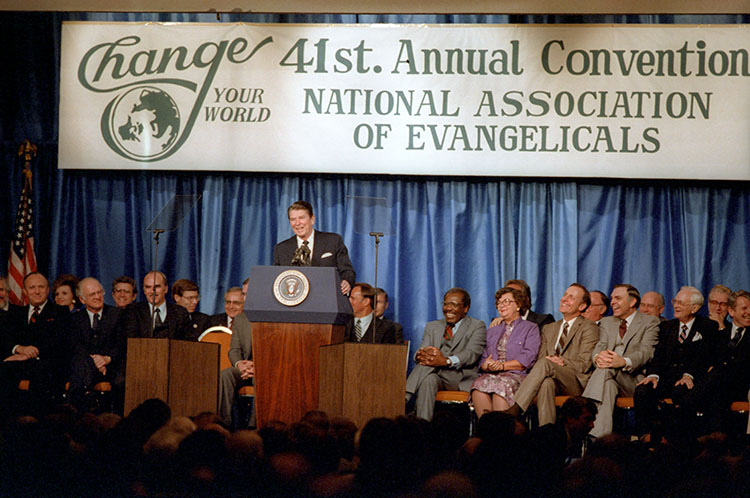
The idea crystallized further in 1979, when Reagan visited the North American Aerospace Defense Command (NORAD) headquarters deep inside the Cheyenne Mountain Complex near Colorado Springs. Impressed by the massive fortifications built into the mountain, Reagan asked General James Hill a simple question: what would happen if a Soviet nuclear missile hit nearby? “It would blow us away,” Hill replied. They could track an incoming missile, but there was absolutely nothing they could do to stop it. “There must be something better than this,” Reagan said, visibly shaken.
After winning the presidency in 1980, Reagan wasted no time. In early 1981, he signed National Security Decision Directive 12, which included provisions for “a vigorous research and development program on ballistic missile defense systems.” The stage was being set for something far bigger than anyone realized.
The Most Dangerous Year: 1983 and the Threat of Nuclear War
To understand why Reagan made his announcement when he did, you have to understand just how terrifying 1983 was. The Cold War had entered one of its most perilous phases. Reagan had adopted fiercely anti-Soviet rhetoric and policy, a dramatic shift from the détente of the 1970s. The Soviet Union, led by the ailing and paranoid Yuri Andropov, genuinely believed the United States might be preparing a first-strike nuclear attack.
NATO was in the process of deploying Pershing II missiles in Western Europe — weapons that could reach Soviet targets in just four to six minutes, far too quickly for any meaningful response. The Soviets had 351 SS-20 missiles aimed at Western Europe. Both sides were locked in a nuclear standoff that seemed to edge closer to catastrophe with each passing month.
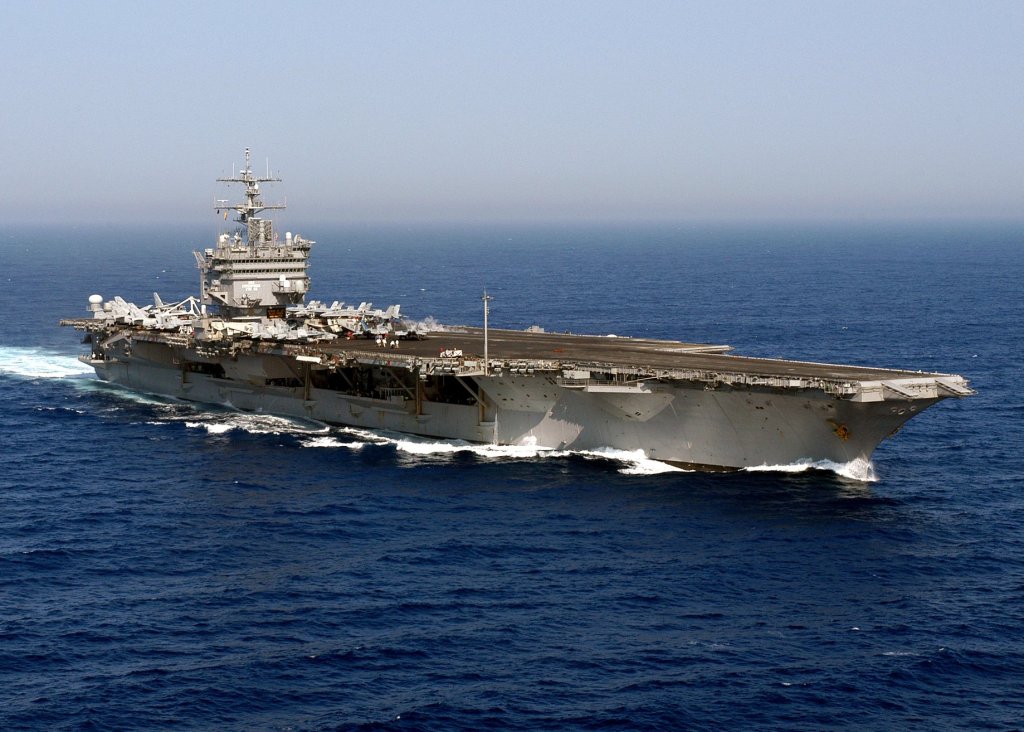
Just two weeks before the SDI announcement, on March 8, 1983, Reagan delivered his infamous “Evil Empire” speech to the National Association of Evangelicals in Orlando, Florida. He called the Soviet Union “the focus of evil in the modern world” and urged Americans not to “ignore the facts of history and the aggressive impulses of an evil empire.” The speech sent shockwaves through Moscow. Against this backdrop of escalating rhetoric and genuine nuclear anxiety, Reagan prepared to drop his biggest bombshell yet.
The Speech That Changed Everything
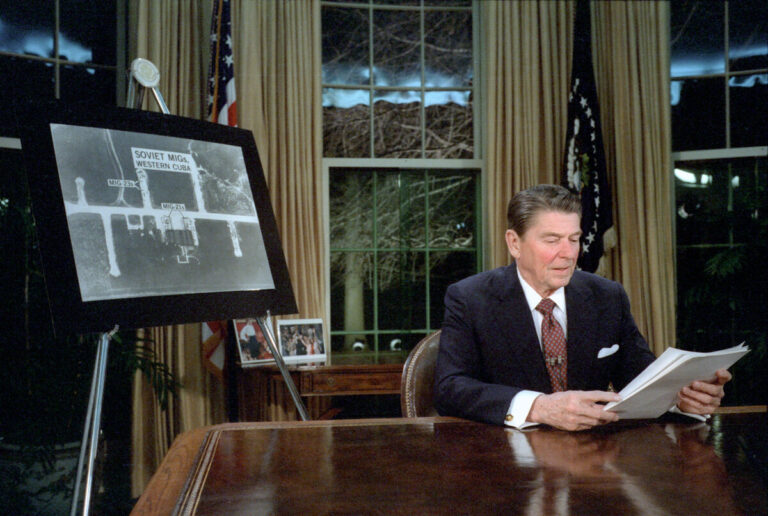
The March 23 address began conventionally enough. For most of its thirty-minute runtime, Reagan made his case for increased defense spending, using charts and satellite photographs to illustrate the growing Soviet military threat. He detailed how the USSR had built five new classes of intercontinental ballistic missiles since 1969, while the United States hadn’t deployed a single new ICBM since the Minuteman III.
Then, in the final minutes, Reagan pivoted to something entirely unexpected. “Let me share with you a vision of the future which offers hope,” he said. “What if free people could live secure in the knowledge that their security did not rest upon the threat of instant U.S. retaliation to deter a Soviet attack, that we could intercept and destroy strategic ballistic missiles before they reached our own soil or that of our allies?”
Reagan then issued his historic challenge: “I call upon the scientific community in our country, those who gave us nuclear weapons, to turn their great talents now to the cause of mankind and world peace, to give us the means of rendering these nuclear weapons impotent and obsolete.”
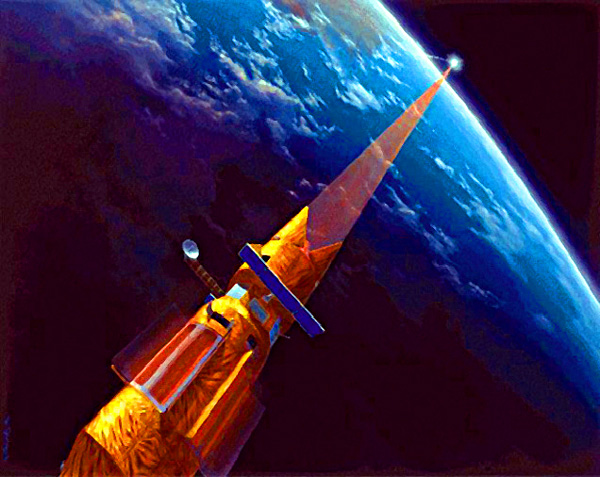
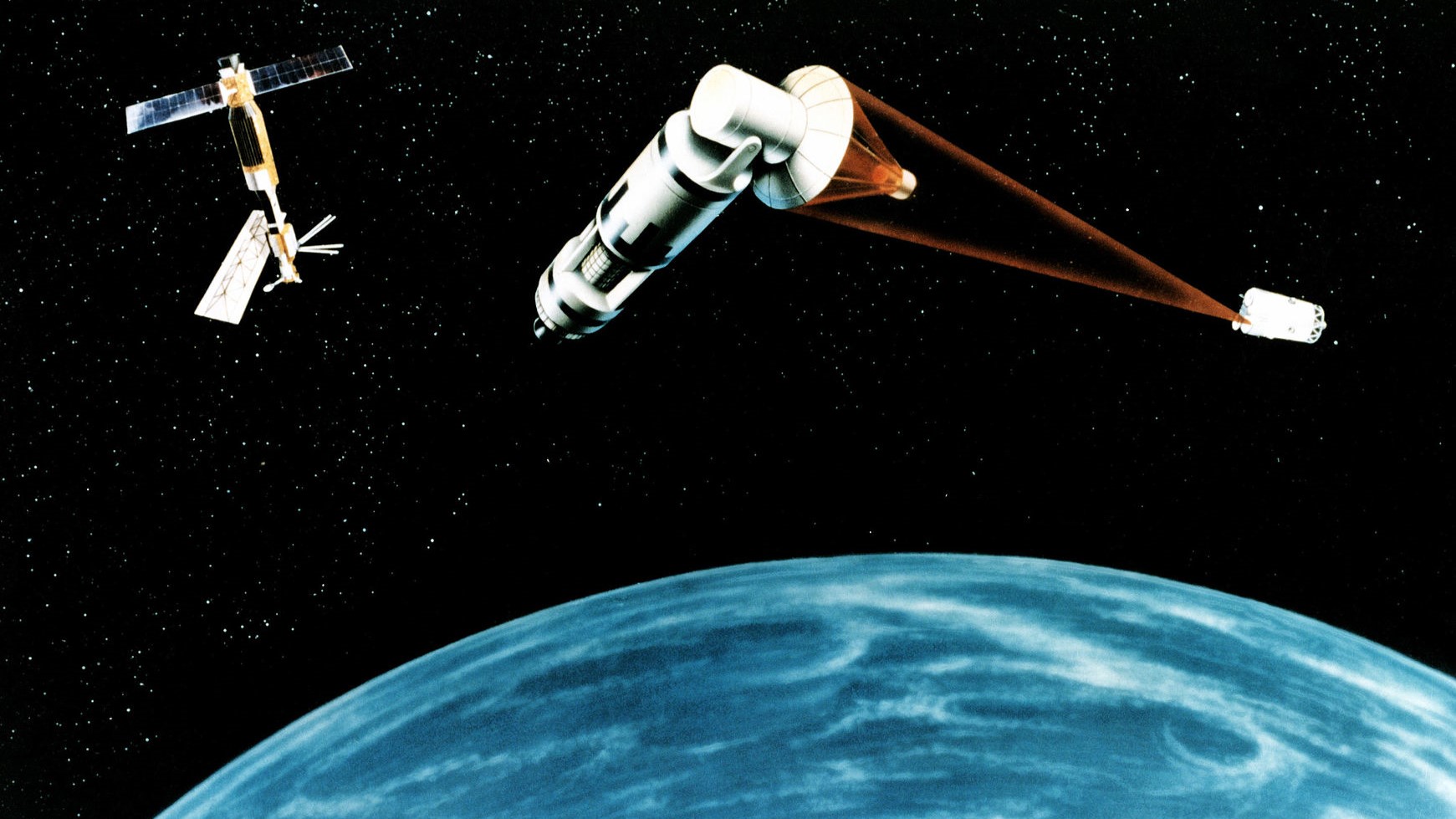
The vision was breathtaking in its ambition. Reagan proposed a multi-layered defense system that would use space-based satellites, ground-based interceptors, and advanced directed-energy weapons to detect and destroy Soviet missiles at every phase of their flight — from the moment they launched to the instant before they struck their targets. Lasers, particle beams, kinetic kill vehicles, and technologies that existed only in theory would form an impenetrable shield over the entire United States and its allies.
Shock, Awe, and “Star Wars”
The reaction was immediate and explosive. Reagan’s announcement blindsided many of his own advisors. Secretary of State Alexander Haig recalled the chaos: “I know the aftermath the next day in the Pentagon, where they were all rushing around saying, ‘What the hell is strategic defense?'” Several senior officials had received no advance warning that SDI would become administration policy overnight.
The day after Reagan’s speech, Democratic Senator Ted Kennedy took to the Senate floor and denounced the proposal as “reckless Star Wars schemes.” The Washington Post picked up Kennedy’s phrase, and just like that, the most ambitious defense program in American history had a pop culture nickname it would never shake. The reference to George Lucas’s science fiction saga was meant as mockery — the technology Reagan described seemed as fantastical as lightsabers and the Death Star — but the name gave SDI an instant cultural presence that policy papers never could.
Scientists were deeply divided. Supporters, including Edward Teller, argued that directed-energy weapons and advanced computing could make the system feasible within a generation. Critics countered that the technology was decades away at best, and that the system could never be truly impenetrable — even a 95% success rate would still allow enough warheads through to devastate the country. The Union of Concerned Scientists published withering assessments, and many physicists refused to participate in SDI research on moral and practical grounds.
The Technology Behind the Dream
In 1984, the Strategic Defense Initiative Organization (SDIO) was established within the Department of Defense to oversee development. By 1985, twenty-two think tanks and aerospace firms were working under the SDIO umbrella, and the program was consuming billions of dollars in research funding.
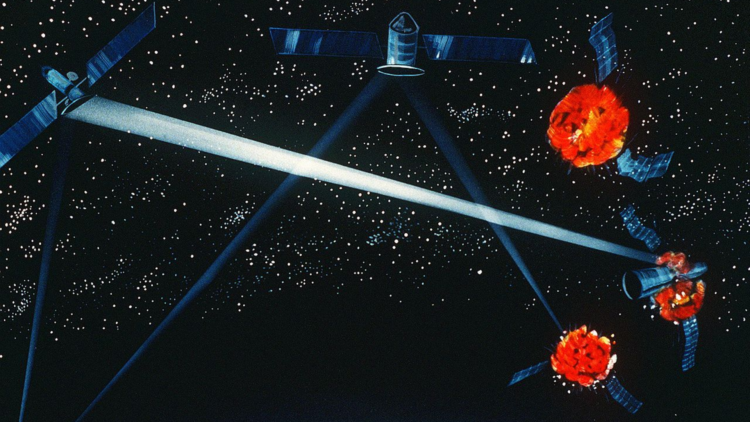
The proposed technologies read like science fiction. Space-based chemical lasers would target missiles during their vulnerable boost phase, when they were still climbing out of the atmosphere. X-ray lasers — powered by nuclear explosions in space — would generate intense beams to destroy multiple warheads simultaneously. Ground-based free-electron lasers would bounce their beams off orbital mirrors to strike targets thousands of miles away. Kinetic energy weapons, essentially sophisticated “smart rocks,” would physically slam into warheads at incredible speeds. And tying it all together would be an advanced sensor network using radar, optical, and infrared detection systems spread across ground stations, aircraft, and satellites.
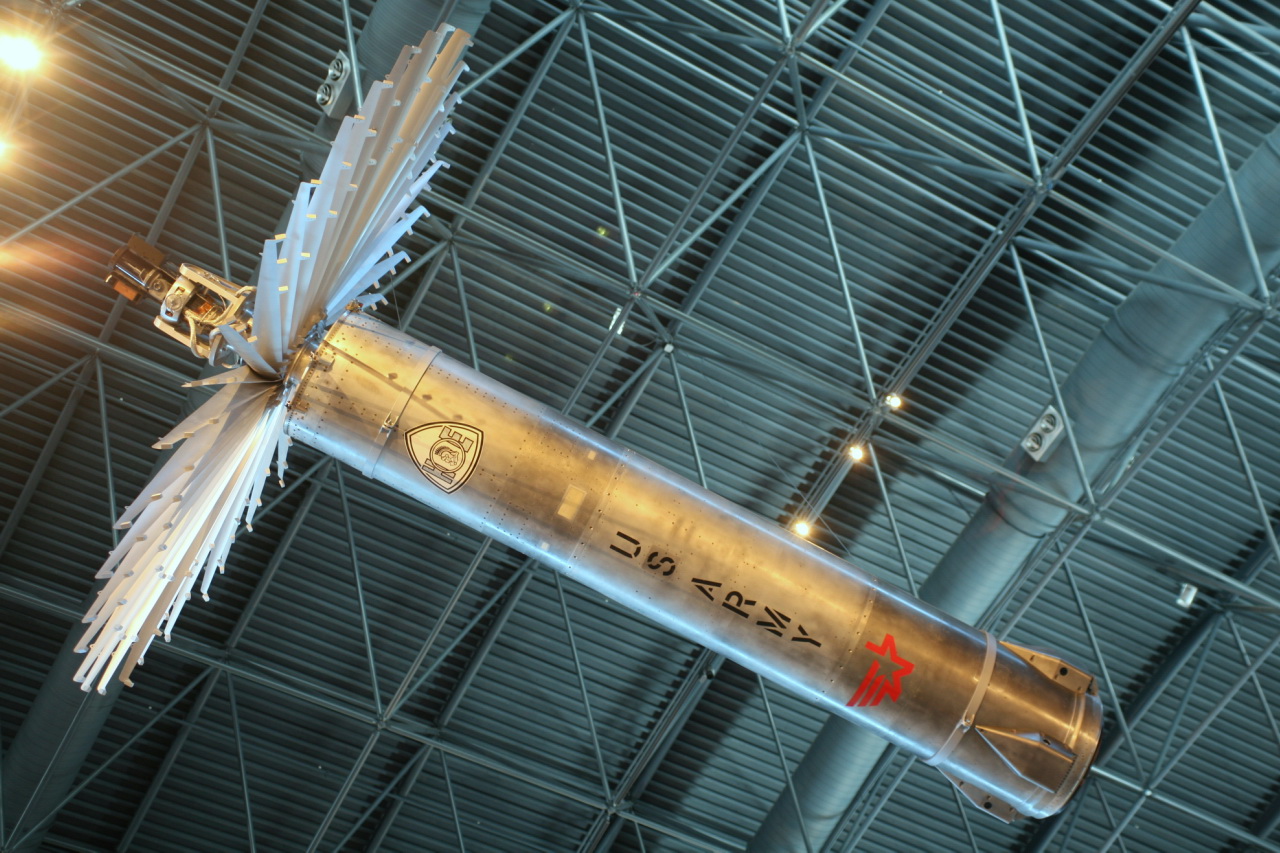
One of the most ambitious concepts was “Brilliant Pebbles” — thousands of small, autonomous interceptors orbiting the Earth, each capable of independently detecting and destroying an enemy warhead. By 1990, Brilliant Pebbles had become the centerpiece of SDI’s evolving architecture, replacing earlier, more complex designs.
The Soviet Response and the End of the Cold War
Whatever American critics thought of SDI, the Soviet reaction proved that Reagan had struck a nerve. Secretary of State George Shultz had given Soviet Ambassador Anatoly Dobrynin an advance copy of the speech. Dobrynin’s response was immediate: “You will be opening a new phase in the arms race.”
The Soviet leadership was genuinely alarmed. They understood that even a partially effective missile defense system could tip the nuclear balance dangerously in America’s favor. If the United States could shield itself from retaliation, it could theoretically launch a first strike without fear of consequences. The entire framework of Mutually Assured Destruction (MAD) — the grim doctrine that had paradoxically kept the peace for decades — was suddenly under threat.
SDI also threatened to violate the Anti-Ballistic Missile (ABM) Treaty of 1972, which both superpowers had signed precisely to prevent this kind of destabilizing arms race. The treaty limited each side to one ABM system protecting its capital and one protecting an ICBM launch area — acknowledging the reality that defensive systems could actually make nuclear war more likely by undermining the balance of terror.
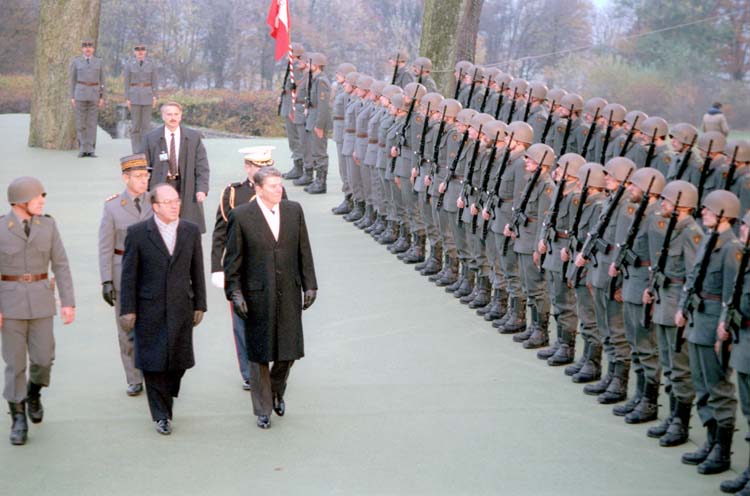
SDI became the central issue at every subsequent superpower summit. At the Reykjavik Summit in October 1986, Reagan and Soviet leader Mikhail Gorbachev came tantalizingly close to agreeing to eliminate all nuclear weapons — but the deal collapsed because Reagan refused to confine SDI research to the laboratory. Gorbachev demanded it; Reagan wouldn’t budge. The two leaders walked away from what could have been the most significant arms agreement in history, all because of Star Wars.
Reagan even offered to share SDI technology with the Soviets. “A President of the United States could offer to give that same defensive weapon to them to prove that there was no longer any need for keeping these missiles,” he explained. It was an astonishing proposal that most of his own advisors considered unrealistic, but it revealed the depth of Reagan’s personal conviction that SDI could rid the world of nuclear weapons entirely.
Legacy: The Dream That Changed the World
The Strategic Defense Initiative never produced the impenetrable space shield Reagan envisioned. The technology proved far more complex than even its most optimistic supporters had predicted, and much of the research was scaled back or cancelled by subsequent administrations. President George H.W. Bush refocused the program on more limited goals, and President Clinton renamed it the Ballistic Missile Defense Organization in 1993, effectively ending the SDI era.
But to judge SDI solely on whether it achieved its stated technical goals is to miss its true significance. Many historians argue that SDI played a crucial role in ending the Cold War. The Soviet Union, already staggering under the weight of its dysfunctional economy, simply could not afford to match the American investment in missile defense research. The prospect of an expensive new arms race in space — one that played to America’s technological strengths — helped convince Soviet reformers like Gorbachev that the arms race was unwinnable and that radical change was necessary.
SDI also produced genuine technological advances. Research into miniaturized sensors, advanced computing, and missile tracking systems contributed to later defense programs and civilian technologies. The idea of missile defense itself never went away — it resurfaced as the National Missile Defense program in the late 1990s and continues today in various forms.
Forty-three years after Reagan’s speech, the debate he started remains unresolved. Was SDI a brilliant strategic gambit that helped win the Cold War? A dangerous escalation that brought the world closer to nuclear catastrophe? An expensive boondoggle that enriched defense contractors while producing no working system? Or a visionary challenge that pushed the boundaries of what humanity thought possible? The answer, like most things in history, is probably a complicated mix of all four.
What’s beyond debate is this: on a March evening in 1983, a former Hollywood actor sat in the Oval Office and dared to imagine a world without nuclear terror. Whether that dream was naive or noble, it changed the course of the Cold War and the fate of nations. And that makes the night Ronald Reagan unveiled Star Wars one of the most consequential moments of the entire decade.