When Calculators Killed the Abacus: The Math Revolution Nobody Saw Coming
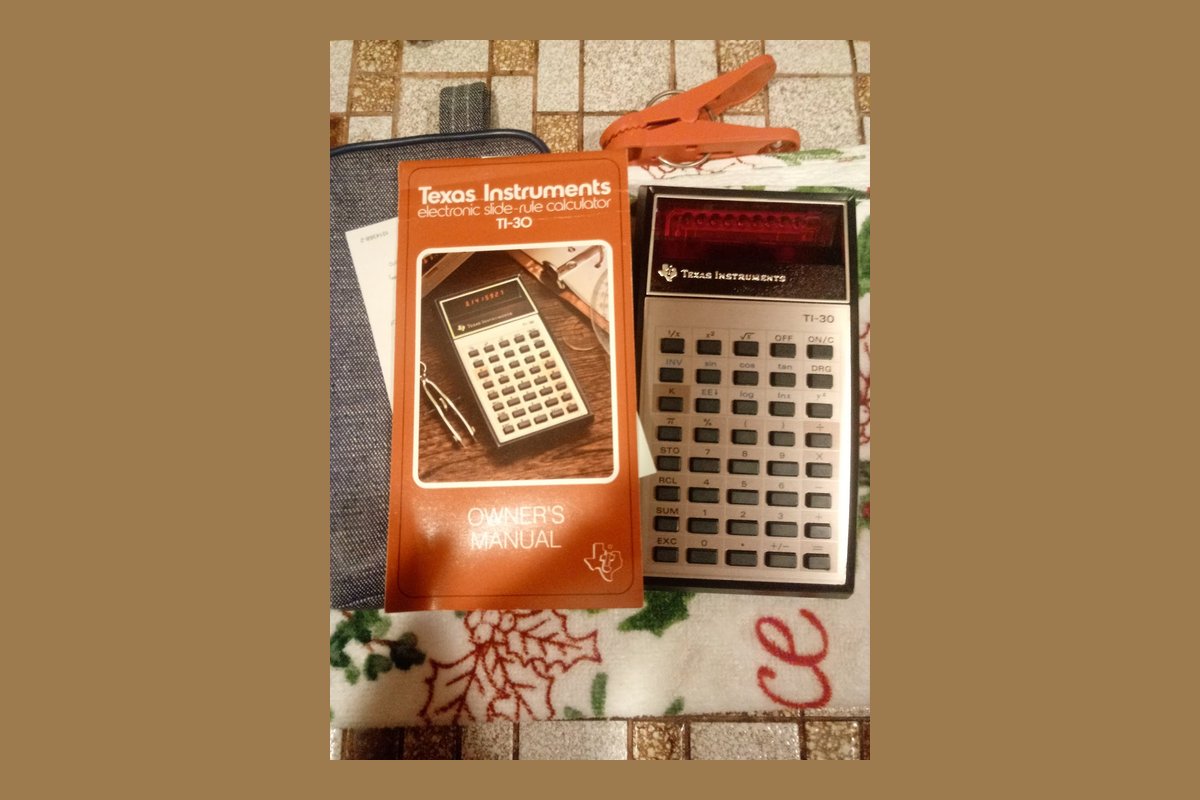
The first time a kid in 1976 walked into algebra class with a $25 Texas Instruments TI-30 in his Trapper Keeper, something quietly broke in the math world that had stood for almost five thousand years. The abacus — wood, beads, brass rivets, the original computer — had spent centuries as the fastest counting tool humans ever invented. And then a piece of red-LED plastic from Dallas ended its career in less than a decade.
The thing nobody wants to admit is that the abacus didn’t lose because it was bad. It lost because it required a skill, and the calculator didn’t.
The Retro Almanac
A monthly roundup of "on this day" highlights from that month, decades back — plus first dibs on new retro merch drops. No spam, just the good stuff.
The Abacus Had a Five-Thousand-Year Head Start
Before we talk about what killed it, let’s give credit where it’s due. The abacus wasn’t some primitive cave-person tool that humans grudgingly used until something better came along. This thing was sophisticated. The earliest counting frames showed up in ancient Mesopotamia around 2700 BCE, and variations popped up independently across virtually every major civilization — China gave us the suanpan, Russia the schyoty, Rome a tabletop version with grooves and pebbles. Every empire that ever taxed grain or counted ships needed one, and every empire built one.
The Japanese soroban was the most refined of the bunch. One bead above the dividing beam, four below — a base-10 system stripped down to its absolute minimum. In trained hands it could rip through addition, subtraction, multiplication, division, and even square roots faster than most modern people can type the same problem into a phone. There are documented cases of soroban masters beating early electronic calculators in speed competitions, and they weren’t isolated parlor tricks. They were international news.
The 1946 Tokyo Showdown That Should Have Been a Warning
On November 12, 1946, the U.S. Army newspaper Stars and Stripes set up what they thought would be a quick demonstration of American technological superiority. Private Thomas Nathan Wood of the U.S. Army’s Finance Disbursing Section faced off against Kiyoshi Matsuzaki of the Japanese postal ministry. Wood had a state-of-the-art electric desk calculator. Matsuzaki had a wooden soroban. They were going head-to-head on addition, subtraction, multiplication, division, and a final composite problem.
The soroban won four out of five. The crowd lost its mind. The contest is still talked about in computing history circles as proof that the human-plus-tool combination could outperform machines, at least in skilled hands. What nobody fully appreciated at the time was that the lesson had an expiration date. The machines kept getting better. The skill required to use a soroban at that level took years to develop, and most kids in the 1970s simply weren’t going to spend a decade training their fingers when a $25 piece of plastic would do the same math without any practice at all.
The Bowmar Brain Walked Into the Room and Everything Changed
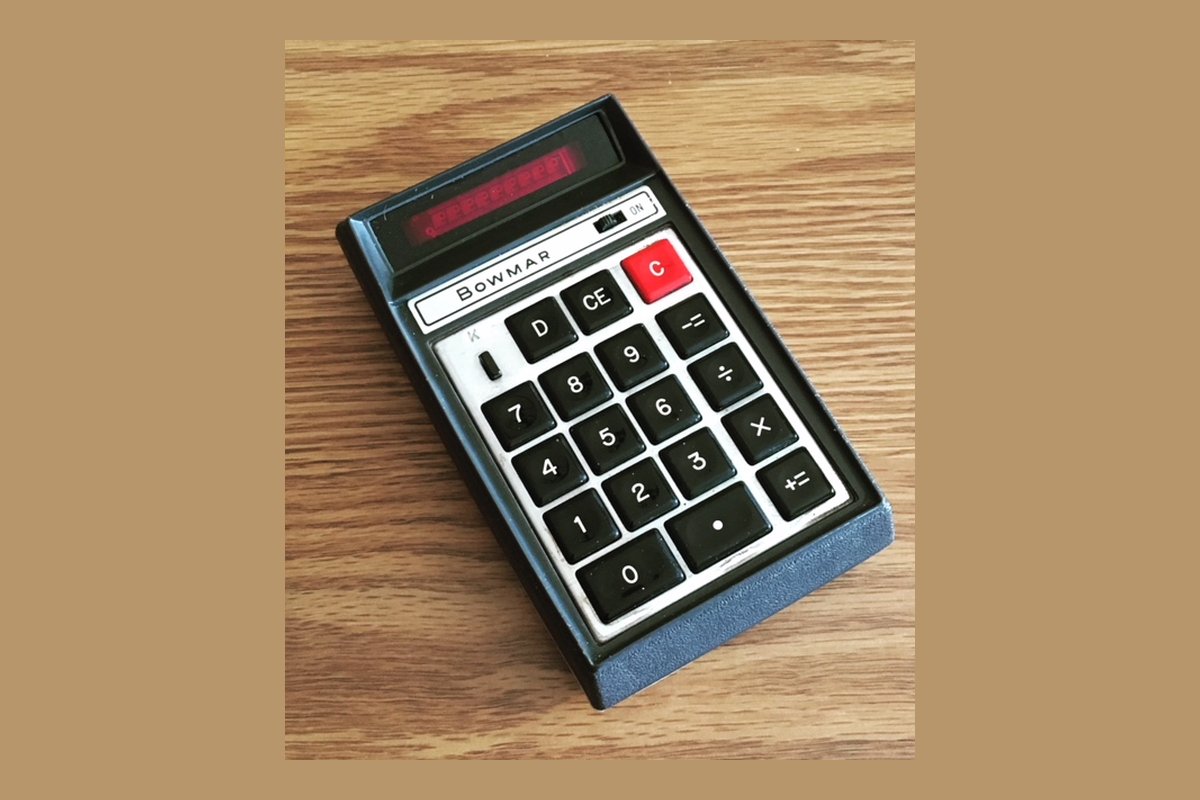
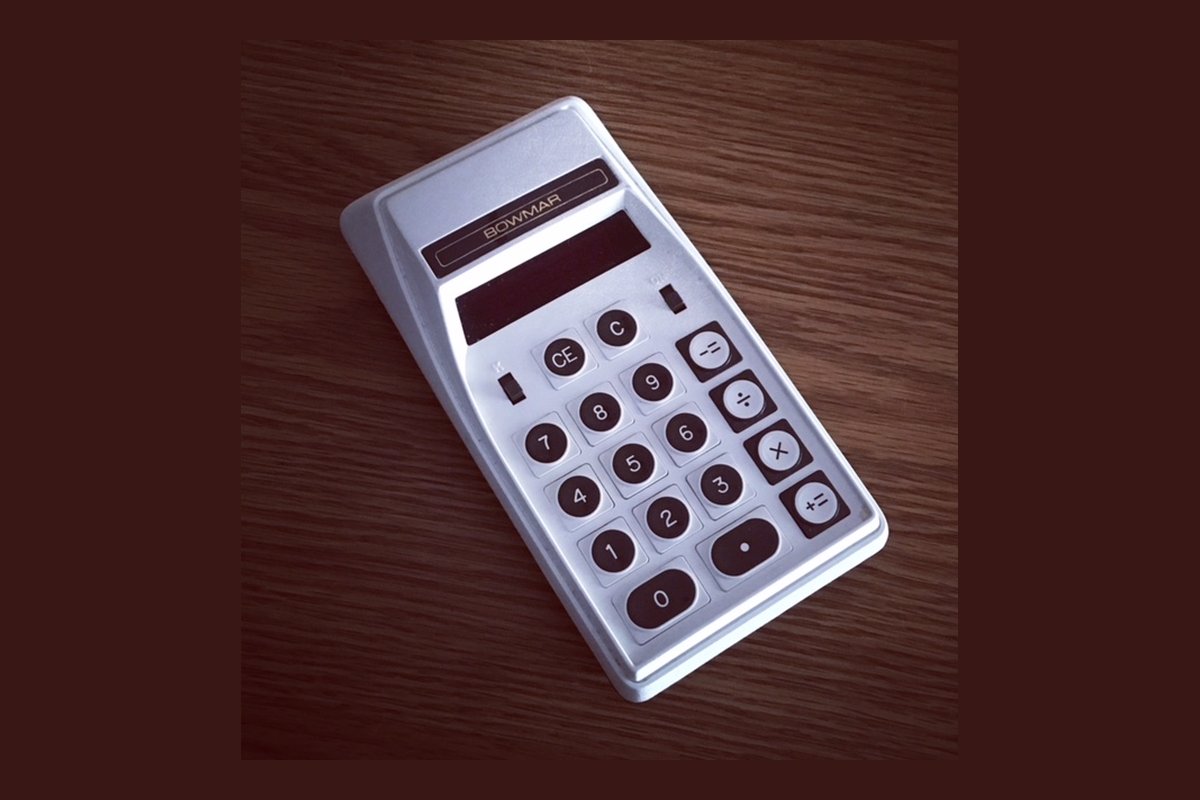
In the fall of 1971, an obscure Indiana company called Bowmar Instrument Corporation shipped something nobody had ever held before: a four-function calculator with a red LED display that fit in a shirt pocket. It was called the 901B, but everyone called it the Bowmar Brain. It measured 5.2 by 3.0 by 1.5 inches, cost $240 — close to a month’s rent for a young office worker at the time — and was, according to IEEE Spectrum’s Consumer Electronics Hall of Fame, the first calculator to use an LED display and the first to be genuinely pocket-sized.
Bowmar’s sales went from $3 million in 1971 to $64 million in 1973. They were briefly the largest hand-held calculator manufacturer on the planet. Then the price war started, the bigger players moved in, and Bowmar imploded by 1976. But the floodgates were open and nothing was going to close them. The same year the Brain shipped, Sharp, Canon, and a then-tiny Japanese company called Casio were already racing to undercut everyone. Just like the broader 80s technology shift that reshaped everyday life, the calculator wars were a story about brutal competition driving prices down faster than anyone expected.
The HP-35 Made Slide Rules Obsolete in About Six Months
If the Bowmar Brain killed the four-function tabletop adding machine, the Hewlett-Packard HP-35 killed something more sacred: the slide rule. Bill Hewlett famously wanted a scientific calculator that would fit in his shirt pocket, and on January 4, 1972, HP introduced one. Thirty-five keys, transcendental functions, logarithms, exponentials, trigonometry. Engineers who had spent careers mastering the slide rule looked at the HP-35 and quietly bought one. Within a year, slide rules disappeared from engineering schools.
The HP-35 cost $395, which is roughly $3,000 in today’s money. According to the HP Virtual Museum, the HP-35 and its descendants would eventually sell over 20 million units. The Smithsonian added one to its permanent collection. It was the first product Hewlett-Packard ever marketed directly to consumers, and it triggered what HP itself called a personal electronics craze.

Texas Instruments Showed Up and Cut the Price by Two-Thirds
If HP turned engineers into calculator buyers, Texas Instruments turned everyone else. On September 21, 1972, TI launched the TI-2500 Datamath at $149.95. Four functions, eight-digit red LED display, made in Texas. The Datamath was crude compared to the HP-35, but it was less than half the price, and it kept getting cheaper. By 1973 a Datamath cost under $100. By 1974 it was under $50.
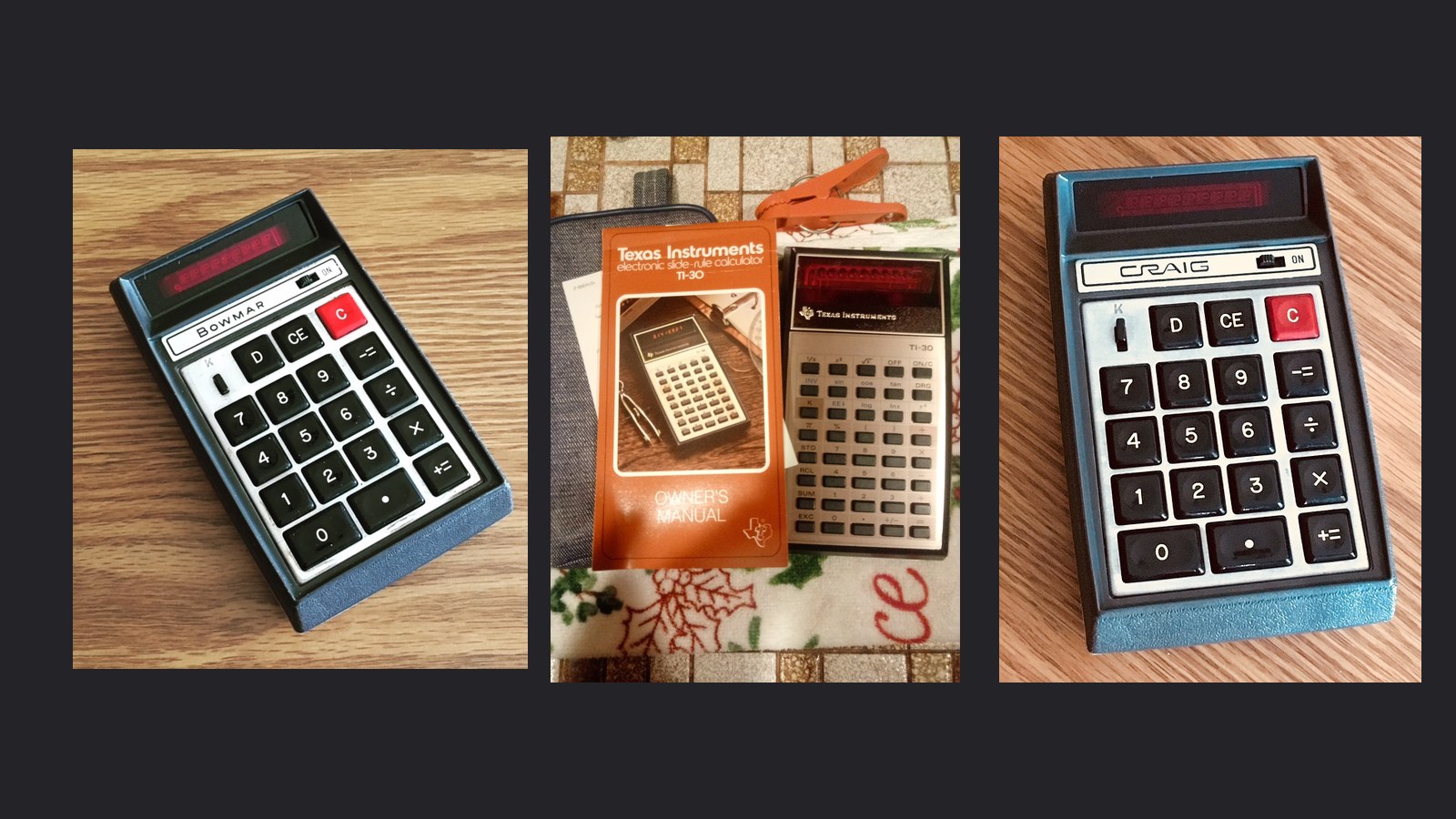
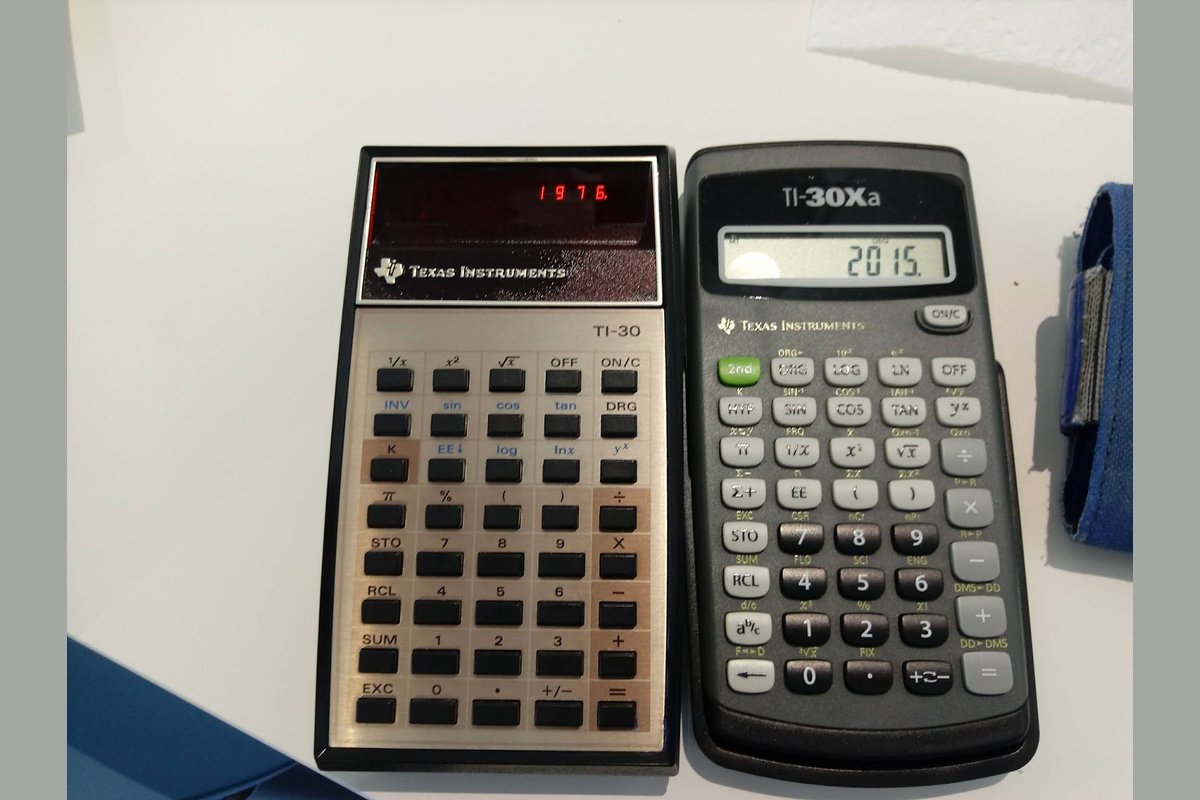
Then in June 1976, TI dropped the bomb that finished the job: the TI-30 scientific calculator at $25. A scientific calculator. For twenty-five dollars. Junior high students bought them. High school freshmen bought them. By the end of 1976, the TI-30 was the most popular scientific calculator in American schools, and there was no going back. The slide rule wasn’t just obsolete anymore; it had become a museum object. The abacus was right behind it, at least everywhere outside Japan.
The Cottage Industry That Vanished Overnight
Here’s the part of the story that doesn’t get told. Before the calculator wars, there was an entire ecosystem of jobs built around mental arithmetic. Cashiers, bank tellers, bookkeepers, accountants, store clerks, postal workers — every one of them was expected to compute fast, in their heads, often with the help of a paper ledger and a clear sense of place value. The abacus had been a professional tool for thousands of years because counting was a profession.
By 1980, those jobs still existed, but the skill behind them had quietly evaporated. A clerk could simply hammer a key and read the answer. Whole categories of mental math — running totals, percentage calculations, currency conversions — went from daily exercise to once-a-week novelty. Educators noticed within about five years. By the mid-1980s, American math educators were sounding alarms about kids who couldn’t make change without a register telling them how much, and the “back to basics” movement showed up specifically to push against calculator-driven dependency. It was the opening shot in what would become the math wars of the late 1980s and 1990s.
Japan Refused to Let the Soroban Die
While the United States was busy abandoning mental arithmetic, Japan did something nobody expected. They kept teaching the soroban. Not because they didn’t get calculators — Japan was, by the mid-1970s, manufacturing more calculators than any other country on earth — but because Japanese educators had figured out something Americans hadn’t. Soroban training wasn’t really about counting beads. It was about building a kind of visual memory and mental discipline that carried over to almost everything else.
Japanese kids who studied soroban from age six tended to develop something called anzan — mental calculation done by visualizing an imaginary abacus in the mind’s eye. Anzan masters can solve multi-digit multiplication problems in their heads in under a second, faster than anyone with a calculator could type the question. As of the mid-2020s, around 43,000 Japanese students are still enrolled in private soroban schools. The abacus stopped being a calculation tool there and became a cognitive training device, which is honestly a more interesting role than it ever had before.
The Calculator Wars Killed Almost Every Brand That Started Them
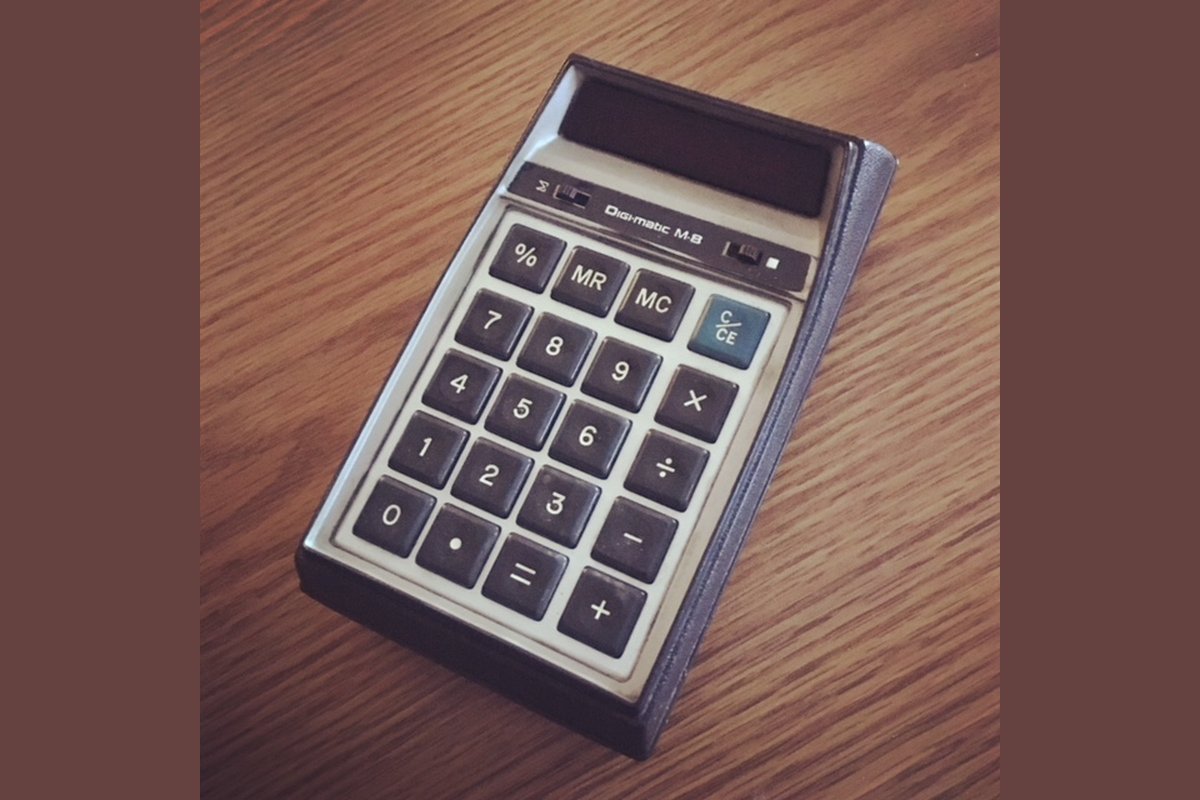
By the late 1970s, the brutal economics of calculator manufacturing had ground most of the early players into dust. Bowmar, Commodore, Rockwell, Lloyd’s, Craig, Unitrex, Digi-Matic, APF, Litronix — every one of them either pivoted to other electronics or vanished entirely. The five survivors were Sharp, Texas Instruments, Hewlett-Packard, Canon, and Casio, and they survived by getting vertically integrated and crushing margins on everyone else.
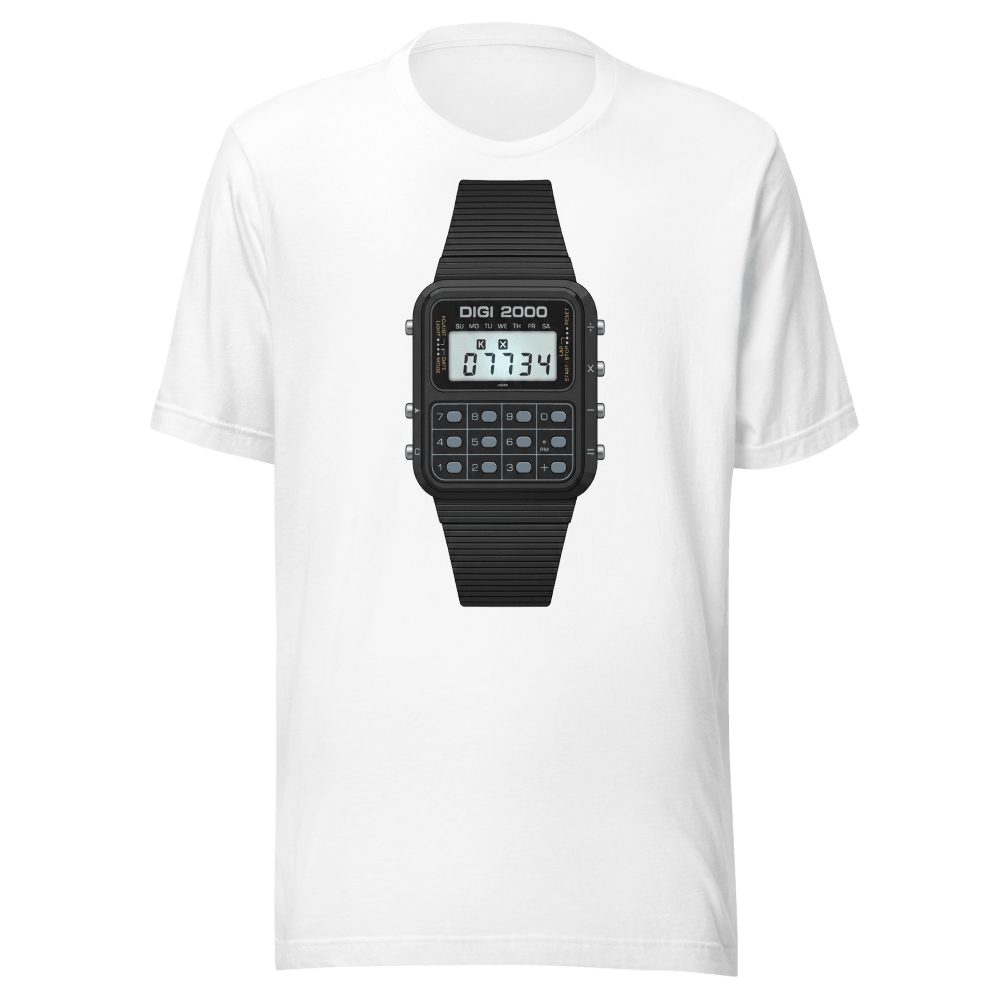
The technological pivot from LED to LCD in 1977 finished off the stragglers. LEDs were power-hungry and required disposable batteries that ran out fast; LCDs sipped power, ran on watch batteries, and let manufacturers shrink the form factor down to wristwatch size. Suddenly the calculator wasn’t just in your pocket — it was on your wrist. The Casio calculator watch became one of the defining nerd accessories of the 1980s, alongside Trapper Keepers and digital wristwatches with built-in games.
What the Pocket Calculator Actually Replaced Was Patience
The deepest change wasn’t computational, it was cultural. A soroban operator who had spent ten years training developed something the rest of us lost: a relationship with numbers as physical objects. Beads sliding into place. The clack of a bead against a beam. The pause before the next digit. The whole rhythm of calculation as something you did, with your hands, in real time. The calculator turned that into instant answer-summoning. Press, read, move on.
If you grew up before 1976, you probably remember being told to “show your work” by every math teacher you ever had. The instruction made sense in a world where the work was the only way to know whether the answer was right. Once a five-dollar calculator could give you the answer in a quarter-second, the whole pedagogy had to be rebuilt. Some teachers refused to allow calculators at all through the 1980s. Some embraced them and made students focus on problem-solving instead of arithmetic. Both camps had a point, and the math wars never really ended.
The Casio Mini and the Forgotten Underdog
One brand that survived the carnage deserves its own footnote: Casio. While Bowmar was burning through cash and TI was bleeding margin, Casio quietly pioneered the low-cost calculator market with the Casio Mini in 1972, then kept iterating relentlessly. By the early 1980s, Casio had figured out something nobody else had — the calculator could be a fashion item. Bright colors, calculator watches, the iconic FX-series for scientific use, novelty units that played little musical jingles when you typed certain numbers.
If you had a Casio FX-82 in high school in the 1980s, you were holding a device that descended directly from the calculator wars. The FX-82 wasn’t a four-function novelty anymore; it had statistical functions, scientific notation, programmable memory. The same little plastic shell that killed the abacus had now killed the slide rule, the log table, the trigonometry table, and most of the pocket reference books carpenters and engineers used to carry around.
The Pocket Calculator as the First Real Personal Computer
One thing the history books underplay is how the pocket calculator was, for most people, their first personal computer. Before the IBM PC. Before the Apple II. Before the Commodore 64. Tens of millions of Americans first held a single-chip electronic device that responded to their input in the form of a pocket calculator. The user experience that would later define the digital age — press a button, read a glowing screen, get a result — was rehearsed for almost a decade on TI-30s and HP-35s before personal computers became consumer products.
The same arc that defined other transitions of the era — analog cars giving way to digital dashboards, mechanical typewriters yielding to word processors — played out earliest and most completely with calculators. By 1985, when the first wave of home computers was hitting suburban basements, the calculator had already trained an entire generation of office workers to trust glowing electronic displays with their math. That trust was the prerequisite for everything that came after.
What We Lost and What We Got
The honest accounting is mixed. We lost the ability to do reasonably complex arithmetic in our heads, and we lost a cottage industry of professional calculation. We lost the soroban almost entirely as a Western tool, and the mental discipline that came with it. We lost a tactile, physical relationship with numbers that had survived since Babylon.
We got speed. Instant, error-free, take-it-everywhere computational power for under a hundred dollars. We got engineers who could iterate on designs five times faster than their slide-rule predecessors. We got scientists who could run statistical analyses in classrooms instead of computer labs. The pocket calculator is one of the most successful product categories in the history of consumer electronics — over four billion units sold by 2025 — and it earned its place by making something genuinely hard suddenly trivial.
The abacus didn’t really die, though. It just retired. Walk into a soroban classroom in Osaka or Taipei today and you’ll still hear the clack of wooden beads. The kids holding them aren’t competing with calculators anymore. They’re training their brains. Somewhere in there, in the gap between the wood and the silicon, is the thing the whole story has been about the entire time — not which device is faster, but what counting does to the person doing it.
Sources
- IEEE Spectrum: The Consumer Electronics Hall of Fame: Bowmar 901B — Definitive history of the first American pocket calculator.
- HP Virtual Museum: HP-35 Scientific Calculator — HP’s own account of the device that ended the slide rule era.
- Computer History Museum: TI-2500 Datamath — Catalog entry for Texas Instruments’ first consumer calculator.
- The Atlantic: The 1946 Abacus-Calculator Showdown — The Tokyo contest where a wooden soroban beat an American electric calculator.
- Vice: Thousands of Japanese Kids Are Still Learning Math on the Abacus — Why soroban survived in Japan after the calculator killed it everywhere else.
- Smithsonian National Museum of American History: Handheld Electronic Calculators — Curated archive of the calculator revolution.
Browse retro and vintage-inspired apparel at the RetroRadical shop →
The Retro Almanac
A monthly roundup of "on this day" highlights from that month, decades back — plus first dibs on new retro merch drops. No spam, just the good stuff.