The Van Halen David Lee Roth Split: How Rock’s Greatest Divorce Changed Everything
On a spring day in 1985, one of rock music’s most explosive partnerships came to an end in a tearful conversation at a Pasadena mansion. David Lee Roth and Van Halen — the band he had fronted since their formation in the early 1970s — parted ways, splitting the rock world into two camps that still argue today. It wasn’t just a lineup change. It was a cultural earthquake that divided a fanbase, launched two parallel careers, and ultimately defined what it meant to be a Van Halen fan. The story of the Van Halen David Lee Roth split is rock and roll mythology: ego, ambition, tears, and a guitar god who just wanted to play keyboards.
Van Halen at the Peak: The 1984 Album and “Jump”
To understand why the Van Halen David Lee Roth split happened, you have to understand how impossibly high the band had climbed by 1984. Their album 1984, released on January 9 of that year, was a commercial juggernaut. It reached No. 2 on the Billboard 200, sold over 10 million copies in the United States alone, and produced their only No. 1 single: “Jump.” With its iconic synthesizer hook, pounding drums, and Roth’s theatrical vocal swagger, “Jump” became the anthem of a generation.
But here’s the irony — “Jump” almost didn’t exist. Eddie Van Halen had been sitting on the synthesizer riff for two years. David Lee Roth famously resisted it, reportedly telling Eddie, “You’re a guitar hero, you shouldn’t be playing keyboards.” Eddie recalled in a 2014 interview that Roth rejected the synth-driven direction “for at least two years” before relenting and writing lyrics to it. It took producer Ted Templeman hearing the track and declaring it “a stone-cold hit” before the rest of the band came around. That creative standoff — Eddie pushing the band into new sonic territory while Roth tried to define and constrain his role — was a preview of the larger battle that would end their partnership.
The Retro Almanac
A monthly roundup of "on this day" highlights from that month, decades back — plus first dibs on new retro merch drops. No spam, just the good stuff.
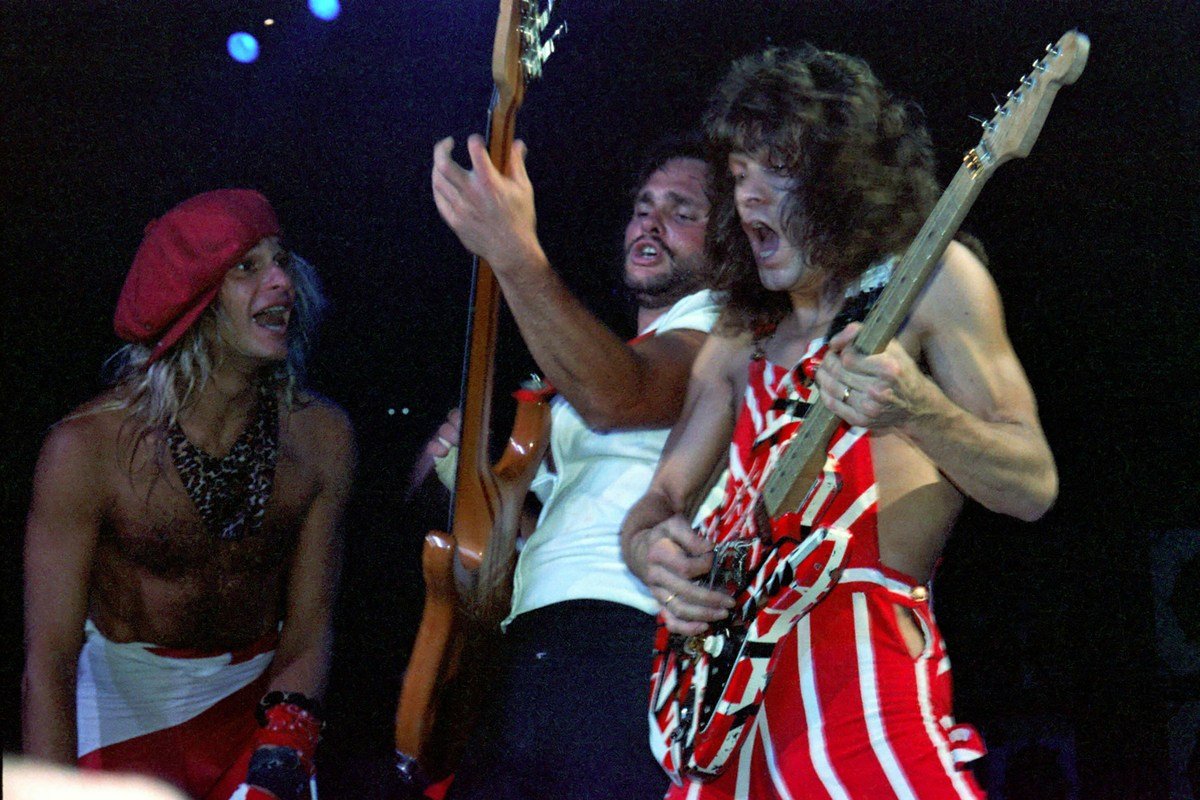
Watch the “Jump” video, filmed at the Forum in Inglewood, California, and you can almost see the fault lines. Roth is commanding, flamboyant, wholly in his element as the ringmaster. Eddie, in a striped spandex jumpsuit, plays the synth solo with a smile that looks like relief — like a man who finally got to do what he wanted. Two massive personalities, briefly in sync.
The Tensions Building: Ego, Ambition, and the Road to Breaking Point
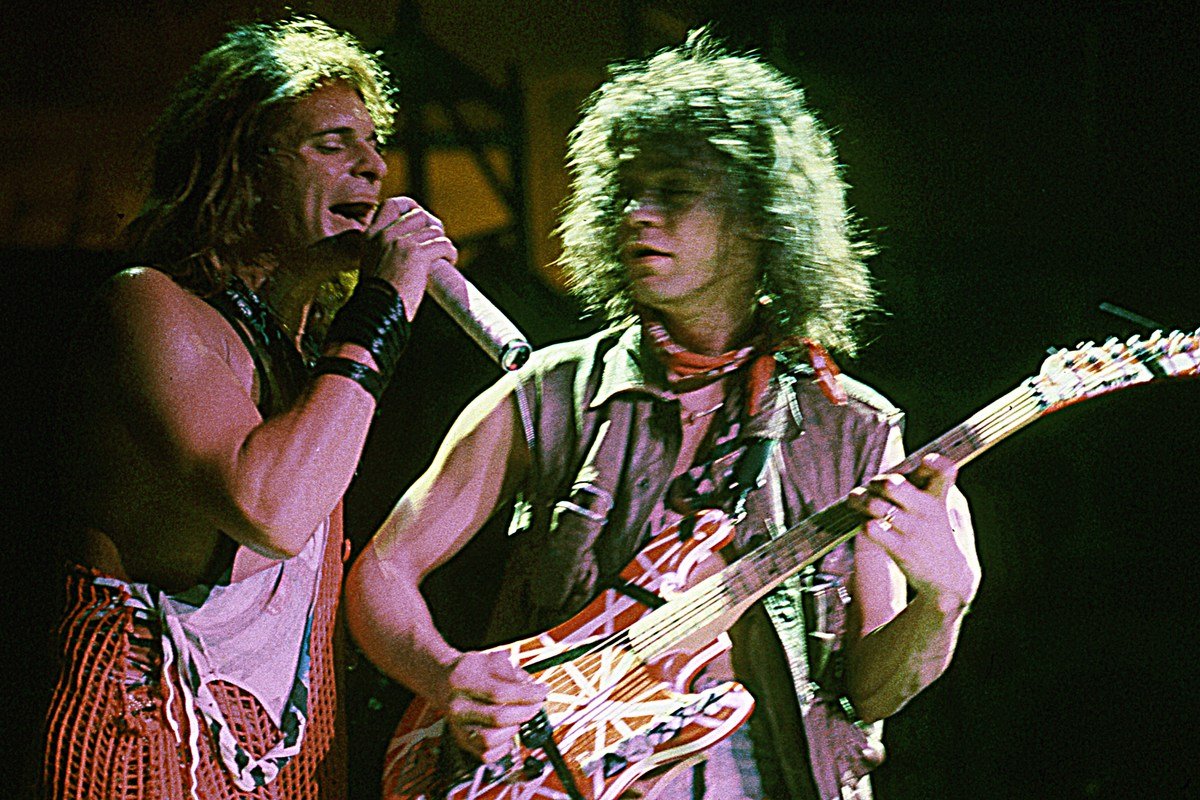
The 1984 world tour was, by any measure, a triumph. The band played arenas and stadiums to hundreds of thousands of fans. But beneath the surface, the band was fracturing along lines that had been forming for years. Eddie Van Halen, one of the most technically gifted guitarists in rock history, was growing increasingly frustrated with what he saw as Roth’s need to dominate every aspect of the band’s identity — the visual presentation, the marketing, the sheer spectacle of it all. For Roth, the performance was the point. For Eddie, the music was.
Roth was, to put it charitably, a force of nature. He had the charisma of a carnival barker and the ego to match. He had long nurtured dreams beyond rock music — film, acting, a broader entertainment career. Van Halen was his launching pad, and he knew it. Eddie and Alex Van Halen, for their part, were musicians first and foremost. They wanted to make records, push the music forward, experiment. Those two visions — Roth the showman vs. the Van Halen brothers the craftsmen — had always been in productive tension. By 1984-1985, that tension had turned corrosive.
Alex Van Halen, speaking about the split decades later, called it “the most disappointing thing I’d experienced in my life, the thing that seemed the most wasteful and unjust — until I lost my brother.” That quote, raw and unguarded, tells you everything about the weight of what happened. This wasn’t just a business decision. It was a genuine rupture between people who had shared stages, tour buses, and formative years together.
The “Crazy from the Heat” EP: Roth’s First Move
Even before the official split, Roth was testing the solo waters. In December 1984 — while still nominally part of Van Halen — he released “California Girls” as a solo single, a cover of the Beach Boys classic featuring Carl Wilson on backing vocals. The song was a massive hit, reaching No. 3 on the Billboard Hot 100 in March 1985. The accompanying music video, co-directed by Roth himself, was pure campy excess: Roth as a tour guide shepherding bikini-clad women through a sun-drenched California fantasy. It was quintessential DLR — all swagger and wink.
The follow-up EP, Crazy from the Heat, dropped in January 1985 and topped the charts. It was an unmistakable statement of intent: David Lee Roth was a star in his own right, with or without a backing band named Van Halen. The EP also included a cover of “Just a Gigolo/I Ain’t Got Nobody” that became an MTV staple, earning Roth eight nominations at the 1985 MTV Video Music Awards — more than any other artist that year. (He went home empty-handed, but the nominations alone were a sign of his cultural dominance.)
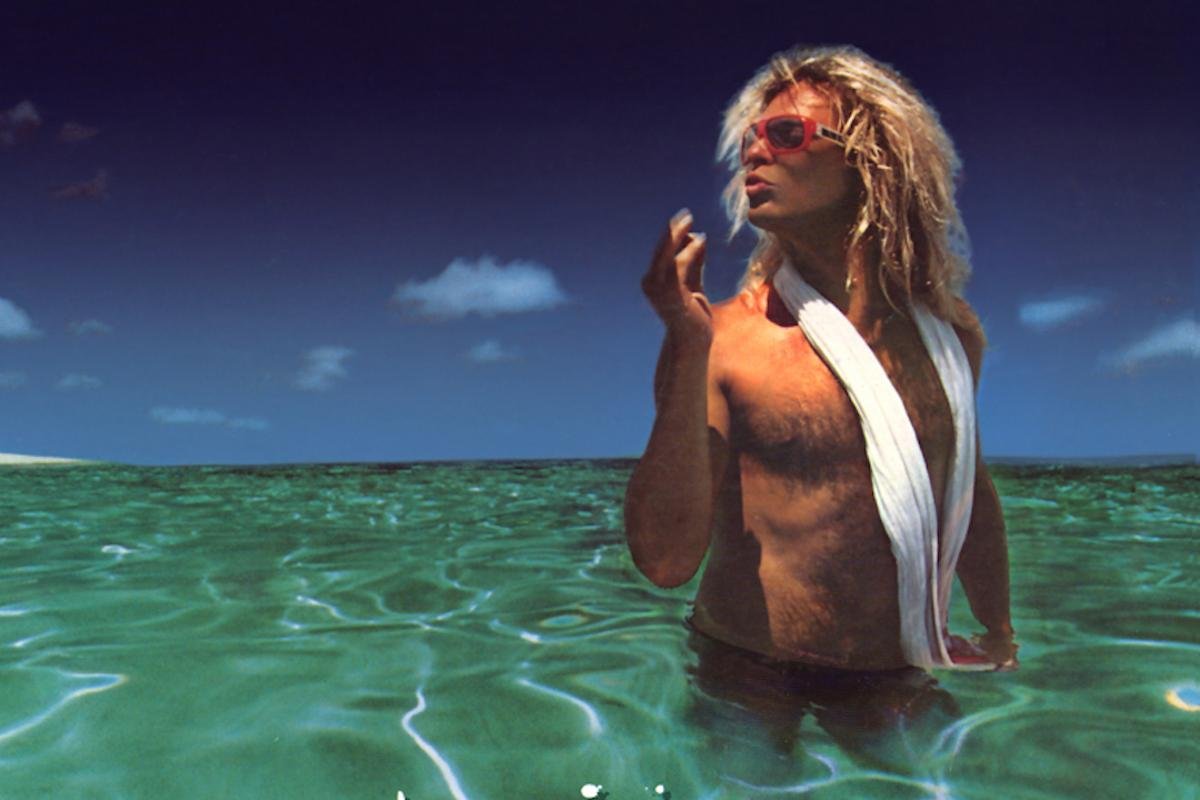
The Crazy from the Heat EP’s success was both cause and symptom of the split. It proved Roth could go it alone. But it also infuriated the Van Halen camp, who saw it as a distraction at best, a betrayal at worst. Why was their frontman launching a parallel career while theoretically preparing the band’s next album?
The Actual Van Halen David Lee Roth Split: Who Quit? Who Got Fired?
The question of who left whom has been debated for four decades, and the truth appears to lie somewhere between both accounts.
In early 1985, Roth and Eddie Van Halen met at Roth’s Pasadena mansion to discuss the band’s future. According to multiple accounts, two issues dominated the conversation. First, Eddie was interested in scaling back the band’s touring schedule — fewer massive stadium shows, a more sustainable pace after years of grueling world tours. Roth, who lived for the road and the crowd, reportedly viewed this as a “ripoff” to fans. Second, and perhaps more fatally, Roth wanted Eddie to score his proposed Crazy from the Heat film. Eddie declined. At that point, according to Eddie’s later account, Roth declared: “I can’t work with you guys anymore.”

Roth’s version is more diplomatic. He has said that he and Eddie openly discussed their “career differences,” that they both acknowledged they needed to go their own ways, that there were tears, hugs, and a mutual acknowledgment that the partnership had run its course. Neither man was fired; they simply agreed they were done.
Eddie’s public statement, delivered to Rolling Stone in mid-August 1985, had a sharper edge: “The band as you know it is over. Dave left to be a movie star.” That last line — “to be a movie star” — carried the unmistakable sting of contempt. Whether the split was a mutual decision or a firing dressed up as a resignation, the result was the same: by the summer of 1985, David Lee Roth was no longer the singer of Van Halen. The band that had sold tens of millions of records and redefined arena rock was suddenly without its most visible face.
April Fools’ Day 1985 has often been cited as the date Roth officially departed, and while there’s poetic irony in that — rock and roll’s greatest showman exiting on the day devoted to pranks — the public announcement actually came months later, in August 1985.
Van Halen’s “Panama” and the End of an Era
Before we get to what came next, it’s worth pausing on the Roth-era Van Halen at its most elemental: “Panama.” Released in 1984 as the second single from the 1984 album, the song is one of the most perfectly constructed hard rock tracks ever recorded. Eddie’s guitar work is ferocious, Roth’s delivery is magnetic, Alex’s drumming is relentless. It is the sound of a band firing on all cylinders, in the last year before everything fell apart.
Sammy Hagar Steps In: The 5150 Era Begins
The Van Halen brothers didn’t waste time grieving. Within months of Roth’s departure, they had found a new singer: Sammy Hagar, the “Red Rocker,” who had enjoyed a successful solo career with hits like “I Can’t Drive 55” and had previously fronted the band Montrose. Hagar was a different kind of frontman — less theatrical than Roth, more earnest, a genuine songwriter who could actually play guitar. The chemistry with Eddie was immediate.
“We bounced around the idea of having everyone from Joe Cocker to Phil Collins to Mike Rutherford sing,” Eddie recalled. But Hagar was the one who clicked. They began recording almost immediately.
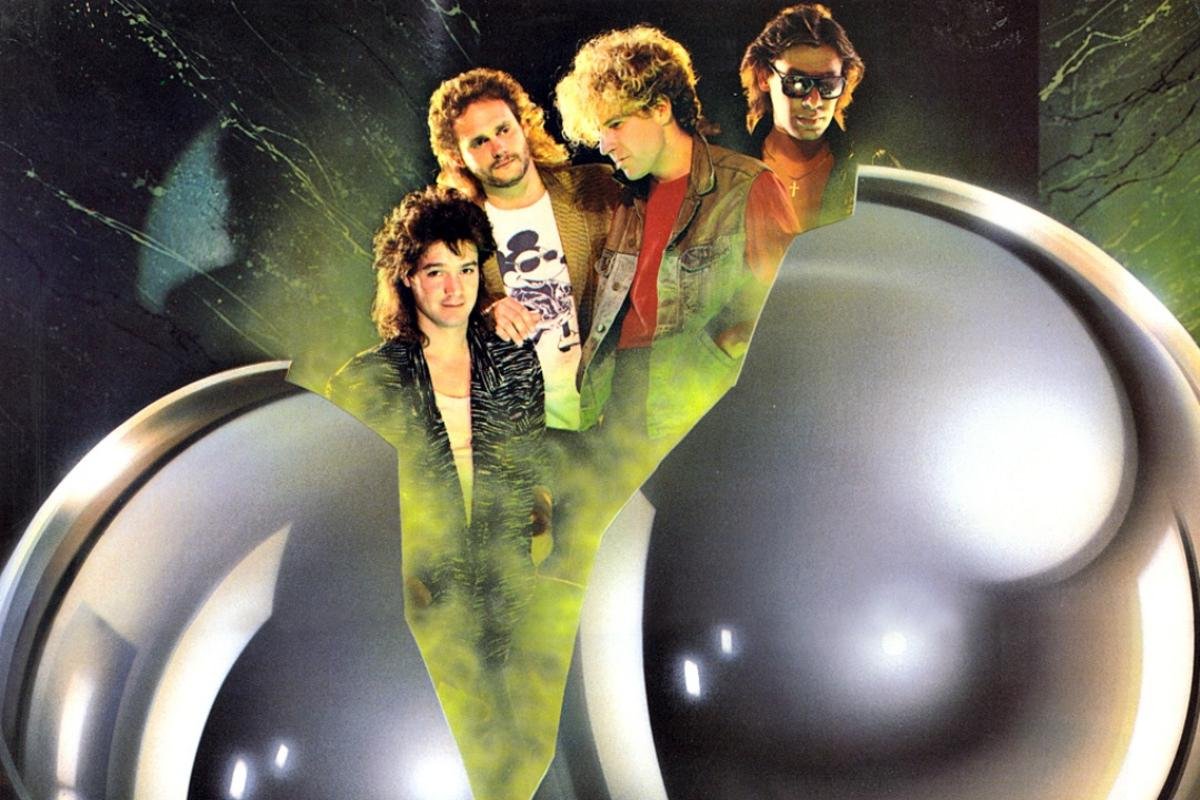
The result was 5150, released in March 1986. Named after the California police code for an involuntary psychiatric hold (and the name Eddie had given his home studio in Coldwater Canyon), the album was a thunderclap. It debuted at No. 1 on the Billboard 200 — the band’s first chart-topper — went platinum in one week (a Warners Records speed record at the time), and eventually went six-times platinum. Singles like “Why Can’t This Be Love,” “Love Walks In,” and “Dreams” dominated radio. The Hagar era had announced itself.
Hagar himself has said that 5150 made the band “a little bigger and a little more mainstream.” That’s both accurate and revealing. The sound had shifted: more polished, more radio-friendly, with ballads and love songs sitting alongside the crunch. Hagar brought genuine vocal range and a collaborative songwriting dynamic that Eddie clearly relished. The new Van Halen was more melodic, more adult contemporary — and to a generation of fans, it was just as valid as what came before.
Fan Reactions: Team Dave vs. Team Sammy
The Van Halen David Lee Roth split created one of rock music’s most durable fan fault lines. The derisive nickname “Van Hagar” tells you everything about how the hardcore Roth faithful felt. To them, Hagar represented a dilution — a smoothing-out of the dangerous, unpredictable energy that Roth had brought. Where Roth was chaos in spandex, Hagar was competence in jeans. Wonderful, but not the same.
Hagar’s defenders — and there were many — pointed to the commercial numbers. 5150, OU812 (1988), For Unlawful Carnal Knowledge (1991, which won the Grammy for Best Hard Rock Performance), and Balance (1995) were all massive successes. The Hagar-era Van Halen sold tens of millions of records, won awards, and packed arenas. Hagar brought his own following along, compensating for the Roth purists who sat it out. As Hagar put it simply: “The fans bought into our trip.”
The divide ran deep. At its most heated, it wasn’t just about musical preference — it was about identity. Roth-era fans saw themselves as devotees of pure, unreconstructed rock and roll. Hagar-era fans were sometimes accused of being soft-rockers who had wandered in from an adult-contemporary station. The debate was petty, passionate, and very, very 1980s. It has never fully been resolved.
Meanwhile, Roth’s own solo career accelerated with his debut full album Eat ‘Em and Smile (1986), recorded with a band that included guitar prodigy Steve Vai and bassist Billy Sheehan. The record was a critical and commercial hit — proof that whatever had driven the Van Halen David Lee Roth split, Roth’s appeal was not diminished by the departure. He followed it with Skyscraper (1988), another Top 10 album. Team Dave had their answer: the man didn’t need Van Halen any more than Van Halen needed him.
The 2012 Reunion: One Last Ride with Roth
After years of acrimony, failed reunion attempts, and bitter public statements, David Lee Roth and Van Halen reconciled — sort of — in 2007. A massive reunion tour, with the then-16-year-old Wolfgang Van Halen replacing founding bassist Michael Anthony, was greeted with euphoric reviews. Roth was in fine form; Eddie, despite health concerns, played with ferocious precision. For one tour, the two camps could agree: this was the real Van Halen.

The studio reunion followed in 2012. A Different Kind of Truth — Van Halen’s twelfth and final studio album — was released on February 7, 2012, marking Roth’s first studio work with the band since 1984. Ahead of the release, on January 5, 2012, the band played a secret show at the legendary Cafe Wha? in New York City, announcing the album and a North American tour simultaneously. The album debuted at No. 2 on the Billboard 200 and sold over 411,000 copies in the US that year.
It wasn’t a perfect reunion. Michael Anthony, one of rock’s great backing vocalists, was conspicuously absent — replaced by Wolfgang, who was talented but didn’t have Anthony’s iconic harmonies. Roth and Wolfgang later had a public spat over the album’s legacy, with Roth jabbing at Wolfgang’s own solo debut in characteristically ungentle terms. Old wounds, partially closed, cracked open again. But on stage, the chemistry was there. For fans who had waited since 1985 to hear Roth front Van Halen on a new album, it was a gift.
Eddie Van Halen’s Death in 2020: The End of All Possibilities
On October 6, 2020, Eddie Van Halen died of a stroke at Saint John’s Health Center in Santa Monica, California. He was 65 years old. His wife Janie, son Wolfgang, ex-wife Valerie Bertinelli, and brother Alex were at his side. He had been battling throat cancer — and, according to some accounts, lung cancer — for years, though few outside his inner circle had known the severity of his condition.
The music world reacted with an outpouring of grief that underscored just how singular Eddie had been. Joe Perry said Eddie had “reinvented guitar playing.” Steve Vai called his contributions “immeasurable.” Tom Morello labeled him “innovative.” Jeff Beck praised his “amazing technique.” Even Sammy Hagar, who hadn’t been on good terms with Eddie in the decade before his death, had reconciled with him earlier in 2020 and was texting him frequently in his final months.
As for David Lee Roth — Roth and Eddie’s relationship had always been complicated, even after the 2007 and 2012 reunions. Whether they had truly buried the hatchet is known only to them. What is certain is that Eddie’s death ended any possibility of another reunion, another record, another tour. On November 16, 2020, Wolfgang Van Halen appeared on The Howard Stern Show and made it official: “You can’t have Van Halen without Eddie Van Halen.” Van Halen, the band, was over.
Legacy: The Two Eras — Which Was Better?
The Van Halen David Lee Roth split created two distinct bands operating under one name, and the debate over which era was “better” is the kind of argument that will never be settled — which is exactly what makes it so durable.
The case for the Roth era rests on cultural lightning-in-a-bottle. The self-titled debut (1978), Van Halen II, Women and Children First, Fair Warning, Diver Down, and 1984 form a catalog of hard rock that has rarely been equaled for sheer visceral excitement. Roth was a once-in-a-generation entertainer — the kind of frontman who made you feel like rock and roll was the most important thing in the world. His and Eddie’s creative friction produced something that neither could have made alone.
The case for the Hagar era rests on consistency, craft, and commercial achievement. 5150 through Balance represents a remarkably strong run of melodic hard rock, with Eddie’s guitar work arguably more sophisticated and the songwriting more emotionally varied. Hagar and Eddie co-wrote as genuine partners; there was no Roth-style veto on synths or keyboards. And the numbers don’t lie: the Hagar era produced Van Halen’s only No. 1 album, their only Grammy win, and some of their most enduring radio hits.
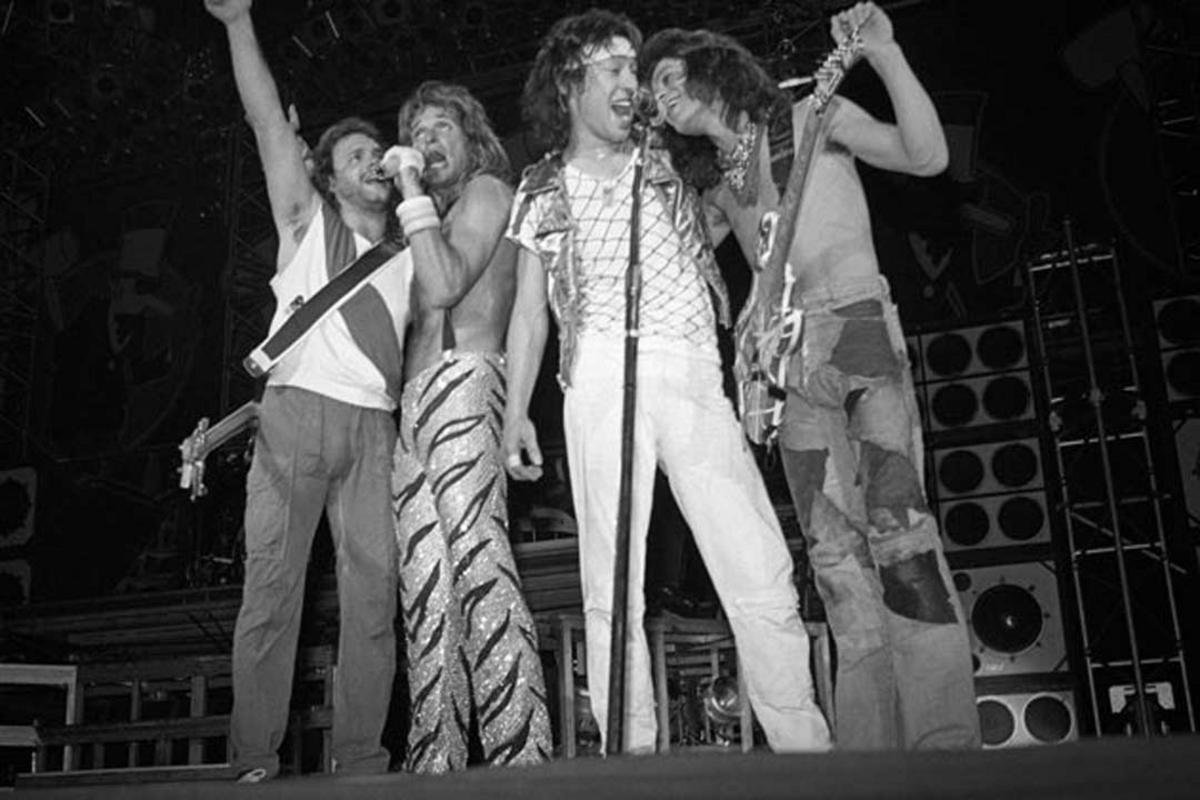
Perhaps the most honest answer is that neither era was “better” — they were simply different expressions of what Van Halen could be. The Roth era was lightning. The Hagar era was thunder. Both shook the walls. And the Van Halen David Lee Roth split, for all its pain and acrimony, is what made both possible.
Frequently Asked Questions
Why did David Lee Roth leave Van Halen?
The Van Halen David Lee Roth split in 1985 resulted from a combination of factors: creative differences over the band’s musical direction (particularly Eddie’s desire to use synthesizers), Roth’s growing solo ambitions (evidenced by his hugely successful Crazy from the Heat EP), disagreements over the band’s touring schedule, and Roth’s request that Eddie score his proposed Crazy from the Heat film — a request Eddie declined. When Eddie refused, Roth reportedly declared he could no longer work with the band. The two sides have offered slightly different accounts of exactly who “quit” and who was “fired,” but both agree the split was effectively mutual.
When did David Lee Roth officially leave Van Halen?
The exact date of the conversation in which Roth and Eddie Van Halen agreed to part ways is not definitively known, though it occurred in early-to-mid 1985. April 1, 1985 (April Fools’ Day) is often cited as the date Roth tendered his departure, though some historians dispute this precise date. The public announcement came in August 1985, when Eddie Van Halen told Rolling Stone: “The band as you know it is over.”
Who replaced David Lee Roth in Van Halen?
Sammy Hagar replaced David Lee Roth as Van Halen’s lead singer in 1985. Known as the “Red Rocker,” Hagar had previously fronted Montrose and enjoyed a successful solo career. His debut album with Van Halen, 5150 (1986), became the band’s first No. 1 album on the Billboard 200 and went six-times platinum in the US.
Did Van Halen and David Lee Roth ever reunite?
Yes, twice. In 2007, Roth rejoined Van Halen for a major North American tour, with Eddie’s son Wolfgang Van Halen replacing founding bassist Michael Anthony. The tour was a massive success. In 2012, the reunion became a full studio recording when Van Halen released A Different Kind of Truth — the band’s twelfth and final studio album, and Roth’s first studio work with Van Halen since 1984. The album debuted at No. 2 on the Billboard 200.
What happened to Eddie Van Halen after the split?
Eddie Van Halen continued with Van Halen, recording six more studio albums with Sammy Hagar (1986–1995) and one with Gary Cherone (Van Halen III, 1998). He remained one of the most influential guitarists in rock history, widely credited with popularizing the two-handed tapping technique. He died of a stroke on October 6, 2020, at age 65, after battling throat cancer. His son Wolfgang confirmed that Van Halen would not continue as a band after Eddie’s death.
What was the “5150” album and why does it matter?
5150 (1986) was Van Halen’s first album with Sammy Hagar, named after the California psychiatric hold code and Eddie Van Halen’s home studio. It matters for several reasons: it was the band’s first No. 1 album on the Billboard 200; it went platinum in one week (a Warner Bros. Records speed record at the time); it eventually went six-times platinum; and it proved definitively that Van Halen could survive — and thrive — after the Van Halen David Lee Roth split. Singles “Why Can’t This Be Love,” “Love Walks In,” and “Dreams” became staples of 1980s rock radio.
The Retro Almanac
A monthly roundup of "on this day" highlights from that month, decades back — plus first dibs on new retro merch drops. No spam, just the good stuff.