
80s Horror Movies: The Golden Age of Scares and Screams
There’s something about 80s horror movies that modern fright flicks just can’t replicate. Maybe it’s the grainy film stock, the synth-heavy soundtracks, or the practical effects that looked so real they gave you nightmares for weeks. Whatever the secret ingredient was, the 1980s produced some of the most iconic, terrifying, and downright fun horror films ever committed to celluloid.
If you grew up haunting the horror section of your local video store — you know, that mysterious back corner with the lurid VHS covers that promised more than they could possibly deliver — then you already know what I’m talking about. The 80s weren’t just a golden age for horror. They were the golden age.
The Slasher Explosion That Changed Everything
John Carpenter’s Halloween (1978) lit the fuse, but the 80s turned slasher movies into an absolute phenomenon. Friday the 13th crashed into theaters in 1980 and proved that audiences had an insatiable appetite for masked killers, summer camps, and creative kills. By the time Jason Voorhees finally donned that iconic hockey mask in Part III (1982), the slasher genre was printing money.
Then came Freddy. Wes Craven’s A Nightmare on Elm Street (1984) took the slasher formula and flipped it on its head. The killer didn’t lurk in the woods or behind a door — he attacked you in your dreams. You literally couldn’t sleep to escape him. Robert Englund’s Freddy Krueger became the first horror villain who was genuinely funny and genuinely terrifying at the same time. That razor glove scraping along the boiler room pipes? Pure nightmare fuel.
And we can’t talk 80s slashers without mentioning A Nightmare on Elm Street 3: Dream Warriors (1987), which many fans consider the best sequel in the franchise. It gave Freddy’s victims superpowers inside their dreams, turning the hunted into warriors. It was creative, scary, and absolutely wild — everything 80s horror did best.
Practical Effects: When Movie Magic Was Actually Magic
Here’s what separates 80s horror from everything that came after: practical effects. Before CGI took over and turned every monster into a bunch of pixels, effects artists like Tom Savini, Rob Bottin, Rick Baker, and Stan Winston were sculpting nightmares by hand. Latex, foam rubber, mechanical puppets, gallons of corn syrup blood — these guys were absolute wizards.
Rob Bottin nearly worked himself into a hospital creating the creature effects for John Carpenter’s The Thing (1982). Every grotesque transformation in that film was done with practical effects, and they hold up better today than most CGI from the 2010s. The chest-chomp scene alone is enough to make your jaw hit the floor, even forty-plus years later.
Then there’s An American Werewolf in London (1981), where Rick Baker’s transformation sequence won the first-ever Academy Award for Best Makeup. David Naughton writhing on the floor as his bones snap and his face stretches into a wolf snout? They did that with air bladders under foam latex. No computers. Just genius craftsmanship and a whole lot of elbow grease.
Tom Savini, the “Godfather of Gore,” made Friday the 13th, The Burning, Creepshow, and Day of the Dead look impossibly real. The man was a Vietnam veteran who channeled the real horrors he witnessed into creating movie effects that shocked audiences to their core. His work on Day of the Dead (1985) — particularly Captain Rhodes getting torn apart — remains some of the most convincing gore ever put on screen.
The Video Store: Horror’s Greatest Marketing Machine
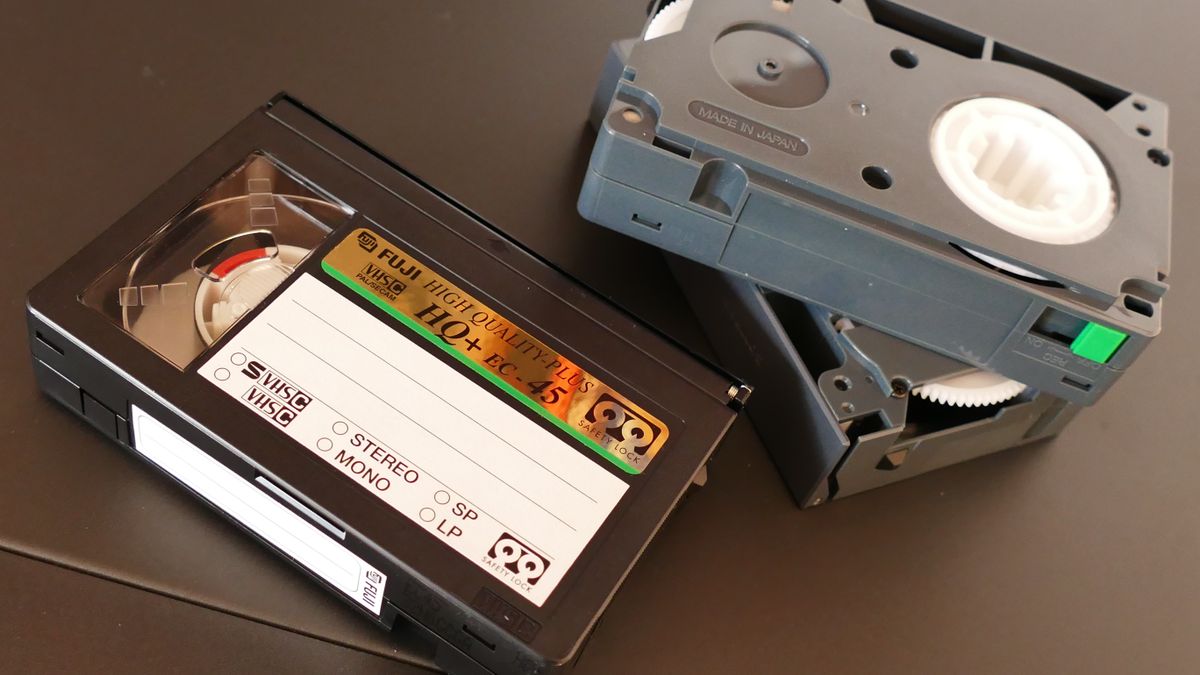
You can’t tell the story of 80s horror without talking about the VHS revolution. Home video didn’t just change how we watched movies — it fundamentally transformed what kind of movies got made. Suddenly, a low-budget horror flick didn’t need to be a theatrical hit to turn a profit. It just needed a killer VHS cover.
And oh man, did those covers deliver. Walking into the horror section of your local Blockbuster or mom-and-pop video store was like entering a museum of the macabre. Grinning skulls, dripping blood, screaming women, chainsaw-wielding maniacs — the box art was often better than the actual movie. But that was part of the fun. You’d judge every book by its cover, grab two or three tapes, and pray that at least one of them was actually scary.
This VHS boom gave birth to an entire ecosystem of direct-to-video horror that thrived throughout the decade. Movies like Chopping Mall (1986), Night of the Demons (1988), and Sleepaway Camp (1983) became cult classics not because of theatrical runs, but because kids kept renting them over and over from the video store. The VHS era was the great equalizer — a film that cost $200,000 to make could sit right next to a $20 million studio production on the same shelf.
Body Horror and Sci-Fi Hybrids: The Weird Stuff We Loved
The 80s weren’t just about slashers. The decade produced some of the most imaginative genre-bending horror films ever made. David Cronenberg basically invented body horror as a mainstream genre with films like Videodrome (1983), The Fly (1986), and Scanners (1981). If watching Jeff Goldblum slowly dissolve into a human-insect hybrid didn’t make you squirm, nothing would.
The Fly is particularly brilliant because underneath all the oozing, pulsating grossness, it’s actually a tragic love story. Geena Davis watching the man she loves literally fall apart — losing fingernails, vomiting acid onto his food to digest it, his ear dropping off — it’s Shakespearean tragedy wrapped in a latex body suit. Cronenberg understood something that lesser filmmakers didn’t: the best horror makes you feel something beyond just fear.
Then there were the sci-fi horror hybrids. Aliens (1986) proved that James Cameron could take Ridley Scott’s slow-burn masterpiece and turn it into an action-horror rollercoaster that worked on every level. The Terminator (1984) was basically a slasher movie with a robot. Predator (1987) combined an Arnold Schwarzenegger action flick with a creature feature and somehow made it work perfectly. And Re-Animator (1985) was so gleefully over-the-top that it circled back around from gross to hilarious, like a Looney Tunes cartoon directed by H.P. Lovecraft.
Horror Comedy: When Laughing and Screaming Became the Same Thing
One of the 80s’ greatest gifts to cinema was the horror-comedy. Sure, there had been funny horror movies before, but the 80s perfected the formula of making you scream and laugh in the same breath.
Sam Raimi’s Evil Dead II (1987) is the Mount Everest of horror comedy. Bruce Campbell’s Ash Williams fighting his own possessed hand, getting gallons of blood sprayed in his face, and strapping a chainsaw to his stump to fight deadites — it’s slapstick meets splatter, and it works because Raimi commits fully to the insanity. The film never winks at the audience; it just cranks everything to eleven and dares you to keep up.
Return of the Living Dead (1985) gave us punk rockers fighting zombies who could actually talk (and specifically craved brains — that “braiiins” thing everyone attributes to Romero? It actually came from this movie). Fright Night (1985) was Rear Window with vampires, featuring Roddy McDowall as a washed-up horror TV host who has to actually fight the undead for real. And Gremlins (1984) — Joe Dante’s anarchic masterpiece — proved you could make a horror movie that the whole family could watch, as long as the family had a twisted sense of humor.
These films understood that horror and comedy come from the same place: the unexpected. A scare and a joke both depend on surprise and timing. The 80s directors who figured that out created some of the most rewatchable movies of the entire decade — horror or otherwise.
Watch: A Love Letter to 80s Horror
If you want a deep dive into why the 80s were the ultimate decade for horror, check out this fantastic retrospective:
Scream Queens and Final Girls: The Women Who Fought Back
80s horror gave us one of cinema’s most enduring archetypes: the Final Girl. She’s the one who survives. The one who fights back. The one who refuses to die even when everyone around her is getting picked off one by one. And while 80s pop culture wasn’t always kind to its female characters, the Final Girl trope was surprisingly progressive for its time.
Jamie Lee Curtis set the template in Halloween, but the 80s ran with it. Heather Langenkamp’s Nancy Thompson in A Nightmare on Elm Street didn’t just survive Freddy — she booby-trapped her own house and fought him on his own turf. She was smart, resourceful, and completely badass. Sigourney Weaver’s Ripley in Aliens became one of the greatest action heroes of all time, gender be damned. And even in slashers that weren’t exactly feminist manifestos, the Final Girl always earned her survival through intelligence and grit rather than brute force.
Meanwhile, the term “Scream Queen” became a badge of honor. Actresses like Jamie Lee Curtis, Linnea Quigley, Barbara Crampton, and Adrienne Barbeau built entire careers on their ability to look terrified and fight monsters. They were the beating heart of 80s horror, and many of them are still beloved icons in the genre community today.

The Soundtracks That Still Haunt Us
Can we talk about how 80s horror soundtracks absolutely slapped? The decade’s love affair with synthesizers created some of the most atmospheric, unsettling movie music ever recorded.
Carpenter did double duty as director and composer for most of his films, and his minimalist synth scores were pure brilliance in their simplicity. The Halloween theme is just a few piano notes over a synth drone, but it’s become the universal shorthand for “something terrifying is about to happen.” His scores for The Fog (1980) and Christine (1983) were equally masterful — proof that you don’t need an orchestra when you’ve got a Prophet synthesizer and a flair for the creepy.
But it wasn’t all synths. A Nightmare on Elm Street had Charles Bernstein’s haunting “one, two, Freddy’s coming for you” lullaby woven into its score. The Lost Boys (1987) had a killer rock soundtrack featuring Echo & the Bunnymen’s cover of “People Are Strange” and the unforgettable “Cry Little Sister.” And Return of the Living Dead featured an entire punk rock soundtrack that was arguably better than the movie itself (and the movie was great).
These soundtracks didn’t just accompany the movies — they defined them. Ask any horror fan to hum the Halloween theme and they’ll nail it instantly. That’s the power of 80s horror music. It got into your head and never left.
Why 80s Horror Still Matters
Here’s the thing — 80s horror isn’t just nostalgia bait. These movies genuinely hold up. Modern filmmakers know it, too. The Stranger Things creators built an entire empire on 80s horror aesthetics. Ti West, Robert Eggers, and Jordan Peele have all cited 80s horror as foundational influences. The recent trend of “elevated horror” owes a massive debt to films like The Shining (1980) and The Thing, which proved horror could be both viscerally terrifying and intellectually stimulating.
The practical effects renaissance in modern horror — think Terrifier, Mad God, and Evil Dead Rise — is a direct response to audiences who grew up on 80s horror and know the difference between a latex monster that feels real and a CGI creation that feels like a video game cutscene.
And then there’s the community. 80s horror fandom is one of the most passionate, dedicated fan communities on Earth. Horror conventions, collector’s edition Blu-rays from boutique labels like Scream Factory and Arrow Video, VHS collecting (yes, people pay hundreds for rare horror tapes) — the love for these movies hasn’t dimmed one bit. If anything, it’s stronger than ever.
So the next time someone tells you horror movies peaked in the 2010s, just smile, hand them a copy of The Thing or A Nightmare on Elm Street, and let the 80s do the talking. Because when it comes to scares, practical effects, unforgettable villains, and pure uncut movie magic, no decade does it better than the glorious, blood-soaked 1980s.