80s Workout Videos: When Fitness Met Fashion and Changed Everything

The 1980s didn’t just give us neon colors and big hair – they revolutionized how we thought about fitness, fashion, and fun. Before the decade that taste forgot, working out meant lifting weights in dingy gyms or jogging in cotton shorts. Then came the VHS revolution, spandex explosion, and a fitness instructor who would become more famous than most movie stars: Jane Fonda.
What started as a simple workout video became a cultural phenomenon that transformed America’s relationship with exercise. The 80s workout video era wasn’t just about fitness – it was about empowerment, style, and making exercise accessible to everyone with a TV and a VCR.
The Birth of a Movement

In 1982, Jane Fonda released “Jane Fonda’s Workout,” a 90-minute VHS tape that would sell over 17 million copies worldwide. Filmed in a bright studio with synthesizer music pumping, Fonda appeared in a striped leotard, leg warmers, and that iconic layered haircut. She wasn’t just teaching exercise – she was selling a lifestyle.
“Are you ready to do the workout?” Fonda would ask with infectious enthusiasm, surrounded by perfectly coiffed instructors in vibrant workout wear. The answer from America was a resounding yes.
The success wasn’t accidental. Fonda had already established herself as a serious actress and political activist. When she pivoted to fitness, she brought credibility to what many still considered a frivolous pursuit. Her workout wasn’t just about looking good – it was about feeling strong, capable, and confident.
Fashion Meets Function

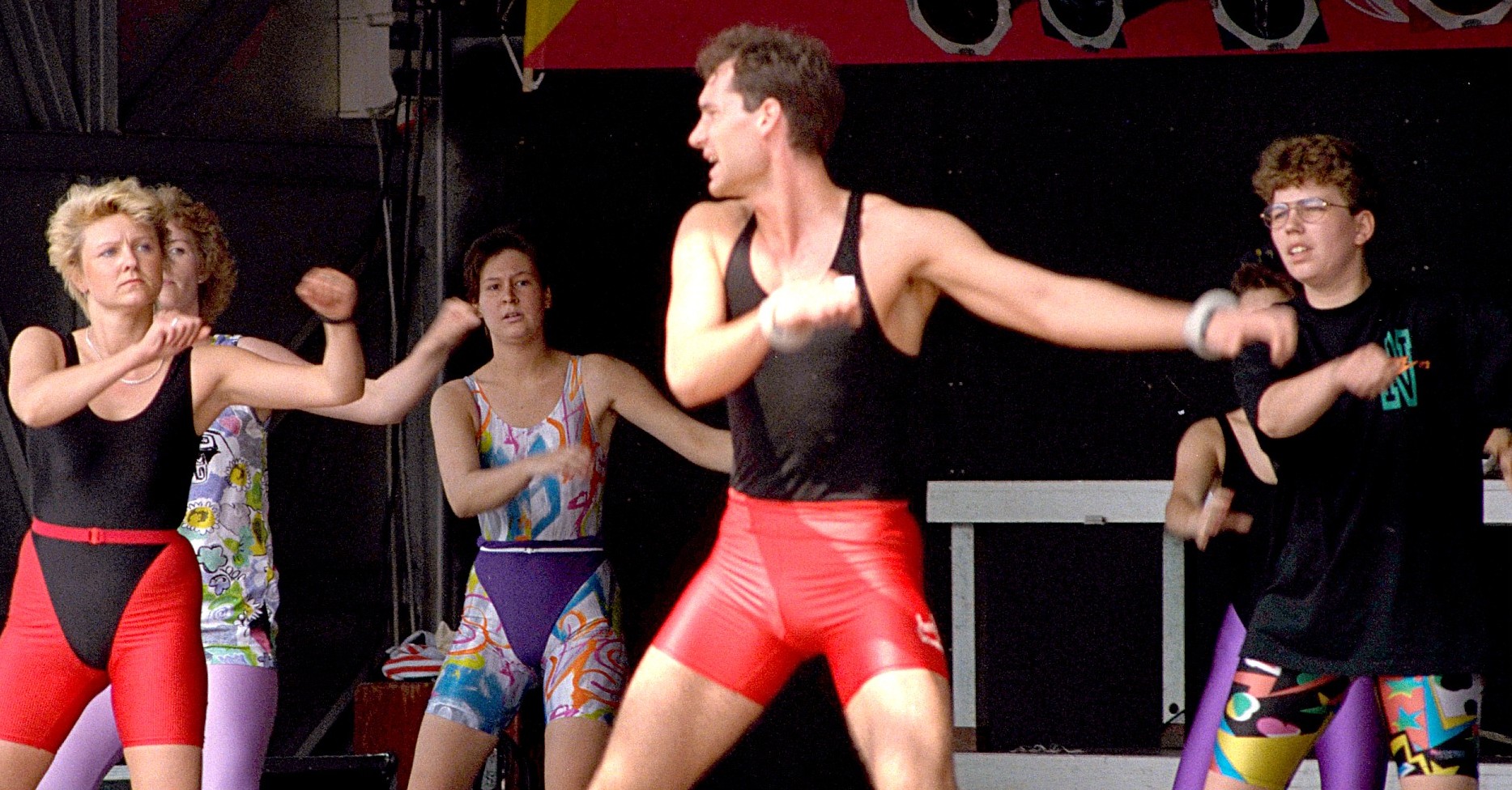
The 80s workout aesthetic was unmistakable: neon leotards, matching leg warmers, headbands that defied gravity, and enough spandex to outfit a small army. These weren’t just costumes – they were statements. Bright colors projected energy and positivity, while form-fitting garments allowed for freedom of movement that baggy clothes couldn’t provide.
Leg warmers, originally designed for ballet dancers to keep muscles warm, became the decade’s most iconic fitness accessory. They served a practical purpose but also added a dash of dance-inspired glamour to any workout. Paired with high-cut leotards and colorful tights, they created a look that was uniquely 80s.
The fashion industry took notice. Suddenly, sportswear wasn’t just for sports. Designers like Calvin Klein and Norma Kamali began creating “athleisure” pieces that could transition from gym to street. The line between workout clothes and regular clothes began to blur in ways that would permanently change fashion.
The Aerobics Explosion

Aerobics wasn’t new in the 1980s – Dr. Kenneth Cooper had coined the term in the late 1960s. But the 80s transformed it from a medical concept into a mainstream obsession. The combination of dance-inspired movements, upbeat music, and group energy created something that felt more like a party than exercise.
The typical 80s aerobics class followed a specific formula: warm-up stretches, low-impact movements, high-impact cardio, floor work for “buns and thighs,” and a cool-down. Instructors weren’t just fitness experts – they were entertainers, cheerleaders, and motivational speakers rolled into one spandex-clad package.
Music was crucial to the experience. Purpose-built aerobics albums featured songs with 120-140 beats per minute, perfect for maintaining energy throughout a 60-minute session. Artists like Olivia Newton-John (“Physical”) and Irene Cara (“Flashdance”) provided the soundtrack to millions of workouts.
Beyond Jane Fonda: The Video Revolution

Fonda’s success opened the floodgates. By mid-decade, workout videos had become their own industry. Richard Simmons brought theatrical flair and genuine compassion to fitness with his “Sweatin’ to the Oldies” series. Unlike the glamorous aerobics instructors, Simmons specifically targeted people who felt intimidated by traditional fitness culture.
Raquel Welch released “Total Beauty and Fitness Program,” combining her Hollywood glamour with yoga and strength training. Even action stars got in on the trend – Arnold Schwarzenegger’s “Shape Up with Arnold” brought bodybuilding to living rooms across America.
Each instructor brought their own personality and approach, but they all shared certain characteristics: boundless energy, perfect form, and the ability to make exercise feel achievable and fun. They weren’t drill sergeants – they were your enthusiastic friend who happened to be in incredible shape.
The Technology Revolution

The rise of 80s workout videos coincided perfectly with the VHS boom. For the first time in history, people could bring professional fitness instruction into their homes. No more scheduling around gym hours, no more worrying about how you looked compared to other members, no monthly fees.
The convenience factor was revolutionary. Busy parents could squeeze in a 30-minute workout after the kids went to bed. People in small towns without gyms could access the same quality instruction as those in major cities. The democratization of fitness had begun.
Video also allowed for production values that live classes couldn’t match. Multiple camera angles showed proper form from every perspective. Professional lighting made everyone look their best. Editing could create seamless routines that built intensity at just the right pace.
Cultural Impact Beyond the Gym
The 80s workout video phenomenon changed more than just how people exercised. It shifted cultural perceptions about who could be fit and strong. While bodybuilding had been dominated by men, aerobics instructors were predominantly women – and they were calling the shots.
Jane Fonda, in particular, represented a new kind of female empowerment. Here was a woman in her 40s who was not just maintaining her figure but actively promoting strength and capability. Her workouts emphasized functional fitness – being strong enough to lift your groceries, energetic enough to keep up with your kids, confident enough to take on the world.
The workout video era also contributed to the growing acceptance of cosmetic concerns. It became okay to want to look good while getting in shape. The marriage of fitness and fashion that began in the 80s would eventually evolve into today’s athleisure trend and Instagram fitness culture.
The Legacy That Lives On

While the neon leotards and gravity-defying hair may seem dated now, the core innovations of 80s workout culture remain influential. The emphasis on making fitness fun and accessible laid the groundwork for everything from Zumba classes to Peloton bikes to YouTube workout channels.
Modern fitness influencers owe a debt to those pioneering 80s instructors who proved that personality and enthusiasm could be just as important as credentials. The idea that working out should be enjoyable rather than punitive – revolutionary in 1982 – is now fitness industry gospel.
Even the fashion has made comebacks. High-waisted leggings, sports bras as outerwear, and yes, even leg warmers have all returned to mainstream fashion. The 80s proved that workout clothes could be expressive, confidence-boosting, and fun.
Jane Fonda herself continues to champion fitness well into her 80s, recently partnering with VR fitness company Supernatural to create a new generation of workout experiences. At 87, she’s still asking, “Are you ready to do the workout?” – and finding new audiences eager to say yes.

Why We Still Need That 80s Energy
In our current era of boutique fitness classes and expensive equipment, there’s something refreshing about the straightforward enthusiasm of 80s workout videos. No complicated technology, no monthly subscriptions – just pure, unfiltered motivation to move your body and feel good doing it.
The 80s workout revolution taught us that fitness doesn’t have to be serious to be effective. That looking good and feeling strong aren’t mutually exclusive goals. That a little bit of flair and fun can make the difference between a workout you dread and one you actually look forward to.
The influence extends far beyond just exercise routines. Today’s wellness culture, with its emphasis on self-care and body positivity, owes much to the inclusive spirit that Jane Fonda and her contemporaries pioneered. They showed that fitness wasn’t just for athletes or gym rats – it was for everyone who wanted to feel better about themselves.
So dust off those leg warmers, crank up the synth-pop, and remember what the 80s taught us: fitness should feel good, look good, and most importantly, be something you actually want to do. Because the best workout is the one you’ll actually stick with – even if it requires a little spandex and a lot of enthusiasm.
Ready to do the workout? Let’s go.