Iconic 80s Toys Worth a Fortune Today
In November 2024, somebody handed over $1.34 million for a 3.75-inch action figure that came free in the mail to Star Wars kids in 1979. It was a Boba Fett prototype — one of about 100 ever made before Kenner pulled the spring-loaded rocket for safety reasons. The buyer is anonymous, the seller had owned it for decades, and a piece of plastic that originally cost a stamp and four proof-of-purchase seals broke every record in the vintage toy market.
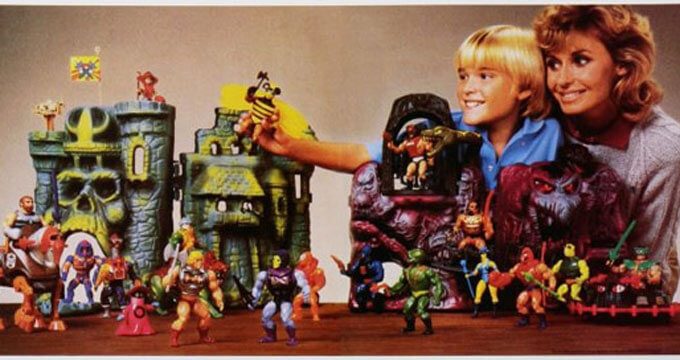
That sale is the loud headline. The quieter story is what’s happening at every regional auction house and Facebook marketplace in the country. Iconic 80s toys are now treated like baseball cards, vintage watches, and first-edition comics: condition-graded, slabbed, photographed under good lighting, and priced accordingly. The toys you used to fight over at the Sears wishbook table — Castle Grayskull, Optimus Prime, the original NES with R.O.B. still strapped in — have become serious collectibles, and most of the people selling them today were the kids who got them under the tree.
The Retro Almanac
A monthly roundup of "on this day" highlights from that month, decades back — plus first dibs on new retro merch drops. No spam, just the good stuff.
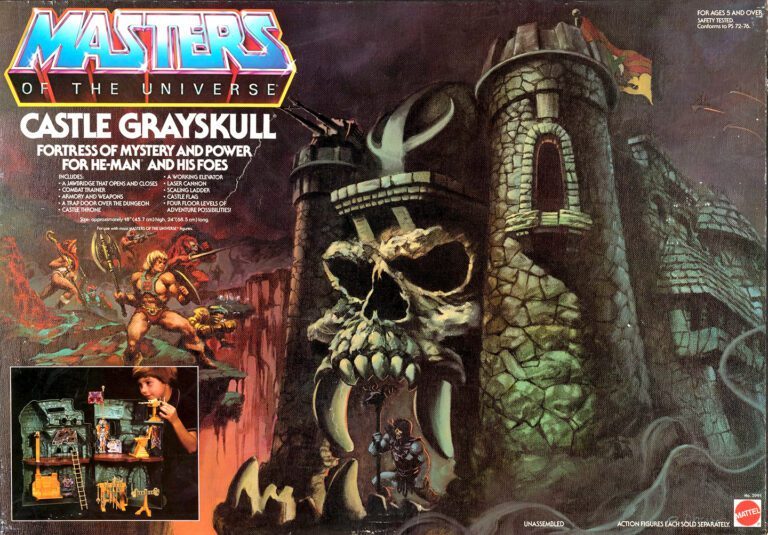
Castle Grayskull and the He-Man Empire
Mattel released Castle Grayskull in 1982 with a sticker price of $24.99. Today, a complete boxed example with all the accessories, the working drawbridge, the rubber band still holding the trap door — that’s a $1,500 to $2,500 toy depending on who’s bidding. Heritage Auctions has moved AFA-graded examples well past $2,000, and the unicorn version with original instructions and dripping wax-paper inserts has crossed $3,000 more than once.
The figures themselves are where the real surprises live. A loose, played-with He-Man with the right belt is maybe sixty bucks. A carded Wonder Bread He-Man — the rare mail-away promo that only came in white-bread bags — has cleared $10,000 at auction. That’s the spread that defines this market: most of these toys are worth lunch money, but a tiny percentage hit the lottery, and almost nobody can tell the difference at a yard sale.
He-Man was also the toy that broke open the entire industry. Before Masters of the Universe, the FCC restricted cartoons that functioned as toy commercials. After Reagan’s 1984 deregulation, every action figure got its own 22-minute weekly ad. We covered how that one law change rewired Saturday mornings, and the toy values today are basically a delayed echo of that policy shift.
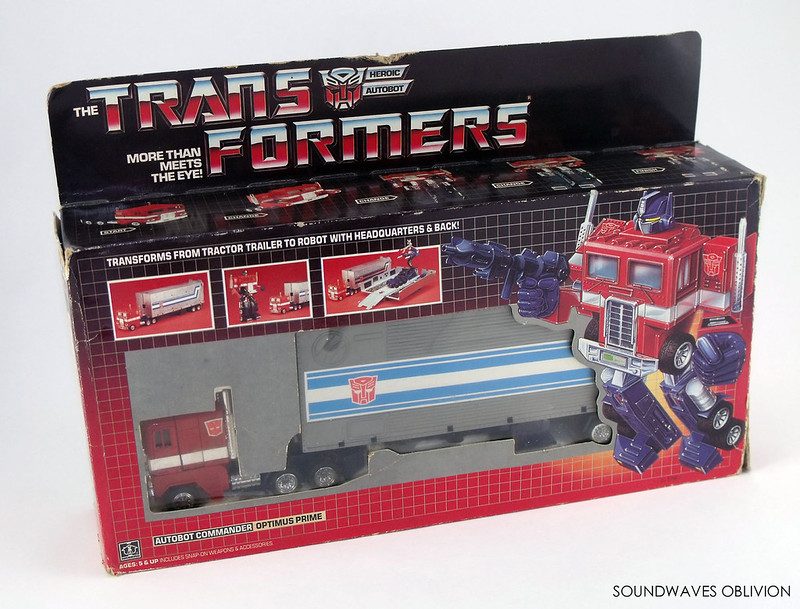
Optimus Prime and the G1 Transformers Gold Rush
Optimus Prime hit American shelves in 1984 at $23.99. The average sealed-box sale today sits around $614 — about 25 times retail — but that’s the floor, not the ceiling. A graded, sealed-shrinkwrap Prime with sharp corners and crisp paint has cleared $1,625 at Heritage. Boxed Jetfire (the Macross-licensed weirdo Hasbro rebadged) has crossed $1,495. A boxed Fortress Maximus, the towering Headmasters playset, has gone for $1,325 on a single eBay listing.
The reason vintage G1 Transformers got expensive isn’t mysterious. Most of them got played with hard, the stickers peeled, the rubber tires went brittle, and parents threw away the boxes. A boxed example is the rarest piece of any G1 sale, because the box was usually the first thing in the garbage. Wheeljack’s Lab and the Soundwaves Oblivion blog have been documenting boxed survivors for years, and the inventory is genuinely thinning out — fewer mint examples surface each year than the year before.
Cabbage Patch Kids and the Riot of ’83
Coleco shipped 3.3 million Cabbage Patch Kids in 1983 and still couldn’t keep up. Real fights broke out in real stores — Wilkes-Barre, Hills Department Store, December 1, 1983, footage on the local news. A factory in Cleveland had a police escort for the trucks. The dolls retailed at $25 and were trading on the gray market for $150 before Christmas.
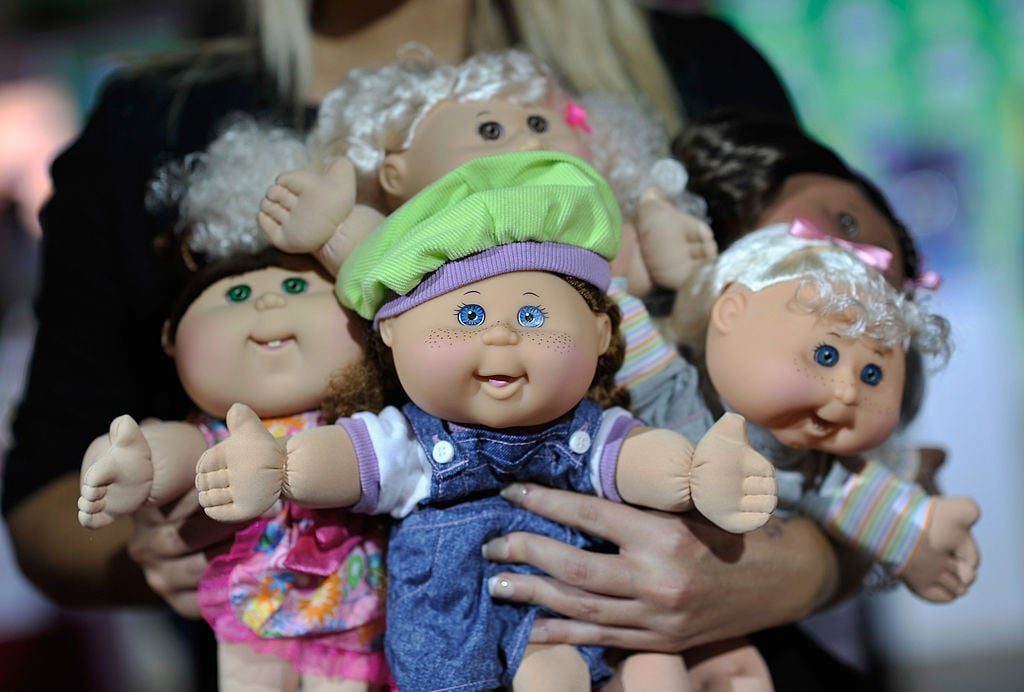
Forty years later, the value picture is split. A standard 1984 or 1985 Coleco doll with the box, birth certificate, and adoption papers will sell for $30 to $80. But the early Xavier Roberts Original Appalachian Artworks “Little People” dolls — the hand-stitched ones from 1978 to 1981, before Coleco licensed the design — have hit $4,500 at auction. The 1983 launch-year Coleco dolls with rare hair colors (Powder Puff, Tsukuda Japanese release, Furskins variants) regularly clear $500 when they’re complete with paperwork. The detail that separates a $40 doll from a $500 doll is usually the head stamp, the signature on the rear end, and which factory it came from. Most resellers don’t bother checking.
That Pile of Care Bears in the Attic
Kenner’s original 1983 Care Bears run hit shelves through American Greetings licensing, and the first ten characters — Tenderheart, Cheer, Grumpy, Funshine, Wish, Bedtime, Friend, Birthday, Good Luck, Love-a-Lot — became the launch lineup. A standard played-with Cheer Bear with no tags is a $10 to $20 toy. Mint with hangtags and the original cardstock backer, you’re looking at $80 to $150 each. The full first-wave set sealed in original boxes can crack $1,000 if the boxes are sharp.
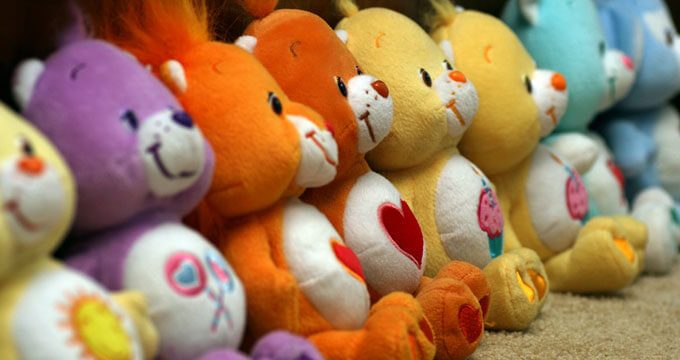
The really expensive Care Bears are the ones nobody remembers buying. The 1984 “Care Bear Cousins” expansion — Braveheart Lion, Brightheart Raccoon, Cozy Heart Penguin — sold poorly because the cartoon hadn’t aired yet. That means the production runs were short, the boxes are scarce, and a sealed Cozy Heart Penguin with original packaging has touched $400 at auction. The same logic applies to almost every 80s toy line: the figures everybody wanted got mass-produced and survive in piles; the figures nobody wanted got pulled from shelves and now cost a fortune.
The Boba Fett That Sold for $1.34 Million
The Kenner Star Wars line is the single biggest category in vintage toy collecting, and the rocket-firing Boba Fett is the trophy. Kenner advertised the figure as a mail-in promo in 1979 with a spring-loaded missile fired from the jetpack. Before the toy shipped, a child in California reportedly choked on a similar projectile from Mattel’s Battlestar Galactica line. Kenner killed the rocket, retrofitted the design to a fixed missile, and a few prototypes — roughly 100 with L-shaped firing slots and 30 with J-slots — were the only examples that ever existed.
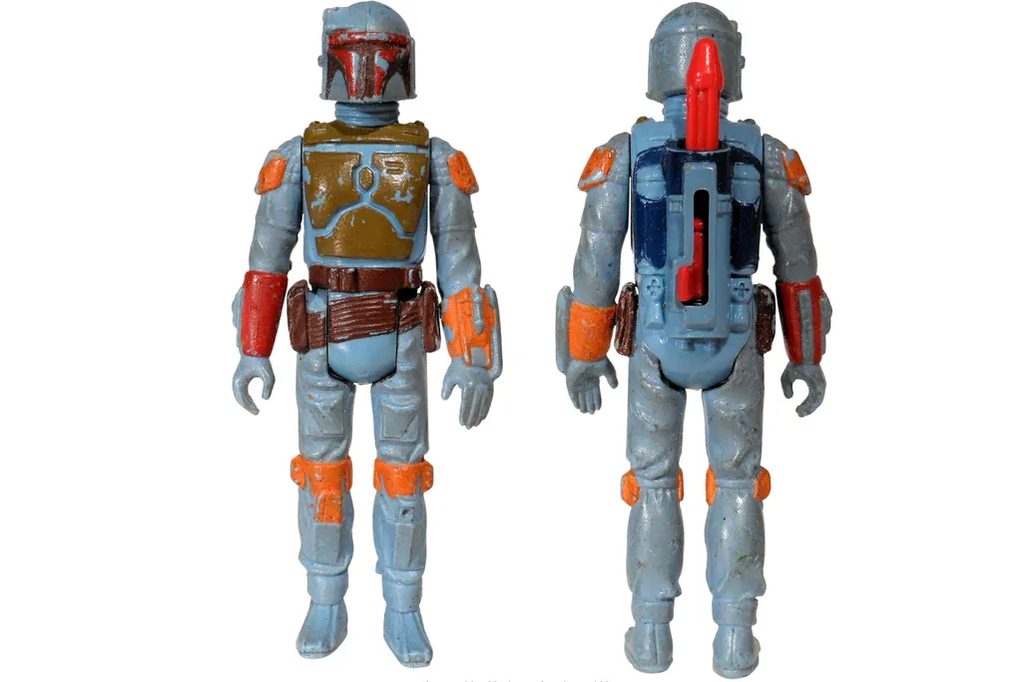
In 2019, a J-slot version sold at Hake’s for $185,850 including buyer’s premium. In 2024, Goldin moved one for $1,342,000, making it the most valuable vintage toy ever sold at auction per the Smithsonian’s reporting. The standard, non-rocket-firing Boba Fett — the one you actually had — is also valuable: a graded AFA-85 carded example sells for $5,000 to $8,000, and even loose figures with the original blaster rifle clear $200 every weekend.
The NES, Atari, and the Toys That Plugged Into the TV
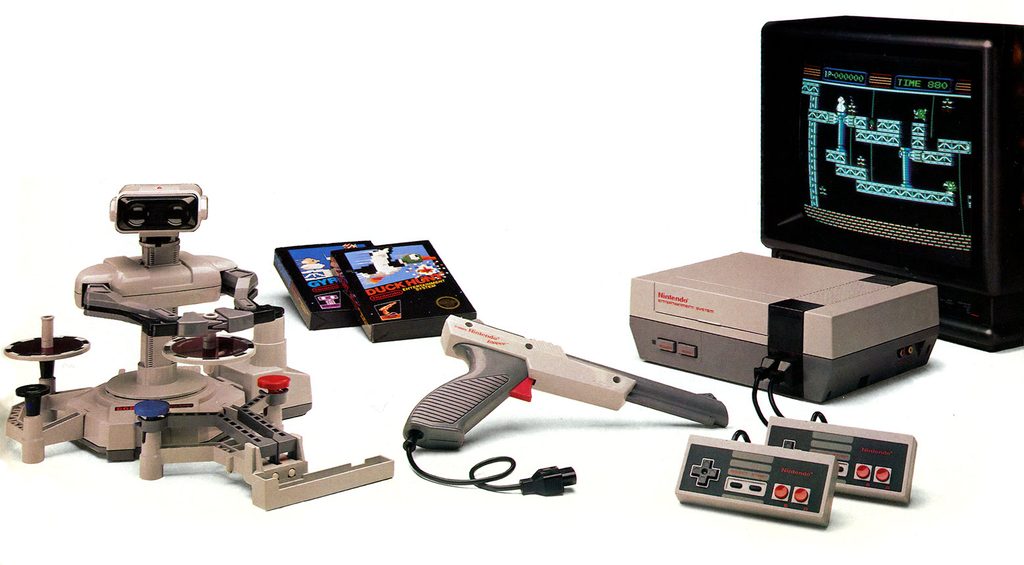
Hardware ages differently than figures. A Nintendo Entertainment System Deluxe Set — the 1985 launch bundle with R.O.B., the Zapper, two controllers, and Gyromite plus Duck Hunt — retailed for $179.99 at FAO Schwarz in October 1985. A complete-in-box example today sells for $1,500 to $3,500 depending on condition. A sealed, never-opened Deluxe Set is the white whale: one cleared $13,000 at Heritage in 2021.
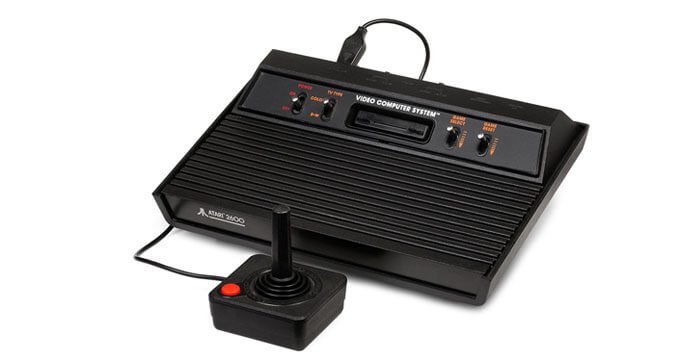
The real money is in the games. A sealed, WATA-graded Super Mario Bros. from the 1985 launch window sold for $2 million at Heritage in 2021. A sealed Legend of Zelda from 1987 hit $870,000 the same year. We dug into how the NES single-handedly resurrected the American console market after the Atari crash, and the auction prices today are a backwards reflection of how badly Nintendo dominated that decade. Even Atari 2600 hardware, which was the previous king, sells for $80 to $150 boxed — fine money, but nothing close to NES territory.
What Actually Survives — And Why Most Don’t
Three things separate a $40 toy from a $4,000 toy: the box, the paperwork, and a child who somehow restrained themselves. The brutal math is that almost nothing from the 1980s survived in the original packaging, because the original packaging was designed to be torn open and forgotten. Manufacturers printed the cardboard cheap. Parents pitched it on Christmas morning. The few sealed examples that exist today are usually warehouse finds, store-inventory leftovers, or the rare household where somebody stashed a duplicate gift in the basement.
Condition grading services like AFA (Action Figure Authority) and WATA Games now grade vintage toys on a 100-point scale the same way comic books and trading cards have been graded for decades. An ungraded boxed Optimus Prime might sell for $600. The same toy with an AFA-85 grade can clear $1,500 at the same auction. Grading is expensive — fifty to several hundred dollars per item — but for high-end pieces it doubles the resale price. That’s why most serious collectors won’t even bid on an ungraded sealed item from a non-specialist seller.

Should You Sell, Hold, or Just Keep Playing?
Here’s the honest take. If you’ve got a toy in the original box with paperwork, it’s worth getting an appraisal — not from the Antiques Roadshow type, but from someone who specifically deals in 1980s action figures. Heritage Auctions, Hake’s, and Goldin all do free initial valuations and will tell you within a week whether what you’ve got is rent money or a Coke for the road. Potteries Auctions runs a He-Man price guide that gets updated quarterly, and the Transformer Land price database is the closest thing G1 collecting has to a Kelley Blue Book.
The smarter move for most people, though, isn’t selling. It’s holding onto the pieces that mean something and ignoring the spreadsheet. The 80s toy market has run hot since 2020 — partially because the generation that grew up with these toys finally has disposable income, partially because the pandemic surfaced a wave of attic-cleaning. There’s a real argument that prices peak when the original kids hit retirement, then drift down as the next generation chases its own nostalgia. The reason 80s nostalgia stays bulletproof isn’t because the toys were better — it’s because the merchandising machine of that decade was built to last.
If you find a beat-up He-Man in a box at an estate sale this weekend, by all means grab him. But the kid who slept with his Optimus Prime, drove him into walls, and lost the rifle behind the couch isn’t holding a $1,500 collectible. He’s holding the closest thing most of us have to a time machine. That’s worth more than the auction price either way.
Sources
- Smithsonian Magazine — Rocket-Firing Boba Fett $1.34M sale — Coverage of the 2024 Goldin auction that set the vintage toy record.
- Mental Floss — 11 of the Most Valuable Transformers Toys From the ’80s — Price guide for boxed G1 figures and playsets.
- Potteries Auctions — Most Valuable He-Man Figures — Updated collectors’ guide for Masters of the Universe values.
- Video Game History Foundation — The NES Launch Collection (1985) — Archive on the Nintendo Deluxe Set test launch.
- Antique Trader — Cabbage Patch Kids Craze of the 1980s — Background on the 1983 Christmas riots and shipping numbers.
- Heritage Auctions — Star Wars Prototype Rocket-Firing Boba Fett Listing — Auction record details for the L-slot variant.
Browse retro and vintage-inspired apparel at the RetroRadical shop →
Shop on Amazon
80s Collectibles on Amazon →
As an Amazon Associate we earn from qualifying purchases.
Shop on eBay
80s Collectibles on eBay →
We may earn a commission when you shop through our eBay links.
Get a Geek Crate
Shop Geek Crate →
We may earn a commission when you shop through our Geek Crate link.
The Retro Almanac
A monthly roundup of "on this day" highlights from that month, decades back — plus first dibs on new retro merch drops. No spam, just the good stuff.