The Rise and Fall of the 80s Arcade
In 1981 the average American 13-year-old spent more money at the 80s arcade than the average American adult spent at the movies. That single sentence is the whole story of a decade — quarters poured into glowing cabinets at a rate that made Hollywood nervous and the Recording Industry Association of America look up from its accounting books.
For about six years, the 80s arcade was the most profitable form of entertainment in North America. Then it cratered so hard that within 18 months entire chains were dust. The crash gets blamed on a lot of villains — Atari, E.T., Nintendo, MTV — but the truth is uglier and more interesting than any of those one-line histories suggest.
The Retro Almanac
A monthly roundup of "on this day" highlights from that month, decades back — plus first dibs on new retro merch drops. No spam, just the good stuff.
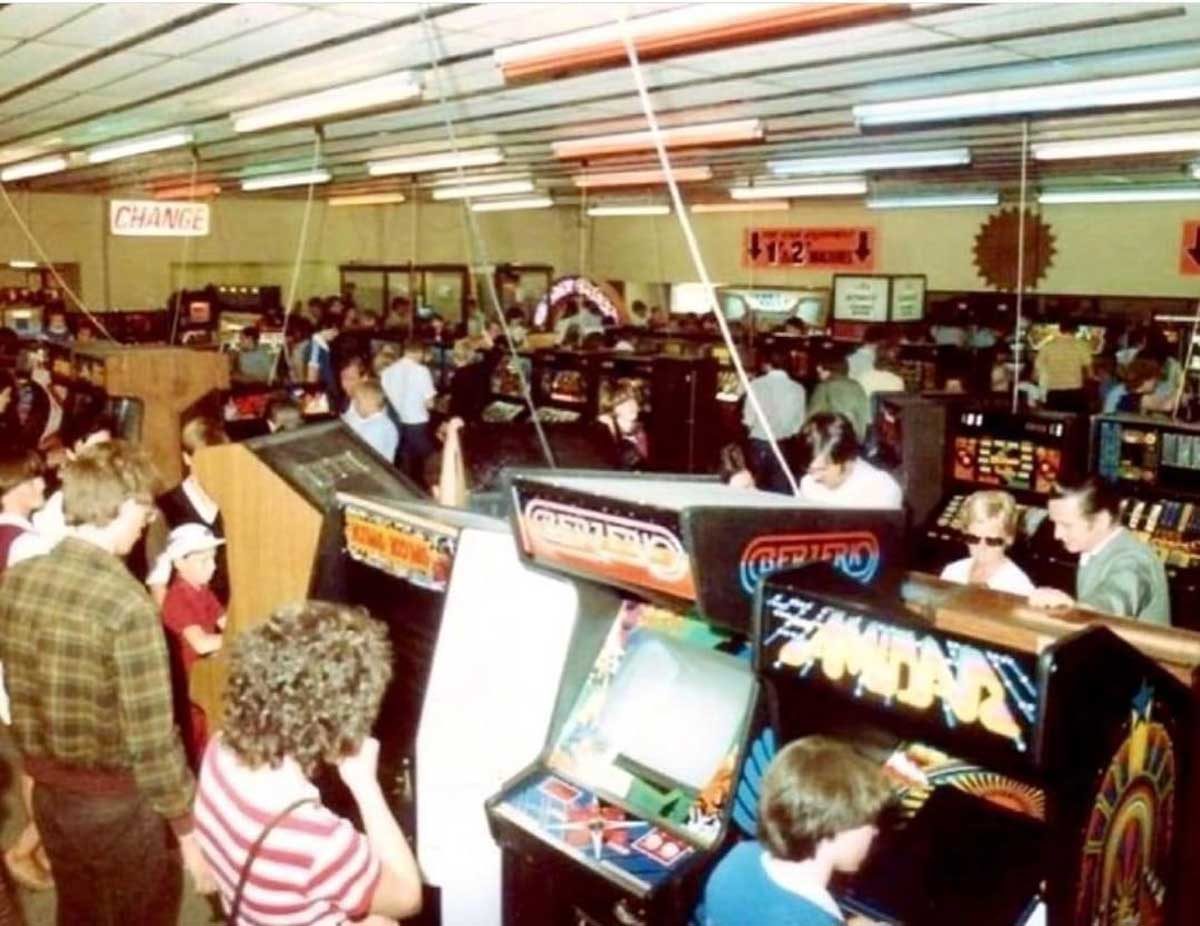
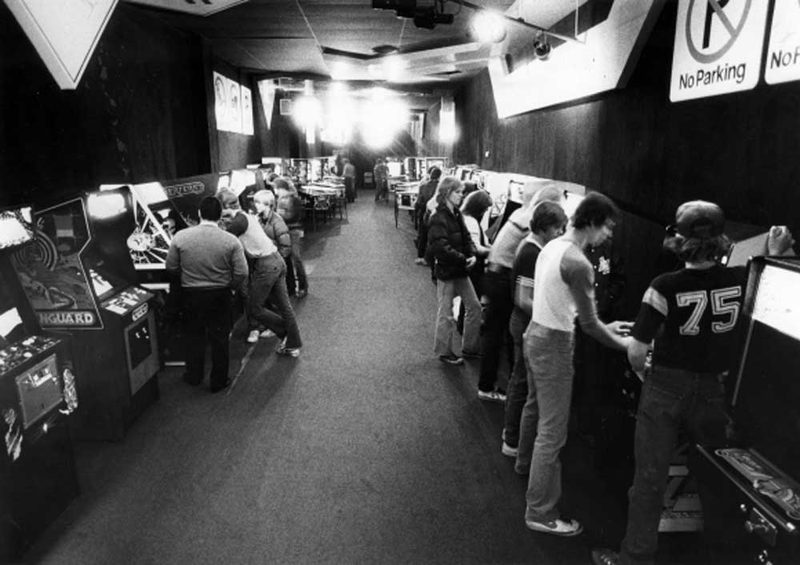
Peak coin-op: a packed arcade floor in the early 80s when quarters ruled the universe.
How Quarters Built a Billion-Dollar Industry
By 1982, the 80s arcade business hit $8 billion in U.S. revenue at peak quarter pumping. That number beat the combined take of the film industry ($3 billion) and the entire pop music industry (around $4 billion) in the same year. The math behind it was almost embarrassingly good — a Pac-Man machine in a high-traffic mall could earn back its $2,400 wholesale price in two weeks and then print money for a year.
Denver alone had over 100 dedicated arcades by 1982. New York City counted more than 1,200. Even one-stoplight towns in Nebraska had a corner of the laundromat dedicated to a row of cabinets. The Denver Post called arcades “the hottest thing walking” — and the locals weren’t lying. The Funway Freeway inside Cinderella City mall was reportedly grossing $40,000 a week in quarters by mid-1982.
Why so much money so fast? Three things lined up. The first was the post-Star Wars sci-fi obsession that made anything with a CRT and a laser sound effect feel like the future. The second was demographics — the leading edge of Gen X was hitting the teenage-with-allowance sweet spot at exactly the right moment. The third was the loneliest one: there was almost nothing else to do at the mall.
Space Invaders Lit the Fuse
The 80s arcade boom didn’t technically start in the 80s. It started in 1978, when Taito released Space Invaders in Japan and accidentally caused a national 100-yen coin shortage. The Bank of Japan had to quadruple production of the coin. American distributors saw the import numbers and started writing blank checks.
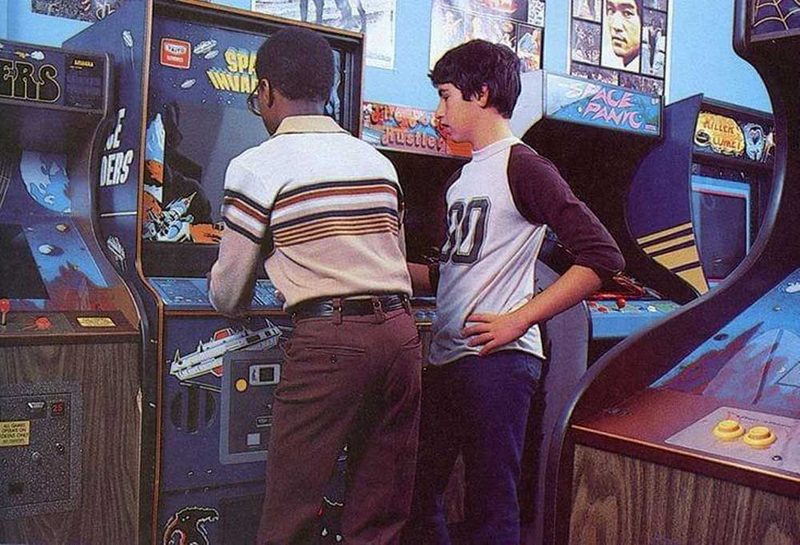
When Space Invaders crossed the Pacific in 1979, it didn’t roll out — it detonated. Bowling alleys reported their cocktail-table versions outgrossing the lanes themselves. One Chicago bar owner stripped out his pool tables because the Space Invaders cocktail next to the jukebox was making four times the money. The pool tables had been there since 1962. The cabinet had been there for nine days.
Asteroids landed in 1979 and pushed the format further with vector graphics that looked like nothing else on Earth. Then 1980 arrived and the floodgates opened: Battlezone, Defender, Berzerk, Missile Command, Centipede, and — the one that broke the ceiling — Pac-Man.
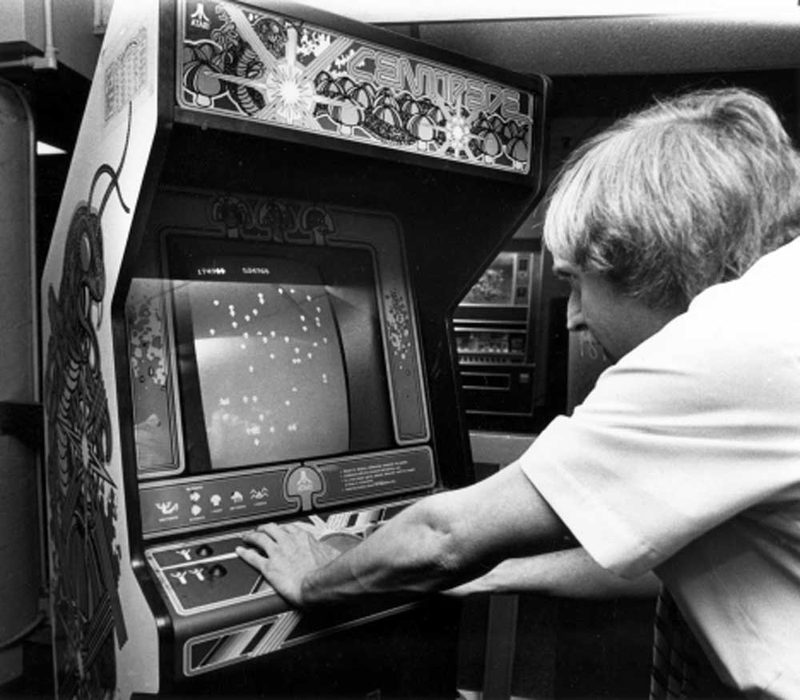
1981 — The Year Pac-Man Ate America
Pac-Man earned $1 billion in quarters within 15 months of its U.S. release. That’s four billion individual coin drops. The game spawned a Saturday morning cartoon, a Top 40 single (“Pac-Man Fever” went platinum), pasta shapes, lunchboxes, and a Marvel comic. Namco’s licensing department added a digit to every check it cut.
What made Pac-Man different was who played it. Before Pac-Man, the 80s arcade demographic was boys, age 8–17, full stop. Pac-Man dragged in girls, college students, secretaries on their lunch breaks, and middle-aged mall walkers. The game’s tiny, character-driven hook — the chase, the cherries, the wakka-wakka — was warm in a way Defender’s nihilistic alien war was not.
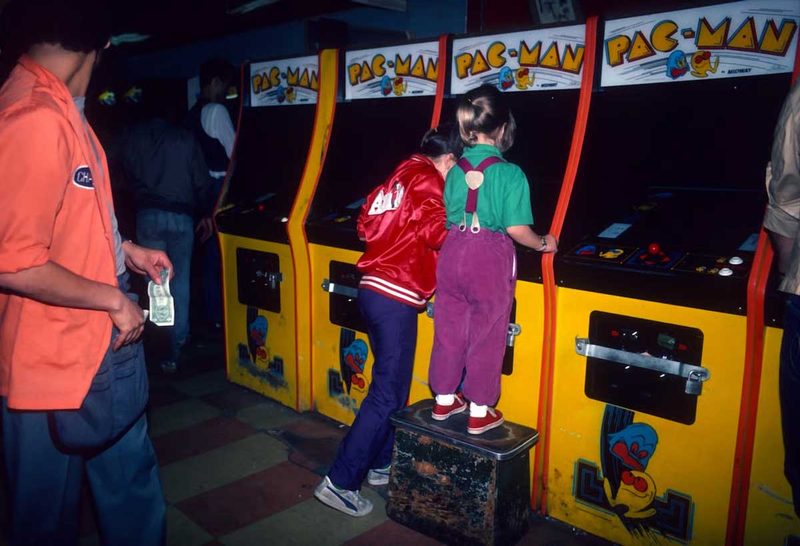
By the back half of 1981, every arcade had a Pac-Man line. Some had two cabinets. Some had four. The Ms. Pac-Man follow-up, released in 1982, somehow earned even more — 125,000 cabinets sold in North America, making it the best-selling arcade game in American history. That record still stands.

The Arcade as Teenage Embassy
Forget the games for a second. The 80s arcade was infrastructure. It was where you went after school when your house felt too small, where you went on a first date when the movie theater felt too expensive, where you went on Saturday when your parents needed a break. The cabinets just happened to be there.
Walk into a peak-era arcade and the lighting hit you before the sound did — black ceiling, cabinets glowing under their own marquees, the floor in some loud geometric carpet pattern that hid the soda stains. The air smelled like rubber joystick handles and stale popcorn. Around any popular machine there was always a small crowd, watching whoever was on a hot run, ready to put their quarter on the cabinet to claim “next.”
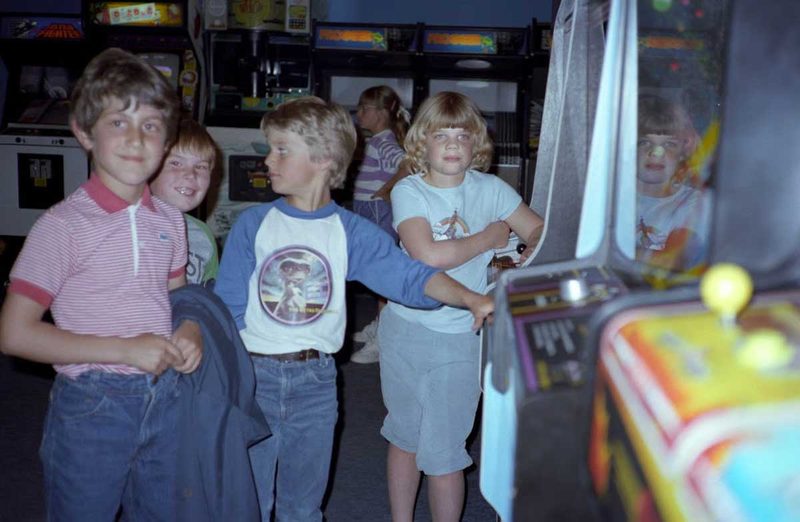
That “quarter up” system was the actual social contract. Drop a coin on the bezel, you were in line — no one could skip you, no one could shove in, and when the current player died, you stepped up. Kids who had never met agreed to honor the rule like it was federal law. It was probably the most functional democracy in 1980s America.
Donkey Kong, Defender, and the Cabinet Arms Race
By 1981 the manufacturers were sprinting. Nintendo, a Japanese playing-card company at the time, released Donkey Kong with a then-unheard-of plot — a guy in red overalls climbing girders to save a girl from a giant ape. That guy got a name retrofitted onto him within a year. He was called Mario. Donkey Kong sold 60,000 cabinets in its first year and made Nintendo serious money for the first time.
Williams Electronics dropped Defender in 1980, and operators initially complained the controls were too complicated — five buttons, a joystick, a horizontally scrolling screen, no on-screen instructions. The complaints stopped when Defender posted higher weekly earnings than anything else in the bar. Operators called it “the cabinet that prints money even when nobody understands it.”
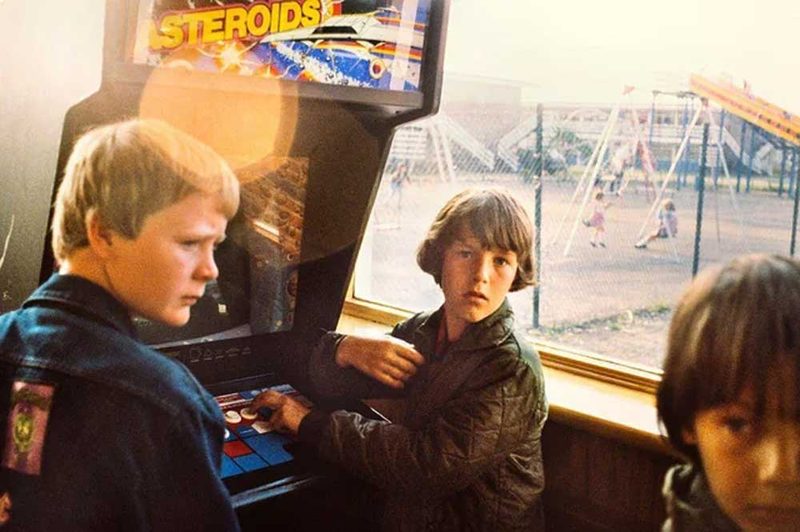
Then came the format wars. Cabinets started getting weirder on purpose. Atari released Pole Position in 1982 with a sit-down cockpit. Sega built Hang-On with motorcycle handlebars you actually leaned into. Dragon’s Lair in 1983 used full-cel animation streamed off a LaserDisc — quarter-eating Don Bluth cartoons that the player barely controlled. The cabinet itself was becoming the experience.
If you want the full taxonomy of cabinets that mattered, our deep dive into the golden age legends that defined 80s gaming culture walks through them title by title.
1983 — The Crash That Killed the Boom
The North American video game industry generated $3.2 billion in 1983. By 1985 it had cratered 97% to $100 million. Most histories pin that crash on the home console side — Atari, the E.T. cartridge buried in a New Mexico landfill, the bargain-bin glut that destroyed retail confidence. That’s accurate for consoles. For the 80s arcade, the picture was different and slower.
Arcade revenue peaked in 1982 at around $8 billion. It dropped to $5 billion in 1983 and $4 billion in 1984. Bad, but not apocalyptic. Then it kept dropping. By 1986 the number was under $2 billion. By 1989 it was below $1 billion. The 80s arcade didn’t crater overnight — it bled out over half a decade. And the wounds were self-inflicted.
First, the games stopped being new. After Defender, Pac-Man, Donkey Kong, and Tron, the 1984–86 cabinet releases mostly recycled mechanics. Operators stopped buying because customers stopped putting quarters in old hits. Second, moral panic kicked in — towns like Mesquite, Texas passed ordinances banning anyone under 17 from arcades without a parent, citing “truancy and loitering.” Mall arcades had to install ID checkers. The vibe died fast.
What Actually Killed the Arcade (Hint: It Was the Couch)
The conventional wisdom blames Nintendo. That’s lazy history. The Nintendo Entertainment System launched in North America in 1985, and by 1987 a kid could play Super Mario Bros at home for free instead of feeding quarters into Donkey Kong at the mall. But the 80s arcade had already lost half its revenue before the NES took off. The real killer was the home console finally being good enough.
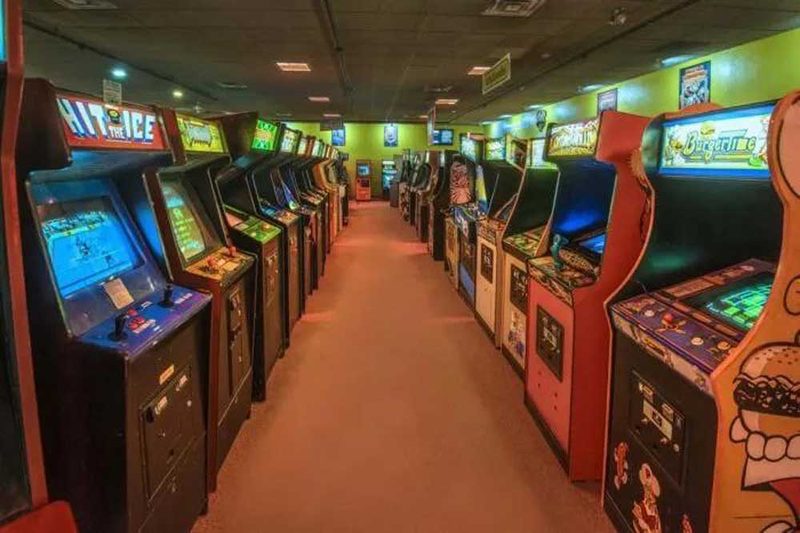
By 1987, a Nintendo at home offered better graphics than 1981 cabinets, infinite play time, and zero quarters per minute. Sega Genesis arrived in 1988 and made the gap worse. The math that had powered the 80s arcade — pay $0.25 for three minutes of an experience you can’t get anywhere else — broke the moment that experience moved to your living room. We covered the home-console pivot in how the NES saved gaming forever after the 1983 crash if you want the other half of the story.
Meanwhile, the malls themselves were starting to wobble. 80s mall culture peaked the same year arcades did, and when foot traffic dropped, the arcade — usually anchored in a far corner with no signage and no windows — was the first tenant to lose its lease. By 1991, the surviving arcades had pivoted hard to redemption tickets, ski-ball, and Chuck E. Cheese-style food. The pure quarter-cabinet 80s arcade was effectively extinct.
Why the 80s Arcade Still Owns Real Estate in Our Heads
Here’s a take that will annoy purists: the 80s arcade was actually a worse way to play video games than what came after. Quarters per minute, sticky joysticks, having to wait behind some kid who wouldn’t die — none of that was efficient. Modern Gen X nostalgia for arcades is not really about the games. It’s about the room.
The room had no parents. The room had a sound floor of synth and chip music that you couldn’t have at home. The room had social stakes — you could be the kid who put up the high score, initials and all, for everyone to see. Home consoles took the games and lost the room, and we’ve spent 40 years trying to rebuild it. Twitch, esports tournaments, retro-arcade barcades like Barcade in Brooklyn — every one of them is an attempt to recreate that specific energy.

Modern barcades work because they sell the room first and the cabinets second. The Galloping Ghost in Brookfield, Illinois has 850+ cabinets under one roof, charges $20 for unlimited play, and runs at capacity most weekends. It’s not nostalgia — half the customers are under 25. The 80s arcade format was never broken. The economics were.
If the 80s arcade comes back fully — and there’s a real chance it does as VR rooms and location-based entertainment scale — it won’t look like a Pac-Man cabinet in a strip mall. It’ll look like a $40 cover, a craft beer, four friends, and a game you can’t run on a phone. The format will survive in spirit. The quarter is gone for good.
Sources
- Wikipedia — Golden age of arcade video games — Industry revenue figures, cabinet sales data, and the 1978–1986 peak window.
- Wikipedia — Video game crash of 1983 — Background on the home-console crash and its delayed effect on the 80s arcade business.
- Denver Public Library — Video Game Arcades: The ‘Hottest Thing Walking’ in Early 1980s Denver — Local archive on Funway Freeway and the Cinderella City mall arcade scene.
- Museum of the Game — Pac-Man cabinet record — Production numbers and U.S. earnings data for Pac-Man and Ms. Pac-Man.
- Bring Back Dial-Up — 27 Vintage Photos of 1980s Arcades — Photographic archive of peak-era arcades referenced in this article.
Browse retro and vintage-inspired apparel at the RetroRadical shop →
The Retro Almanac
A monthly roundup of "on this day" highlights from that month, decades back — plus first dibs on new retro merch drops. No spam, just the good stuff.