Marvin Gaye Killed by Father: April 1, 1984
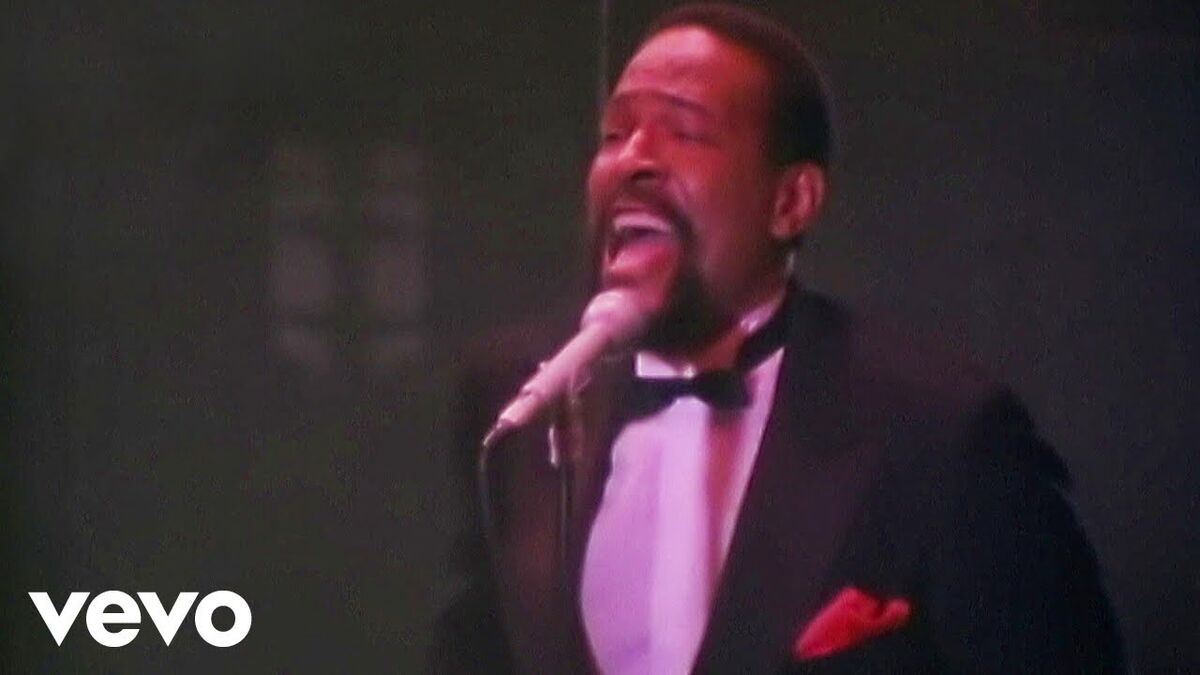
April 1, 1984. April Fool’s Day. The cruelest joke the calendar ever played on the music world came not from a prankster, but from a .38 Special revolver — fired by a man who should have loved the person he was shooting. One day before his 45th birthday, Marvin Gaye — the Prince of Soul, the voice behind “What’s Going On” and “Sexual Healing,” the man who helped build Motown into a cultural empire — was shot and killed by his own father at their home in Los Angeles.
For those of us who grew up with his music weaving through our childhoods, the news landed like a punch to the gut. Marvin Gaye’s death on April 1st, 1984 wasn’t just the loss of a musician. It was the end of a complicated, brilliant, tortured soul — someone whose art made you feel things you couldn’t put into words. And 40-plus years later, the story still cuts deep.
The Voice That Changed Everything
To understand what was lost on April 1, 1984, you have to understand what Marvin Gaye meant. Not just as a performer — though the man could make a room go completely still with a single note — but as an idea. Marvin Gaye represented something radical: the notion that a soul singer could also be a conscience. That popular music could carry the weight of real human experience.

He was born Marvin Pentz Gay Jr. in Washington, D.C., in 1939 — the “e” came later, added partly in tribute to Sam Cooke and partly to distance himself from his father’s name. From the moment he joined Motown Records in 1960, Gaye had ambitions bigger than the label’s machine was built to accommodate. Berry Gordy’s formula was genius for its time — tight, polished pop-soul built for radio and dance floors — but Gaye was already looking past it.
Through the 1960s, the hits piled up. “Hitch Hike.” “Can I Get a Witness.” “I Heard It Through the Grapevine” — which sold four million copies and became Motown’s best-selling single of the entire decade. He recorded duets with Mary Wells, Kim Weston, Diana Ross, and the legendary Tammi Terrell, whose tragic death from a brain tumor in 1970 sent Gaye into a grief-stricken withdrawal that would change him permanently.

What’s Going On: The Album That Broke the Rules
The real turning point — the moment Marvin Gaye became Marvin Gaye — was 1971’s “What’s Going On.” It shouldn’t have existed. Berry Gordy famously thought it was the worst thing Gaye had ever recorded and didn’t want to release it. Gaye pushed back with everything he had, reportedly refusing to record anything new until the label released it.
Gordy relented. And the world shifted.
“What’s Going On” addressed Vietnam, ecological disaster, poverty, racism — things that simply were not supposed to appear on Motown records. The album was lush and layered, cinematic and intimate, its songs bleeding into each other like a single long meditation on American life in crisis. Rolling Stone would later vote it the greatest album ever made. At the time, it showed that soul music could carry the weight of the world.

“Let’s Get It On” followed in 1973, shifting from the political to the deeply personal. Gaye had come out of two years of relative reclusiveness and he channeled it all — the longing, the sensuality, the spirituality that he always felt were inseparable — into one of the most seductive albums in pop history. If “What’s Going On” showed that soul could be a moral force, “Let’s Get It On” proved it could be a physical one too.
These weren’t just records. They were events. If you were a kid in the 70s with older siblings or parents who played music, Marvin Gaye was everywhere. On the radio. On the 8-track in the car. Floating through the house on Saturday afternoons.
The Unraveling: Europe, Exile, and the Road Back
By the late 1970s, Gaye’s life had turned into a mess of his own making — and making he couldn’t fully control. His divorce from Anna Gordy Gaye, Berry Gordy’s sister, left him financially devastated (he literally owed her an album, which became the raw, bitter “Here, My Dear”). Tax debt mounted. His drug use escalated. His second marriage to Janis Hunter dissolved. By 1981, he had fled to London and then to Ostend, Belgium, essentially running from both the IRS and himself.

But Belgium gave him something unexpected: space. Away from the pressures of Los Angeles, away from the people who wanted pieces of him, Gaye rediscovered himself in a rented apartment near the North Sea. He began writing and recording again. The result was “Midnight Love” — and the single that would define his comeback: “Sexual Healing.”
When “Sexual Healing” hit in October 1982, it was unlike anything on the charts. Groovy, minimalist, deeply sensual, spiritually grounded — it made you feel both clean and dirty at the same time, which was precisely the Marvin Gaye experience. It spent six weeks at number one on the R&B charts. It won him two Grammys in February 1983 — his first ever Grammy wins, after 25 years in the business. He was back.

The Last Year: Shadow and Darkness
But the comeback had a shadow. The Sexual Healing Tour of 1983 — his first major tour in years — was a commercial success and an emotional nightmare. Gaye hated touring. He used cocaine to cope with the pressure. Halfway through, he became convinced someone was trying to kill him, wearing a bulletproof vest until he stepped onstage. He developed paranoia so deep that he barely left his hotel rooms during the day.
When the tour ended in August 1983, Gaye returned to nurse his mother, who was recovering from kidney surgery. He moved into his parents’ home at 2101 South Gramercy Place in Los Angeles — a house he had bought for them back in 1973. His relationship with his father, Marvin Gay Sr., had always been terrible. The elder Gay was a Pentecostal minister who had beaten his children throughout their childhoods, reportedly giving the young Marvin some of the worst of it. He was also, by all accounts, an intensely jealous man who resented his son’s success.
For the next six months, father and son circled each other like two planets in an unstable orbit. Arguments. Near-fights. Brief moments of uneasy peace. Friends and family said Gaye seemed to be in terrible psychological shape — suicidal, paranoid, wearing three overcoats inside the house, putting his shoes on the wrong feet. Four days before his death, according to his sister Jeanne, he jumped from a moving car. “There was no doubt Marvin wanted to die,” she later said.
On Christmas Day 1983, in a detail that reads almost like tragic symbolism, Marvin Gaye gave his father a gift: a Smith & Wesson .38 Special, so Marvin Sr. could protect himself from intruders.
The year 1984 was one of the most culturally charged in pop history — the year that gave us Purple Rain and Born in the USA. It was also the year that claimed one of its greatest voices. Across town, Michael Jackson was redefining what pop fame looked like with the Thriller era in full swing, while breakdance culture was exploding onto cinema screens. Both Michael Jackson and Marvin Gaye had grown up in the Motown orbit, each shaped by the institution that Berry Gordy built. Gaye’s death sent a shockwave through that entire world.
April 1, 1984: The Day That Shook the Music World
The argument that morning started over something absurdly small: a misplaced insurance letter. Marvin Sr. was shouting at his wife Alberta. Gaye, still in bed, heard the commotion and intervened. He told his father to leave his mother alone. The argument escalated into a physical fight between father and son.
After the fight was broken up, Marvin Sr. went to his bedroom. He returned with the .38 Special — the one his son had given him — and shot Marvin Gaye twice in the chest.
Marvin Gaye was rushed to California Hospital Medical Center. He was pronounced dead on arrival.
He was 44 years old. His 45th birthday was the next day.

The music world reacted with disbelief. Stevie Wonder, who spoke at the funeral, described Gaye as “the person who encouraged me that the music I had within me, I must feel free to let come out.” Smokey Robinson wept. Quincy Jones called it “the saddest day of my life.” Diana Ross, who had been one of Gaye’s closest friends and collaborators, was devastated. The following January, she hosted the American Music Awards and led an In Memoriam tribute — Gaye was featured first.
Marvin Gay Sr. — who had initially been charged with first-degree murder — pleaded no contest to voluntary manslaughter. An autopsy revealed he had a previously undiscovered brain tumor, which his legal team argued had contributed to his behavior. He was sentenced to five years’ probation. He never served a day in prison.

The Legacy That Never Fades
Here’s what’s remarkable about Marvin Gaye’s music, 42 years after his death: it doesn’t feel like an artifact. “What’s Going On” still sounds urgent. “Sexual Healing” still sounds alive. “Mercy Mercy Me (The Ecology)” still sounds heartbroken about the planet. His catalog doesn’t sit behind glass in a museum — it keeps finding new ears, new hearts, new generations who need exactly what he was saying.
For Gen X specifically, Marvin Gaye occupies a particular kind of emotional real estate. His records were the soundtrack of our parents’ lives, which meant his music was always there — floating in from another room, playing at a family cookout, on the radio during a long car ride. We absorbed him without fully understanding what we were absorbing. Then, as we got older, we understood.
April 1 is supposed to be about jokes. About pulling one over on somebody. But on April 1, 1984, the cruelest trick of all was the one life played on Marvin Gaye — and on everyone who loved his music. The man who sang about healing couldn’t heal what was broken inside the walls of his own home.
He never got to turn 45. He never got to make the next record. He never got to find out what kind of old man he would have become.
Rolling Stone ranks him 6th on its list of the Greatest Singers of All Time. He was inducted into the Rock and Roll Hall of Fame in 1987. Washington, D.C. Mayor Marion Barry declared April 2nd — Gaye’s birthday — Marvin Gaye Day. His ashes were scattered over the Pacific Ocean.
If you want to understand Marvin Gaye — really understand him — put on “What’s Going On” and listen all the way through. Don’t skip. Don’t shuffle. Just let it go. You’ll hear why the world went quiet on April 1, 1984.
And why it’s never been quite the same since.
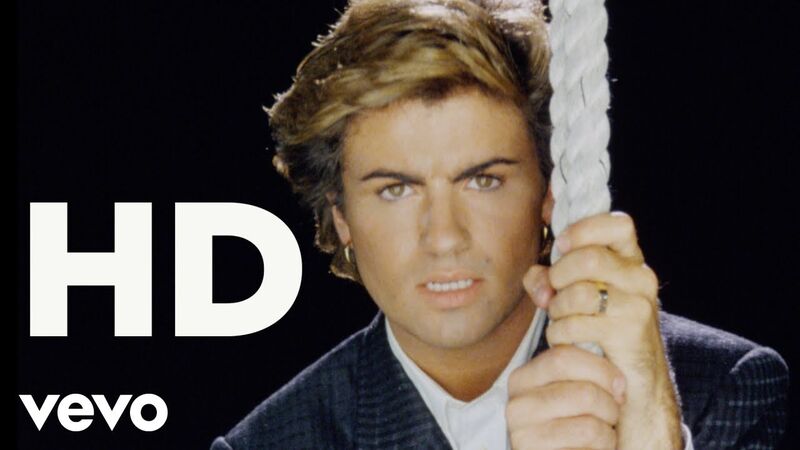
Watch: Marvin Gaye — Sexual Healing (Official HD Video)
Marvin Gaye’s Sexual Healing was his last great hit — a number-one R&B smash that won him his first Grammys in 1983, just a year before his death. The song remains one of the most seductive and spiritually complex recordings ever made.