Rotary Phone Nostalgia: Why Gen X Misses the Click and the Dial Tone
Close your eyes for a second. Can you hear it? That solid, satisfying click-click-click-click as your finger drags the rotary dial around to each number, the mechanical whir as it spins back to rest, and then — that glorious, full-bodied dial tone humming in your ear like a warm greeting from an old friend. If you grew up in a house with a rotary phone, these sounds aren’t just memories. They’re hardwired into your brain.
Gen X didn’t just use rotary phones. We had a relationship with them. And in an age where making a phone call requires zero physical effort and about as much emotional investment, there’s something deeply satisfying about remembering a time when dialing a number was a full-body commitment.
Rotary Phone History: From Alexander Graham Bell to Your Kitchen Wall
The rotary dial telephone has a surprisingly long history. The first rotary dial patent was filed by Almon Brown Strowger in 1891 — yeah, over 130 years ago. Strowger was an undertaker in Kansas City who was convinced that the local telephone operator (who happened to be married to his competitor) was routing his business calls to the competition. So he invented an automatic switching system to cut out the human operator entirely. Petty revenge? Maybe. Revolutionary technology? Absolutely.
But it wasn’t until the Western Electric company — the manufacturing arm of AT&T — mass-produced rotary phones that they became a household staple. The iconic Western Electric Model 500, introduced in 1949, became the standard American telephone for nearly four decades. That chunky, heavy, indestructible black phone sitting on your grandmother’s end table? That was a Model 500, and it probably still works today.


The Art of Dialing: Why It Mattered
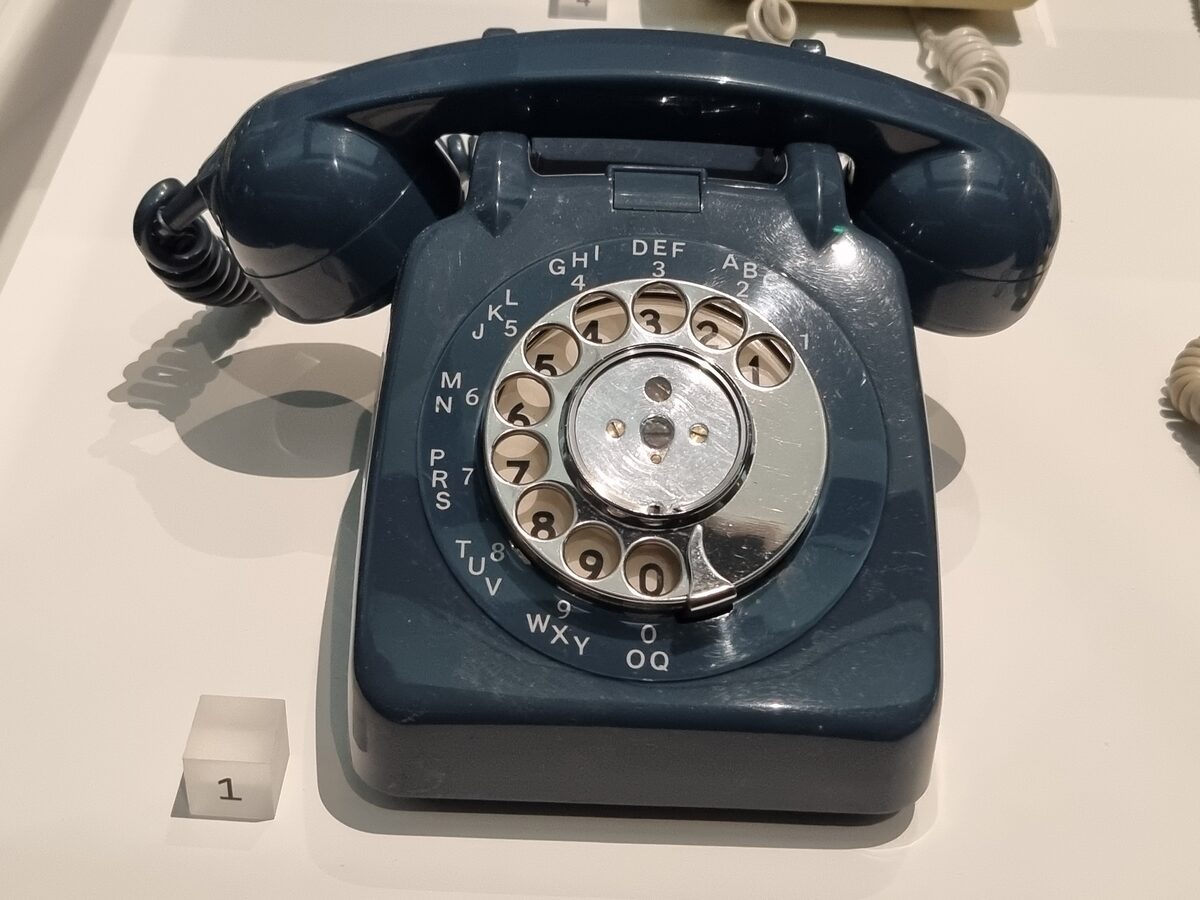
Here’s what kids today will never understand: dialing a rotary phone was a physical act. You didn’t tap a screen or press a button. You stuck your finger in a hole, dragged the dial clockwise until it hit the metal stop, and then waited — waited! — as it clicked its way back to the starting position before you could dial the next digit.
Dialing a full seven-digit number took a solid 15-20 seconds. A long-distance number with the area code? We’re talking half a minute of dedicated finger labor. And God help you if you messed up on the sixth digit, because there was no backspace. You had to hang up and start the whole process over from scratch.
This forced patience into every phone call. You couldn’t rage-dial someone. By the time you finished dialing all seven numbers, you’d had a chance to think about what you were going to say. There was a built-in cooling-off period. Modern technology eliminated that, and honestly, some of us could use it back.
The numbers you dreaded dialing? Anything with 9s and 0s. Those suckers had the longest dial-back distance, which meant the longest wait between digits. If your friend’s phone number was 909-9090, you basically needed to pack a lunch before making that call.

The Phone as Furniture: A Design Statement
Rotary phones weren’t gadgets — they were furniture. They sat in one spot in the house, usually the kitchen or the hallway, and they weighed enough to serve as a doorstop or a self-defense weapon. The standard Western Electric Model 500 weighed about 3.5 pounds. Try throwing your iPhone at a wall and see what happens. Now try it with a rotary phone. The phone wins. The wall loses.
And the colors! While the classic black phone dominated for decades, AT&T eventually released rotary phones in a rainbow of colors: avocado green, harvest gold, sky blue, princess pink, and that specific shade of beige that existed exclusively in the 1970s. Your phone color said something about your family. Black meant traditional. Green meant your parents read Better Homes & Gardens. Pink meant your teenage daughter had won a major battle.
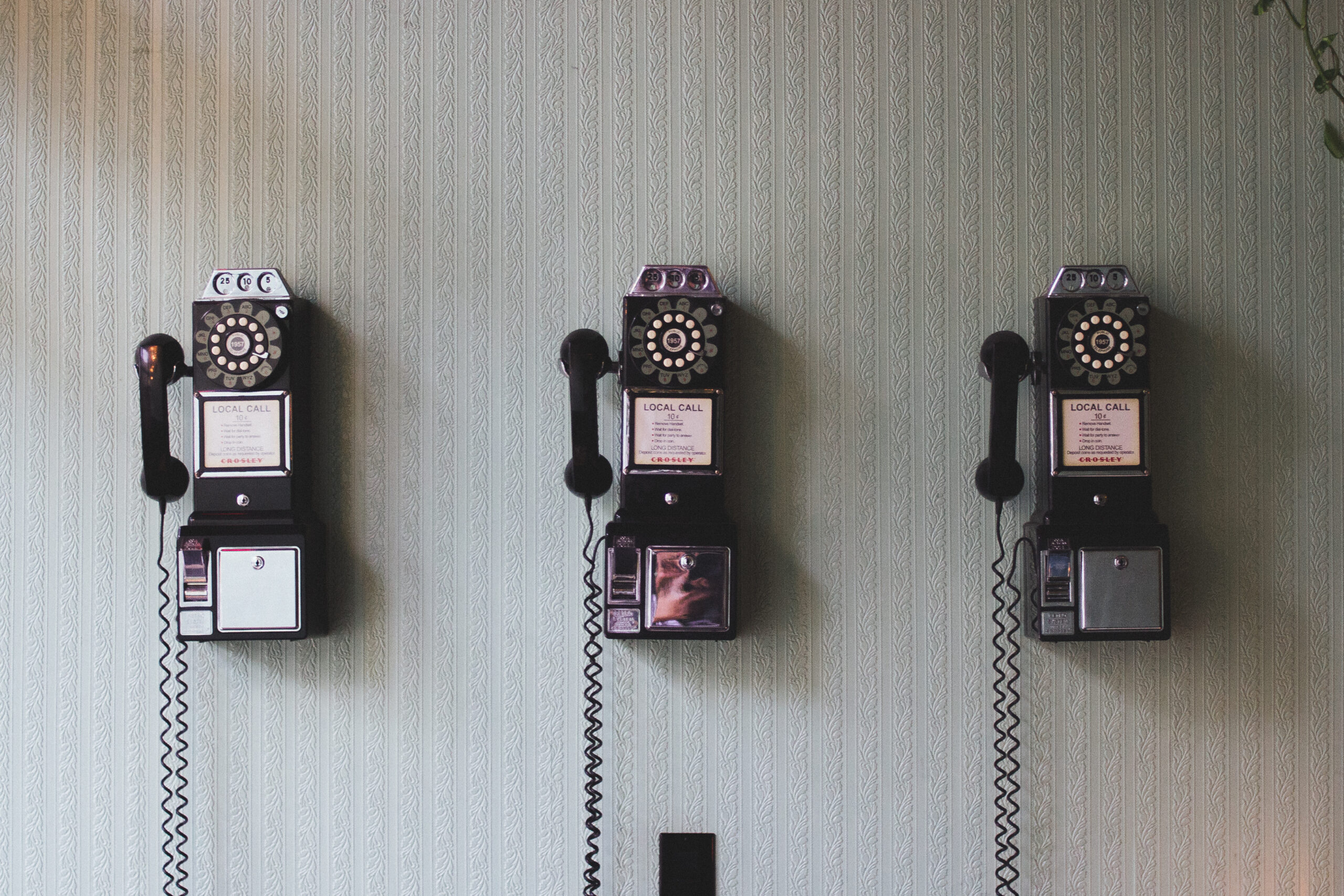
Then there was the wall phone. Mounted in the kitchen, coiled cord dangling, receiver cradled between your shoulder and ear while you stirred spaghetti sauce. The wall phone was the multitasking command center of every American household. Dinner got cooked, gossip got shared, and homework arguments got settled — all within the six-foot radius of that stretchy cord.

The Coiled Cord: A Love Story
Speaking of that cord. Can we talk about the coiled telephone cord for a minute? Because it was simultaneously the most useful and most frustrating piece of technology ever invented.
In its natural state, a phone cord was maybe two feet of tightly coiled wire. But through years of stretching, twisting, and abusing, most household phone cords eventually reached lengths of six, eight, even ten feet — though by that point they were a tangled, kinked-up mess that looked like a Slinky having an existential crisis.
The cord defined your phone territory. Need privacy for a call? Stretch that cord around the corner, into the pantry, close the door, and whisper. Your parents knew exactly what you were doing, but the illusion of privacy mattered. Every teenager in the 70s and 80s mastered the art of the cord stretch.
And when the cord got hopelessly tangled — and it ALWAYS got hopelessly tangled — there was the ritual of The Untangling. You’d let the handset dangle and spin freely, watching it rotate like a slow, plastic pendulum until the twists worked themselves out. Meditation before meditation was trendy.

Party Lines and Eavesdropping: The Original Social Network
Before everyone had their own phone line, many households shared a party line — a single telephone line split between multiple homes. Pick up the phone, and you might hear your neighbor already mid-conversation about her bunion surgery. Want to make a call? You had to wait until the line was free, or you could do the slightly aggressive thing and cough loudly into the receiver until they got the hint.
Party lines were the original social network, except instead of scrolling through posts, you were literally listening to your neighbors’ drama in real time. Kids would pick up the phone extension super quietly and eavesdrop on their older sibling’s conversations. It was surveillance before surveillance was creepy — or at least, before we called it creepy.
By the 1980s, party lines had mostly disappeared in urban areas, but they hung on in rural communities well into the 90s. Some people genuinely miss the accidental community they created. Most people don’t.

That Dial Tone: A Sound We’ll Never Forget
Here’s a thought experiment: describe a dial tone to someone who’s never heard one. Go ahead, try.
It’s almost impossible, right? That steady, unbroken hum — a combination of 350 Hz and 440 Hz tones, if you want to get technical — was the sound of possibility. Pick up the handset, hear the dial tone, and the whole world was available to you. It meant the phone worked, the line was clear, and you were connected to the system. It was reassuring in a way that’s hard to explain.
The dial tone is functionally extinct now. Cell phones don’t have one. VoIP services don’t have one. Even modern landlines sound different. An entire generation is growing up never having heard the sound that was, for decades, the official audio signature of human connection.
And the busy signal? That rhythmic beep-beep-beep-beep that told you the person you were calling was already on the phone? Also gone. Call waiting killed it. Voicemail buried it. Today, your call just goes to a recording. But in the rotary phone era, a busy signal meant one thing: call back later. And you did. Again and again and again.
The Phone Number Memory Palace
Ask any Gen Xer their childhood phone number. Go ahead. They’ll rattle it off instantly, decades later. Now ask a Millennial their best friend’s current phone number. Blank stare.
Rotary phones forced us to memorize phone numbers. There was no contact list, no speed dial, no “Hey Siri, call Mom.” You either knew the number or you didn’t. And because dialing was slow and deliberate, each number got burned into your muscle memory through pure repetition.
Most Gen Xers can still recite at least a dozen phone numbers from their childhood: home, grandma’s house, best friend, the pizza place, the movie theater’s showtime line, and that girl or guy from school whose number you called so many times it was permanently grooved into your brain.
The phone book was your backup. That massive yellow brick that showed up on your doorstep once a year, containing every listed phone number in your area code. The Yellow Pages were for businesses, the White Pages were for people, and your dad’s phone book had about forty numbers circled in pen with mysterious annotations in the margins.

The Death of the Rotary: Touch-Tone Takes Over
The rotary phone didn’t die suddenly. It was a slow, dignified fade. AT&T introduced the touch-tone phone in 1963, but it took decades for rotary dials to fully disappear. Touch-tone service actually cost extra on your phone bill for years — there was literally a monthly surcharge for the privilege of pressing buttons instead of dialing. AT&T really knew how to monetize convenience.
The transition accelerated in the 1980s when automated phone systems started requiring touch-tone input. “Press 1 for English, press 2 for Spanish” doesn’t work so well when your phone goes click-click-click instead of beep-beep-beep. Some clever rotary phone holdouts bought little tone-generating devices they could hold up to the receiver, but eventually, resistance was futile.
By the early 1990s, rotary phones had largely vanished from American homes. Phone companies stopped supporting pulse dialing. The physical infrastructure that made rotary phones work was being dismantled. A technology that had dominated global communication for nearly a century was relegated to thrift stores and grandma’s spare bedroom.

Why We’re Still Nostalgic for Rotary Phones
The rotary phone represents something that’s increasingly rare in our hyper-connected world: intentional communication. Every call you made on a rotary phone was a deliberate choice. You had to physically commit to each digit. You had to stand in one spot (or at least within cord range). You had to be present.
There was no multitasking on a rotary phone call. No scrolling through Instagram while someone talked to you. No texting a third person while pretending to listen. You held the heavy handset to your ear, you heard the other person’s voice with zero digital compression or latency, and you talked. Really talked.
The sound quality of a rotary phone was actually remarkable. The carbon microphone in the handset and the copper wire infrastructure delivered warm, rich audio that modern cell phone calls can’t match. When someone laughed on the other end of a rotary phone call, you heard every nuance. When they cried, you felt it. The emotional bandwidth was enormous.
Today, vintage rotary phones are experiencing a renaissance among collectors and retro enthusiasts. Working models sell for anywhere from $30 to several hundred dollars depending on color, condition, and model. Some companies even sell adapters that let you connect a rotary phone to modern phone lines or even cell networks. Because sometimes, you just want to feel that dial under your finger again.

The Rotary Phone’s Final Ring
The rotary phone era wasn’t just about a piece of technology. It was about a way of life where communication required patience, effort, and physical engagement. It was about knowing phone numbers by heart, stretching cords around corners for privacy, and understanding that not every moment needed to be connected.
We live in a world now where a three-year-old can FaceTime their grandmother on an iPad. That’s incredible. That’s progress. But it’s also a world where nobody memorizes phone numbers, nobody waits for a dial tone, and nobody has to commit to a phone call with the slow, deliberate rotation of a finger through numbered holes.
The rotary phone is gone, and it’s not coming back. But the sounds it made — the click of the dial, the hum of the tone, the ring of the bell — those sounds live on in the memories of everyone who grew up hearing them. And every now and then, when the smartphone world gets too loud and too fast and too much, we close our eyes and we hear it again.
Click-click-click-click-click… whirrrrrrr.
Yeah. We miss that.