March 20, 1980: The Day Radio Caroline’s Mi Amigo Sank, Ending an Era of Pirate Radio
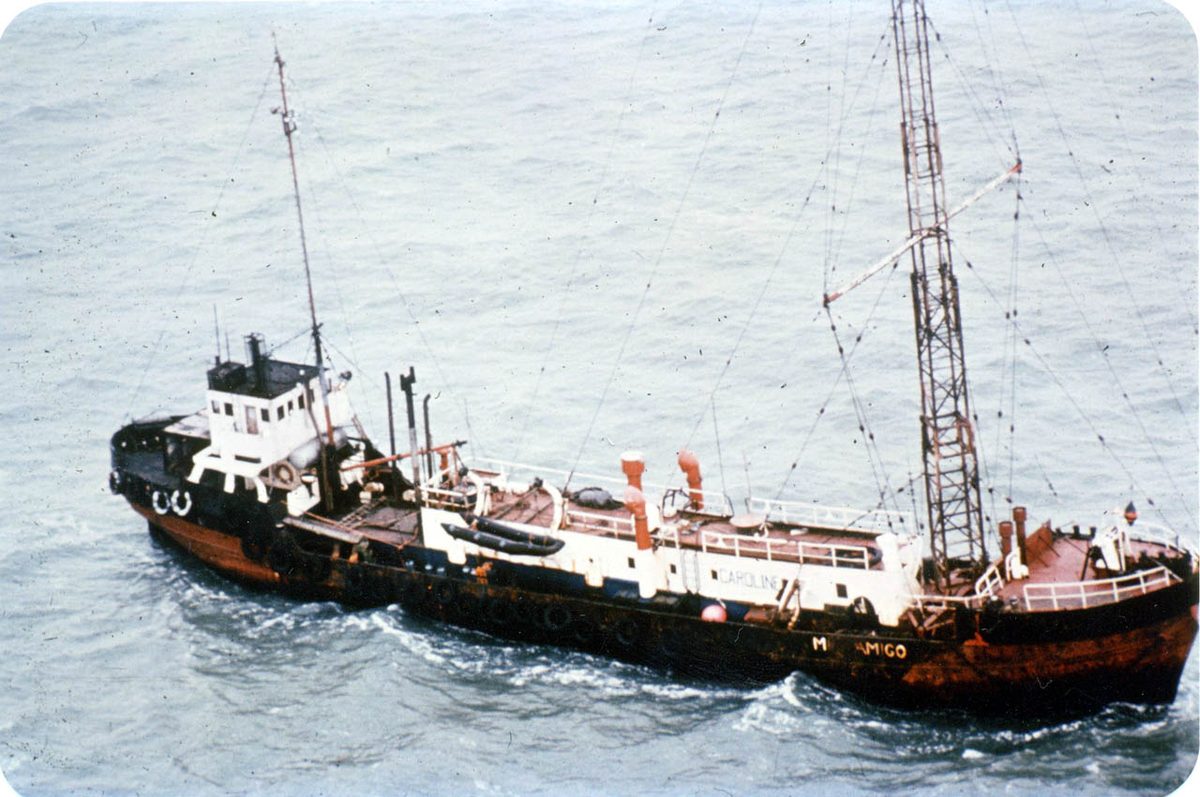
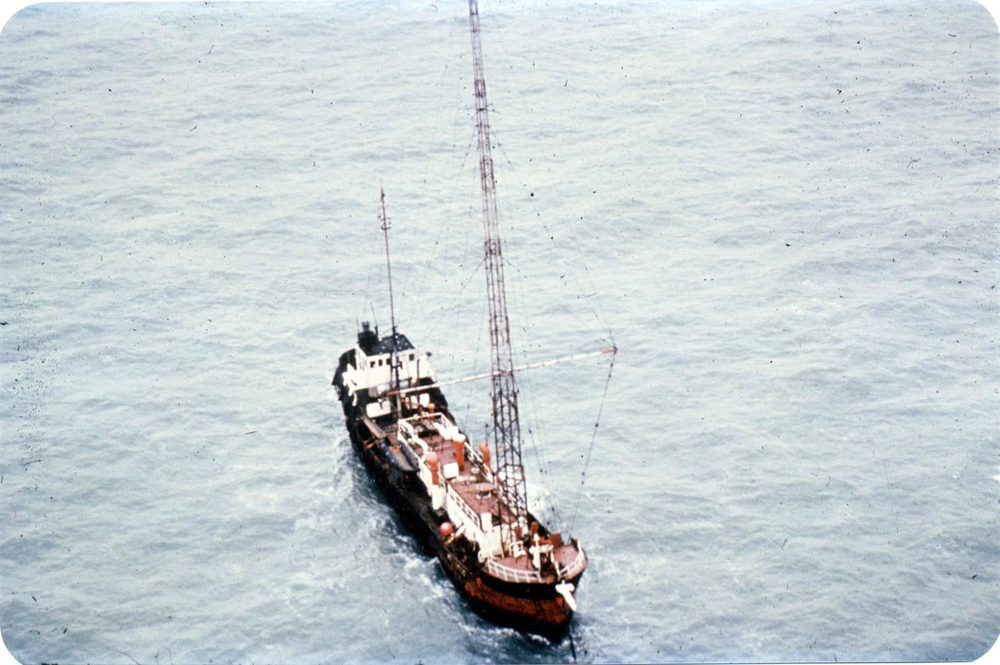
At 11:58 PM on March 19, 1980, a DJ named Stevie Gordon leaned into the microphone aboard a rusted Panamanian coaster called the Mi Amigo and told listeners across Britain that Radio Caroline was about to go off the air. Force-ten gales were already over the gunwales. The 134-foot mast that had beamed sixteen years of contraband rock and pop into bedrooms from Felixstowe to Folkestone was about to disappear under the North Sea. Less than two hours later, it did — and the Mi Amigo Radio Caroline story took its most famous turn.
What sank that night was not just a ship. It was the last working pirate transmitter in British waters, the last floating two-fingered salute to the BBC, and the closing scene of the most defiant cultural experiment European radio has ever produced. The crew got off alive. The era did not.
The Retro Almanac
A monthly roundup of "on this day" highlights from that month, decades back — plus first dibs on new retro merch drops. No spam, just the good stuff.
A Converted German Coaster Becomes a Floating Jukebox
The Mi Amigo started life in 1921 as the SS Margarethe, a 470-ton German coaster built in Kiel for moving cargo around the North Sea. By the early 1960s she was a tired old workboat with a new owner, a new flag, and a Texas-financed transmitter bolted into her hold. Her first pirate gig was as the broadcast platform for Radio Atlanta, but on July 2, 1964, after Atlanta merged with Ronan O’Rahilly’s Radio Caroline, the ship was rechristened Radio Caroline South and pointed at the listening masses of southern England.
O’Rahilly, a young Irishman who had grown up in his family’s port at Greenore, County Louth, was furious that the BBC’s restrictive “needle time” policy froze pop music off the airwaves. The state broadcaster played a handful of records per week. Teenagers who wanted Motown and Merseybeat had to tune their radios at midnight to a crackling French frequency. Caroline’s pitch was simple: anchor a transmitter just outside the three-mile territorial limit, broadcast 24 hours a day, and ignore the laws that ended at the waterline.
It worked. At its peak, Caroline pulled an audience of roughly 20 million across Britain, Ireland, and the Low Countries. Tony Blackburn, who joined in 1964 at age 21, would later jump to Radio 1 and become the BBC’s first daytime pop voice. Johnnie Walker followed the same path. The pirates were not just playing records — they were training the talent pool that the establishment would eventually have to hire.
Outlawed, Boarded, Salvaged, and Back Again
The fun did not last. On August 14, 1967, Parliament passed the Marine Broadcasting (Offences) Act, which made it illegal for any British citizen, advertiser, or supplier to deal with an offshore station. Every other pirate folded that month. Caroline alone kept transmitting, defiant from international waters, until Dutch tugboat operators seized the Mi Amigo over an unpaid towing bill in March 1968. The ship was hauled into Amsterdam and sat there for six years.
She came back in February 1974, refitted and broadcasting again. Through most of the late 1970s, Caroline was an album-rock station — long sets, deep cuts, no Top 40 chart pressure — and the Mi Amigo’s signal was strong enough to reach the inland clubs and bedsits that the BBC’s Light Programme couldn’t be bothered to serve. It was the soundtrack to bedsit Britain at exactly the moment punk and new wave were rewriting the rules. The same audience that was buying Stiff Records singles and dancing through the death of disco into 80s new wave was tuning the dial offshore after dark.
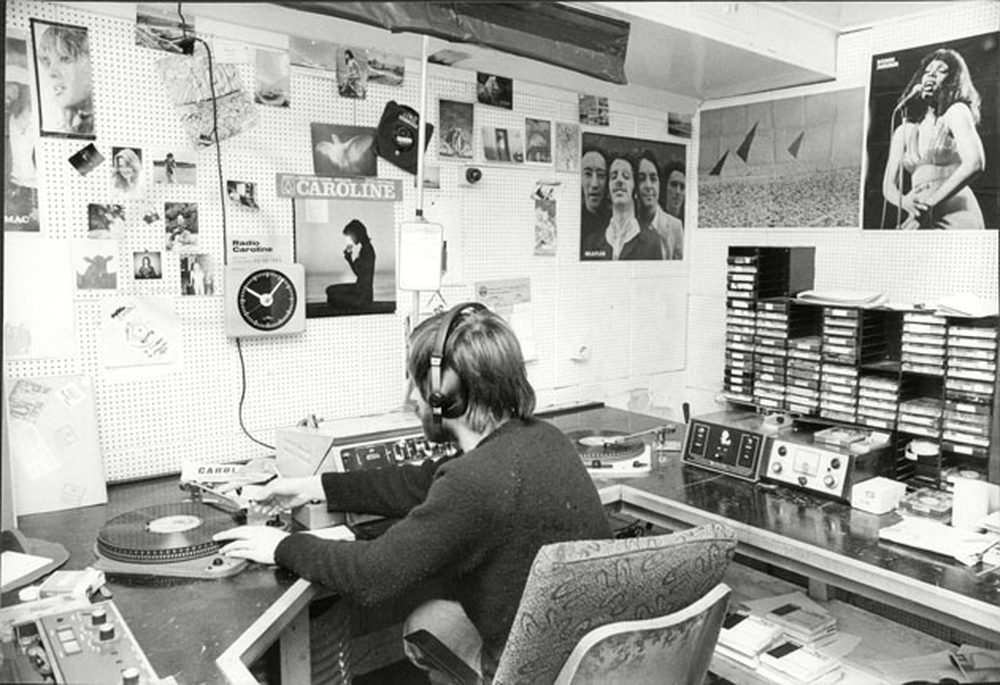
The ship herself was barely seaworthy. RNLI lifeboat crews who had towed her off sandbanks in earlier storms were already calling her a death trap. The transmitter ran at 10 kilowatts on 963 kHz, the generators leaked, and the on-board studio looked less like a broadcasting facility and more like a teenager’s bedroom — pegboard walls stacked with cassettes, posters of Beatles and Tina Turner taped above the console, a single battered turntable with a red rubber mat. The whole operation was held together with effort, willpower, and salt-eaten wire.
The Storm of March 19, 1980
The weather had been turning sour for days. By the afternoon of March 19, the Met Office was reporting force-ten gales pushing down through the Knock Deep — a notorious stretch of the outer Thames Estuary between the Long Sand and Knock John banks. The Mi Amigo was riding her anchor at a position the crew had used for years. She had ridden out worse, or so they thought.
Just after dark, the anchor chain parted. With no power to steer against the wind, the ship drifted nearly ten nautical miles before grounding on the Long Sand Bank. The pounding started immediately. Water came in through seams that had been re-caulked too many times. Four crewmen — DJs Stevie Gordon, Tom Anderson, and a Dutch engineer, plus a third broadcaster named Nick Richards — went to work with portable pumps and tried to keep the rising water below the bilge plate.
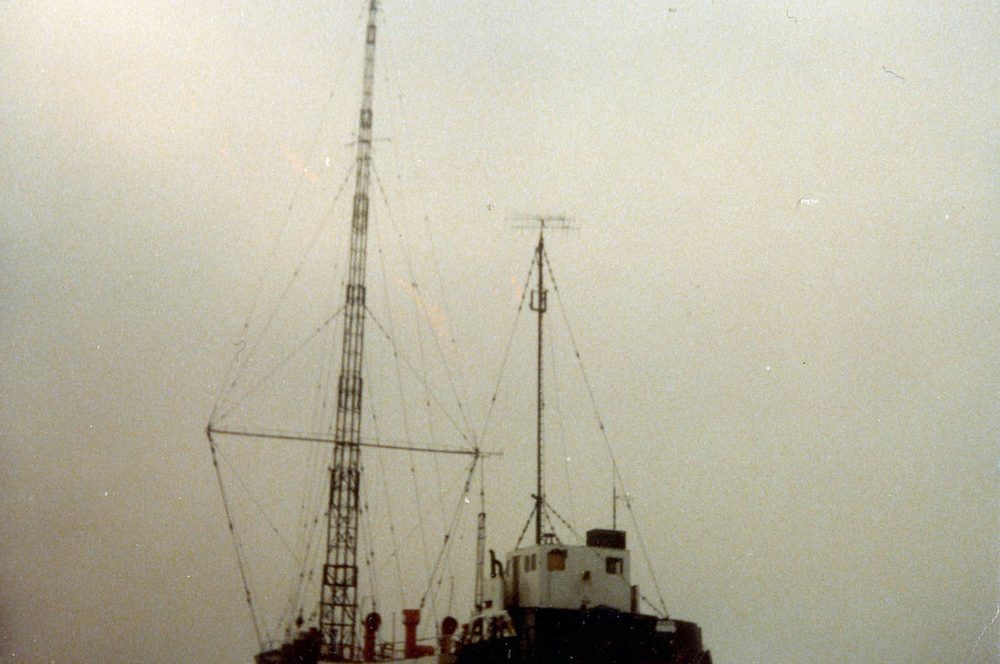
They lost. For eight hours they bailed and broadcast at the same time, calling the coastguard, telling listeners that this might be the night the ship went down, playing records in between distress updates. The Sheerness RNLI lifeboat launched into the gale and stood off the Mi Amigo in case the crew had to jump. Richards remembers it without theatrics: “Had the lifeboat not have been standing by, there was no way the ending would have been as happy as it was.”
The Final Broadcast
At about 11 PM, Stevie Gordon spun a record that he thought captured the mood — the sort of melancholy choice DJs make when they know they are signing off forever and want to leave something on the wire. At 11:58 PM, he closed the microphone for the last time on board, telling listeners that the ship was foundering and that the crew was about to abandon to the lifeboat. Then he reached over and powered down the 10-kilowatt transmitter. For the first time in nearly six years of continuous broadcasting, Caroline went silent.
The crew climbed into the Sheerness lifeboat in the dark, in heavy seas, with no injuries. By the early hours of March 20, only the top portion of the 134-foot mast was still visible above the water. An RAF helicopter that overflew at first light radioed back that the Mi Amigo had gone, leaving the antenna sticking out of the Thames Estuary like a tilted exclamation point — a detail the British tabloids would milk for weeks.
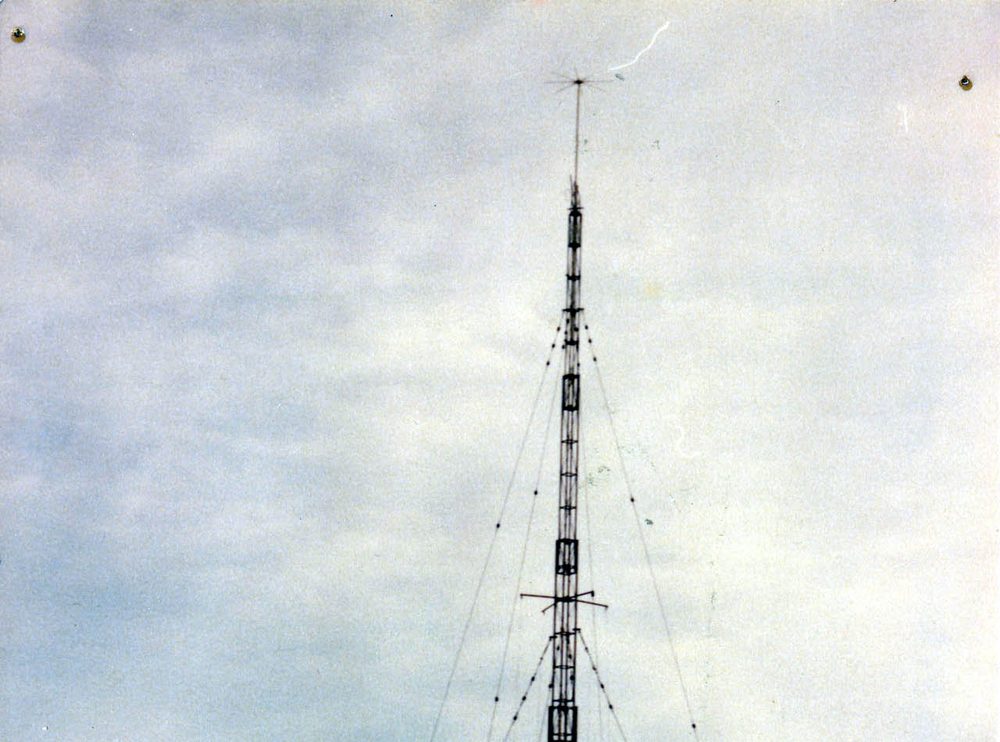
The Mast in the Estuary
The mast stayed visible until July 1986, when it finally collapsed. Thanet District Council briefly floated a plan in May 1980 to refloat the Mi Amigo and turn her into a museum ship at Ramsgate. The money was not there. The wreck stayed where she fell, at 51°35′N 1°17′E, in 8 to 16 feet of water on the Long Sand Bank. English Heritage formally recorded her in the Modern Wrecks Project in 2010, thirty years after she went down. Her two halves are half-buried in the sand, the bridge separated from the bow, the lower stub of the mast still bolted to the deck.
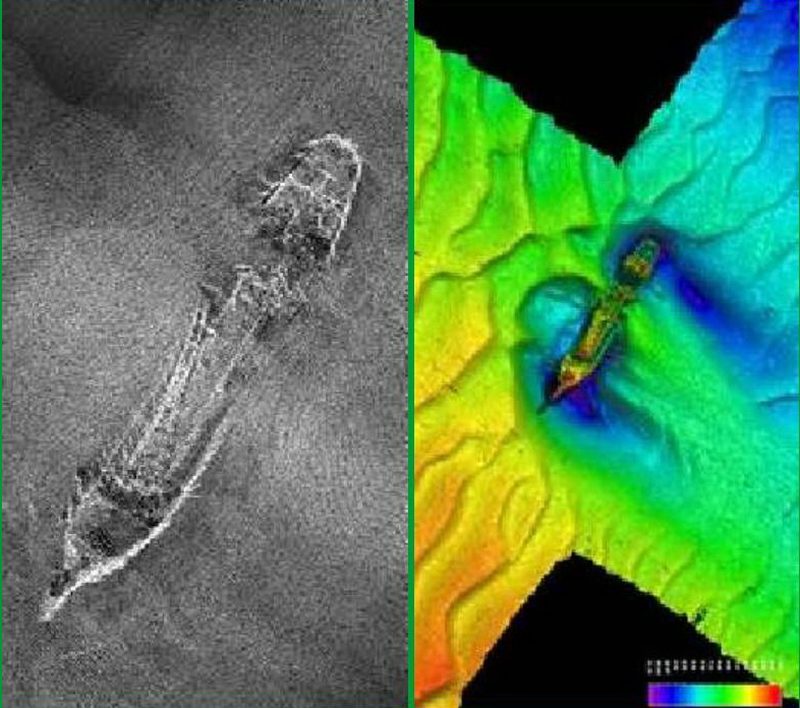
Sport divers visit it. Charter boats out of Whitstable run trips during good summer weather. It is officially classified as a navigation hazard, which feels about right for a ship whose entire reason for existing was getting in the way of authority.
Why the Sinking Mattered More Than the Ship
By March 1980, the rest of British pop radio had caught up to what the pirates had been doing all along. BBC Radio 1 had been on the air for thirteen years, playing the music that Caroline had forced into the conversation. Independent commercial stations — Capital, Piccadilly, Clyde — were spreading across the country with formats that owed their DNA to the offshore broadcasters. The cultural argument had been won. What the Mi Amigo’s sinking ended was not the music. It was the geography.
Caroline had been the last station in Europe broadcasting from a ship anchored in international waters, the last operation that could literally point at a map and say “we are outside your jurisdiction.” When she went down, that loophole closed. Radio became, once and for all, a thing you did from a building with a license. The era of broadcast as an act of mild maritime crime was finished.
The Caroline brand did not die with her. In August 1983 the organization reappeared on the converted trawler MV Ross Revenge, with a 300-foot mast and a 50 kW transmitter, broadcasting off the Knock Deep again. The British and Dutch authorities boarded her in 1989 and again in 1990. By the mid-1990s, satellite and then internet radio had made the whole offshore game pointless. Today, Radio Caroline broadcasts legally from Suffolk under a community license, the Ross Revenge moored at Tilbury as a floating museum. Aging DJs still walk her decks for special broadcasts. The original spirit survives as nostalgia, which is what tends to happen to revolutions that win.
The Sound of an Era That Closed With Her
The Mi Amigo went down at almost exactly the moment 80s pop culture was about to detonate. MTV would launch sixteen months later. Walkmans were just becoming a thing — within a year of the sinking, the way an entire generation listened to music would be reshaped by the Sony Walkman and its portable cassette revolution. The acts the pirates had championed in the 70s — heavy rock, glam, early new wave — were about to give way to synth pop, the New Romantics, hair metal, and the slick MTV machine. Caroline’s sinking marked the end of one British music economy and the start of another.
The audience that had grown up tuning offshore signals after midnight grew up to become the buyers of vintage band tees, the collectors of vinyl, the people who still mourn the loss of physical media. The Mi Amigo’s mast sticking out of the Thames Estuary in March 1980 was, in retrospect, the perfect image for that handoff — old technology dying, broadcasting itself drowning, a new decade about to begin under different rules.

What the Mi Amigo Left Behind
Sixteen years of offshore broadcasting produced a roll call of DJs that effectively built modern British pop radio. Tony Blackburn, Johnnie Walker, Tony Prince, Dave Lee Travis, Tommy Vance, Simon Dee, Robbie Dale, Keith Skues — every one of them learned the craft on a rolling deck in the North Sea before bringing it ashore to Radio 1, Radio Luxembourg, Capital, or the BBC World Service. The pirates trained the establishment.
That same year of 1980 saw the cultural ground shifting in every direction. Five months after the Mi Amigo sank, CNN launched its 24-hour news experiment in Atlanta, importing a different kind of always-on broadcast culture from a different direction. Two years later the country that had outlawed offshore radio was at war with Argentina over the South Atlantic, and Radio Caroline’s old listeners were following the Falklands War broadcasts on the BBC World Service. The rebel broadcaster had become, by then, just another fond memory of the decade Britain was leaving behind.
O’Rahilly died in April 2020 at age 79. The obituaries were generous — the Irish Times called him the man who “captured the spirit of the swinging 60s.” That spirit, the willingness to anchor a transmitter in international waters and tell a government no, was always going to age into nostalgia. The remarkable thing is that the Mi Amigo lasted as long as she did, with as bad a hull as she had, riding out as many gales as she rode out, before the North Sea finally cashed in the bill.
If you stand on the Essex shore at the right tide and the right time of year, you can still see the buoy that marks her grave. It is a small orange dot in a grey expanse of water. The signal is gone but the position is fixed: 51°35′N, 1°17′E, the place where pirate radio finally ran out of luck.
Sources
- MV Mi Amigo — Wikipedia entry covering the ship’s full broadcasting and sinking history.
- Memories of Radio Caroline sinking and DJ rescue by RNLI — RNLI account with eyewitness recollections from DJ Nick Richards.
- The Mi Amigo Sinks — March 1980 — DX Archive page with crew accounts, timeline, and contemporary photographs.
- The final days of the pop pirates — BBC News retrospective on the Marine Broadcasting (Offences) Act and the offshore stations it ended.
- Ronan O’Rahilly obituary — Irish Times obituary of the Radio Caroline founder.
- On This Day: Pirate station Radio Caroline sank — Yahoo News UK / British Pathé summary of the sinking.
Browse retro and vintage-inspired apparel at the RetroRadical shop →
The Retro Almanac
A monthly roundup of "on this day" highlights from that month, decades back — plus first dibs on new retro merch drops. No spam, just the good stuff.