90s Internet Culture: From AOL Dial Up to Napster
The 90s internet culture started with a sound that has no modern equivalent — a shriek, a hiss, a series of clicks, a final triumphant tone that meant you were now on the World Wide Web at a screaming 28.8 kilobits per second. Somewhere in the house, someone was about to pick up the phone and ruin everything. If you lived through it, your nervous system still flinches when you hear that handshake. If you didn’t, no amount of YouTube nostalgia can explain what it felt like to wait three minutes for a single JPEG of Cindy Crawford to render line by line from the top down.
This was the decade that took the internet from a research curiosity to a household appliance, and it did it on creaky beige hardware running browsers that crashed if you looked at them sideways. AOL printed money. Napster torched the music industry. A teenager in Aberdeen, Washington could find another teenager in Aberdeen, Scotland and argue about Smashing Pumpkins lyrics at 2 a.m. Nobody had any idea what they were building. That’s what made it great.
The Retro Almanac
A monthly roundup of "on this day" highlights from that month, decades back — plus first dibs on new retro merch drops. No spam, just the good stuff.
The Sound That Connected a Generation
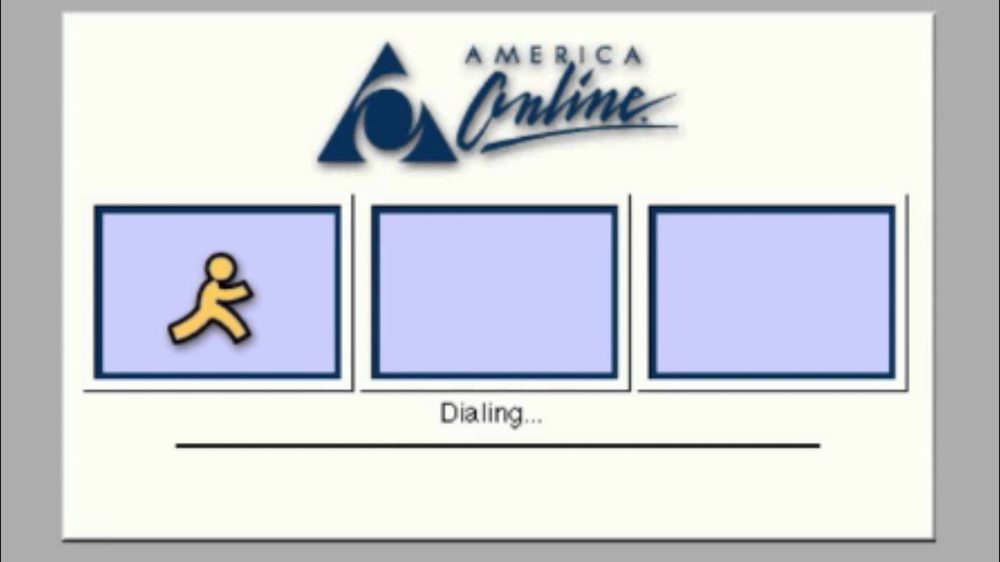
KSHHHHHH-DING-DING-DING-BRRRRRRRR-KSHHHHHH. If you know, you know. The dial-up modem handshake was the overture to the loudest cultural shift since cable television, and it took anywhere from 30 seconds to a full minute to negotiate. You’d pick up the phone in the kitchen, hear that demonic chittering, and either wait impatiently or scream “GET OFF THE INTERNET!” — a sentence that made complete sense in 1997 and now sounds like a koan.
The 90s internet was a beautiful, chaotic, revolutionary mess. It was slow, ugly, occasionally dangerous, and absolutely magical. Before algorithms decided what you’d see and before social media harvested your data, the web was the Wild West. Exploring it felt like genuine adventure because there was no map, no recommendation engine, no helpful nudge toward the next thing. You typed a URL you’d seen on a bumper sticker and hoped for the best. AOL announced that dial-up service is finally being retired in 2025, which means the sound itself is now a historical artifact, a piece of audio archaeology that the under-30 crowd will never hear in the wild.
AOL Was the Internet for Most of America
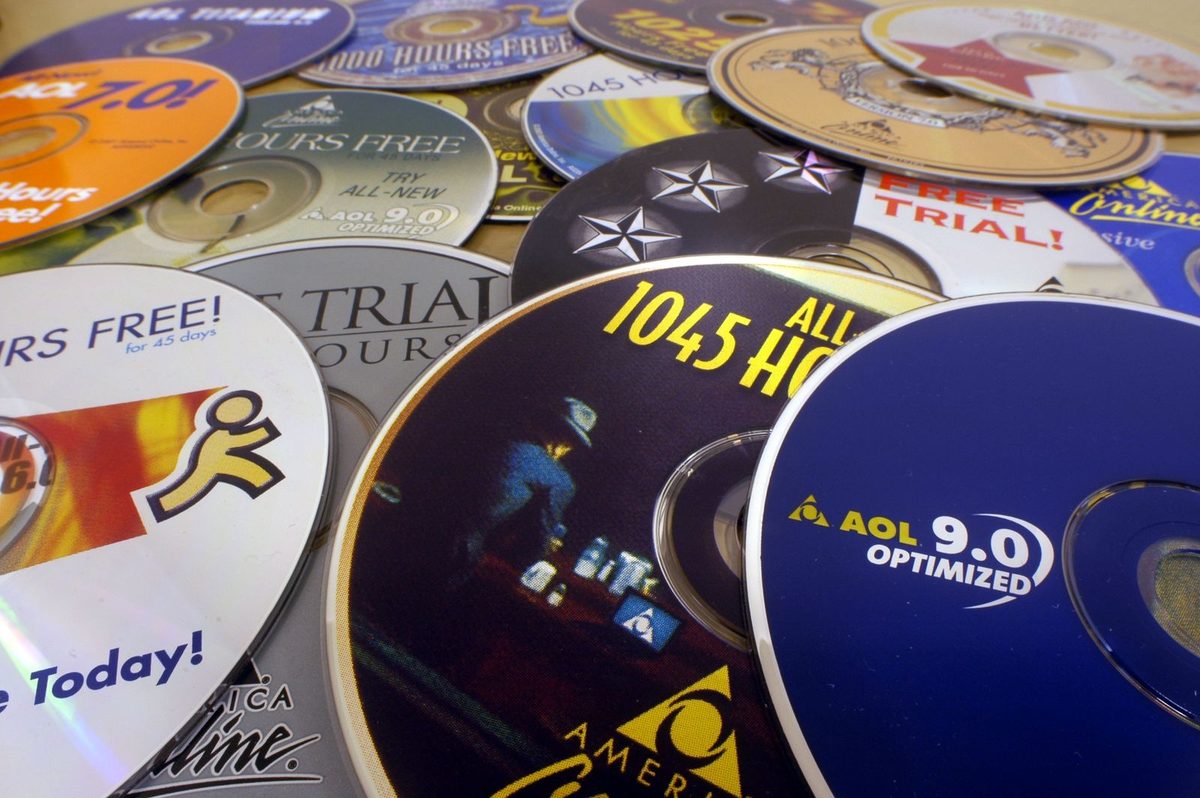
America Online didn’t just provide internet access — it provided the internet experience for tens of millions of Americans who otherwise had no idea where to start. Those free AOL CDs were everywhere: stapled inside magazines, jammed into cereal boxes, mailed unsolicited to your house, scattered across the counter at Blockbuster. By 1997 AOL had over 10 million subscribers, making it the largest internet service provider on Earth and earning founder Steve Case a permanent seat at the technology grown-ups table.
“You’ve Got Mail” became one of the most iconic phrases of the decade, important enough to anchor a 1998 Tom Hanks romantic comedy. The AOL interface — with its keyword system, chat rooms, and curated content channels — was the training wheels for an entire generation. It made the terrifying vastness of the open internet feel manageable, like a walled garden with a friendly running-man mascot waving you in. The fact that those discs went into a permanent collection at the Smithsonian tells you everything about how thoroughly they embedded themselves into 90s American life.
Chat Rooms, AIM, and the Birth of Online Identity
Before social media taught everyone to perform a curated version of themselves, the 90s internet handed you a screen name and a blinking cursor and said: be whoever you want. SmashingPunkin84. xXDarkAngelxX. Soccer_Guy_10. The screen name was your first piece of online identity, and you agonized over it the way later generations agonized over Instagram handles. AOL’s chat rooms ran the full spectrum, from “TeenChat” filled with 14-year-olds pretending to be 19 to “OverForty” filled with 19-year-olds pretending to be over forty. By 1997 AOL was operating 19,000 chat rooms simultaneously, which is more digital small-talk than humanity had produced in its entire prior history.
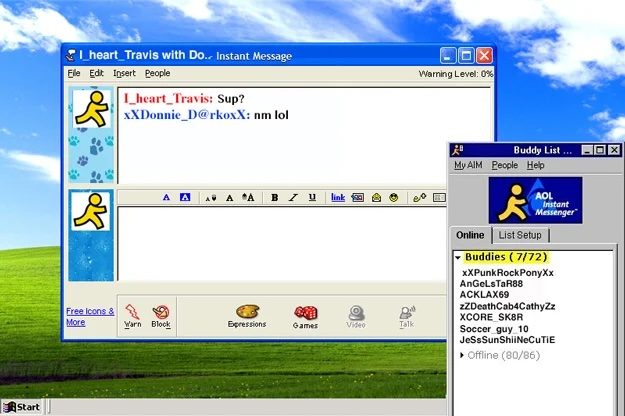
Then in 1997, AOL released AIM — AOL Instant Messenger — as a free standalone app, and the internet got faster and more personal overnight. The Buddy List was the social network before anyone called it that. A green dot meant your crush was online. A door opening sound effect meant a friend just arrived. The away message was performance art: a song lyric, a cryptic threat, a poem about whoever just broke your heart, all displayed for the seven specific people you cared about. It was Twitter for an audience of seven, and the stakes felt enormous. If you grew up with a real home phone tethered to the kitchen wall, AIM was the first time you could have a continuous private conversation with someone outside the house without your mom hovering.
Netscape, Internet Explorer, and the Browser Wars
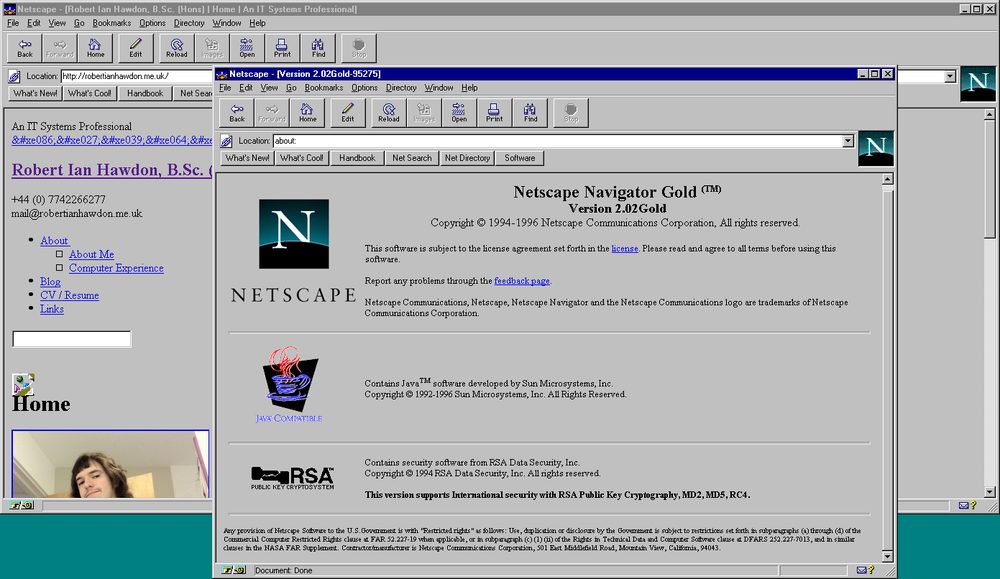
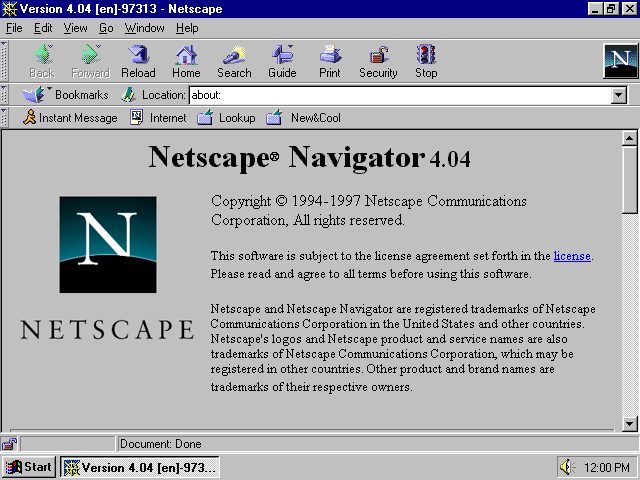
The whole web was browsable through one piece of software, and in 1995 that piece of software was Netscape Navigator. Netscape held roughly 80 percent of the browser market by 1996, which made its founders billionaires on paper and made every other software company on the planet want a piece. Microsoft bundled Internet Explorer free with Windows, killed Netscape’s revenue, and triggered the antitrust case that defined the late 90s tech industry. Bill Gates was on the losing side of that one, which was a rare experience for him.
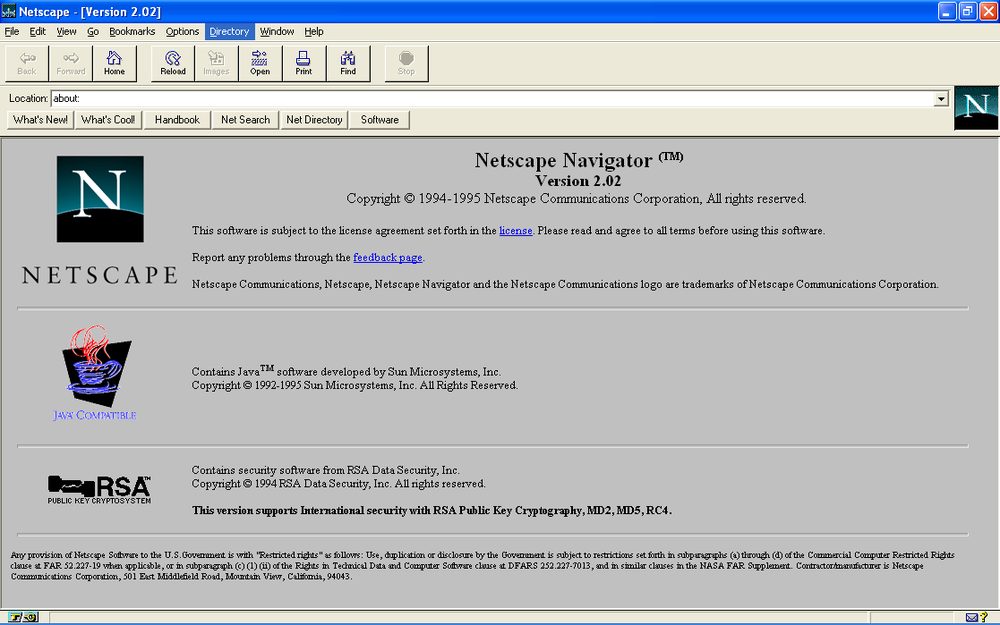
Netscape gave us the JavaScript language in 1995 — invented by Brendan Eich in ten days, a fact that explains a lot about the language’s quirks. It also gave us animated GIFs, the blink tag, frames, and a thousand other features that web designers immediately abused. Looking at a Netscape 2.0 screenshot today is like looking at a 1955 kitchen: every appliance is recognizable, but the proportions are all wrong, and you can feel how much we had to learn.
GeoCities, Angelfire, and the Build-Your-Own-Website Era
You could not buy a website in 1996 the way you can today. You had to build one, by hand, in a text editor, and host it on GeoCities or Angelfire or Tripod. GeoCities organized its free pages into themed neighborhoods like Hollywood (entertainment) and SiliconValley (tech) and Heartland (Christian-friendly family content). At its peak the service hosted over 38 million pages, and almost every one of them included a flaming skull GIF, a MIDI of a Smashing Pumpkins song, a guestbook, a hit counter, and the eternal phrase “UNDER CONSTRUCTION.”
The first wiki, Ward Cunningham’s WikiWikiWeb, also launched in 1995, planting the seed of collaborative editing that would eventually become Wikipedia. But for the average 90s teenager, web publishing meant a GeoCities page about your dog, your favorite anime, or your unfortunately strong opinions about Limp Bizkit. There was no algorithm, no follower count, no monetization. You built it because you could, and the only people who saw it were the strangers who stumbled in from a web ring. The bar for becoming a published author on the World Wide Web was: do you own a copy of Notepad.

Napster, MP3s, and the End of the Record Store
Shawn Fanning was a 19-year-old college dropout when he wrote Napster in his uncle’s office in 1999, and what he built effectively detonated the recorded music industry. The premise was simple to the point of being criminal: every Napster user shared their MP3 folder, and every other user could search and download from it. Within a year there were 80 million registered users. Metallica famously sued. Dr. Dre sued. The Recording Industry Association of America turned itself inside out trying to stop a piece of software written by a teenager.
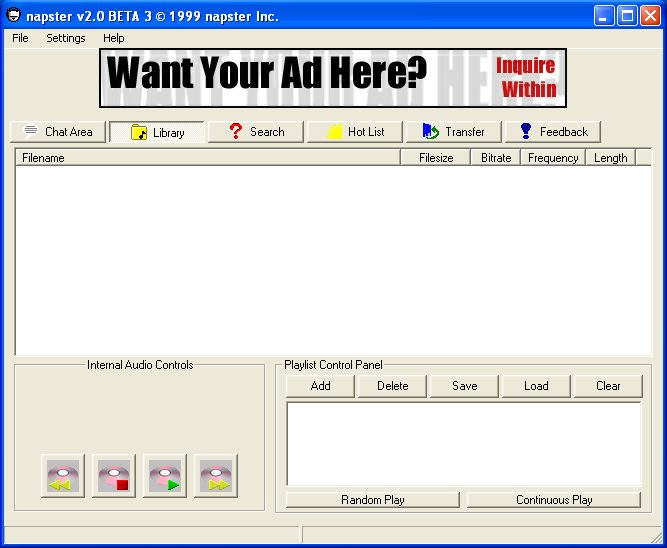
The truth, looking back, is that the record labels weren’t really fighting Napster — they were fighting a generation that had decided albums no longer cost $17.99. Napster taught millions of people that a song was a file, not an object. Once that belief settled in, you couldn’t un-settle it. iTunes followed in 2003. Spotify followed iTunes. Every modern streaming service is the lawful descendant of a program a 19-year-old wrote because his roommate complained about how hard it was to find MP3s. The music industry will tell you Napster was a thief. It was actually the beta test of the next forty years.
The Internet Felt Genuinely Weird Because It Was
What gets lost in the nostalgia is how strange the early web actually was. There was no Google for the first half of the decade — you used AltaVista, Excite, Lycos, or a hand-curated directory like Yahoo. There was no centralized social media, so you joined a Listserv, posted on Usenet, or hung out on IRC. Finding anything took skill and patience. Maintaining a friend group online took even more.
Communication tech outside the browser was equally weird. People still carried pagers, which forced you to find a payphone to call back. Caller ID was new and controversial, and entire subcultures formed around blocking it with *67. Long-distance phone calls were expensive enough that families used party lines and 1-900 numbers to socialize cheaply. The 90s internet didn’t replace any of this overnight — it sat on top of it, awkward and noisy, and slowly absorbed each piece. By the end of the decade your modem, your phone, your TV, and your stereo were all starting to compete for the same household role.
What That Era Got Right That We Lost
The 90s internet had genuine flaws. It was sluggish, ugly, hostile to anyone non-technical, and structurally insecure in ways that would horrify a modern security engineer. But it also had something the current web has bled out: optionality. You weren’t being tracked. You weren’t being recommended. You weren’t being optimized for engagement. You went online to do a specific thing — chat with a specific person, read a specific page, download a specific file — and then you got off, because the phone needed to ring. The internet was a destination, not an ambient presence. Coming back from a session online felt like coming back from somewhere.
The reason people in their 40s talk about this era the way they do is not because dial-up was good. Dial-up was terrible. It’s because the rhythm of 90s internet culture forced presence. You couldn’t doomscroll if the page took 90 seconds to load. You couldn’t be addicted if your mom needed the phone. The friction was the feature, and we mistook it for a bug, and once broadband killed the friction we discovered the friction was holding several things together. If you want to know why the AIM away message has had four separate nostalgia revivals in the last decade, that’s the reason. The buddy list said: my friends are real, and they are not always reachable, and that’s the point.
Sources
- NPR — Say bye-bye to the beeps and boops of AOL’s dial-up internet service — Coverage of AOL’s 2025 shutdown of dial-up service and a history of the connection sound.
- Smithsonian Magazine — Remember These Free AOL CDs? They’re Collectibles Now — How AOL’s free trial CDs became a recognized piece of American material culture.
- Defragg — The Forgotten History of AIM (AOL Instant Messenger) — Long-form history of the Buddy List, away messages, and AIM’s rise and fall.
- Cybercultural — The Emergence of Napster and P2P File Sharing in 1999 — Original launch context for Shawn Fanning’s software and how it reshaped music distribution.
- Netscape browser history — Reference timeline for Netscape Navigator versions and the first browser war.
Browse retro and vintage-inspired apparel at the RetroRadical shop →
The Retro Almanac
A monthly roundup of "on this day" highlights from that month, decades back — plus first dibs on new retro merch drops. No spam, just the good stuff.