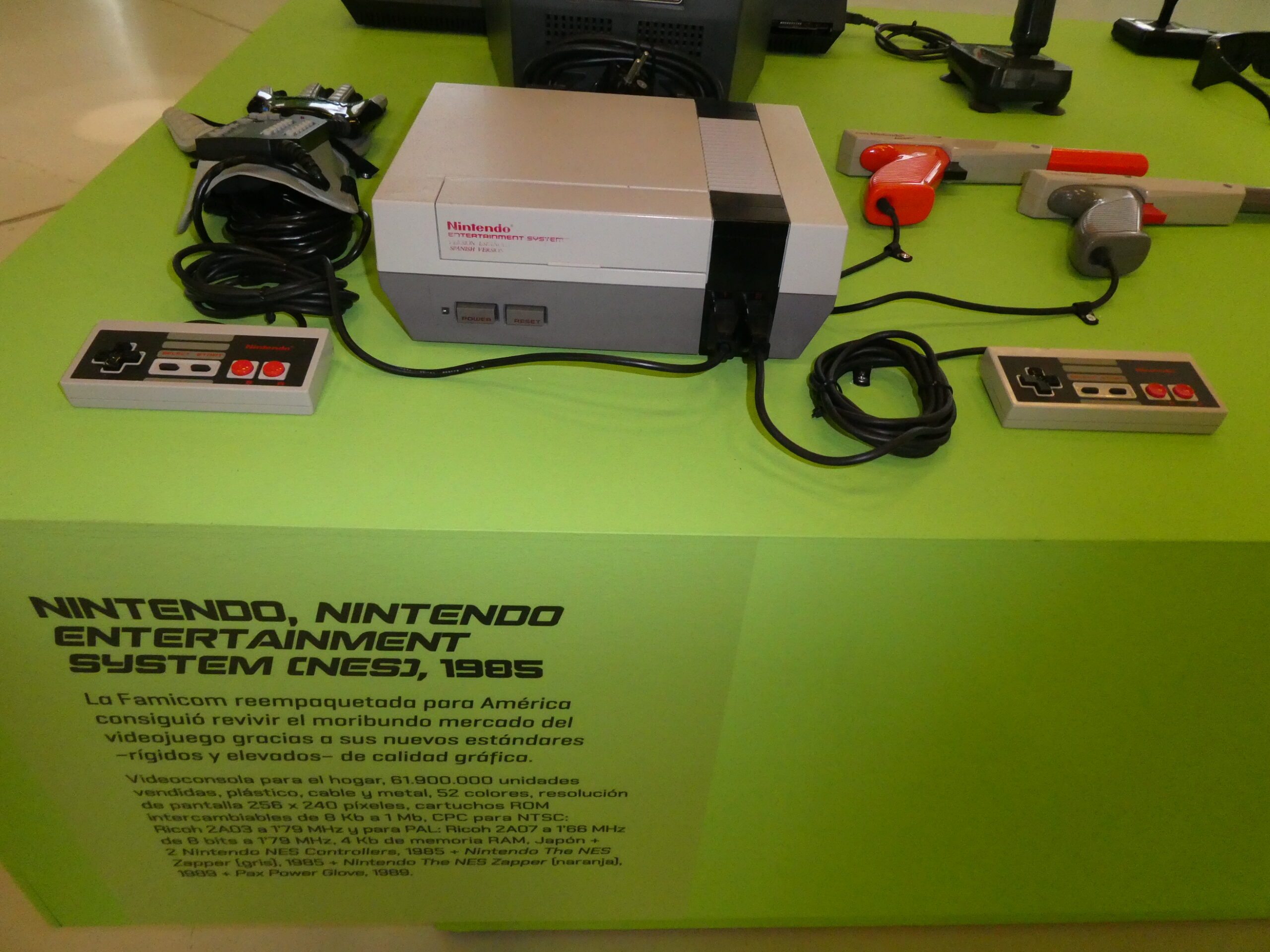
Nintendo Entertainment System NES console from 1985 that saved gaming

October 18, 1985: The Day Nintendo Changed Everything

Picture this: It’s October 18, 1985, and you’re walking through the toy aisles of a New York City store. Among the Transformers and Care Bears sits something completely different – a sleek gray box with a futuristic robot companion. The Nintendo Entertainment System had just landed in America, and none of us knew we were witnessing the birth of modern gaming culture.

For Gen Xers, that moment represents more than just another product launch. It was the beginning of our digital childhood, the foundation of countless Saturday morning marathons, and the spark that would ignite decades of gaming passion.

The Console That Almost Wasn’t

Nintendo’s journey to American living rooms wasn’t guaranteed. The video game crash of 1983 had left retailers burned and consumers skeptical. Atari’s failure was still fresh in everyone’s minds, and toy stores weren’t exactly rolling out the red carpet for another “computer game” system.

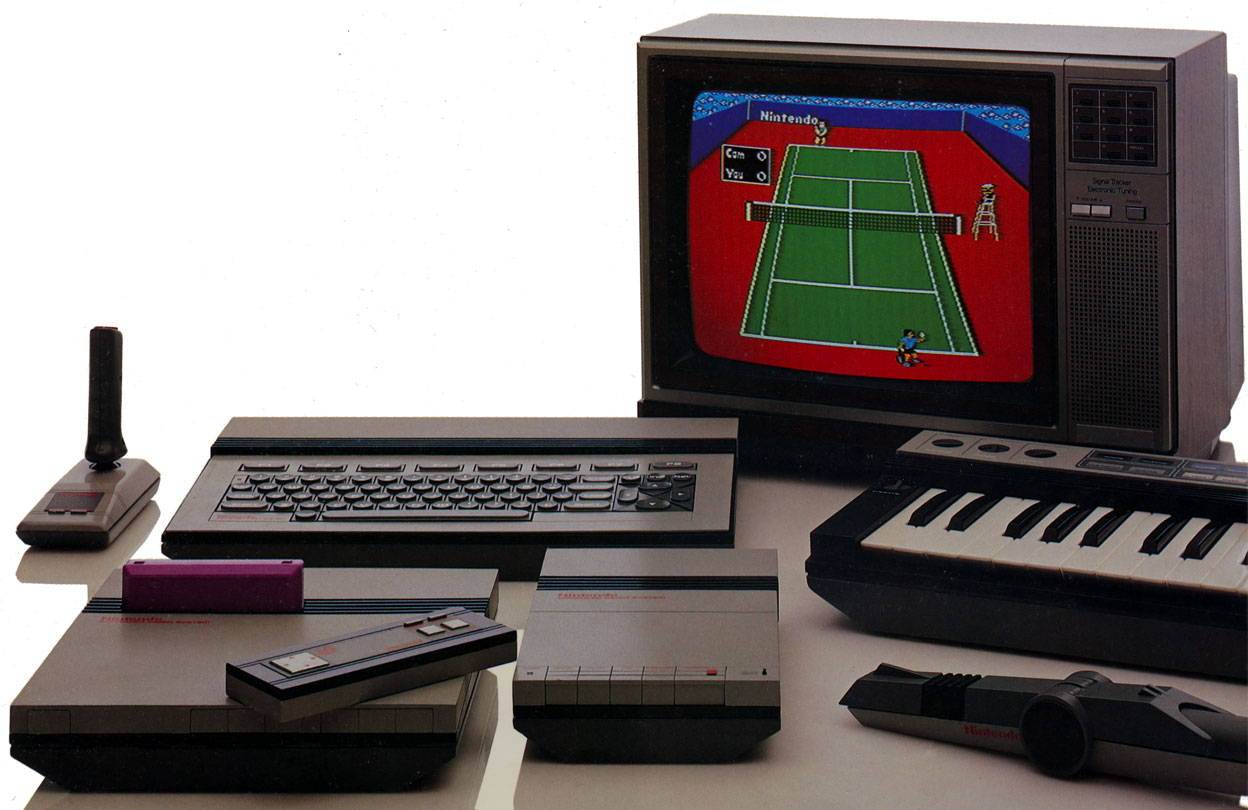
Nintendo Advanced Video System from early 1985 showing the original concept before the final NES design

What most people don’t realize is how close the NES came to never existing in America at all. Nintendo president Hiroshi Yamauchi had watched the Famicom dominate Japanese living rooms since 1983, but convincing American retailers to take a chance on video games after the industry collapse was a completely different challenge. Multiple presentations at trade shows had been met with polite rejection.

Nintendo’s brilliant solution? Don’t call it a video game system at all.

The NES Deluxe Set launched with R.O.B. (Robotic Operating Buddy), positioning the whole package as an advanced toy rather than a gaming console. At $179.99 – about $540 in today’s money – it wasn’t cheap, but it came with everything: the Control Deck, two controllers, the Zapper light gun, R.O.B., and two games (Gyromite and Duck Hunt).

ROB the Robotic Operating Buddy for the Nintendo Entertainment System from 1985

R.O.B. might have only worked with two games, but he served his purpose perfectly. The little gray robot was essentially a Trojan horse – a way to get past the gatekeepers at toy stores who had sworn off video games entirely. Suddenly, Nintendo wasn’t competing with failed gaming systems – they were selling the future of interactive entertainment. Store buyers who wouldn’t touch a “video game console” were intrigued by what looked like an advanced robotic toy system.

The New York Test Market

Nintendo didn’t roll the NES out nationwide right away. Instead, they chose New York City as their proving ground, placing units in select stores across Manhattan and the outer boroughs. The strategy was methodical and brilliant – Nintendo of America’s team, led by Minoru Arakawa, literally went store to store, offering retailers a deal they couldn’t refuse: Nintendo would stock the shelves themselves and buy back any unsold inventory.

The Nintendo Entertainment System Deluxe Set box from the 1985 launch

That holiday season, approximately 50,000 NES units sold in the New York metro area. It wasn’t a runaway hit, but it was enough. Nintendo had proven that Americans would buy video games again. By February 1986, the NES expanded to Los Angeles, Chicago, and San Francisco, eventually reaching nationwide distribution by September 1986.

Super Mario Bros.: The Game That Defined a Generation

While R.O.B. got Nintendo into stores, Super Mario Bros. is what kept us glued to our TV screens for hours. Released alongside the NES, this wasn’t just a game – it was a revelation.

The rarely-seen hybrid NES prototype from June 1985 that bridged the AVS and final NES designs

Before Mario, most video games felt like digital versions of pinball or Pong. Super Mario Bros. created an actual world. World 1-1 became as familiar to 80s kids as their own neighborhood streets. Every pixel of that opening level was perfectly crafted: the first Goomba teaching you about enemies, the first pipe teaching you about secrets, the first power-up showing you the magic of transformation.

Original Super Mario Bros game cartridge for the Nintendo Entertainment System released in 1985

The side-scrolling adventure format seems obvious now, but in 1985, it was revolutionary. Nintendo had figured out how to make exploration feel endless on a machine with just 2KB of RAM. The warp zones alone blew our minds – secret passages to entire worlds we hadn’t even dreamed existed. Designer Shigeru Miyamoto had created something that transcended the medium – Super Mario Bros. wasn’t just a game, it was a masterclass in level design that developers still study today.

The Zapper: Bringing the Arcade Home

The NES Zapper deserves its own chapter in gaming history. That gray (later orange) light gun transformed the living room television into a shooting gallery, and Duck Hunt became the gateway drug for an entire generation of gamers.

The NES Zapper light gun used to play Duck Hunt on the Nintendo Entertainment System

The technology behind the Zapper was elegantly simple. When you pulled the trigger, the screen would flash black for a single frame, then display a white rectangle where the duck was. A photodiode in the gun barrel detected the light change. If the barrel was pointed at the white rectangle – hit. If not – miss. And that laughing dog would mock you mercilessly. The Zapper worked with several other titles too, including Hogan’s Alley and Wild Gunman, but Duck Hunt remained the king. It shipped as part of the iconic Super Mario Bros./Duck Hunt dual cartridge, meaning nearly every NES owner had it.

The Living Room Revolution

The NES didn’t just change gaming – it changed how families used their living rooms. Before Nintendo, the TV was for watching shows together. After Nintendo, it became a battleground for screen time.

Nintendo's prestigious display at FAO Schwarz in New York City circa 1986 showcasing the NES to upscale consumers

Saturday mornings transformed from cartoon marathons into gaming sessions. Kids would wake up before dawn, not for Looney Tunes, but to get in a few rounds of Duck Hunt before parents claimed the television. The distinctive “click-click” of the Zapper gun became the soundtrack of weekend mornings across America.

Split-screen arguments became a new form of sibling rivalry. Who got to be Mario versus Luigi in two-player mode? How many lives did you really have left? These weren’t just games anymore – they were social experiences that defined playground conversations Monday through Friday.

The Nintendo Aesthetic

Everything about the NES was designed to feel premium and futuristic. The front-loading cartridge slot made inserting games feel like operating sophisticated machinery. The satisfying “thunk” when you pressed the power button suggested serious technology at work.

The original NES controller with its iconic rectangular design and directional pad

Even the controller was revolutionary. The iconic rectangular pad with its simple cross-shaped directional control and two action buttons became the template for gaming controllers for decades. No joysticks, no complex button layouts – just pure, intuitive control that anyone could master. Designer Gunpei Yokoi’s creation was so ahead of its time that the basic D-pad layout persists on every modern controller. The angular, minimalist design of the NES controller wasn’t just functional – it became one of the most recognizable icons in pop culture history.

The gray and black color scheme screamed “high-tech consumer electronics,” not “toy.” Nintendo had learned from Atari’s mistakes and created a product that looked like it belonged next to your VCR and stereo system.

The Launch Lineup Nobody Talks About

Super Mario Bros. and Duck Hunt get all the glory, but the NES launched with 17 titles in its first year. Games like Excitebike offered high-speed motocross thrills with a track editor that let you design your own courses. Ice Climber challenged you to ascend icy mountains while dodging Toppies and seals. Baseball, Tennis, and Golf brought sports into the digital age with a simplicity that made them instantly accessible.

Then there were the deeper cuts – Kung Fu, with its side-scrolling martial arts action, presaged the beat-em-up genre that would explode later in the decade. Wrecking Crew turned demolition into a puzzle game. And 10-Yard Fight proved that football could work as a video game, even if it took Tecmo Bowl a few years later to really nail it.

Beyond the Games: A Cultural Shift

The NES represented something bigger than entertainment – it was our first taste of interactive media. Before Nintendo, kids were passive consumers of television and movies. With the NES, we became active participants in digital stories.

This shift created the first generation of kids who grew up believing they could control their digital environment. Every time we guided Mario through the Mushroom Kingdom or blasted ducks with the Zapper, we were learning that technology could respond to our choices and creativity.

The NES also democratized gaming in ways that arcade culture never could. Suddenly, mastering a game wasn’t about having enough quarters – it was about dedication, pattern recognition, and pure persistence. Games like The Legend of Zelda taught us that patience and exploration could unlock incredible secrets. The gold cartridge alone was enough to make you feel like you were holding something sacred.

The Seal of Quality

One of Nintendo’s most impactful innovations had nothing to do with hardware or games. The Official Nintendo Seal of Quality was a licensing program that controlled which games could be released for the NES. While some criticized it as monopolistic, the seal ensured that the flood of garbage titles that had destroyed Atari’s reputation wouldn’t repeat itself on the NES.

Publishers had to meet Nintendo’s standards, and they were limited in how many titles they could release per year. This quality control approach meant that while the NES library was smaller than Atari’s had been, the average quality was dramatically higher. Consumers learned to trust that a game bearing the Nintendo seal would at least be playable – a radical concept in an industry that had nearly destroyed itself through oversaturation.

The Home Entertainment Evolution

Looking back, the NES launch in 1985 marked the beginning of the home entertainment revolution we’re still living through today. Nintendo proved that families would invest in dedicated gaming hardware, setting the stage for every console generation that followed.

The success of Super Mario Bros. showed that video games could tell stories and create emotional connections with players. The popularity of Duck Hunt demonstrated that simple, intuitive gameplay could bring families together around the television.

Most importantly, the NES established video games as a legitimate form of entertainment, not just a fad for kids or tech enthusiasts. By 1987, the NES had sold over 3 million units in North America, proving that interactive entertainment was here to stay.

The Legacy Lives On

For those of us who lived through the NES era, October 18, 1985, represents more than a product launch – it’s the day our digital childhood began. The console that started with R.O.B. and Duck Hunt eventually gave us The Legend of Zelda, Metroid, Mega Man, and dozens of other franchises that still dominate gaming today.

Official Nintendo promotional photograph of the Nintendo Entertainment System used during the 1986 national launch

The gray box under our TVs taught us that technology could be magical, that perseverance could overcome any challenge, and that the best entertainment happens when we’re actively engaged rather than passively watching.

Nearly four decades later, as we watch our own kids discover gaming through modern consoles, it’s impossible not to smile at how it all started. With a robot buddy, a plumber named Mario, and the belief that a simple gray box could change everything.

And you know what? It absolutely did.

Similar Posts

Leave a Reply

Your email address will not be published. Required fields are marked *