Strength Shoes: 7 Things Every 90s Baller Remembers
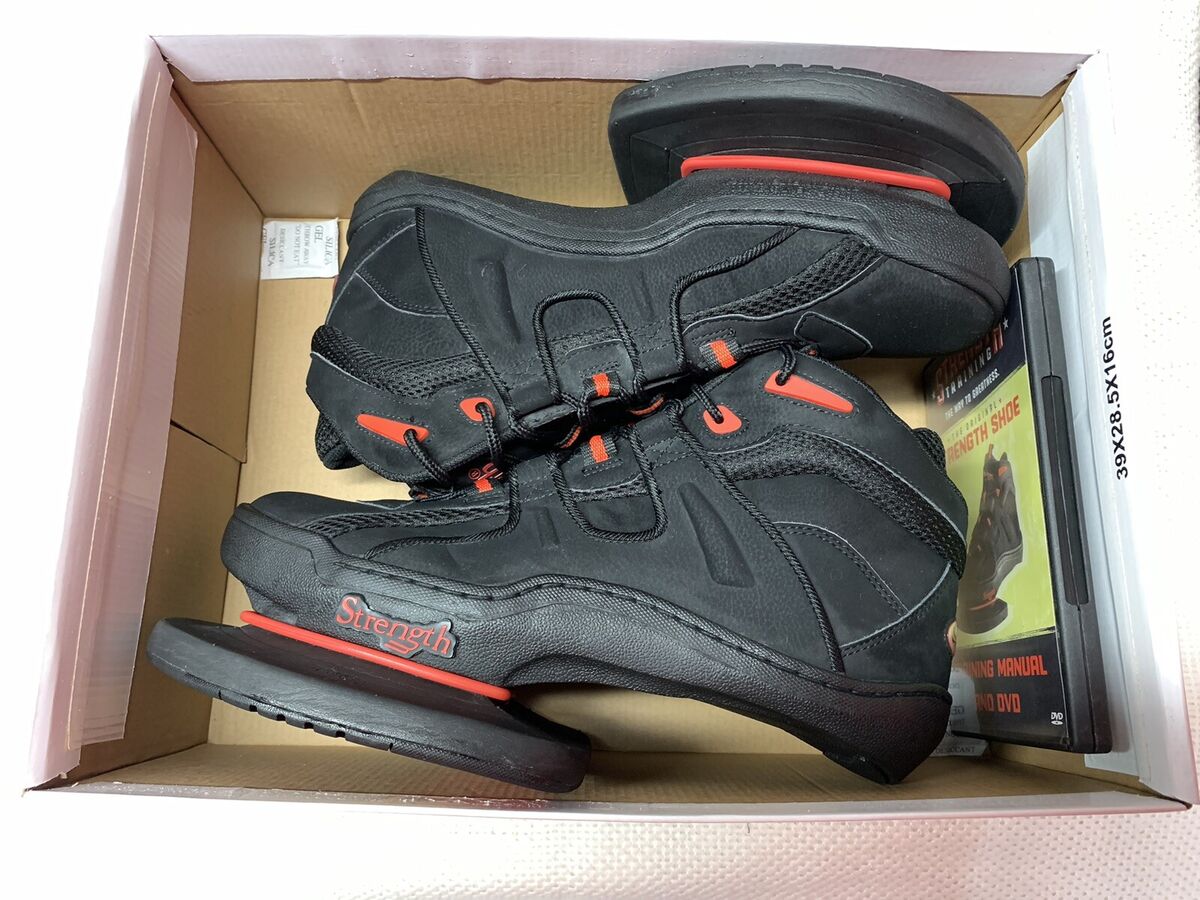
Strength Shoes were the 90s basketball training obsession that promised every gym-rat and blacktop baller a ticket to Dunk City. They were those wild-looking high-tops with a thick rubber platform bolted to the front, forcing you onto your tiptoes 24/7 — and half a generation of basketball kids begged their parents for a pair.
Every issue of Slam, HOOP, and Basketball Digest had the ad staring back at you. Some dude in a gym throwing down ridiculous dunks, the shoe’s distinctive wedge sole clearly visible, and the bold claim: “Add up to 10 inches to your vertical jump.” Ten inches. That was the magic number. That was the dream.
What Exactly Were Strength Shoes?
The Strength Shoe was created by a guy named Bill Jennings and commercialized through a company called Athletic Training Inc. (ATI) in the late 1980s. The concept was deceptively simple: build a thick rubber or foam platform onto the front of a regular high-top sneaker, extending about an inch or more off the ground under the ball of your foot. The heel? No support. Touch the floor, maybe. Maybe not.
The idea was rooted in a real biomechanical principle. By forcing you to walk, run, and jump while balanced on your forefoot, the shoes put your calves and Achilles tendon under constant eccentric load. More work. More muscle. More vertical. The pitch was basically: wear these while doing plyometric drills, and your calves turn into springs. Your springs launch you. You dunk. Simple.
ATI sold the shoes with a VHS training tape (obviously), an instruction manual, and later a DVD as the format wars played out. The program was an 8-week plyometric regimen — box jumps, lateral hops, single-leg skips — all performed on those platforms. If you did everything right, the commercial implied, you’d be windmill dunking by Labor Day.
The Infomercial That Sold a Generation
You can’t tell the Strength Shoes story without bowing down to the infomercial. This was the golden era of late-night TV pitches — the same cultural moment that brought us Hypercolor shirts and Ab Rollers and magnetic mattress pads — and ATI knew exactly how to play it.
The formula was perfect. Open on a gym. Cut to slow-motion dunks, each one more insane than the last. Get a coach on camera — ATI famously used real coaches including legendary trainer Bob Hurley — talking about explosive power like it was gospel. Throw in some before-and-after testimonials from kids who went from “couldn’t touch the rim” to “throwing down reverse slams.” Slap a 1-800 number on the screen and let the phones ring.
The infomercial aired constantly on cable. ESPN2 at 2am. TBS on a Tuesday afternoon. You’d see it before school, after school, during school if your teacher rolled in the TV cart. Every basketball kid watched it with hungry eyes. Every parent watched their kid watching it with an expression that said: how much does this cost?

The Science (and the Skeptics)
Here’s where it gets complicated. The underlying theory — that eccentric calf loading builds explosive power — isn’t completely wrong. Calf strength and Achilles tendon elasticity genuinely do contribute to jumping ability. Elite jumpers like Michael Jordan famously had exceptional calf development. The question was whether strapping a foam wedge to your shoe was the optimal way to develop that quality.
Sports science researchers were skeptical from the jump (pun intended). The main critiques were:
- Calves contribute maybe 10–20% to vertical jump. The primary drivers of jumping are your quads, glutes, and hip extensors. Training only your calves while ignoring triple extension was leaving the big gains on the table.
- The movement pattern was wrong. Jumping requires coordinated firing of ankles, knees, and hips simultaneously. Training exclusively on your toes could actually groove a faulty pattern that transferred poorly to real-game jumping.
- Injury risk was real. All that eccentric Achilles loading without proper progression caused a wave of tendonitis and strains. Some doctors flagged the shoes as dangerous for developing athletes.

A 1994 study published in the Journal of Applied Sport Science Research examined Strength Shoes versus regular plyometric training and found the shoes offered no significant additional vertical jump improvement over standard plyometrics performed in normal footwear. The plyometric exercises — box jumps, depth jumps, bounding — were doing the work. The platform was along for the ride.
That said, plenty of people swore by them. Reddit nostalgia threads are full of guys who claim they gained 3–4 inches of vertical after an 8-week program. Whether the shoes or the training program deserves credit is a debate that’s still going on in sports forums today. The truth is probably somewhere in the middle: the shoes forced you to actually do the training program, and the training program worked.
Jumpsoles: The Cheaper Competitor
Where ATI sold you the whole shoe, Jumpsoles sold you just the platform. They were rubber/foam attachments that strapped onto your existing kicks, converting whatever you had into an ersatz Strength Shoe for about half the price. They launched around 1994 and became nearly as famous as the original.

The Jumpsoles ad copy was practically identical to ATI’s. Same promises, same shirtless athletes, same before-and-after claims. They even had their own training VHS — “Proprioceptor” training, they called it. Proprioception is the body’s sense of its own position in space, and the Jumpsoles people had built an entire marketing mythology around it. Word of the day, every day, in every catalog and ad they ran.
Both brands advertised endlessly in the back pages of every basketball magazine of the era. If you still have issues of Slam or Dime from the mid-90s, flip to the back. They’re there. Right next to the ankle weight ads and the foam grip dribbling gloves and whatever else promised to turn you into Shawn Kemp by next season.
Who Actually Bought These Things?
Every Gen X basketball kid falls into one of three groups when it comes to Strength Shoes. The ones who had them. The ones who desperately wanted them. And the ones who knew someone who had them and spent entire afternoons at their house trying them on.

The shoes retailed for around $150–200 at a time when that was serious money. Not quite Air Jordan money, but serious money. Some school programs bought them in bulk for their players. More often, a kid would save up birthday money and holiday cash, clip the coupon from the magazine, and mail-order a pair. Remember mail order? The two-to-four-week wait for shoes that might change your basketball life forever?
The experience of wearing them was immediately humbling. Your gait was instantly wrecked — you waddled. Walking upstairs was an adventure. Running felt like running in ski boots. The first workout left your calves absolutely destroyed for three days. This was, of course, also the point. If it hurt, it was working. That was the logic, anyway.
A small percentage of users put in the full 8-week program religiously and reported real gains. A larger percentage wore them for two weeks, got intimidated by the soreness and the awkward movement, and let them gather dust. A fair number pulled something in their ankle and put them in the closet forever. The shoes weren’t subtle about demanding commitment.
The Legacy: Debunked, But Never Forgotten
By the early 2000s, sports science had moved on. Periodized strength training, depth jumps in regular shoes, Olympic lifting — these became the gold standard for jump training. The vertical jump industry grew up, got research-backed, and quietly left the platform shoe in the dust.

ATI still sells Strength Shoes today — you can find them on Amazon and through specialty retailers. Jumpsoles are still available from jumpusa.com. They’re niche products now, mostly bought by nostalgic Gen Xers rediscovering them and genuinely curious athletes who stumble across the old infomercials on YouTube. Original pairs in good condition show up on eBay and Etsy, often going for more than they cost new.
The cultural legacy is something different from the product legacy. Strength Shoes represent a specific kind of 90s optimism — the belief that the right gadget, the right system, the right 1-800 purchase could unlock something extraordinary in you. The same energy that sold questionable sporting equipment by the truckload to people who just wanted to be better athletes.
Nobody’s apologizing for wanting to dunk. That’s universal. That’s eternal. The platform shoe was just one generation’s particular answer to that universal need.

Do Strength Shoes Actually Work?
Straight answer: the plyometric training programs that came with them worked. The shoes themselves? The jury is still out, but the consensus leans toward “not necessary, possibly counterproductive, occasionally injurious.” The exercises were real. The platform was marketing genius.
But here’s what nobody tells you: even if the shoes didn’t deliver 10 inches of vertical like the infomercial promised, they got millions of kids doing plyometric training at a time when nobody else was explaining what plyometrics even were. Box jumps, bounds, depth drops — these were legitimately good exercises. The platform just made sure you couldn’t skip them without looking like a fool.
So maybe that’s the real Strength Shoes story. A product that was part gimmick, part legitimate training tool, delivered in one of the greatest marketing packages the sports world has ever seen — an infomercial so compelling that 30 years later, people still talk about it. People still look them up. People still buy used pairs on eBay for nostalgia, or hope, or some combination of both.
If you had a pair, you already know. If you didn’t — you wanted them. Don’t even pretend otherwise.
Sources
- Matava, M.J., et al. (1994). “Plyometric training with the Strength Shoe: effects on vertical jumping.” Journal of Applied Sport Science Research.
- JumpUSA — Jumpsoles Official Product Page
- HoopsKing — Jump 99 Plyometric Strength Training Shoes