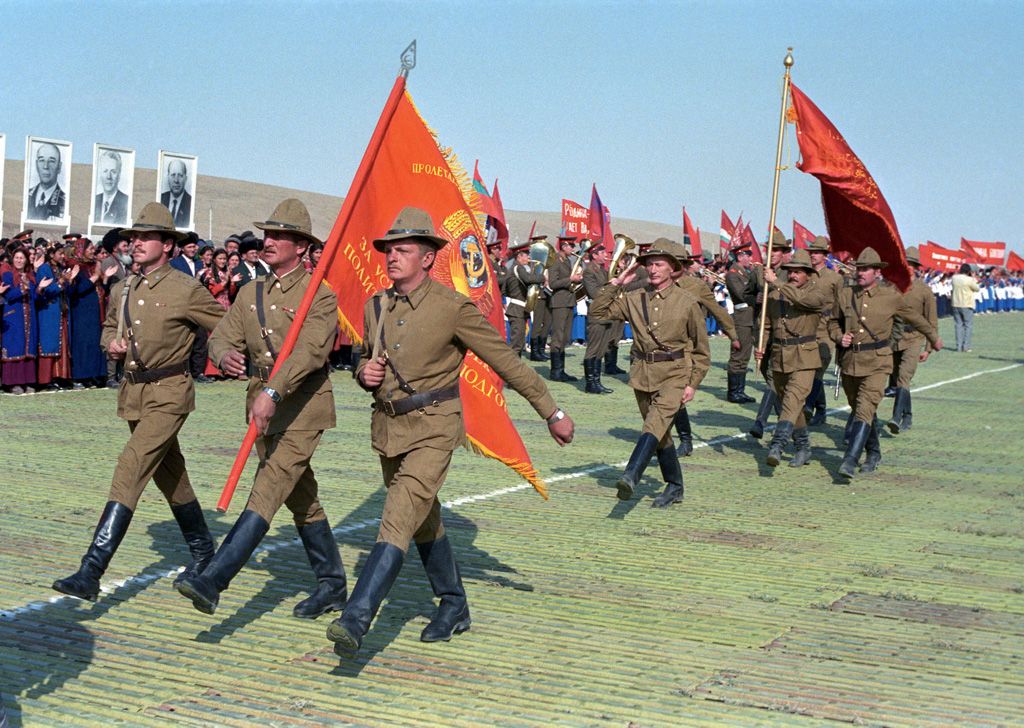
Soviet troops withdrawing from Afghanistan in 1988
|

Soviet Exit from Afghanistan: 7 Shocking Cold War Facts From May 15, 1988

On May 15, 1988, Soviet tanks rolled across the Friendship Bridge at Termez and crossed back into the USSR. After nine years of brutal war in Afghanistan — a conflict the world had nicknamed Russia’s Vietnam — Mikhail Gorbachev finally pulled the plug. The first phase of the Soviet exit from Afghanistan had begun, and the world was watching.

It was a Cold War moment frozen in time, one of those Polaroid-clear flashpoints between the era of Reagan saber-rattling and the era of glasnost. Here are 7 wild facts about the day the Soviets started walking away from the war that helped end their empire — and the messy, fascinating Cold War context that surrounded the long retreat.
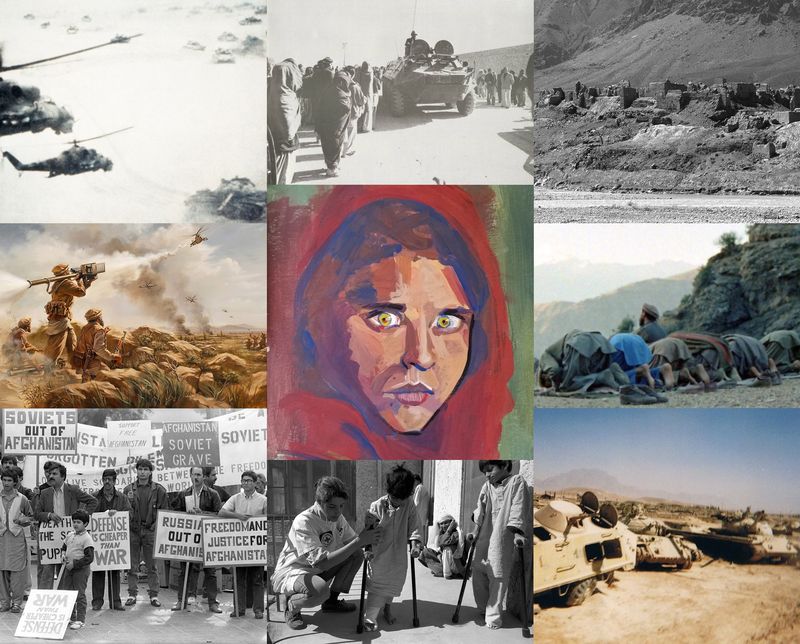
Soviet-Afghan War scenes 1979 to 1989

1. It Took a Peace Deal Three Countries Couldn’t Enforce

The withdrawal was triggered by the Geneva Accords, signed April 14, 1988 — barely a month before the first columns rolled out. The U.S., USSR, Pakistan, and the Soviet-backed Afghan government all signed. The Mujahideen, the actual fighters across most of the country, were never invited to the table and refused to accept any of the terms. The result was almost predictable: the foreign troops left on schedule, but the war on the ground kept going long after the last Soviet soldier crossed the bridge.

The Accords were a paper face-saving exercise more than a real settlement. They locked in non-interference clauses that the U.S. and Pakistan continued to ignore, kept supplying the Mujahideen, and committed Moscow to a fixed timetable that gave Gorbachev political cover at home. Diplomats called it a triumph of negotiation. Afghans called it the start of another phase of the same war.


Soviet armored column leaving Afghanistan May 1988

2. The War Had Already Cost the USSR 15,000 Lives

By the time the withdrawal began, an estimated 13,000 to 15,000 Soviet soldiers had died and tens of thousands more had been wounded. For context: that’s more dead than the United States lost in the first five years of Vietnam. The Soviets entered Afghanistan in December 1979 expecting a quick stabilization mission to prop up a friendly communist government. Nine years later, they were the ones being destabilized.

The casualty figures are still disputed today. The official Soviet number — 14,453 killed in action — was almost certainly underreported, and didn’t count men who later died of disease, suicide, or wounds back home. The “Afghantsy,” as Soviet veterans of the war became known, returned to a country with no parade, no monument, and very little acknowledgement. Many of them spent years in informal veterans’ associations, swapping survival stories and pushing for benefits that the late-stage USSR couldn’t deliver.

First stage of Soviet troop withdrawal from Afghanistan

3. Gorbachev Called It “A Bleeding Wound”

Mikhail Gorbachev, in his own words at a 1986 Communist Party Congress, described the Afghan intervention as “a bleeding wound.” It wasn’t just a moral judgment — it was an economic diagnosis. His reform programs of glasnost (openness) and perestroika (restructuring) needed budget room and political bandwidth. Afghanistan was draining billions of rubles a year and chewing through political capital that Gorbachev needed for the bigger fight at home.

The withdrawal wasn’t only military strategy. It was economic survival. By 1988 the Soviet treasury was groaning under the weight of falling oil prices, an arms race with Reagan, and a domestic economy that no longer made sense. Cutting the Afghan war loose was one of the few decisions Gorbachev could make that produced an instant balance-sheet improvement. The political cost — admitting a Soviet defeat — was the price he was willing to pay.

Soviet unit photographed before withdrawal from Afghanistan

4. The Withdrawal Had Two Phases — and Almost Stalled

Phase 1 ran May 15 to August 15, 1988, pulling out roughly half the force — about 50,000 troops. Phase 2 began in November and wrapped on February 15, 1989, the date General Boris Gromov became, by his own theatrical account, the last Soviet soldier to cross the Friendship Bridge back into Soviet territory. He carried a bouquet of flowers and posed for the cameras. The Kremlin needed an image. They got one.

Between the two phases, the withdrawal almost stalled. Najibullah’s government in Kabul lobbied hard for a slower pace, fearing collapse the moment the Soviets were gone. Hardliners in Moscow tried to keep at least an air-power detachment in place. Gorbachev held the line. The schedule was fixed, the trains and trucks rolled, and the Soviet flag came down in Kabul on schedule — even as the war for the country was very much still on.

Afghan Mujahideen fighters during the Soviet-Afghan War

5. Reagan Was Watching — and Quietly Winning

By May 1988, Ronald Reagan had already signed the INF Treaty with Gorbachev (December 1987), a landmark agreement that eliminated an entire class of nuclear missiles. Behind the warm summit photos, the U.S. had been covertly supplying the Mujahideen with FIM-92 Stinger missiles since 1986. Those shoulder-fired anti-aircraft weapons changed everything in Afghan skies. Soviet helicopters and ground-attack jets could no longer dominate at low altitude. Pilots had to fly higher and harder, accuracy collapsed, casualties climbed.

The CIA’s Operation Cyclone, which funneled the weapons and money through Pakistan’s ISI, became one of the most expensive covert operations in U.S. history — over a billion dollars by some accounts. Reagan never had to fire a shot. He just had to keep the pipeline open. The Stinger arrival in late 1986 is often cited as the turning point that convinced the Soviet General Staff that the war could not be won at any acceptable cost.

The blowback would come later. The networks, training pipelines, and weapons stockpiles that the U.S. helped build in the 1980s outlived the Soviet defeat. By the late 1990s and into the 2000s, some of the same fighters and infrastructure would be on the other side of the rifle from American troops. May 15, 1988 was the start of the Soviet exit — and, in a darker way, the start of the long American entanglement that followed.

Mujahideen fighters at prayer in Kunar Valley 1987

6. The Soviets Left Behind a Functioning Army — For a While

The Soviet-backed Afghan government under Mohammad Najibullah didn’t collapse the moment the Russians left. It held on for three years after the last Soviet soldier crossed the bridge — surviving longer than almost anyone in Washington predicted. Soviet aid, weapons stockpiles, and a battle-hardened Afghan army kept Najibullah in Kabul through 1992. He fell only when the Soviet Union itself stopped existing and the rubles stopped flowing.

Najibullah was eventually captured by the Taliban during their 1996 march into Kabul. He was tortured and executed, his body left hanging from a traffic post outside the presidential palace. The vacuum the Soviets left behind defined Afghanistan’s next 30 years — civil war, the Taliban era, the U.S. invasion in 2001, two decades of NATO occupation, and the Taliban’s return in 2021. Every chapter of that history traces a line back to May 15, 1988.

Soviet soldiers welcomed home after Afghanistan withdrawal

7. It Was the Beginning of the End of the Cold War

Historians often point to May 15, 1988 as one of the quiet turning points of the late Cold War. Within 18 months, the Berlin Wall had fallen. Within three years, the Soviet Union itself had dissolved into 15 separate states. The Afghan humiliation accelerated Gorbachev’s reforms, which accelerated the unraveling of Soviet authority across Eastern Europe, which accelerated everything else.

It’s tempting to draw a single straight line from the Friendship Bridge to the Brandenburg Gate, but the real story is messier. The Afghan war exposed limits — military, economic, ideological — that the Soviet system had been hiding for decades. Once those limits were visible, the rest came down faster than anyone expected. When those tanks crossed the bridge on May 15, 1988, they weren’t just retreating from a war. They were retreating from an empire, and the empire’s clock had already started ticking.

The Long Echo of May 15, 1988

Pop the cassette of the late 1980s back in for a second. Reagan and Gorbachev shaking hands at summits. Top Gun in theaters. Bon Jovi on MTV. And, in the middle of all of it, a column of Soviet armor rumbling out of Kandahar and Jalalabad, headed for the bridge at Termez. The Cold War wasn’t over yet — but on May 15, 1988, you could already see the cracks.

Did you watch the news the day the Soviets started walking away from Afghanistan? Were you in school, in basic training, glued to a black-and-white television in some corner of the world? Drop your memory in the comments — these are the kinds of stories that don’t make it into the documentaries.

Sources

  1. Britannica: Soviet invasion of Afghanistan — Background on the 1979 invasion and 1988–89 withdrawal.
  2. U.S. State Department Office of the Historian: The Geneva Accords — Primary source on the April 1988 agreement.
  3. CIA Reading Room — Declassified documents on Operation Cyclone and Stinger missile deployment.
  4. Radio Free Europe / Radio Liberty archive — Contemporary reporting on the Soviet withdrawal and Najibullah government.
  5. Wikimedia Commons: Soviet withdrawal from Afghanistan — RIAN archive photographs of the May 1988 withdrawal.

Similar Posts

Leave a Reply

Your email address will not be published. Required fields are marked *