Breakin’ 2 Electric Boogaloo: 5 Reasons the 1984 Films Still Rule
If you were alive in 1984 and went to the movies even once, you know exactly what happened that spring and summer. Cardboard got more important. Every linoleum floor became a stage. Somebody in your neighborhood was spinning on their head — or trying to — and getting away with it because the entire country had just discovered breakdancing, and the movies that lit the fuse were Breakin’ and its impossibly fast sequel, Breakin’ 2: Electric Boogaloo. Both dropped the same year. Both made money that Cannon Films had absolutely no right making. And both burned themselves into the cultural memory of an entire generation in a way that’s genuinely hard to explain to anyone who didn’t live through it.
How Breakin’ (1984) Happened So Impossibly Fast
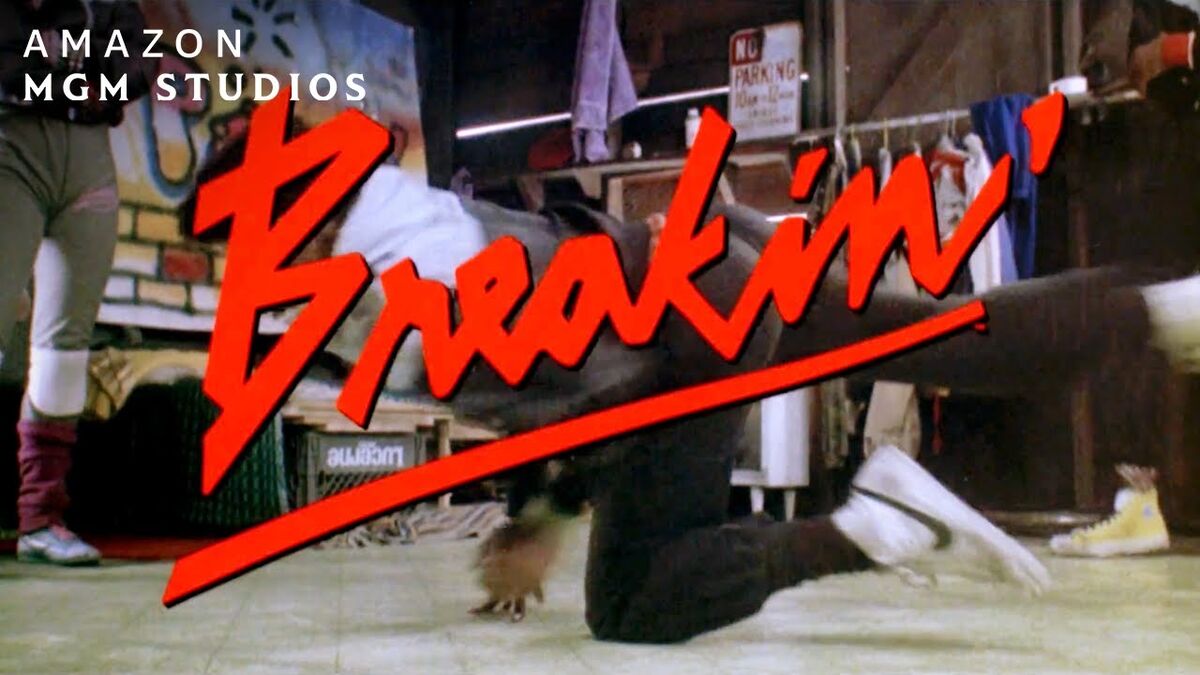
Here’s the thing about Breakin’: the people who made it were essentially racing against time. By early 1984, breakdancing had blown up on the streets of Los Angeles, New York, and everywhere in between. The Cannon Group — the Israeli production duo of Menahem Golan and Yoram Globus, who specialized in making movies faster and cheaper than anyone thought possible — smelled an opportunity [1].
Production on Breakin’ cost roughly $1.2 million and moved at warp speed. Director Joel Silberg shot it in three weeks. The film was based directly on a 1983 documentary called Breakin’ ‘n’ Enterin’, which chronicled the real-life hip hop scene at the Radio-Tron club in LA’s MacArthur Park neighborhood [2]. Golan and Globus didn’t just draw inspiration from the documentary — they straight-up cast the same people. Many of the dancers who appeared in Breakin’ ‘n’ Enterin’ walked directly onto the set of Breakin’.
The result hit theaters on May 4, 1984, and made $38.7 million on a $1.2 million budget [2]. That is not a typo. The movie made more than 30 times its production cost. Critics hated it. The teenagers who filled those theaters did not care even slightly.

The Cast That Made Breakin’ Work: Ozone, Turbo, and Special K
Three performances make Breakin’ worth watching forty-plus years later, and they’re all in the names you already know. Adolfo “Shabba Doo” Quiñones plays Ozone, the street-smart crew leader who doesn’t believe in selling out to the mainstream dance world. Michael “Boogaloo Shrimp” Chambers plays Turbo, his partner, whose rubber-limbed style of popping and electric boogaloo was genuinely unlike anything audiences had seen on a movie screen. And Lucinda Dickey plays Kelly “Special K” Bennett, the classically trained dancer who finds her people when she wanders off Venice Beach and into their world [3].
Shabba Doo was the real deal — a legitimate street dancer and choreographer who had been grinding on the Los Angeles scene for years. Boogaloo Shrimp’s body-isolation style, those impossible moves where his limbs seemed to exist independently from the laws of physics, was something he’d developed himself. These weren’t actors pretending to dance. They were dancers who learned to act well enough. The difference is visible in every frame.

The plot is pure wish-fulfillment: Kelly quits her uptight dance instructor (who sniffs at breakdancing as low-class), teams up with Ozone and Turbo to form a crew, and ultimately — in one of cinema’s great “screw you, stuffed shirts” moments — enters a formal dance competition, shows up in tuxedos, then rips off their sleeves mid-performance to win with pure breakdancing energy. It’s corny as hell. It absolutely works. The judges give them a standing ovation. You will too, probably.
And then there’s the cameo that nobody in 1984 fully understood the significance of: a young MC named Ice-T, making his first ever film appearance, as a club emcee at the Radio-Tron [2]. In 1984, Ice-T was just a guy who could rap fast in a low-budget dance movie. In the years that followed, he would become one of the foundational voices of West Coast hip hop, star in New Jack City, and eventually spend twenty-plus years solving crimes on Law & Order. The through-line from Breakin’ to Detective Odafin Tutuola is real, and it’s one of the more delightful historical footnotes in 80s cinema.

The Soundtrack: Ollie & Jerry and the Song That Was Everywhere
You want to talk about the music? Let’s talk about the music. The Breakin’ soundtrack was a legitimate cultural event in its own right. The centerpiece was “Breakin’… There’s No Stopping Us” by the duo Ollie & Jerry (Ollie E. Brown and Jerry Knight), a song that sounds like the musical equivalent of cardboard on a sidewalk — pure momentum, pure joy, and absolutely inescapable during the summer of 1984 [4]. The Bar-Kays contributed “Freakshow on the Dance Floor,” Hot Streak delivered the UK Top 20 hit “Body Work,” and the whole thing felt like a specific moment in time captured perfectly.
The soundtrack for Breakin’ reached #21 on the Billboard 200, which for a low-budget dance movie was remarkable [4]. When the music industry is paying attention to your movie’s album, something is working. The Breakin’ soundtrack wasn’t just background noise — it was part of the experience, the thing your older sibling played in the basement while pretending to b-boy.
Breakin’ 2: Electric Boogaloo — The Sequel Hollywood Made in Seven Months
Here’s where the story gets genuinely insane. Breakin’ opened in May 1984. Breakin’ 2: Electric Boogaloo opened in December 1984 [1]. Seven months. The entire movie — pre-production, casting, shooting, post-production, distribution — in seven months. Golan and Globus were not messing around. They saw the box office, smelled a sequel, and put the machine into overdrive.

Director Sam Firstenberg (who also did Ninja II: Shadow of a Ninja for Cannon — these guys were workhorses) took the helm, the budget bumped up slightly to $3 million, and the whole original crew came back. Lucinda Dickey, Shabba Doo, Boogaloo Shrimp — all present. Ice-T came back too, because Ice-T was apparently having a very good year [1].
The plot this time involves the gang trying to save a community recreation center from a developer who wants to tear it down and build a shopping mall. Yes, it’s the same basic structure as the first movie (underdog dancers vs. the establishment), just with different furniture. And yes, it works for exactly the same reasons the first one worked: the dancing is extraordinary, the energy is infectious, and nobody told Boogaloo Shrimp he was in a B-movie so he just kept performing like his life depended on it.
The film grossed $15.1 million against a $3 million budget [1]. Critics were not impressed — the Rotten Tomatoes score sits at 29% based on seven reviews — but Roger Ebert gave it three stars, which tells you everything you need to know about the gap between what critics thought and what audiences experienced [1].

“Electric Boogaloo”: The Subtitle That Conquered Popular Culture
Something unexpected happened to the title of the sequel in the years after its release. The phrase “Electric Boogaloo” — a reference to a specific funk-influenced street dance style developed in Fresno, California in the late 1970s [5] — escaped from its original context and became one of the most widely used joke subtitles in English-language culture. Somewhere along the line, “2: Electric Boogaloo” became shorthand for any unnecessary, slightly ridiculous sequel. You’ve seen it everywhere — “X 2: Electric Boogaloo” is its own linguistic template now.
The Atlantic, the Oxford English Dictionary, Grantland, and dozens of other publications have all noted this cultural phenomenon [1]. The band Five Iron Frenzy literally named their fourth album Five Iron Frenzy 2: Electric Boogaloo. There’s a documentary about Cannon Films called Electric Boogaloo: The Wild, Untold Story of Cannon Films. It’s Always Sunny in Philadelphia named an episode “Chardee MacDennis 2: Electric Boogaloo.” At this point, the phrase is more famous than the movie it came from, which is a strange form of immortality but immortality nonetheless.
What These Movies Got Right About 1984 Hip Hop Culture
It’s easy to condescend to the Breakin’ films from forty years of distance. They’re low-budget. The acting is inconsistent. The plots are thin. But there’s something these movies captured that bigger-budget productions of the era completely missed: the actual feeling of early hip hop culture in Los Angeles. The Radio-Tron club was a real place. The dancers were real people from that scene. The music was current, not a pastiche of what someone in a studio thought street music sounded like.

The Breakin’ films were competing directly with MGM’s Beat Street (1984) and Krush Groove (1985) for the same audience [6]. Where Beat Street was the more critically respected New York hip hop movie — set in the Bronx, backed by Harry Belafonte, with a more serious tone — Breakin’ was the L.A. party movie. Less prestige, more fun. The debate over which was “better” is a genre argument that has been going on since 1984 and will continue indefinitely. The correct answer is that both existed and both mattered.
What makes the Breakin’ films historically interesting is their relationship to the west coast hip hop story. Los Angeles wasn’t New York — it had its own scene, its own style, its own economic geography. The Venice Beach boardwalk setting of the first film captured something specific: the way early hip hop culture had crossed from East Coast to West Coast and mutated into something new, something sun-bleached and colorful and uniquely Californian. You feel it in every outdoor sequence.
Boogaloo Shrimp: The Performance You Can’t Forget
If there’s one reason to watch both movies in 2024, it’s Michael “Boogaloo Shrimp” Chambers. The man’s physical vocabulary was unlike anything else on screen in that era. Where most movie dance sequences of the early 80s were filmed conventionally — medium shots, standard coverage — the best sequences in the Breakin’ films get out of the way and just let Chambers move. His body does things that seem anatomically implausible. His popping and locking, his isolations, the way he could make individual body parts appear to move independently of each other — these weren’t just good dancing moves. They were a new kind of movement language arriving on screen for the first time.

Chambers trained on the streets of Fresno, California, studying under Sam Solomon (known as “Boogaloo Sam”), the creator of the electric boogaloo style [5]. He was 19 years old when he shot Breakin’. The nickname “Shrimp” was a childhood name that stuck. Everything else is just pure talent and grinding.
The influence of Boogaloo Shrimp’s performance in these films on subsequent generations of dancers, choreographers, and filmmakers is impossible to fully measure. Every music video that features robotic isolation dance, every commercial where someone pops and locks, every stage performance incorporating electric boogaloo elements — all of it traces back, at least partially, to what Michael Chambers was doing on Venice Beach in 1984.
The Cannon Films Legacy
It’s worth understanding what The Cannon Group was in 1984, because the story of these movies is inseparable from the story of Golan and Globus. Menahem Golan and Yoram Globus were Israeli cousins who bought the struggling Cannon Films in 1979 and turned it into one of the most prolific (and polarizing) production companies in Hollywood history [7]. Their formula: make movies fast, spend as little as possible, market aggressively, and trust that audiences would show up for action and spectacle regardless of critical opinion.
The Breakin’ films were, in an interesting way, the last gasp of the original Cannon-MGM/UA distribution relationship. Breakin’ is considered the final financially profitable film released under that arrangement — the deal collapsed over Cannon’s unrelated Bolero, and after that, Cannon distributed its own films [2]. So in a weird historical footnote, the movie that made 30x its budget on a breakdancing premise also closed a chapter in Hollywood distribution history.
The Breakin’ films were followed by Cannon’s Rappin’ (1985) — sometimes marketed as Breakdance 3 — though with a completely different cast and story. Ice-T is the only connection between all three films, which should tell you something about both Ice-T’s work ethic in 1984-1985 and Cannon’s approach to continuity.
Should You Watch These Movies in 2024?
Yes. Absolutely yes. Here is the honest case: Breakin’ is a time machine. It takes you to a specific cultural moment — Los Angeles, 1984, hip hop culture arriving at a mainstream crossroads — with a fidelity that more expensive, more prestigious films of the era couldn’t match. The dancing is historically significant. Boogaloo Shrimp’s performance is genuinely extraordinary. Ice-T’s cameo is a piece of pop culture history. The soundtrack is a legitimate banger.
Breakin’ 2: Electric Boogaloo is marginally sillier but also marginally more fun, in the way that all good sequels are willing to be a little more themselves than their predecessors. The community center plot gives the film a genuine stakes structure. The dance sequences are bigger and more ambitious. And the phrase “Electric Boogaloo” alone has generated more cultural value than the entire production budget could have predicted.
Both films are available streaming. Shout! Factory released them as a double feature Blu-ray in 2015 [1]. They hold up better than you’d expect — not because the filmmaking is sophisticated, but because the culture they’re documenting was real, and real things have a way of resonating even through decades of accumulated irony.
If you grew up watching these movies, revisiting them is an experience — you’ll see things you were too young to appreciate in 1984, like the actual quality of the dancing, and things that are exactly as you remembered them, like the raw joy of watching people do something spectacular with nothing but their bodies and a good beat. That combination is timeless. Golan and Globus knew it. Venice Beach knew it. Your eleven-year-old self definitely knew it.
For more 80s movie nostalgia, check out our look at Michael Jackson’s Thriller era and the moonwalk moment that defined the decade, or dive into our roundup of the best 80s movies that still hold up today. And if you want more great 80s music and movie culture, the Thriller era breakdown covers how MJ was literally changing pop culture in the same year Breakin’ hit theaters.
Watch: Breakin’ 2 — Electric Boogaloo (1984)
Sources
- Wikipedia: Breakin’ 2: Electric Boogaloo — Production details, box office, cast, and cultural legacy of the subtitle
- Wikipedia: Breakin’ (1984) — Full production history, Ice-T debut, budget and box office figures
- IMDB: Breakin’ (1984) — Cast, crew, and trivia for the original film
- Billboard: Breakin’ Soundtrack — Chart performance and track listing
- Wikipedia: Electric Boogaloo (Dance) — Origins of the electric boogaloo style and Boogaloo Sam
- IMDB: Beat Street (1984) — The competing New York hip hop film released the same year
- Wikipedia: The Cannon Group — History of Golan-Globus productions and Cannon Films