On This Day: May 26, 1990 — The Week Women Owned the Entire Billboard Top 5
On the morning of May 26, 1990, radio DJs across America were spinning a chart that had never existed before. Five songs sat at numbers one through five on the Billboard Hot 100. Five songs. All by women. It sounds like a footnote, but in the pop landscape of 1990 — an industry still largely gatekept by male executives, male producers, and the lingering assumption that women were novelty acts — it was a detonation.
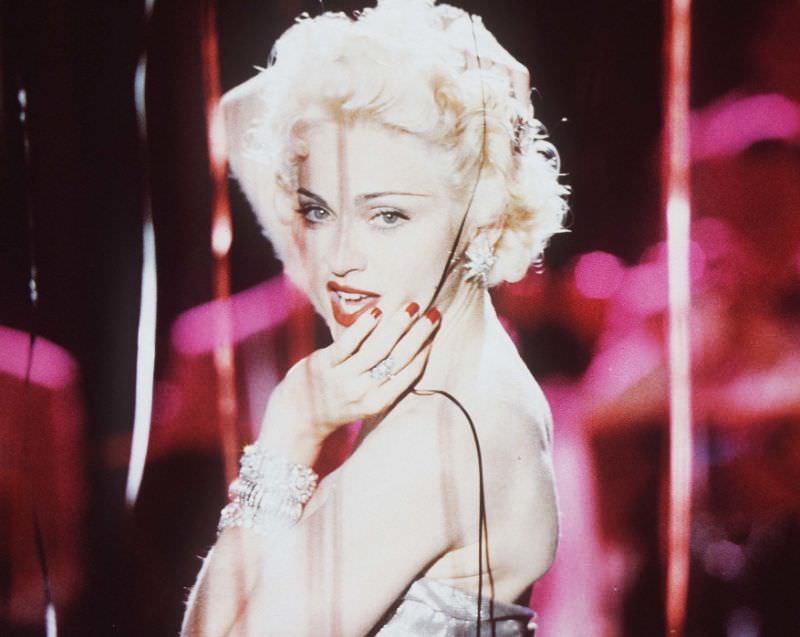
Madonna was at the top with “Vogue.” Heart held at number two. Sinéad O’Connor was at three. Wilson Phillips at four. Janet Jackson rounded out the five. For one perfect week, the most commercially dominant real estate in popular music belonged entirely to female artists. It has never happened before. It has never happened since.
How “Vogue” Became the Number One Song in America
The story of “Vogue” starts not in a recording studio, but in the underground ballroom scene of 1980s New York. Madonna had been frequenting clubs like the Sound Factory and the Tunnel, watching as gay Black and Latino men invented an art form — voguing, a dance style that blended runway posturing with athletic floor work. It was gorgeous and fierce and almost entirely invisible to mainstream culture.
Madonna brought it to the world. Producer Shep Pettibone was handed just $5,000 by Warner Bros. to make what was initially supposed to be a B-side. He finished the backing track in under two weeks. The song was originally slated as filler for the I’m Breathless soundtrack album, tied to Madonna’s role as Breathless Mahoney in Warren Beatty’s Dick Tracy. Nobody expected it to become her biggest hit to date.
The music video was shot on February 10 and 11, 1990 at Burbank Studios — all 16 hours of it, sandwiched between Madonna’s rehearsals for the Blond Ambition World Tour. Director David Fincher, then still a relatively unknown video director, gave the whole thing a black-and-white Art Deco sheen. The visual references landed precisely: Tamara de Lempicka’s angular paintings, Horst P. Horst’s famous fashion photographs, the golden-age Hollywood glamour of Marlene Dietrich. Two dancers from the House of Xtravaganza — Luis Camacho and José Gutierrez, pioneers of the actual ballroom scene — were among the first people cast.

“Vogue” debuted at number one on the Hot 100 dated May 19, 1990, and held there for three weeks. It became her eighth number one in the US — and her biggest worldwide hit to that point, topping charts in over 30 countries. At the MTV Video Music Awards that September, it received nine nominations. For the week of May 26, it was still at the top, anchoring a chart that would become a piece of music history.
The Song Ann Wilson Called “Hideous”
Heart’s “All I Wanna Do Is Make Love to You” is one of the stranger success stories of 1990. The song was written by Robert John “Mutt” Lange — yes, the same Mutt Lange who produced AC/DC and Def Leppard — and was originally conceived for Don Henley before Heart got it. The lyrics tell the story of a woman who picks up a hitchhiker to conceive a child because her husband is infertile, then drives away at dawn never to see the stranger again.
Ann Wilson hated it. She called it “hideous.” She told Dan Rather in a TV interview that she found the narrative empty and dehumanising — “an empty, weird, sort of hateful story.” The song was outright banned in Ireland. Remarkably, none of that stopped it from spending two weeks sitting directly behind “Vogue” at number two on the Hot 100, making it one of the Wilson sisters’ biggest commercial hits despite being the song they most despised performing live.

A Prince Song That Prince Never Charted With
By May 26, 1990, Sinéad O’Connor’s “Nothing Compares 2 U” had been on the Billboard Hot 100 for eleven weeks. It had already spent four weeks at number one, peaking in April. That week it sat at number three — and the song’s journey to get there is one of the more remarkable pop music stories of the era.
Prince wrote “Nothing Compares 2 U” in 1984 for his band The Family. Their version appeared on a 1985 album and went precisely nowhere. The song languished for years until O’Connor, working on her second album I Do Not Want What I Haven’t Got, covered it. Her label released it as a single in January 1990. Within weeks it was dominating charts across Europe, Australia, and eventually the United States.
The music video, directed by John Maybury, is mostly just Sinéad’s face. Close-up. Unguarded. She was twenty-three years old, with a shaved head at a time when female artists were under enormous pressure to be conventionally beautiful. The record company had demanded she grow her hair out. She refused. At one point in the video, a single tear runs down her face. The take where it happened was not planned. It was real.
The video won three MTV Moonmen in 1990, including Video of the Year — the first time a female artist had won that award. At the end of the year, Billboard magazine named “Nothing Compares 2 U” the number one single in the world.

Rock Royalty’s Daughters Needed One More Day
Wilson Phillips came from music royalty so concentrated it bordered on absurd. Carnie and Wendy Wilson were the daughters of Brian Wilson — the Beach Boys genius, the man who made Pet Sounds. Chynna Phillips was the daughter of John and Michelle Phillips of the Mamas & the Papas. Between their parents, that’s a combined songwriting discography that shaped the entire direction of California pop music.
Growing up with that legacy was not easy. Chynna Phillips spent her teenage years battling drug and alcohol addiction. The group formed in 1986 but didn’t release music until 1990. Their debut single, “Hold On,” was written largely by Chynna, drawing on the AA mantra of taking life one day at a time. She brought 90 percent of the lyrics to producer Glen Ballard’s garage studio after writing most of it in her car.

“Hold On” would eventually reach number one on June 9, 1990 — and despite spending only a single week at the top, Billboard named it the number one single of the entire year. That particular statistical quirk had only happened once before, in 1962. On May 26, it sat at number four, still climbing.

Janet Jackson Was Living in the 1950s
By May 1990, Janet Jackson had already released four consecutive top-two singles from her landmark album Rhythm Nation 1814. “Alright” was the fourth. It was the only one of the seven singles from that album that didn’t crack the top two on the pop chart — it peaked at number four. But the song produced arguably the most inventive music video of her entire career.
Director Julien Temple took Janet to the backlot of Universal Studios Hollywood and dressed the whole thing like a 1930s-1950s jazz musical. Janet wore a zoot suit. Cab Calloway, then 82 years old, made one of his final on-screen appearances. The Nicholas Brothers — legendary tap dancers from the golden era of Hollywood — were in it. Cyd Charisse danced. It was an extraordinary piece of filmmaking wrapped around a pop song, and it honoured a generation of Black entertainers who had been systematically excluded from the mainstream cultural memory that music videos were now beginning to reclaim.

Why This Moment Actually Mattered
The record industry in 1990 was still operating under assumptions about what female artists could and couldn’t sell. A woman could have a hit. But five women at the very top of the chart simultaneously — that was supposed to be statistical noise, a blip, an accident of release timing that would correct itself the following week.
It did correct itself. But the blip had happened. And the five artists who occupied those positions weren’t flukes. Madonna was six albums deep and had just shot a film while simultaneously making a number one single and preparing a world tour. Sinéad O’Connor was twenty-three and had written one of the most emotionally devastating pop records of the decade. Heart had been selling out arenas since the mid-70s. Wilson Phillips had more musical DNA per square inch than almost any debut act in history. Janet Jackson had been systematically dismantling the industry’s assumptions about Black women in pop for three consecutive years.
That week, the music business looked at the chart and had to accept something it had been resistant to acknowledging: the audience didn’t care about the gender of who was singing. They cared about the song.
The YouTube That Proves It All Still Holds Up
Thirty-five years later, “Vogue” sounds exactly as strange and precise and confident as it did in 1990. Madonna’s spoken-word bridge runs through Hollywood legends: Greta Garbo, Marilyn Monroe, Joe DiMaggio, Marlon Brando, James Dean, Grace Kelly. The list itself is a cultural argument — glamour as survival, transformation as resistance. For the ballroom kids who inspired the song and the Gen X listeners who danced to it in suburban bedrooms, it hit differently depending on who you were. That’s what great pop does.
The Week That Won’t Fit in the History Books
There’s a version of pop music history that gives May 26, 1990 a paragraph. A bullet point. A passing mention in a longer piece about women in music. The reality is that this was the single most concentrated display of female commercial dominance in the history of the Billboard Hot 100, and it happened at the exact intersection of five artists who each represented something different: theatrical reinvention, hard rock credibility, raw emotional vulnerability, pop-royalty inheritance, and visionary musical cinema.
None of them needed each other to get there. They got there separately. The chart just arranged them side by side for one week, and anyone paying attention could see something that the industry spent the rest of the decade trying to explain away or replicate. It couldn’t be replicated. You can’t manufacture a Sinéad O’Connor crying on camera, or a ballroom community finally given a mainstream stage, or daughters of the Beach Boys finding their own voice, or Janet Jackson dancing with Cab Calloway in a zoot suit.
You can only recognise it when it happens. And on May 26, 1990, it happened five times over.
For more on the era that produced moments like this, read our piece on the Freddie Mercury Tribute Concert — another moment when music proved it was bigger than any one artist. And if you want to understand where Janet Jackson’s visual ambition came from, start with our look at the night hip hop was born in the Bronx, the culture that rewired what pop music could look and sound like.
Love the retro era? Browse our shop for vintage finds, retro clothing, and 80s/90s nostalgia gear.
Sources: Billboard Hot 100 chart, week of May 26, 1990 (billboard.com); Vogue (song) — Wikipedia; Nothing Compares 2 U — Wikipedia; Wilson Phillips, “Hold On” — Stereogum / Rolling Stone; Heart, “All I Wanna Do Is Make Love to You” — Ultimate Classic Rock / American Songwriter; Janet Jackson, “Alright” — Wikipedia; Madonna Vogue music video production — IMVDb; Grammy.com feature on Wilson Phillips 30th anniversary.