51 Days in Waco: The 1993 Siege That Divided America
It started on a cold February morning in 1993. More than 70 ATF agents in tactical gear descended on a dusty compound ten miles east of Waco, Texas. What followed was a two-hour firefight that left four federal agents dead — and launched a 51-day standoff that glued a nation to its television sets.
We watched it live on CNN. Before social media, before streaming, this was must-see TV in the truest sense — a real-time national drama playing out in the Texas brush country, involving a charismatic doomsday preacher named David Koresh, his armed followers, and the full weight of the U.S. federal government.
Fifty-one days later, the compound was ash. Seventy-six people were dead, including 25 children. America would never be quite the same.
The Retro Almanac
A monthly roundup of "on this day" highlights from that month, decades back — plus first dibs on new retro merch drops. No spam, just the good stuff.
Watch the original CNN news coverage from the raid and the standoff:
The Sinful Messiah and the Raid That Lost the Element of Surprise
By February 1993, Vernon Howell had been calling himself David Koresh for three years and had been telling his followers he was the final prophet for longer than that. He ran a small farming compound called Mount Carmel Center about ten miles outside Waco, Texas, where roughly 120 Branch Davidians — a splinter sect from the Seventh-day Adventist church — lived under his absolute spiritual authority. The community had been a quiet local curiosity for decades. Then a UPS deliveryman named Larry Gilbreath dropped off a package that broke open and spilled inert grenade casings onto the porch. The Bureau of Alcohol, Tobacco and Firearms started watching the property in 1992.
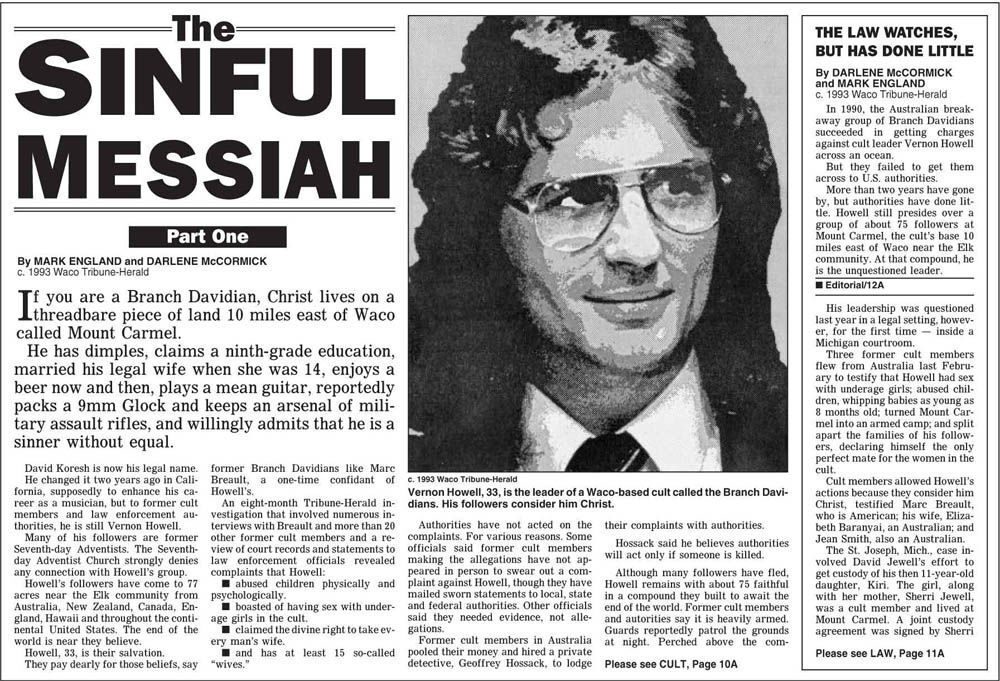
On February 27, 1993, the Waco Tribune-Herald published the first installment of “The Sinful Messiah”, a seven-part investigative series alleging that Koresh had physically abused children at Mount Carmel and taken several underage women as wives. The ATF had tried to stop the series from running because they had a raid scheduled for March 1. Now their hand was forced. They moved the operation up to February 28, code-named it Showtime, and prepared to serve warrants on weapons charges.
The morning of the raid, a KWTX-TV cameraman heading to the staging area got lost and asked a mail carrier for directions. The mailman happened to be David Jones — Koresh’s brother-in-law. He went straight back to the compound and tipped off the group. By the time more than 70 ATF agents in Black Hawk helicopters and cattle trailers rolled up at 9:45 a.m., the Branch Davidians were armed and waiting in the windows.
The gunfight lasted nearly two hours. Four ATF agents were killed and 16 wounded. Five Branch Davidians died inside the compound. The ATF pulled back, regrouped, and handed the operation to the FBI. The element of surprise was gone before the first shot was fired.
The 51 Days CNN Stopped Cutting Away
By the second week, CNN had a fixed camera position pointed at the front of the compound and was checking in every hour on the hour. The cable news network was only thirteen years old in 1993, still figuring out what a 24-hour news cycle was actually supposed to look like, and Waco gave it a permanent template. Cable news learned a lot during those 51 days about how to milk a slow-burning crisis — habits it never unlearned. If you want to see where that template came from, look at the bold 1980 debut that birthed 24-hour cable news in the first place.
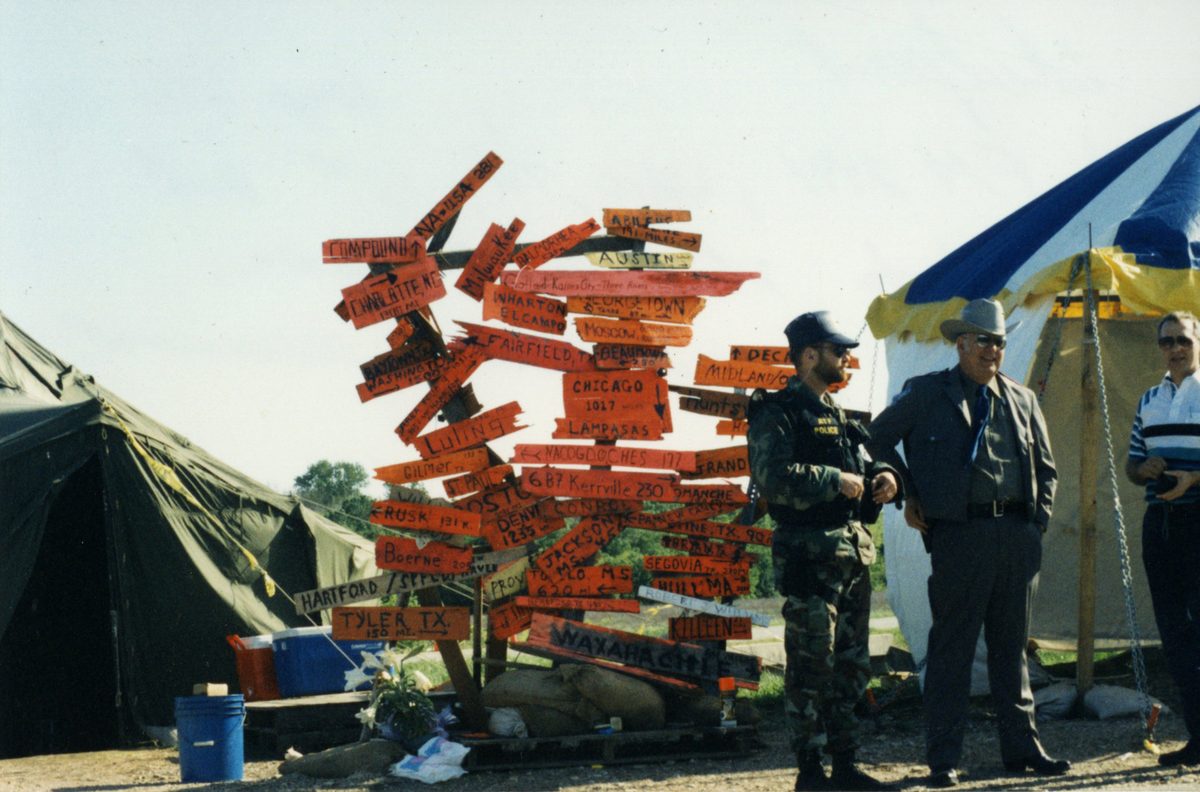
The FBI Hostage Rescue Team set up checkpoints at the intersections of Loop 340 and FM 2491. Reporters and gawkers gave the camp a nickname out of M*A*S*H: Camp Boredom. Koresh agreed early on to surrender if a recorded sermon was broadcast on national radio, then reneged after the broadcast aired, claiming God had told him to wait inside. Twenty-three children were released. Nobody else came out willingly.
To break the will of the people still inside, the FBI ran round-the-clock psychological pressure. Stadium-grade speakers blasted Tibetan throat singing, the cries of rabbits being slaughtered, Nancy Sinatra’s “These Boots Are Made for Walkin’,” and Christmas carols out of season — all night, every night. Floodlights kept the compound lit until dawn.
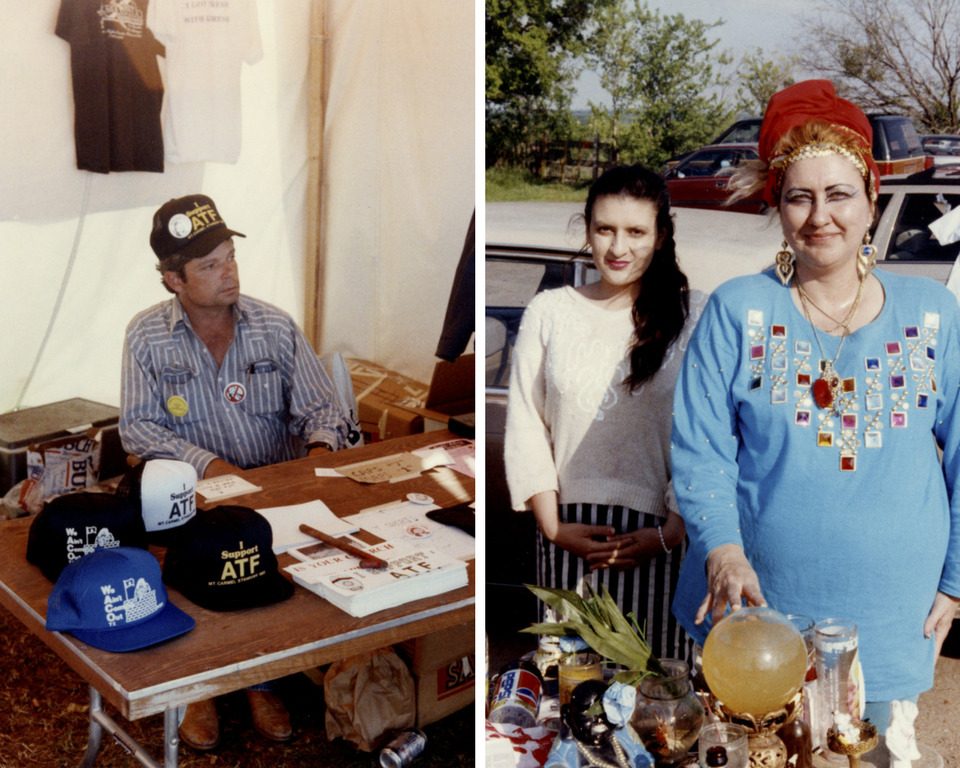
Out at the perimeter, a strange roadside economy sprouted up. Vendors set up folding tables and sold “Property of Mount Carmel” t-shirts, hot dogs, and bumper stickers. A young Army veteran named Timothy McVeigh drove down from Michigan and handed out pro-gun literature with handwritten warnings about federal overreach. He told a Michigan State student reporter named Michelle Rauch that the government had picked a fight it shouldn’t have started. Two years later, on the exact anniversary of the fire, McVeigh would blow up a federal building in Oklahoma City.

Tear Gas, Tanks, and the Fire That Closed the Door
April 19 broke clear and breezy. At 6:02 a.m., FBI loudspeakers told the Branch Davidians the assault was beginning. Two specially equipped M728 Combat Engineer Vehicles — basically tanks with battering rams welded to the front — punched holes through the compound walls and pumped in roughly 400 canisters of CS tear gas over the next six hours. Attorney General Janet Reno had approved the plan after FBI briefers told her children inside were being abused. She would later say she made the call and she stood by it.
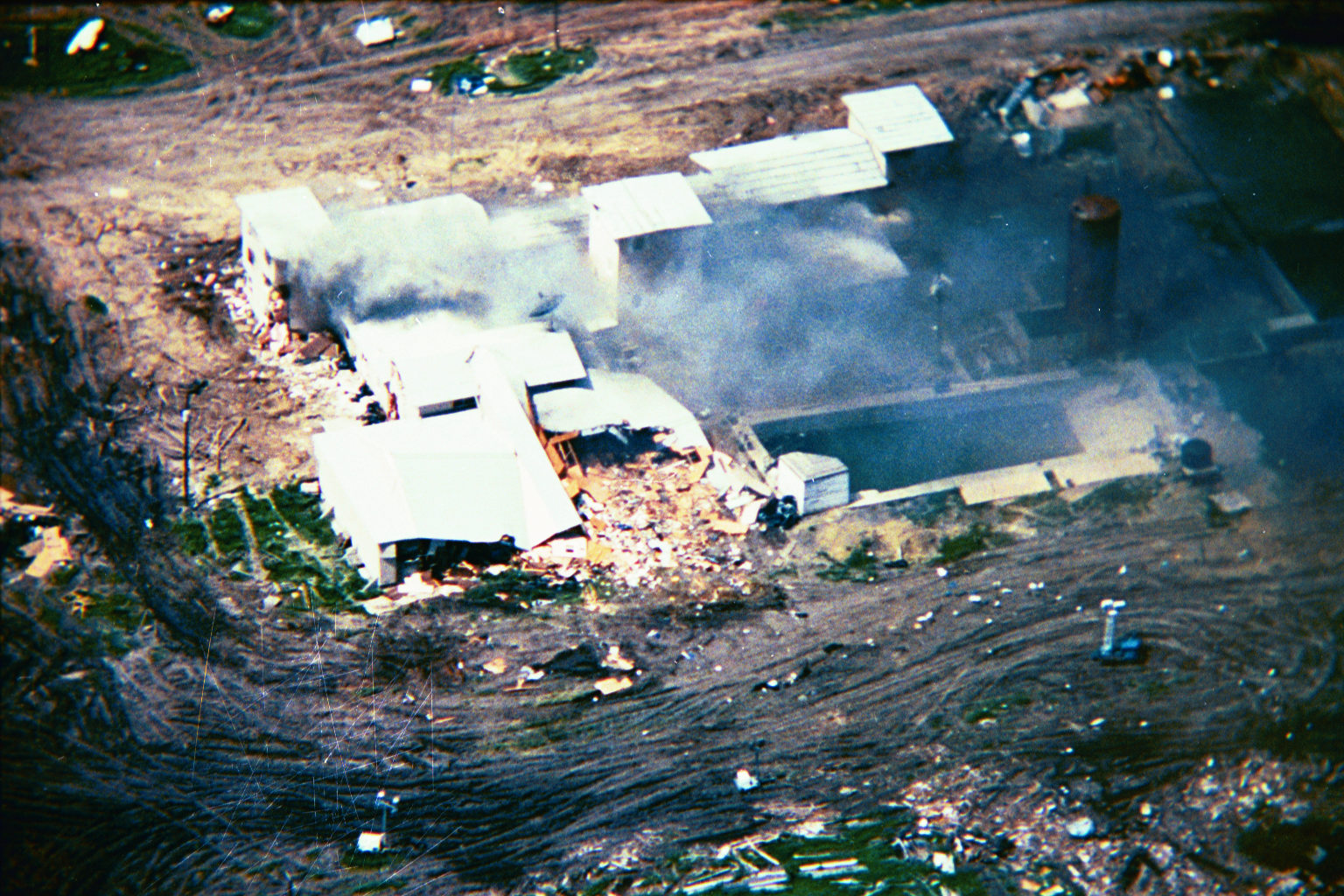
Just after noon, three separate fires broke out inside the compound within minutes of each other. Texas wind that day was gusting over 30 mph. The wood-frame building, packed with hay bales and propane tanks, went up like a torch. CNN was live. ABC was live. CBS, NBC, and every local affiliate within a thousand miles was live. The image that burned into the national memory was the cupola of the church tower glowing red against a black sky, then collapsing inward as the roof caved.
Nine people made it out. Seventy-six did not. Twenty-five of the dead were children. Some had been killed by gunfire — whether by FBI rounds, Branch Davidian suicide pacts, or both is still litigated thirty years later. The official government conclusion was that the fires were started by the Branch Davidians themselves. Surviving members and several independent investigators have argued the tanks knocked over kerosene lanterns inside. Documentary filmmakers found a flicker of pyrotechnic tear gas on FBI evidence reels in 1999 — fuel for a thousand conspiracy podcasts, a Congressional reopening, and one Oscar-nominated documentary called Waco: The Rules of Engagement.
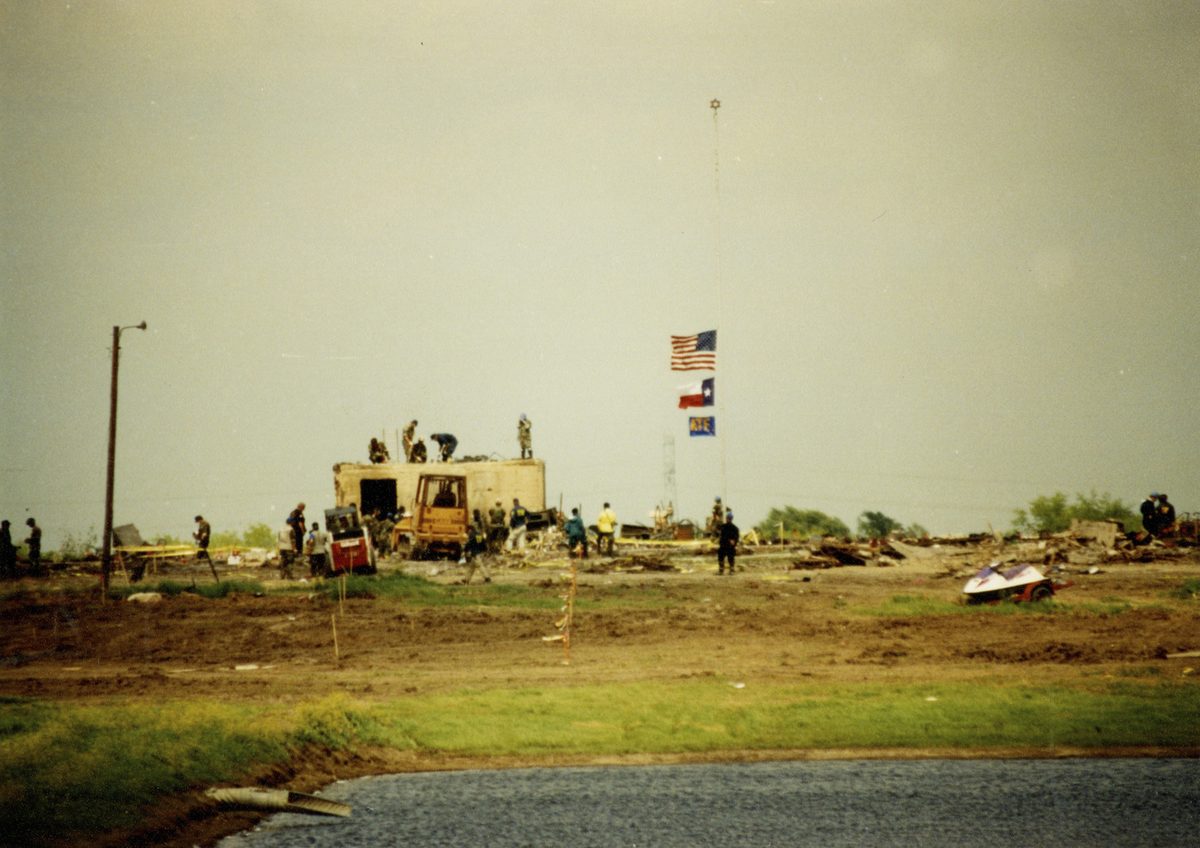
The cleanup took weeks. Crews hauled out lead-contaminated soil. Everything that had been Mount Carmel was bulldozed flat.
How a Texas Compound Set Off a Decade of American Paranoia
The Waco siege did something to the American psyche that nothing else in the 90s had done. It didn’t fit any of the familiar Cold War boxes. It wasn’t a foreign enemy. It wasn’t a hostage rescue from a hijacked plane. It was the federal government and the people who lived inside the country, on television, for nearly two months — ending with dead children and a wall of fire. Compare that to the Iranian Embassy Siege in London thirteen years earlier, which ended with the SAS rappelling off the roof and the hostages walking out alive. Different decade, different ending, very different national memory.
The militia movement, which had been a fringe weekend hobby for survivalists in the late 80s, doubled in size between 1993 and 1995. Talk radio caught fire. Ruby Ridge — a federal standoff in Idaho that had ended with the deaths of Randy Weaver’s wife and son the previous August — got reframed as part of a pattern. Timothy McVeigh chose April 19, 1995, the second anniversary of the Waco fire, to detonate a truck bomb outside the Alfred P. Murrah Federal Building in Oklahoma City. He killed 168 people, including 19 children in the daycare. He told investigators it was retaliation for Waco.
Pop culture absorbed all of it. The X-Files premiered five months after the compound burned, with agents stumbling across a government cover-up in a small Oregon town. The show ran for nine years on a thesis statement Waco had handed it: the people in charge are lying to you. Bumper stickers reading Remember Waco showed up on pickup trucks in every state. The cultural distrust of federal authority that runs through American politics today has its fingerprints all over those 51 days.
What We Saw, and What Gen X Still Carries
For Gen X, the Waco siege was something you watched on a 19-inch tube TV in your parents’ living room because the cable channels would not stop showing it. The siege ended a week before the spring 1993 sweeps period. CNN’s ratings tripled. We were 10, 13, 17 years old, watching real-time American history unfold in a way it had not since the Iran hostage crisis. The Branch Davidian story ended with a smudge of black smoke on a Texas horizon and a federal Attorney General on the evening news saying she’d made the call.
This is the moment the 90s stopped feeling like a victory lap after the Cold War and started feeling like something else. Four years later, Marshall Applewhite and 38 followers of Heaven’s Gate committed mass suicide in a San Diego mansion, and the country was not surprised the way it had been by Jonestown in 1978. Waco had already retrained us. We knew what a doomsday belief system could do when it walled itself off from the outside world.
There’s a version of the 90s most people remember — flannel shirts, Friends, dial-up modems, neon Lisa Frank folders. There’s another version that runs underneath it: Rodney King, the L.A. riots, Waco, OJ, Oklahoma City. Both versions were happening at the same time on the same screen. The era that gave us grunge also gave us this. The fire at Mount Carmel is one of the dates you can point to where Generation X learned that institutions could fail spectacularly, on camera, in real time, and nobody was coming to fix it after.
Sources
- Waco History — The Branch Davidian Siege: February 28 – April 19, 1993 — Baylor University public history project with primary documents and survivor interviews.
- ATF — Remembering Waco — The agency’s official memorial page for the four agents killed in the initial raid.
- Texas Monthly — The Fire That Time — Long-form retrospective on the staging, the negotiations, and the day the compound burned.
- CBS Texas — Remembering Waco, 30 Years Later — 2023 anniversary reporting with former agents on camera.
- CBS News — FBI agents on scene of Waco standoff reveal new details — First-hand accounts from agents inside the operation.
Browse retro and vintage-inspired apparel at the RetroRadical shop →
The Retro Almanac
A monthly roundup of "on this day" highlights from that month, decades back — plus first dibs on new retro merch drops. No spam, just the good stuff.