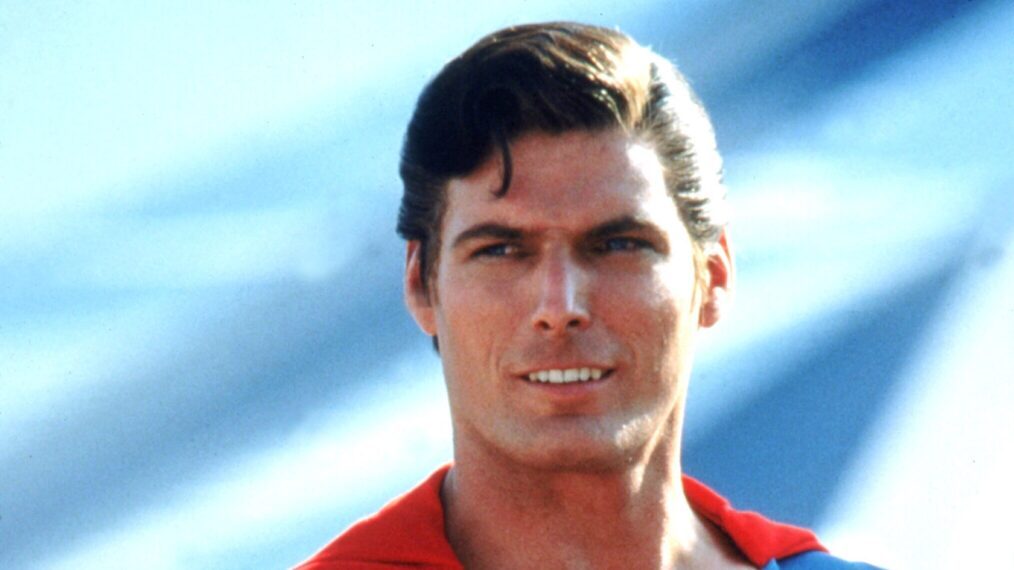
Christopher Reeve as Superman, the role that made him a global icon before his May 27, 1995 accident
|

On This Day: May 27, 1995 — Christopher Reeve’s Fall in Culpeper

At 3:01 p.m. on May 27, 1995, Christopher Reeve sat tied for fourth at a low-stakes equestrian event in Culpeper, Virginia. Twenty minutes later, paramedics were hand-squeezing oxygen into his lungs at the base of a zig-zag fence. The 42-year-old who had played Superman in four films could not breathe, could not move, and his skull was no longer fully attached to his spine.

What happened in those minutes — and the nine years of advocacy that followed — turned a Memorial Day weekend riding accident into one of the defining medical and cultural stories of the late 1990s.

The Equestrian Life That Brought Him to Culpeper
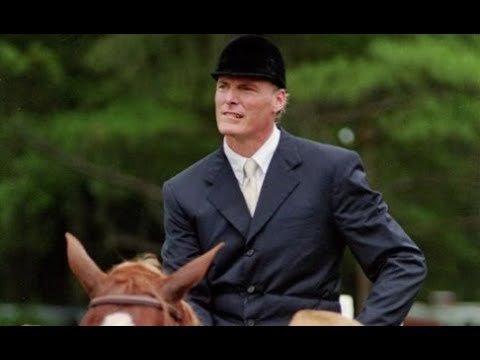
Christopher Reeve in formal equestrian gear before the May 27, 1995 cross-country accident in Culpeper, Virginia

Reeve did not come to riding as a hobbyist. He learned for his role in the 1985 TV adaptation of Anna Karenina and got obsessed. By the early ’90s he was competing in eventing — the triathlon of horse sports, combining dressage, show jumping, and a brutal cross-country course over solid timber obstacles. The man who had floated above Metropolis with a magnet harness under his cape was, by then, more dangerous on a horse than he ever was on a soundstage.

The horse he rode that day was a 12-year-old American thoroughbred named Eastern Express, known as “Buck” around the barn. Reeve had bought him a year earlier while filming Village of the Damned. Buck was experienced. Reeve was fit. The Commonwealth Dressage and Combined Training event in Culpeper was the kind of low-pressure regional outing that competitive amateurs ride as a tune-up before the bigger summer trials.


He was, by every account, ready. He walked the course that morning, made notes about the rhythm changes between fences, and told a friend at the start gate that the only question was how clean he could ride it. The cross-country phase was his strongest.

3:01 p.m.: The Refusal at the Third Jump

Newspaper coverage of the May 27, 1995 Christopher Reeve riding accident, showing the jump site V-notch in Culpeper

The first two jumps came clean. Then Buck saw the third — a zig-zag fence with a V-notch cut into the top rail to test the rider’s line — and slammed on the brakes.

Horses refuse jumps all the time. Riders usually circle and try again. What made this refusal lethal was geometry and momentum. Reeve was already leaning forward in jumping position when Buck stopped dead. His hands were wrapped in the reins, so he could not throw them out to break the fall. His 6-foot-4, 215-pound frame went over the horse’s head and hit the top rail face-first.

His first cervical vertebra shattered. His second was badly fractured. The connection between his skull and his spine was, in the words of his surgeon Dr. John A. Jane, “hanging by a thread.” Witnesses heard him say “I can’t breathe” before he lost consciousness.

Paramedics were on him in minutes. They stabilized his head between their forearms — any twist would have killed him — and bagged him by hand until a medevac helicopter could lift him to the University of Virginia Medical Center in Charlottesville. The fact that he reached the hospital alive was, on its own, statistically unlikely.

Hours Later: Surgery to Reattach a Skull to a Spine

Christopher Reeve in the 1980s at the height of his Superman fame, before the May 27, 1995 accident

The next three days were a referendum on whether modern medicine could keep him alive at all. Reeve had a bilateral cervical spinal cord injury at the C1–C2 level — the highest possible site of survivable spinal trauma. He could not breathe without a ventilator. He could not feel anything below his shoulders.

On June 5, surgeons at UVA performed the procedure that saved him: a posterior cervical fusion that literally wired his skull back onto his spinal column using titanium hardware and bone graft from his hip. The phrase Dr. Jane used in the press briefing — “we reattached his head to his body” — was not a metaphor.

Survival rates at that level of injury are grim. The medical literature at the time gave Reeve a coin-flip chance of seeing the end of the year. He had pneumonia, urinary tract infections, pressure sores, and an adverse reaction to one of his early drug protocols that put him into shock. Each one of those, in 1995, was a credible cause of death for a C1–C2 patient.

The Five Words Dana Reeve Said

Christopher Reeve and Dana Morosini in the late 1980s during their early years together

Sometime in that first week — Reeve placed it before the stabilization surgery, his wife placed it after — he mouthed the question to Dana that anyone in his condition has the right to ask. Maybe they should let him go.

He had married Dana Morosini three years earlier, on April 11, 1992. Their son Will was almost three. Reeve also had two children from his previous relationship with Gae Exton — Matthew and Alexandra, both teenagers — who flew in from London when news of the accident broke.

Dana’s reply has been quoted so often it risks losing its weight. “You’re still you. And I love you.”

Strip away the sentimentality and what that sentence actually did was reframe the patient’s identity question. Reeve had spent the previous decade as a body — Superman, the equestrian, the broad-shouldered leading man. Dana’s answer was that the body had never been the thing she married. He stopped asking about ending his life. Within weeks he was off the morphine drip and starting to sketch out the speech he would eventually give at the 1996 Democratic National Convention.

From Hospital Bed to National Stage

Christopher Reeve in his power wheelchair on the deck of his Pound Ridge home after the May 27, 1995 accident

On August 26, 1996 — fifteen months after the accident — Reeve rolled onto the floor of the United Center in Chicago in a power wheelchair, with a sip-and-puff ventilator clipped to his collar. He spoke for ten minutes. The major networks ran eleven minutes overtime to carry it live.

It was not a subtle speech. He named names, called out the lack of federal funding for spinal cord research, and pushed what would become his signature cause: human embryonic stem cell research. Mainstream coverage was reverential. The disability rights community was split — some advocates argued his “cure-first” framing implied that life in a wheelchair was something to escape rather than build a life inside of. That tension followed him for the next eight years and he never fully resolved it in public.

It also raised tens of millions of dollars. The Christopher Reeve Foundation, set up in 1996 and merged with the American Paralysis Association in 1999, became the single largest non-government funder of spinal cord injury research in the United States. The pattern is one the network has covered before with other celebrity cause-driven moments — see the way the 1992 Freddie Mercury tribute concert reshaped AIDS fundraising overnight — but Reeve sustained it for nearly a decade rather than a single night.

What He Did With the Time He Had

Christopher Reeve and Dana Morosini Reeve, whose words after the accident reshaped his recovery

Reeve directed In the Gloaming in 1997 from his wheelchair, working a sip-and-puff interface to call shots. He starred in a 1998 remake of Rear Window that picked up an Emmy nomination. He published two bestselling memoirs — Still Me in 1998 and Nothing Is Impossible in 2002. He recovered partial sensation by 2000, enough to feel Dana’s touch on his arm.

The blockbuster-Hollywood pre-accident persona had a clean three-act structure that critics found easy to write about: small-town kid plays the world’s most famous superhero. The post-accident decade was messier and, in the long view, more interesting. He chose to keep working in the industry that had made him a movie star — not as a symbol, but as a director and an actor with specific creative ambitions. The comparable arc on this site is the Wayne Gretzky retirement story: an icon refusing the tidy ending the public wanted for him.

On October 10, 2004, Reeve died at age 52 from cardiac arrest brought on by an infected pressure wound — one of the chronic risks of long-term ventilator dependence. Dana Reeve took over the foundation’s leadership and was diagnosed with lung cancer four months later, despite having never smoked a day in her life. She died in March 2006. Their son Will was 13.

The Foundation That Outlived Him

Christopher Reeve as Superman in 1978 alongside a post-1995 accident photo showing his ventilator and wheelchair

The foundation — renamed the Christopher & Dana Reeve Foundation after her death — is still operating out of Short Hills, New Jersey. It has funded more than $140 million in spinal cord injury research and advocacy, runs the federally-recognized Paralysis Resource Center, and is responsible for a substantial chunk of the grant money that has kept axon regeneration research alive in U.S. labs through periods when the federal pipeline dried up. Will Reeve, now a sports broadcaster, sits on the board.

The temptation with the Reeve story is to read it as a parable: Superman falls from his horse, finds true heroism in his vulnerability, dies young. It is too neat. Reeve himself disliked that framing and said so on the record more than once. What actually shifted on May 27, 1995 was less mythological. Pre-accident, the public conversation about high-cervical spinal cord injury treated it as a closed file — once you were paralyzed at that level, you stayed paralyzed, and adaptive equipment was the entire conversation. Reeve refused that frame.

He pushed researchers to talk publicly about what was actually possible. He funded the labs doing axon regeneration work that most of his peers thought was a fundraising dead end. He made it embarrassing for federal agencies to ignore the field. The stem cell research he championed has now produced the first FDA-approved clinical trials for cervical spinal cord injury. None of them would cure Reeve if he were alive today. Some of them are starting to give incomplete-injury patients back the use of their hands. That gap — between “miraculous cure” and “useful clinical progress” — is roughly where Reeve’s actual legacy lives.

If you want a sense of how his three children have metabolized the whole arc, the 2024 HBO documentary Super/Man: The Christopher Reeve Story is the version they built themselves, with full archive access and no studio guardrails.

For those who came to Reeve through the summer-blockbuster era of the late ’70s and early ’80s, May 27, 1995 was the day the cape came off and a more difficult kind of public life began. He spent the next nine years showing what that looked like.

Love the retro era? Browse our shop for vintage finds, retro clothing, and 80s/90s nostalgia gear.

🛒 Visit the Retro Radical Shop →

Sources

  1. Christopher Reeve — Wikipedia — biographical timeline, family, foundation history
  2. The Story Behind Christopher Reeve’s Accident — Biography.com — detailed minute-by-minute narrative of May 27, 1995
  3. ‘Superman’ Star Christopher Reeve Paralyzed (1995) — Click Americana — contemporary 1995 newspaper coverage and quotes from Dr. Jane
  4. Christopher Reeve — 1996 DNC Address — American Rhetoric — full speech text and audio
  5. Christopher & Dana Reeve Foundation — current research grants and advocacy programs

Similar Posts

Leave a Reply

Your email address will not be published. Required fields are marked *