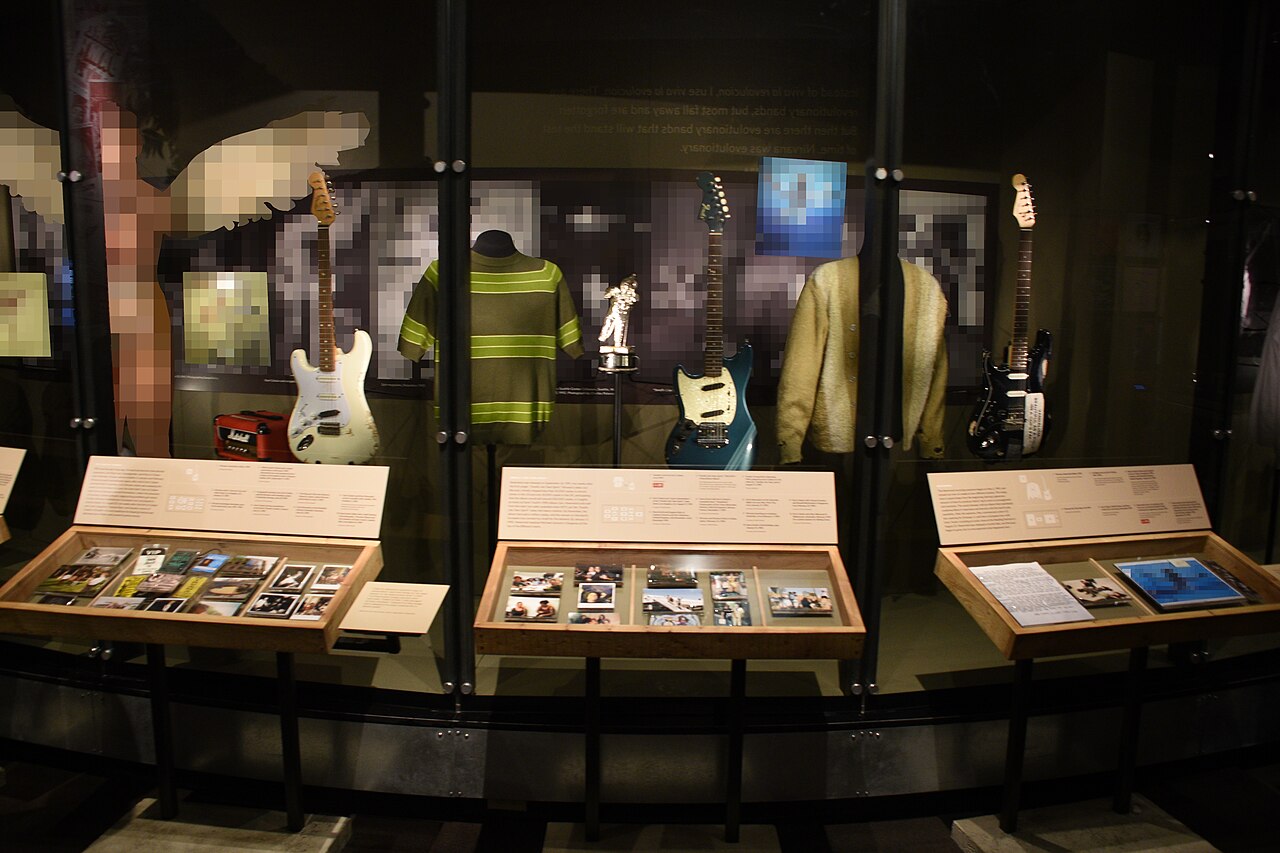
Kurt Cobain cardigan
|

Kurt Cobain Got Dressed in the Dark and Accidentally Designed the 90s

November 18, 1993. Sony Music Studios in New York. Kurt Cobain walks onstage at the MTV Unplugged taping in an olive-green cardigan that looks like it was rescued from a yard sale in Olympia. It basically was. Five months later he was gone. Twenty-six years after that, the same fuzzy, cigarette-burned sweater sold at Julien’s Auctions for $334,000. A button was missing. The stains were left in.

The Kurt Cobain style breakdown is, on paper, the most boring sentence in 90s fashion: thrift store cardigan, striped tee, ripped Levi’s, dead Chuck Taylors. But the math doesn’t add up. How does a wardrobe built almost entirely from someone else’s discarded laundry become the most photographed, copied, and museum-collected look of an entire decade? The answer is that Cobain wasn’t trying to invent anything. He was getting dressed. The 90s just happened to be watching.
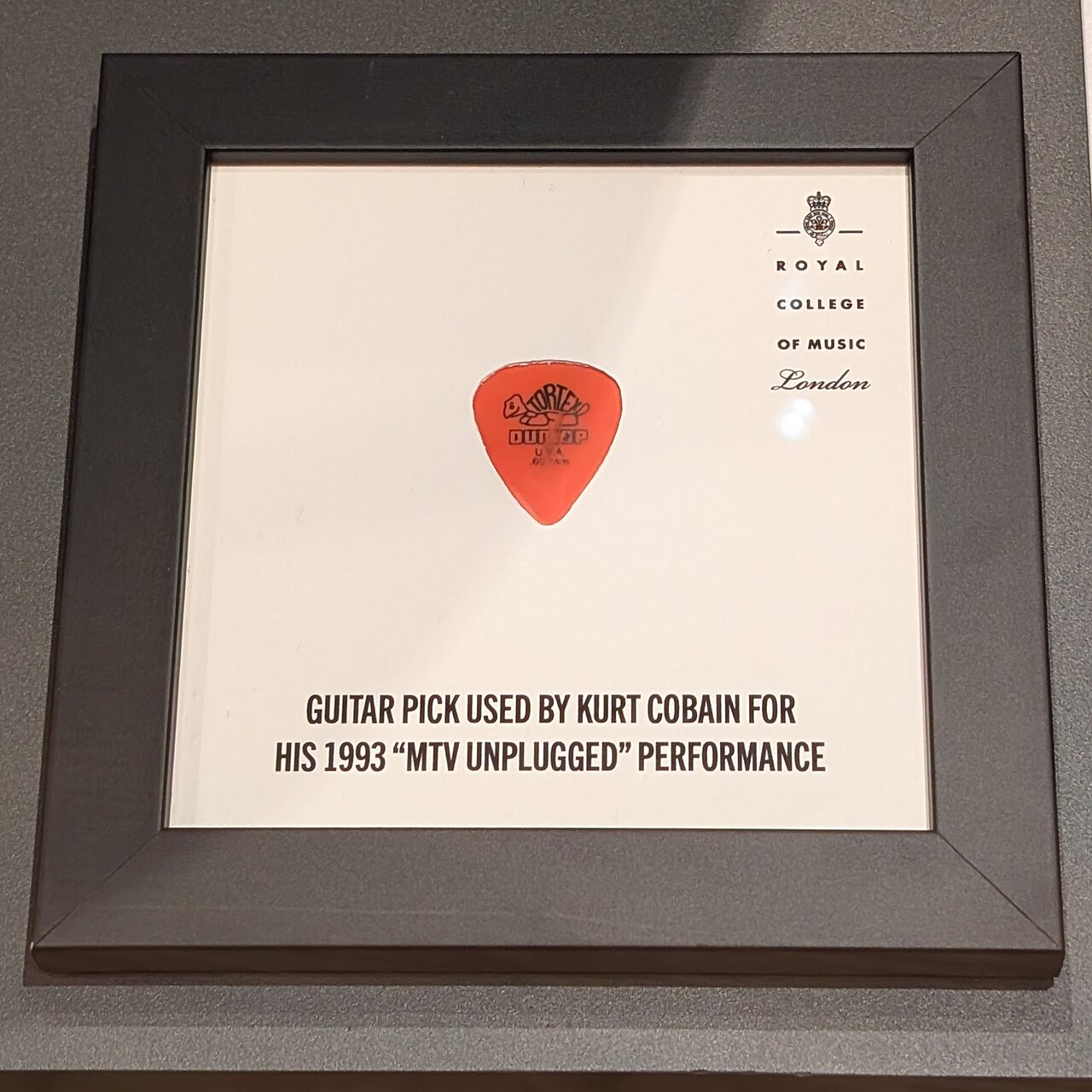
Kurt Cobain MTV Unplugged

The Cardigan That Became a Religious Artifact

https://www.youtube.com/watch?v=-krm035j3EI

Let’s start with the obvious one. The MTV Unplugged cardigan is the single most famous piece of clothing in 90s music, and possibly in 90s anything. It is a small olive-green button-up with bone-colored toggles, a kind of grandpa-issue Mister Rogers sweater that you could find in a Goodwill bin for under three dollars in 1993. Cobain almost certainly did. He wore it because he was cold and because it was within reach, which is the operating principle of his entire wardrobe.

What made it iconic was the contrast. Eddie Vedder showed up to interviews in flannels. Chris Cornell wore leather. Cobain sat down on that candle-lit stage, surrounded by stargazer lilies that he had specifically requested because they looked like a funeral, and played the most haunting acoustic set of the decade in a sweater your great-uncle wouldn’t have bothered to bring on vacation. It was the wrong outfit for the moment. That’s why it became the moment.
When Julien’s auctioned it in October 2019, the listing noted it had never been washed. The cigarette burn on the left chest was still there. The deodorant streaks were still there. Bidders pushed it past $300,000 anyway. People weren’t buying a sweater. They were buying the last visible artifact of a person who refused to be marketed.

Christian Roth 6558 Kurt Cobain Sunglasses 90's, vintage model 6558 from 1993, made in Austria, Made for Men and Women
Christian Roth 6558 Kurt Cobain Sunglasses 90’s, vintage model 6558 from 1993, made in Austria, Made for Men and Women

The Stripes That Came From a Sonic Youth Tour Bus

Before the cardigan there were the stripes. Cobain wore horizontally striped long-sleeve shirts constantly through 1991 and 1992 — sometimes mustard and black, sometimes maroon and cream, sometimes a thrifted Charlie Brown thing that looked stolen from a children’s drama club. The striped tee was so consistent in his rotation that it became shorthand for the entire pre-fame Nirvana aesthetic.

The lineage is direct. Kim Gordon and Thurston Moore of Sonic Youth had been wearing stripes — pulled from European tour stops, French sailor shirts, weird vintage finds — for years. Nirvana opened for Sonic Youth on the 1991 European tour, the one where Dave Grohl filmed the home-video footage that became 1991: The Year Punk Broke. Cobain was 24 years old, wide-eyed, watching his heroes shop. The stripes followed him home.

Why the Stripes Worked

Horizontal stripes are usually the worst-case scenario for thin shoulders, which Cobain had in abundance. He wore them anyway, often two sizes too big, sleeves bunched at the wrist, often with a second shirt layered underneath. The look was supposed to be wrong. That was the point. Punk had been about ill-fitting clothes since the Ramones, but Cobain pushed it further by making the ill-fit look unintentional rather than performed.

May include: Black canvas Converse sneakers with a custom design featuring the faces of Kurt Cobain, Krist Novoselic, and Dav

The Jeans, the Shoes, and the Refusal to Replace Anything

Cobain wore Levi’s 501s almost exclusively, in a wash so faded they looked grey. The knees blew out somewhere in 1991 and stayed blown out for years. He did not patch them. He did not buy a new pair. When the holes got bigger, the jeans simply became a different garment. By the In Utero press cycle, the rips reached mid-thigh and the cuffs were dragging on the ground in shredded ribbons.

The shoes were Converse Chuck Taylor All Stars, sometimes Jack Purcells, occasionally a pair of off-brand sneakers picked up because they were on a rack. The Chucks were almost always white, and almost always destroyed. The toe caps were grey from cigarette ash and stage scuff. The laces were knotted where they had snapped. Cobain wrote messages on them in Sharpie — ENDORSEMENT, the band’s name, anti-corporate jokes — partially as commentary on the very idea of brand placement.

This is the part of the Kurt Cobain style breakdown that gets lost in modern recreations. Everyone copies the silhouette. Nobody copies the wear. A new pair of $80 selvedge jeans pre-distressed at the knee is not a Cobain look. It is the opposite of a Cobain look. The point of his clothes was that they had survived something.

Yellow Gray Striped Grunge Kurt Cobain Sweater - Picture 4 of 6
Yellow Gray Striped Grunge Kurt Cobain Sweater – Picture 4 of 6

The Sunglasses (the Only Designer Thing He Owned)

The exception to the thrift rule was the eyewear. Cobain favored white-rimmed round Christian Roth 14001 frames, the same model worn by countless rock photographers’ favorite subjects in the early 90s. He wore them in the Heart-Shaped Box video. He wore them at the 1993 MTV Video Music Awards. He wore them in the kitchen of his Seattle house in candid Polaroids that Courtney Love took at three in the morning.

The frames were not cheap. They were the one item he splurged on, and they became the most imitated sunglass shape of the decade. Twenty years later, every indie band frontman with a thrift store cardigan and a guitar pedal still buys a version of those exact white-rimmed round frames. The shape is now a costume signal for an entire era.

Nirvana 1991 photo
Nirvana 1991 photo

The Layering Logic: Thermal Under Tee Under Flannel

Cobain’s layering rules were essentially the same rules every kid in the Pacific Northwest grew up with, because it rains nine months a year and the wind off Puget Sound is brutal. The stack went thermal henley on the bottom, t-shirt in the middle, flannel on top, sometimes a cardigan or a corduroy jacket over the whole thing. In photos from the Nevermind tour, you can sometimes count four visible collars stacked at his throat.

The flannels were not, as the cliche later went, plaid lumberjack shirts. They were thin, soft, often pastel — pink, lavender, faded mint — picked from the women’s section of thrift stores because the colors were better and the cuts were smaller. The Aberdeen kid had figured out that thrift store women’s clothes fit a thin man better than thrift store men’s clothes, decades before menswear blogs would discover the same trick.

The Dresses Nobody Wants to Talk About

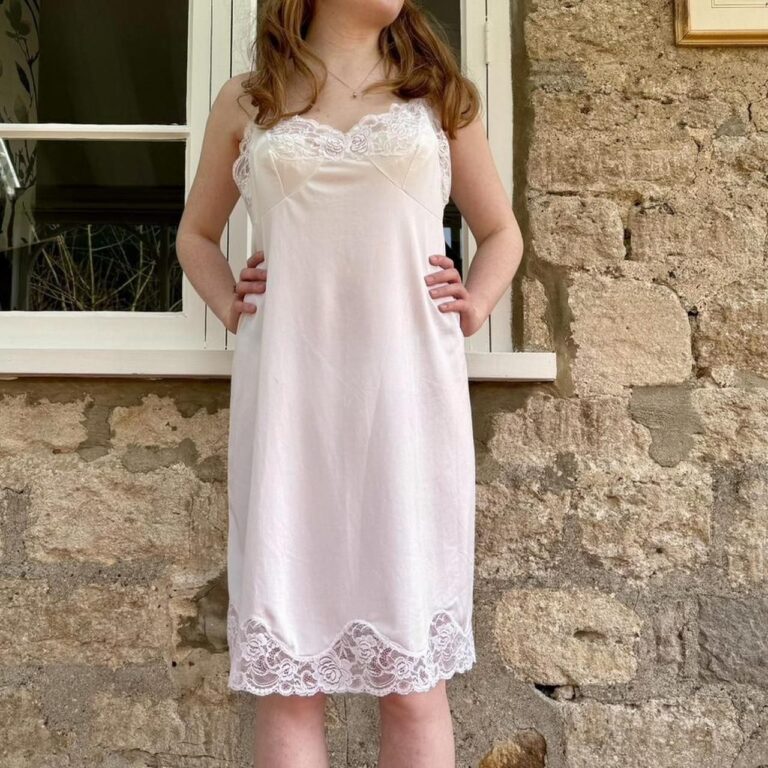
Cobain wore dresses. Not as a stunt, not as a marketing move, not as a costume on stage. He wore dresses to airports. He wore a floral print babydoll dress for the cover of The Face magazine in September 1993. He wore a green satin slip in a famous 1993 photoshoot with Michael Lavine. When asked about it in interviews, he said the obvious thing: he liked how they felt, they were comfortable, and the implication that a man wearing a dress was somehow newsworthy was the actual joke.

This is the part of the Kurt Cobain style breakdown that gets quietly trimmed out of nostalgia retrospectives, and it shouldn’t be. The dresses were not a footnote. They were a thesis. The same person who put a baby on the cover of a record about consumerism was telling Gen X that the rules they had been handed about masculinity were as disposable as a thrift store t-shirt.

Denim jeans with only the top layer of the knee ripped worn by Kurt Cobain

The Hair, the Stubble, the Cigarette

The hair was bleached blonde, then dyed red, then bleached again. By 1993 it was a kind of strawberry-blond color that came from amateur home dye jobs gone sideways. It was almost always greasy because Cobain was almost always on tour. The stubble was permanent and patchy. There was always a cigarette. The whole face read as if someone had been awake for three days and then been told to stand in front of a camera, which was frequently exactly what had happened.

How an Accident Became a Marc Jacobs Runway Show

In the spring of 1993, the designer Marc Jacobs sent a grunge-inspired collection down the Perry Ellis runway in New York. There were silk flannels. There were $200 thermals. There were Doc Martens styled like the boots kids were actually wearing in Aberdeen and Olympia. Perry Ellis fired Jacobs immediately. The collection was a commercial disaster.

Cobain and Courtney Love, the story goes, received the lookbook and a box of the actual garments at their Seattle home. They reportedly burned the box. The gesture has been romanticized for thirty years now — the punk dignity of refusing the fashion industry’s embrace — but it also missed the larger point. The translation had already happened. By 1994, Vogue was photographing grunge layering for September issues. Anna Wintour was eventually photographed wearing a flannel. The accidental uniform had become a category.

Kurt Cobain Leopard Print Coat, HD Png Download

Why the Style Survived Him

Most rock star wardrobes age into costume. Bowie’s Ziggy jumpsuit is theater. Prince’s Purple Rain coat is opera. Even Vedder’s later flannels feel like a band uniform. Cobain’s pieces — the cardigan, the stripes, the busted Chucks, the round white shades — kept circling back into mainstream fashion in seven-year cycles for three full decades after his death, because they were never really designed in the first place. They were just clothes that a tired person grabbed off a hook on the way out of a rented house.

That accidental quality is the part you cannot reverse-engineer. You can buy the cardigan. You can rip the jeans. You can scuff the Chucks against a curb. What you cannot purchase is the indifference. The Kurt Cobain style breakdown ends, weirdly, at the same place his songwriting did — with a refusal to perform the thing that everybody was paying you to perform, and the strange, lasting beauty of the refusal itself.

Sources

Similar Posts

Leave a Reply

Your email address will not be published. Required fields are marked *