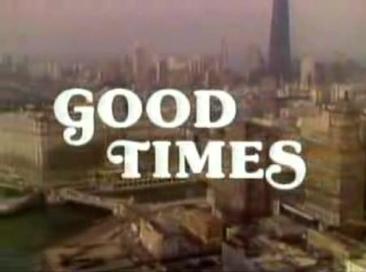
Good Times: Why $4.25 an Hour Was Life-Changing Money (And Why the Show Still Hits)
There’s a scene in Good Times — one of those blink-and-you’ll-miss-it moments that actually says everything — where James Evans Jr. lands a job paying $4.25 an hour. The family erupts. Florida’s eyes light up. James Sr. looks like a man who just got a pardon. The kids are hollering like it’s Christmas morning in July. Watch it yourself:
If you’re watching that clip today, your first instinct might be to laugh. Four dollars and twenty-five cents an hour? That’s not a raise — that’s a rounding error on your coffee. But hold on, because that reaction tells you more about us than it does about them. That scene is a window straight into the gut of 1970s working-class Black America, and once you understand what you’re actually looking at, the Good Times TV show hits completely different.
$4.25 an Hour and What It Actually Meant
In 1974, the federal minimum wage was $2.00 an hour. By 1979 — the show’s final year — it had climbed to $2.90. So $4.25 an hour wasn’t just a job. For a family living in the Cabrini-Green housing projects on Chicago’s north side, that was legitimately good money. That was the difference between eating every night and not. Between keeping the lights on and sitting in the dark. Between dignity and the constant low-grade panic that defines real poverty.
The Evans family didn’t celebrate because they were easily impressed. They celebrated because they knew exactly how rare that moment was — and how fast it could disappear. That’s the emotional core the Good Times TV show was built on, and it’s what made it unlike almost anything else on American television at the time.

What Was Good Times, Exactly?
Good Times ran on CBS from 1974 to 1979, six seasons, 133 episodes. It was created by Eric Monte and Mike Evans, developed by Norman Lear — the same producer behind All in the Family, The Jeffersons, and Maude. Lear had a gift for disguising social commentary as sitcom, and Good Times was one of his sharpest tools.
The show was actually a spinoff of Maude, which was itself a spinoff of All in the Family — Norman Lear building an interconnected universe of uncomfortable truths about American life long before that was a thing anyone called “a cinematic universe.” Florida Evans, the housekeeper on Maude, got her own show, her own family, and her own world.
That world was Cabrini-Green — one of the most notorious public housing projects in American history, a place synonymous in the public imagination with crime, poverty, and systemic neglect. Setting a sitcom there wasn’t a quirky creative choice. It was a statement. The Good Times TV show was saying: these people exist, their lives matter, and their humor and love and struggle deserve to be seen in prime time.
Meet the Evans Family
At the center of it all was Florida Evans, played by the incomparable Esther Rolle. Florida was the moral backbone of the show — warm, fiercely protective, deeply faithful, and tougher than anyone gave her credit for. Rolle brought a dignity to the role that elevated every scene she was in.
Opposite her was James Evans Sr., played by John Amos — arguably the most quietly powerful character in the series. James was proud, hardworking, and perpetually fighting a system rigged against him. He took whatever work he could find, got knocked down, got back up, and never let his kids see him quit. John Amos played him with a physicality and weight that made every small victory feel earned and every setback feel devastating.
Then there was J.J. Evans — James Jr. — played by Jimmie Walker. If you know one thing about Good Times, you know “DY-NO-MITE.” J.J. was the breakout star, the comic relief, the merchandise machine. Jimmie Walker’s rubber-limbed physical comedy and his ear-splitting catchphrase made J.J. a pop culture phenomenon. Walker was everywhere in the mid-70s — talk shows, variety specials, lunchboxes.
Rounding out the family: Thelma Evans (BernNadette Stanis), the beauty and the voice of reason among the siblings; and Michael Evans (Ralph Carter), the youngest, already politically radicalized at ten years old, the one who read books and argued about systemic racism at the dinner table while everyone else was just trying to eat.
They were a family. A real one — flawed, funny, loving, and broke. And that combination was revolutionary.
Why the Good Times TV Show Was Groundbreaking
Here’s what you have to understand about American TV in 1974: Black families had been on screen before, but almost never like this. The Evans family was the first Black two-parent family in a prime-time American sitcom. That alone is staggering. Think about what that meant to viewers who had never seen their own family structure reflected back at them from a television set.
But Good Times didn’t stop at representation. It went somewhere most TV was terrified to go: it was honest about poverty. Not poverty as a quirky obstacle to be overcome by pluck and positivity, but poverty as a structural condition — grinding, persistent, and not the family’s fault. James Sr. wasn’t unemployed because he was lazy. He was unemployed because the economy had no use for him. The bills weren’t unpaid because the Evans family was irresponsible. They were unpaid because there wasn’t enough money.
That honesty created tension — both within the show and in the culture around it. Esther Rolle and John Amos were famously frustrated with the direction the show took as it became more popular, feeling that J.J.’s clowning was overshadowing the social realism they’d signed on for. Amos left after season three. Rolle left after season five, then returned for the final season. The behind-the-scenes conflict was real, and it reflected a genuine artistic debate about what Black representation on television owed its audience.
Even with those tensions, the Good Times TV show did something that almost no one else was doing: it let Black working-class people be the protagonists of their own story, not the supporting cast in someone else’s.
Norman Lear, the 70s, and Why This Stuff Mattered
You can’t talk about Good Times without talking about Norman Lear, and you can’t talk about Norman Lear without acknowledging that he was doing something in the 1970s that American television has never quite managed to replicate. His shows — All in the Family, Good Times, The Jeffersons, One Day at a Time, Maude — collectively formed the most politically and socially engaged body of work in the history of network TV.
Lear understood that comedy could be a delivery system for truths that drama couldn’t touch. People laugh, their defenses drop, and suddenly they’re sitting with an idea they’d have rejected if it came at them straight. Archie Bunker made you laugh at racism. The Jeffersons made you laugh at class anxiety. Good Times made you laugh with a family that had every reason not to be laughing — and that was the whole point.
In the broader 70s TV landscape, Good Times sits alongside Soul Train, Sanford and Son, and The Jeffersons as part of a brief, remarkable window when Black culture wasn’t just tolerated in mainstream media — it was driving it. That window didn’t stay open forever. Which is part of why these shows feel so precious now.
Why Good Times Still Resonates
Go back to that clip. Watch the family react to $4.25 an hour.
What you’re seeing isn’t naivety. It’s not people who don’t know any better getting excited about scraps. It’s people who understand exactly what they have, exactly what it cost to get it, and exactly how much it means — because they’ve been living without it. That kind of joy, specific and hard-earned and completely unperformative, is almost impossible to fake. The Good Times TV show was full of it.
Fifty years later, in an economy where housing costs have outpaced wages by a factor that would make James Evans Sr.’s head spin, those scenes land differently than they did in reruns twenty years ago. The details have changed — the numbers are bigger, the projects have been torn down, the specific textures of 1970s Chicago are gone. But the underlying dynamic, the gap between what work pays and what life costs, the way a family can be doing everything right and still come up short — that part hasn’t gone anywhere.
The Good Times TV show wasn’t trying to make you feel good about poverty. It was trying to make you see the people living in it. That’s a different thing entirely. And fifty years on, it’s still working.