On This Day: June 28, 1997 — The Tyson Bite Fight
Thirty-six million American households paid to watch two men fight on a Saturday night in June 1997, and what they got instead was the single weirdest moment in the history of boxing. Mike Tyson, the most feared puncher of his generation, leaned into a clinch and bit a chunk out of Evander Holyfield’s ear. Then, because once apparently wasn’t enough, he did it again. The Tyson bite fight turned a $65 million championship rematch into a punchline that still gets quoted at every barstool in America.
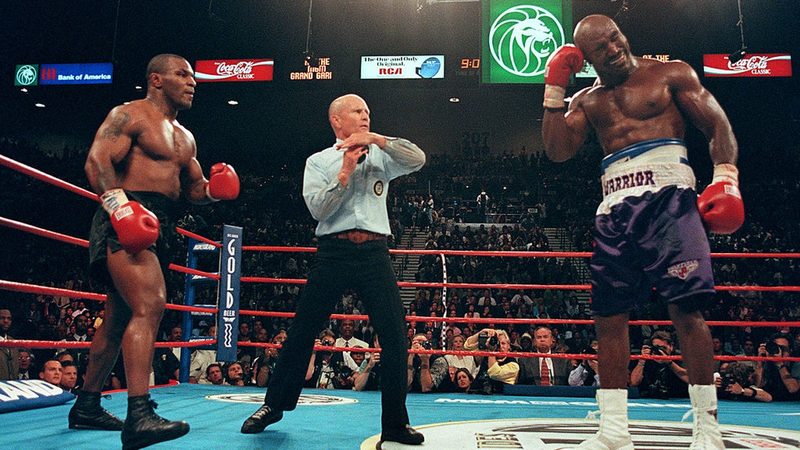
Tyson (left) and Holyfield square off under referee Mills Lane at the MGM Grand Garden Arena, June 28, 1997.
The Retro Almanac
A monthly roundup of "on this day" highlights from that month, decades back — plus first dibs on new retro merch drops. No spam, just the good stuff.
What happened in the Tyson bite fight
The rematch was billed as “The Sound and the Fury.” Holyfield had stunned the boxing world seven months earlier by stopping Tyson in the eleventh round of their first meeting — Tyson’s people had quietly worried Holyfield might not survive the night, and instead he dismantled their man. So the June rematch carried real heat. Holyfield came in as champion. Tyson came in furious.
Holyfield won the first two rounds clean. Then, 32 seconds into the second, the two heads collided and a deep cut opened over Tyson’s right eye. Holyfield’s camp called it a clash of heads. Tyson’s camp called it a deliberate butt — the same complaint they’d carried over from the first fight. Mills Lane reviewed it and ruled it accidental, which meant no point deduction and, in Tyson’s mind, no justice.
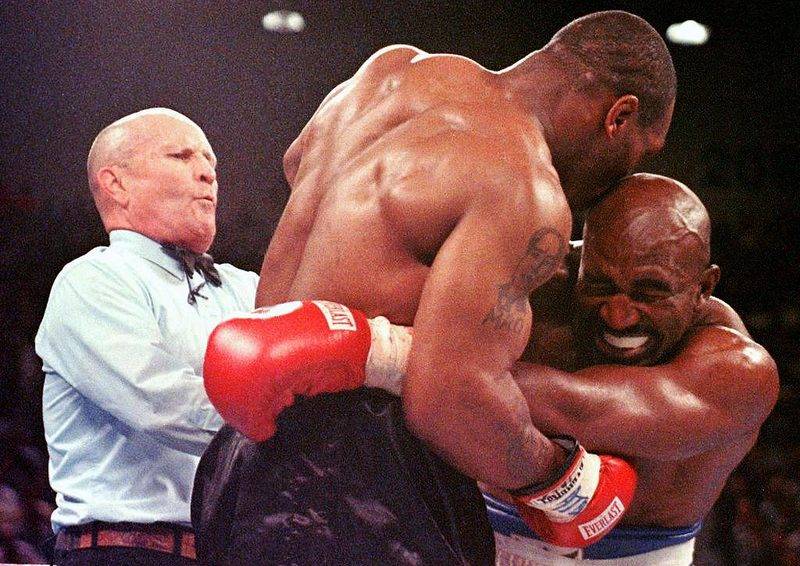
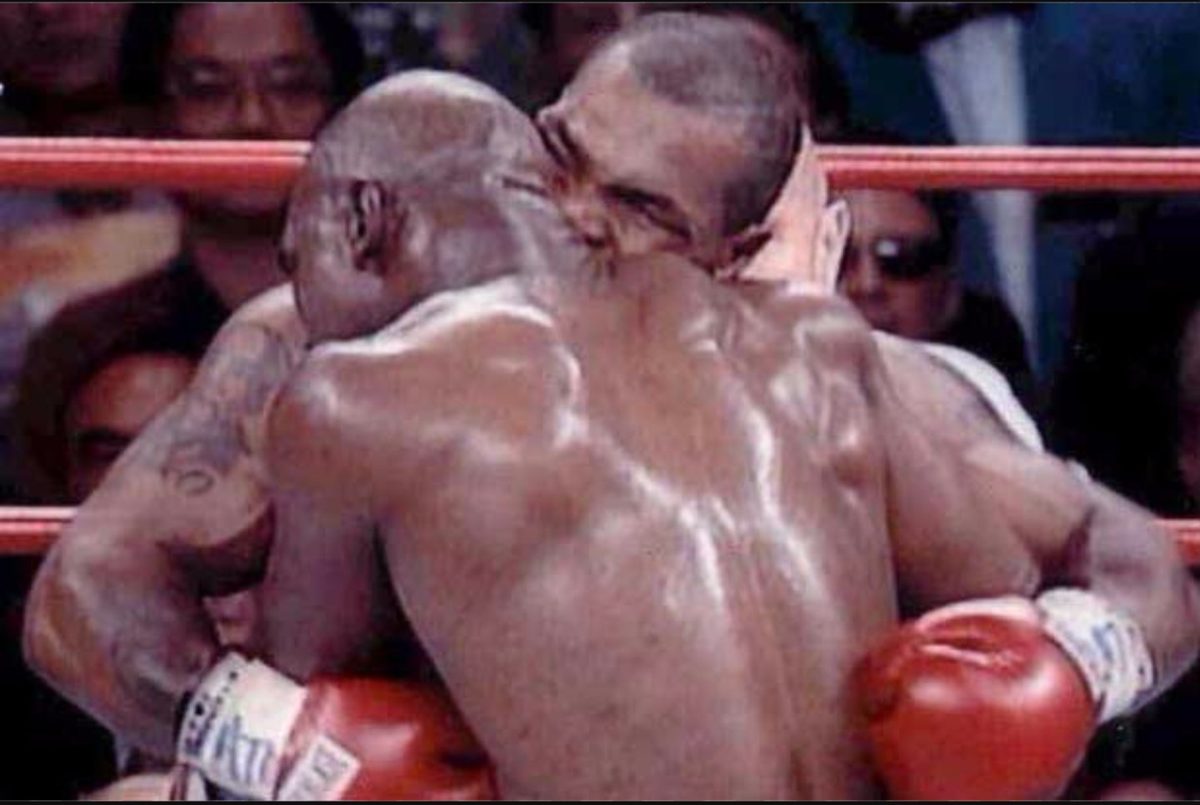
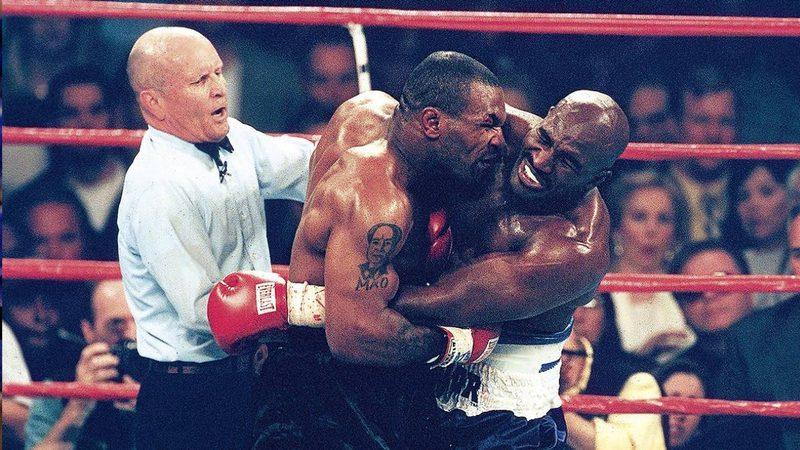
With about 40 seconds left in the third round, the two fell into a clinch near the ropes. Tyson rolled his head up over Holyfield’s shoulder and clamped down on the top of his right ear, tearing off a one-inch piece of cartilage and spitting it onto the canvas. Holyfield leapt straight into the air, spun in a circle, and pointed at his bleeding head like a man who couldn’t believe what had just happened to him. Neither could anyone else.
Here is the part most people forget: the fight didn’t stop. Lane wanted to disqualify Tyson on the spot, but he deferred to ringside physician Flip Homansky, who checked the ear and cleared Holyfield to keep going. Lane deducted two points and restarted the action. And with about ten seconds left in the same round, Tyson did it a second time — this time the left ear. That sealed it.
Why Mike Tyson bit Holyfield’s ear
Tyson never hid the reason. He felt he was being headbutted on purpose and that the referee was letting it slide, exactly as he believed had happened in the first fight. “He kept butting me,” Tyson said afterward. His trainer John Horne put it more bluntly: one headbutt might be an accident, but a pattern of them isn’t. Whether you buy that or not, Tyson clearly walked into the ring convinced the deck was stacked.
The harder truth is the one Holyfield offered later: Tyson knew he was losing. He was cut, he was behind on the cards, and he was up against the one fighter who had already proven he could take everything Tyson had and keep coming. Biting your way to a disqualification is an ugly exit — but it’s still an exit you choose rather than getting knocked cold on pay-per-view. Tyson himself once said the quiet part out loud about that night: he just wanted to hurt the man across from him.
Mills Lane and the chaos after the disqualification
Mills Lane wasn’t even supposed to be there. He’d been brought in as a late replacement after the original referee stepped aside, and he ended up officiating the most infamous round in boxing history. When Tyson tried to claim the first bite was actually a punch, Lane’s recorded reply was a single word: “Bullshit.” The man did not have time for theater.
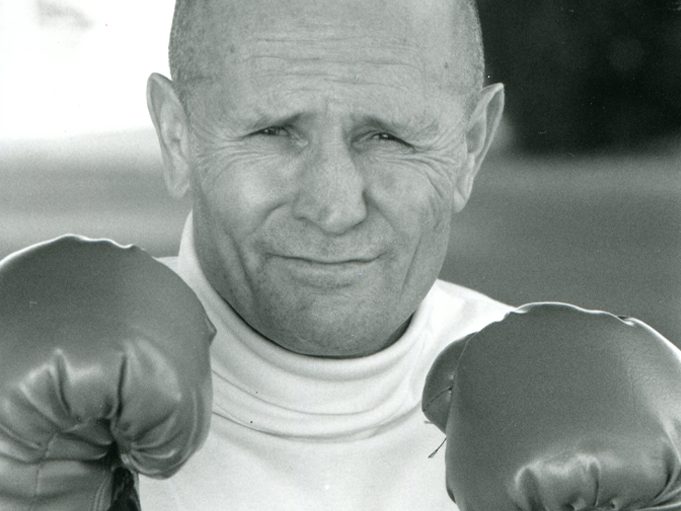
Mills Lane, a former amateur boxer turned judge and referee, made the call that ended the night.
When ring announcer Jimmy Lennon Jr. declared the disqualification, the MGM Grand turned into something closer to a riot than a sporting event. Tyson tried to charge Holyfield’s corner, swung at a police officer, and later went after fans in the stands. Bottles flew. People stampeded for the exits, and a false report of gunshots sent part of the casino floor into a panic. For a fight that lasted less than three full rounds, the fallout was enormous. If you like your sports scandals with a side of pure chaos, it sits right alongside O.J. Simpson’s white Bronco chase in the 90s hall of infamy.
What the bite fight cost Tyson
The numbers are staggering even now. Tyson’s purse for the night was $30 million; Holyfield’s was $35 million. The event pulled in roughly $180 million across the live gate, pay-per-view, closed-circuit, and foreign rights — a record at the time. Tyson walked away from the biggest payday of his life and immediately set fire to his reputation.
The Nevada State Athletic Commission revoked his boxing license and fined him $3 million, the legal maximum of ten percent of his purse, plus legal costs. He didn’t fight again for nearly eighteen months. The commission reinstated his license on a 4-1 vote in October 1998, but the aura of invincibility never fully came back. Sportswriters later estimated the bite cost him something closer to $100 million in lost earnings and endorsements over the years that followed. One bad decision in a clinch, and the most bankable name in boxing torched a fortune.
The hit wasn’t only financial. Tyson had spent a decade being marketed as an unstoppable force of nature, and the bite reframed him overnight as something more troubling — a man who would rather self-destruct than lose with dignity. Talk shows ran the clip on a loop. Comedians had a field day. The phrase “ear” and “Tyson” became permanently fused in the public imagination, and it stuck to him far longer than any of his knockouts did. For a fighter whose entire brand was built on intimidation, being laughed at was arguably the deeper wound.
Holyfield’s ear and eight stitches
Holyfield needed eight stitches that night, and the piece of his upper right ear that Tyson tore away never grew back — ear cartilage doesn’t regenerate, so the notch is permanent. To his enormous credit, Holyfield kept his composure in the ring far better than the situation deserved. He’d already proven he was the better fighter; the bite robbed him of the chance to prove it with his fists, and he carried that frustration with grace.
That mangled ear became one of the most recognizable injuries in sports. It launched a thousand jokes, a few lawsuits’ worth of merchandise, and an entire cottage industry of bad impressions. For a controversy that rivals the audacity of Maradona’s Hand of God, the bite had the advantage of being caught in crystal-clear close-up from a dozen angles.
How two enemies became friends
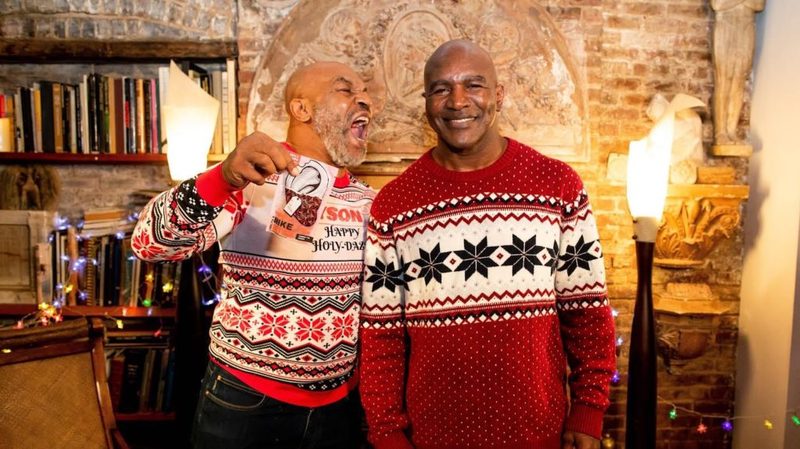
Here’s the twist nobody saw coming in 1997: Tyson and Holyfield are now close friends, and they’ve turned the ugliest moment of both their careers into a running joke they share. In 2022 the two old rivals teamed up to sell ear-shaped cannabis edibles — Tyson’s “Mike Bites” and a holiday line called “Holy Ears,” complete with a Christmas-sweater photo shoot and the tagline “Happy Holy-Daze.” Holyfield even posed grinning while Tyson pretended to chomp the gummy ear.
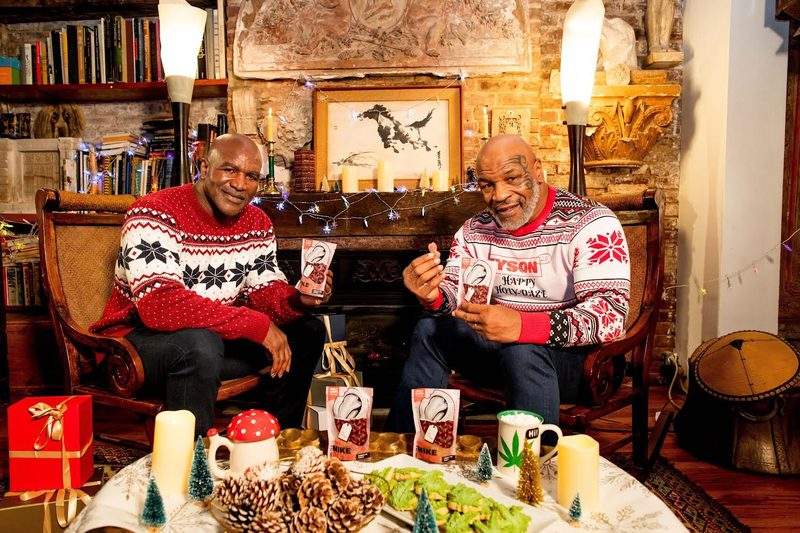
It’s a genuinely strange and oddly heartwarming coda. Two men who once needed police to be pulled apart now do co-branded photo shoots in matching knitwear. Tyson summed it up when he posted a picture of the pair with the caption that they’d come a long way since the bite fight. They had.
Why the bite fight still matters
Ask anyone over 35 to name a boxing match and there’s a decent chance they land on this one before they get to Ali or Frazier. That tells you something. The Tyson bite fight didn’t just end a fight — it became shorthand for the moment a champion’s self-control finally cracked on the biggest stage there is. It’s referenced in cartoons, sampled in songs, and resurrected every June 28 like clockwork.
The 90s gave us plenty of larger-than-life sports moments — the Rangers ending a 54-year Stanley Cup drought in that same summer of 1994, for one. But none of them detonated quite the way this one did, in real time, in front of a paying audience expecting a clean fight. Next time someone tells you the worst thing that can happen in the ring is a knockout, remind them that the most famous heavyweight of the decade lost by getting hungry. The Bite Fight is the rare scandal that aged into a friendship — and it still bites.
Sources
- Evander Holyfield vs. Mike Tyson II — Wikipedia — fight details, purses, revenue, and aftermath.
- Boxer Mike Tyson bites off part of an opponent’s ear — HISTORY — June 28, 1997 day-in-history record.
- The Bite Fight, 25 years later — ESPN — round-by-round account and reflections.
- Tyson and Holyfield launch ‘Holy Ears’ edibles — CNBC — the rivals’ later partnership.
The Retro Almanac
A monthly roundup of "on this day" highlights from that month, decades back — plus first dibs on new retro merch drops. No spam, just the good stuff.