Knight Rider: 9 Wild Facts About the 80s TV Hit
NBC put Knight Rider on the air on September 26, 1982, and buried it in a Friday-night slot nobody expected to survive. Within a season it was a top-20 show, the toy Trans Am was flying off shelves, and every kid in America was talking to their bike like it might answer back. The premise was almost too simple to work: one man, one car, one endless supply of bad guys. The trick was that the car had more personality than most of the humans on prime time.
Here are nine facts about the show, the car, and the mullet that defined it — including the part where the producers wrecked a small fortune in Pontiacs and the voice actor who was too embarrassed to admit he did it.
The Retro Almanac
A monthly roundup of "on this day" highlights from that month, decades back — plus first dibs on new retro merch drops. No spam, just the good stuff.
1. KITT Was a 1982 Pontiac Firebird Trans Am
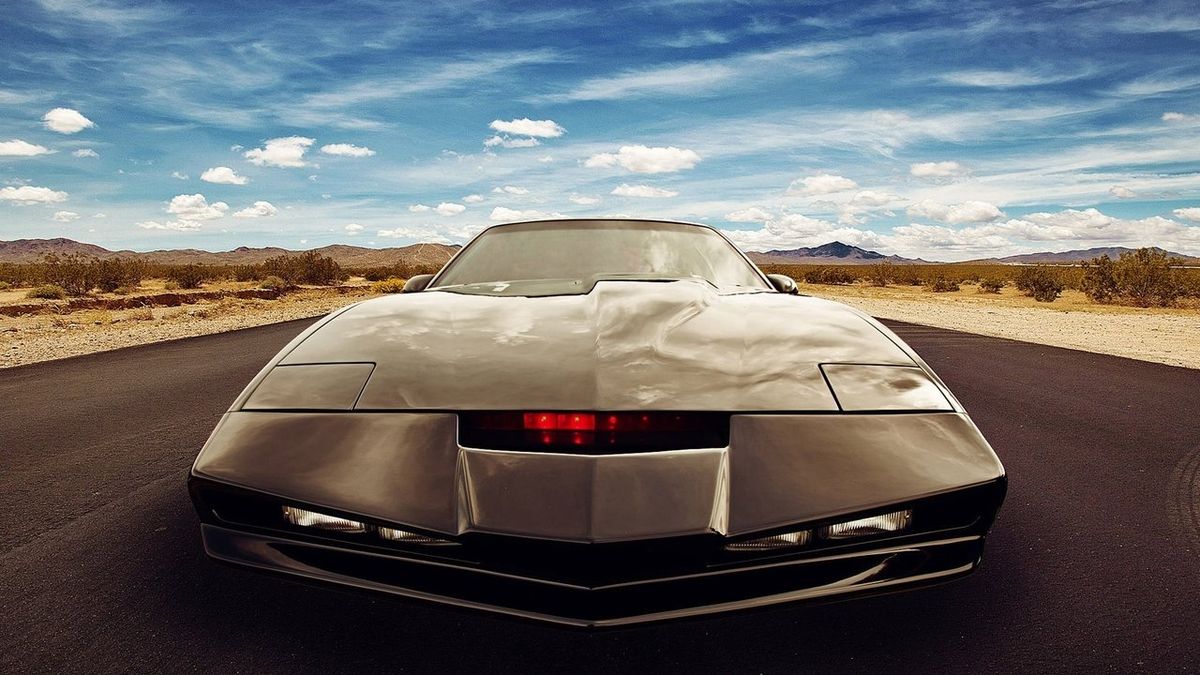
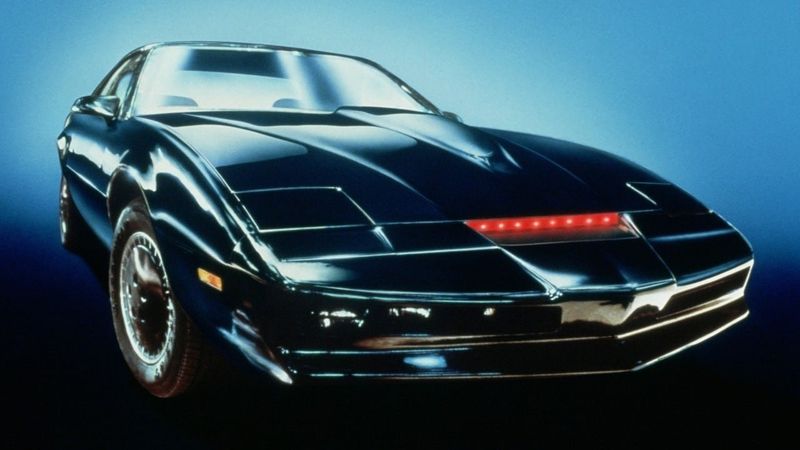
The Knight Industries Two Thousand — KITT for short — was built on a 1982 Pontiac Firebird Trans Am, customized by designer Michael Scheffe into something that looked like it drove off a spaceship. The all-black body, the T-tops, the wraparound dash lit up like a fighter jet cockpit: none of it was standard Pontiac. GM was happy to supply the cars because the exposure was priceless. A generation of buyers walked into dealerships in 1983 asking for “the Knight Rider car,” and Firebird sales reflected it.
The real Trans Am couldn’t do a fraction of what KITT did on screen, but it didn’t matter. The car became the star, and the star became a sales pitch Pontiac could never have bought outright. The interior sold the fantasy hardest — that spaceship dashboard packed with glowing readouts, the voice-modulator display that pulsed when KITT spoke, and a steering yoke pulled straight from an aircraft rather than a car. None of it was functional in the way the show implied, but it looked like the future had already arrived and parked in your driveway.

2. The Red Scanner Light Was Borrowed From the Cylons
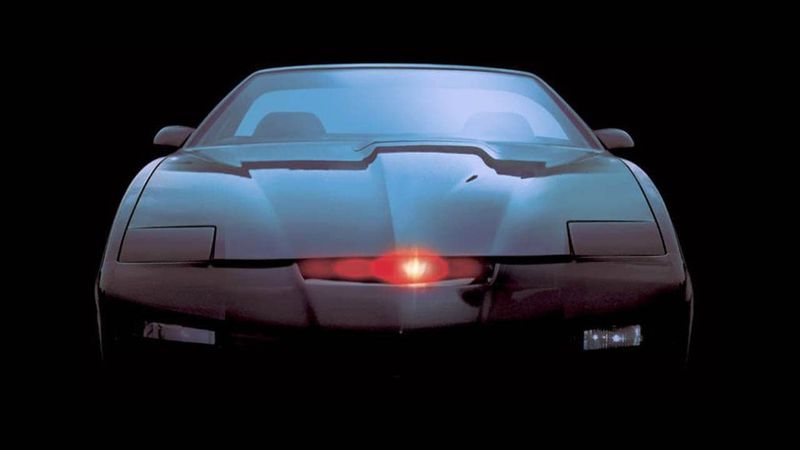
That sweeping red light on KITT’s nose — the single most imitated detail on the car — didn’t come out of nowhere. Creator Glen A. Larson had already used the exact effect on the Cylon robots in his earlier show, Battlestar Galactica. Same red bar, same hypnotic back-and-forth scan. Larson recycled his own best idea, and this time it stuck to a car instead of a killer robot.
Kids spent hours trying to recreate that scanner with bike reflectors and Christmas lights. It said “this machine is thinking” without a single line of dialogue, and it remains the fastest visual shorthand for artificial intelligence that 1980s TV ever produced.
3. KITT’s Voice Actor Was Embarrassed to Take the Job
KITT’s calm, faintly condescending voice belonged to William Daniels, a respected stage and screen actor who would soon win two Emmys playing Dr. Mark Craig on St. Elsewhere. Daniels thought voicing a car was beneath him, so he took the role on the condition that he receive no on-screen credit. For the show’s entire run, the actor giving KITT its dry wit went officially unnamed.
The irony is thick. Daniels won his Emmys, but ask anyone under 50 to name his most famous role and half of them will say “the car from Knight Rider” — or Mr. Feeny from Boy Meets World. The part he was ashamed of outlived nearly everything else he did.
4. They Built Over 20 Trans Ams — and Wrecked Most of Them
A show built on car stunts eats cars. Across four seasons the production used somewhere around 23 Trans Ams, with some estimates as high as 25. The famous turbo-boost jumps, the crashes, the slides through cardboard boxes — each one risked a chassis, and the crew went through vehicles at a pace that would horrify any collector today.
When filming wrapped in 1986, most of the surviving cars were simply destroyed or stripped rather than preserved. Only a handful escaped intact. That scarcity is why a screen-used KITT now commands six figures at auction, and why Hasselhoff himself bought one back before eventually selling it off years later.
5. KITT Had an Evil Twin Named KARR
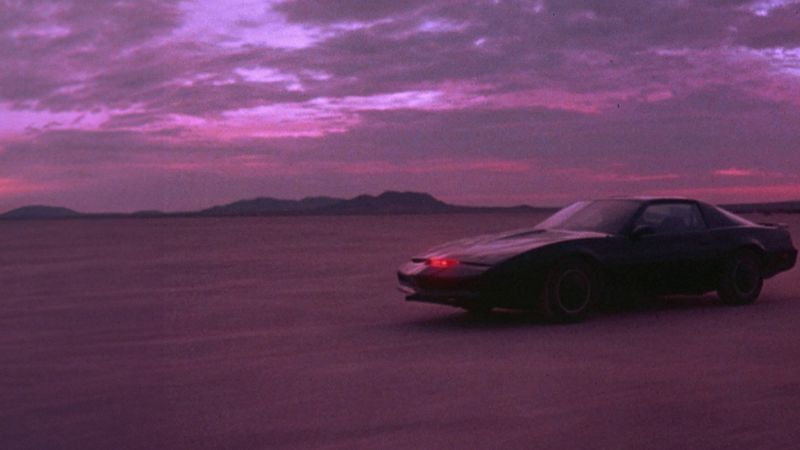
The best villain the writers ever came up with wasn’t a person. It was KARR — the Knight Automated Roving Robot — an earlier, unstable prototype programmed for self-preservation instead of protecting human life. KARR was KITT’s dark mirror: same body, same technology, opposite soul. When the two cars faced off, the show tapped into something genuinely creepy about a machine that only cared about itself.
KARR appeared in just two episodes, but fans still rank those installments among the series’ best. A talking hero car is fun. A talking car that wants you dead is unforgettable, and it gave Knight Rider a rare flash of real menace.
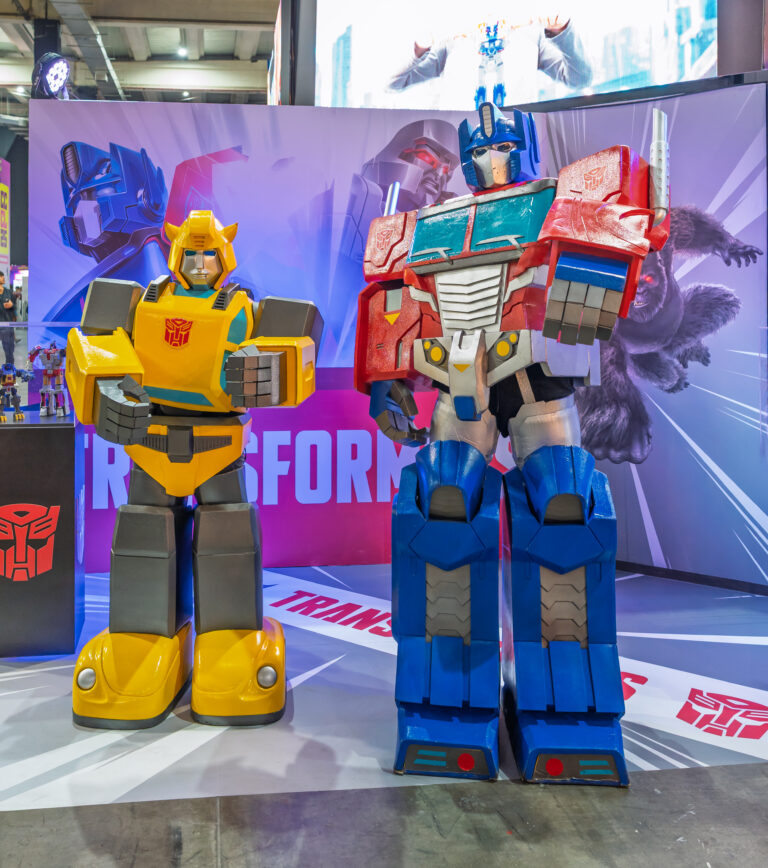
There’s a fun bit of trivia buried in KARR’s return, too. The prototype was voiced in its first appearance by Peter Cullen — the same actor who gave Optimus Prime his booming baritone in the Transformers cartoon. So the evil car and the noblest robot in 80s pop culture shared a voice. Larson’s crew clearly knew that half the job of selling a killer machine was casting the right menace behind the dashboard.
6. The Turbo Boost Was Mostly a Ramp and a Prayer
KITT’s signature move was Turbo Boost — a burst of thrust that launched the car over walls, rivers, and the occasional semi truck. On screen it looked like rocket propulsion. In reality it was a hidden ramp, a stunt driver, and a Trans Am hitting it at speed while the crew held their breath. There was no rocket. There was gravity and good timing.
Those jumps punished the cars brutally. Landings cracked frames and blew suspensions, which is a big reason the body count of Pontiacs climbed so high. The magic of Knight Rider was always half clever gadget talk and half practical stunt work done the hard way, years before CGI could fake any of it.
7. The Show Ran on a Tiny Cast — and One Big Boss
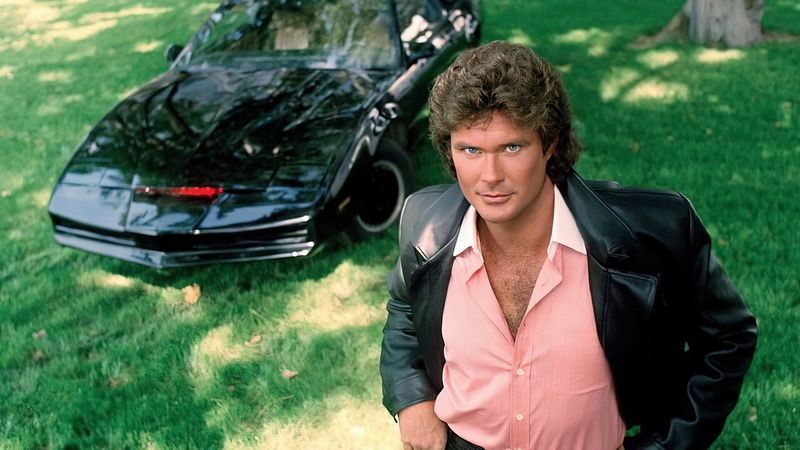
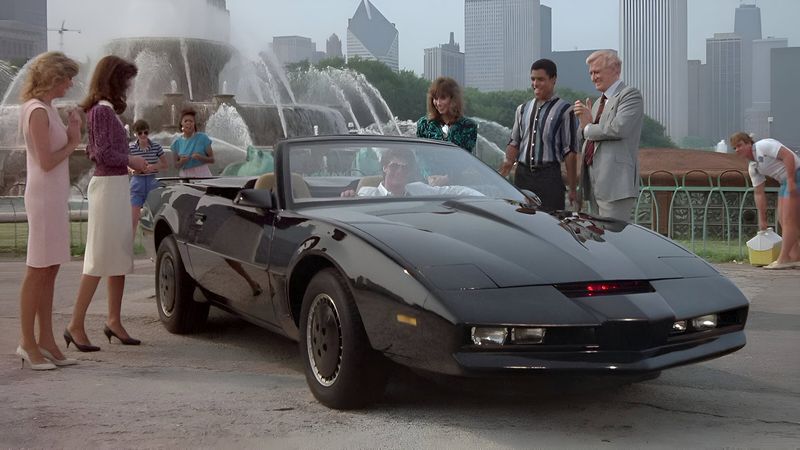
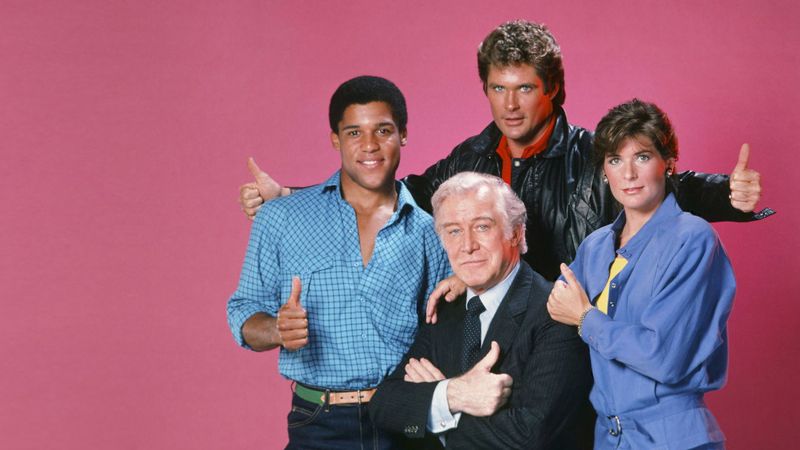
For a series about a lone crusader, Knight Rider kept its human roster lean. David Hasselhoff carried nearly every scene as Michael Knight, backed by Edward Mulhare as the dignified Devon Miles, head of the Foundation for Law and Government, and Patricia McPherson as chief mechanic Bonnie Barstow. Later seasons added Peter Parros as technician RC3. That was essentially the whole operation.
The compact cast worked in the show’s favor. With so few regular faces, the bond between Michael and KITT became the emotional center — a man and his car bickering, saving each other, and genuinely functioning as partners. It’s a buddy-cop formula where one of the buddies happens to be a dashboard.
8. Knight Rider Made David Hasselhoff a Global Phenomenon
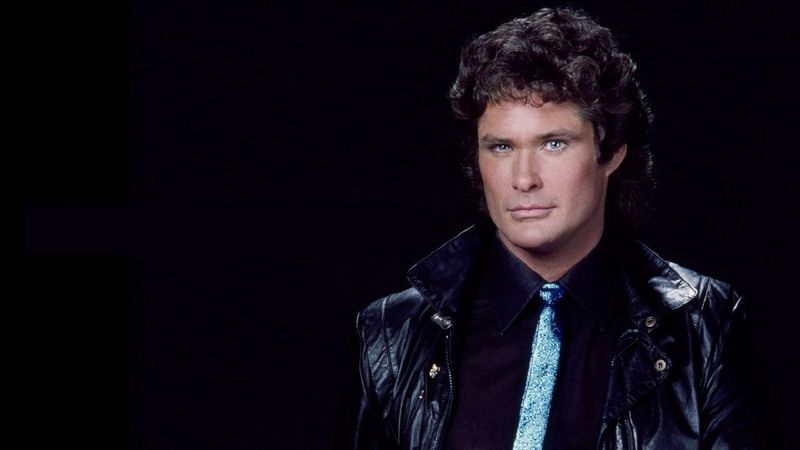
Before KITT, David Hasselhoff was a soap actor best known for The Young and the Restless. Michael Knight changed the trajectory of his entire career. The role turned him into a leading man, set up his even bigger run on Baywatch, and made him a household name on several continents at once — especially in Germany, where his later pop career and the fall of the Berlin Wall turned “The Hoff” into an outright legend.
You can draw a straight line from that black Trans Am to the lifeguard tower. If you grew up on his rescue-beach heroics, our deep dive on the Baywatch TV show covers where the Hoff went after he traded the scanner light for a red swimsuit. Knight Rider was the launchpad for all of it.

9. The Franchise Refused to Die
Knight Rider ended in 1986, but the idea was too good to leave parked. NBC tried to revive it with Knight Rider 2000 and Knight Rider 2010, then a short-lived 2008 reboot that swapped the Trans Am for a Ford Mustang and drew immediate grumbling from purists who insisted KITT would always be a Firebird. Video games, toys, and endless nostalgia specials followed.
The 80s were stacked with tough-guy action TV, from Mr. T and The A-Team to the neon-soaked cool of Miami Vice. Knight Rider stood apart because its true hero had four wheels. That’s a harder thing to reboot than a catchphrase or a pastel blazer, which is exactly why every attempt keeps circling back to the same black car.
Why KITT Still Rules the Garage
The self-driving cars rolling out today talk to their owners, brake on their own, and warn you about hazards you can’t see — everything KITT did in 1982, minus the sarcasm. Knight Rider guessed the future and dressed it in a leather jacket. If your first idea of a “smart car” was a black Trans Am with a glowing red eye and a British accent, you can thank a Friday-night show that nobody at NBC thought would last. Fire up the original intro below, and try not to reach for an imaginary turbo boost.
Sources
- Knight Rider (1982 TV series) — Wikipedia — series history, air dates, cast, and production notes.
- KITT — Wikipedia — details on the Pontiac Firebird Trans Am build and the number of cars used.
- MeTV — Facts About Knight Rider — background on the scanner light, KARR, and the show’s production.
- Knight Rider — IMDb — cast credits including William Daniels as the voice of KITT.
Browse retro and vintage-inspired apparel at the RetroRadical shop →
Shop on Amazon
80s Collectibles on Amazon →
As an Amazon Associate we earn from qualifying purchases.
Shop on eBay
80s Collectibles on eBay →
We may earn a commission when you shop through our eBay links.
The Retro Almanac
A monthly roundup of "on this day" highlights from that month, decades back — plus first dibs on new retro merch drops. No spam, just the good stuff.