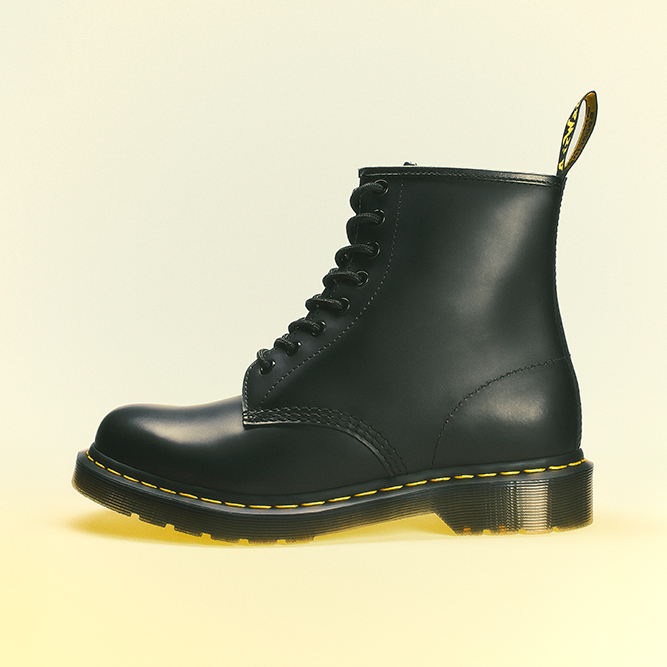
1460 Boots | Dr. Martens
|

Doc Martens Were Dead in 2009 — Then Gen Z Found Them Again

By 2009, Doc Martens were a punchline. The 8-eye boot that had stomped through grunge clubs, mosh pits, and high school hallways from 1991 to 1999 had become the kind of thing you found at the back of your closet next to your Smashing Pumpkins shirt and a Discman with a cracked lid. Sales were sliding. The Northampton factory had shuttered in 2003. The brand was on the rocks, bleeding money, and getting passed around like a hot potato until private equity firm Permira scooped it up in 2013 for $475 million — a price that looked generous at the time.

Eight years later, Doc Martens IPO’d at a $5.6 billion valuation. Eight years after that, Gen Z had completely rewritten what the boots meant — and yet somehow the boots themselves looked exactly the same as they did in the photo of Eddie Vedder we all had taped inside our school lockers. The grunge resurgence in 2020s fashion didn’t tiptoe back. It walked in wearing a $170 pair of 1460s and a thrifted slip dress, and it didn’t ask permission.
Kurt Cobain 1992
Kurt Cobain 1992

The Boot That Started as a Doctor’s Orders

https://www.youtube.com/watch?v=NUymmdv0e1g

Klaus Märtens, a German army doctor, broke his ankle skiing in Bavaria in 1945. The standard issue army boots were murder to walk in with a wonky foot, so he sat down at a workbench and engineered an air-cushioned sole using rubber salvaged from old tires. The boots were ugly. Comfortable, but ugly. He sold them to older German women with foot pain throughout the 1950s — about 80% of his early customer base was women over forty buying them for the same reason your grandmother wears SAS shoes.

The story would have ended there if a British shoemaker named Bill Griggs hadn’t seen them advertised in a 1959 magazine. Griggs licensed the air-cushioned sole, anglicized the spelling to Dr. Martens, slapped yellow welt stitching on the upper to make them pop, and released the 1460 boot on April 1, 1960 — that’s where the number comes from, the date. Eight eyelets. Black smooth leather. Yellow stitch. Grooved sole. Every detail you remember from your cousin’s high school yearbook photo was locked in on day one.
For the first decade they were just workboots. Postmen wore them. Factory workers wore them. They were the British equivalent of Red Wings — cheap, durable, unglamorous. Then the skinheads found them in the late 1960s. Then the punks took them off the skinheads in the late 1970s. Then the post-punks took them off the punks. By the time grunge rolled around, the boots had already been three subcultures deep and were essentially a uniform looking for an army.

Doc Martens yellow stitch

How Grunge Made Them Holy

Seattle, 1991. Nevermind drops in September. By Christmas, every kid in a thrift-store cardigan is searching for a pair of cheap, ugly, durable boots to complete the look. Doc Martens were already in the U.S. by then — they’d been imported since the late 70s — but the price tag was steep for what was supposed to be an anti-fashion movement. That contradiction never bothered anyone. Grunge was always a little bit of a pose, and the boots were the part of the pose you could keep forever.

Kurt Cobain wore them. Eddie Vedder wore them. Courtney Love wore them with baby doll dresses in a combination that launched a thousand prom photos. Drew Barrymore wore them on the red carpet with a slip dress in 1995, which was basically the moment fashion magazines decided grunge had crossed over and the trend was officially dead — except nobody told the kids in the audience, who kept buying boots through the late 90s and into the 2000s long after the editors had moved on to bootcut jeans and Juicy Couture tracksuits.

r/grunge - Eddie Vedder, 1992. Photo by Paul Bergen.
r/grunge – Eddie Vedder, 1992. Photo by Paul Bergen.

The Quiet Years

From about 2001 to 2010, Doc Martens entered the wilderness. Low-rise jeans took over. Pointy-toed boots were in. The 8-eye silhouette looked clunky and earnest in a decade that wanted everything sleek, ironic, and glossy. Sales tanked. The Northampton factory — the original British plant that had been making the boots since 1960 — was closed in 2003 and most production was moved to China and Thailand. Purists called it the end. The brand was technically still alive but it was being kept on life support by the same kind of people who still wore JNCOs to the grocery store — devoted, niche, and aging.

The decision to outsource was the same one every legacy brand made in that decade. Margins improved. Quality, by most accounts, dipped. The boots got a little softer, a little less cardboard, a little easier to break in — which longtime fans hated and which, ironically, made the boots more accessible to anyone who didn’t want to bleed through their socks for six weeks to earn the right to wear them. That trade-off would matter later.

dr martens boots doc martens boots in production uk fashion blogger

Lockdown Did What Marketing Couldn’t

March 2020. Everyone is home. Closets are getting cleaned out. Older sisters are pulling boxes down from the top shelf and finding the boots they wore to a Bush concert in 1996. Teenagers stuck in the house with their parents are seeing these boots for the first time, and TikTok — which had just turned into the global mood ring it remains today — was about to do for Doc Martens what MTV did for them in 1992, only faster and weirder.

The hashtag #docmartens crossed a billion views by mid-2021. Kids who had never heard a Nirvana song outside of their dad’s car stereo were ordering 1460s and pairing them with cottagecore prairie dresses, with bike shorts, with cargo pants, with tennis skirts. The boots had been freed from grunge entirely. They were just shoes again — versatile, recognizable, comfortable enough that the algorithm could endorse them to a generation that grew up in Crocs.

# girls wearing 3 different styles of grunge fashion.

The IPO Nobody Saw Coming

January 2021. London Stock Exchange. Doc Martens — yes, that Doc Martens, the boots your cousin wore with cutoff jorts to a Pearl Jam show in 1994 — goes public at a valuation north of £3.5 billion (roughly $5.6 billion USD). Permira, who paid $475 million for the brand back in 2013, walked away with a return that made every private equity firm in London weep into their morning coffee. The boots had been dead. Then they were the hottest IPO of the quarter.

The stock didn’t stay up forever — by 2024 it had cratered well below the IPO price as the post-pandemic shopping bender ended and supply chain costs ate into margins. But the cultural moment had already happened. The boots had already crossed back over. The IPO was less a beginning than a coronation: confirmation that the silhouette your generation thought was dead had, in fact, just been waiting for the kids who hadn’t grown bored of it yet.

Doc Martens boots black

Why the 1460 Specifically

Doc Martens makes a lot of boots. Mary Janes. Chelsea boots. Loafers. 14-eye monsters that reach the calf. But the boot Gen Z reached for, almost unanimously, was the original 1460 — the same 8-eye lace-up that Pete Townshend wore on stage in 1968 and that the cover of the Manic Street Preachers’ debut album basically canonized. The reason isn’t complicated. The 1460 is the boot your aunt wore. The boot your mom wore. The boot in every grunge-era yearbook photo. It’s the silhouette that screams the loudest, and Gen Z’s fashion sense — for all its irony and remix — has always rewarded the loudest silhouette.

The platform variant — the 1460 Pascal Bex, with the chunky stacked sole that adds an inch and a half — became the breakout 2020s version. Same upper. Same yellow stitch. Same eight eyelets. Just exaggerated, because Gen Z does everything one click louder than the original. If 1992 grunge wore a 1460 to look like it didn’t care, 2022 grunge wore a 1460 Bex to look like it cared a lot about looking like it didn’t care.

Drew Barrymore 1990s

What Gen X Notices That Gen Z Doesn’t

The leather is softer. There, I said it. Anyone who bought a pair of 1460s before 2003 remembers the break-in period as a kind of low-grade trench warfare: blisters across the back of the heel, raw skin under the lace eyelets, six weeks of doubling up on socks until the leather finally surrendered to the shape of your foot. The post-China-production boots are noticeably easier. The leather has give. The collar doesn’t fight back. Younger wearers don’t know this is a thing.

The other thing Gen X notices: nobody is wearing them with anything resembling actual grunge clothing. The boots are showing up under sundresses, with linen pants, with biker shorts, with academia coats. The cultural meaning has been completely unbundled from the costume. The boots are just boots again, the way they were in 1965 before three subcultures laid claim to them. That’s not a complaint — it might actually be the most Doc Martens thing about the whole revival.

The Lesson Hidden in the Comeback

Fashion cycles run about thirty years — that’s the rule of thumb editors use to predict what’s coming back. Sixties bell-bottoms returned in the nineties. Seventies disco fashion returned in the 2000s. Right on schedule, mid-nineties grunge returned in the mid-2020s, with Doc Martens leading the charge because the boots were already mythological objects sitting in closets all over America, waiting to be photographed for an Instagram post.

The boots outlived the kids who wore them in 1993. They outlived the bands. They outlived the magazines that covered the bands. They outlived the malls those kids bought them in. They’ll probably outlive the IPO that valued them at $5.6 billion. The whole story of Doc Martens — Bavarian doctor, British factory, punk uniform, grunge canonization, dead brand, TikTok rebirth — is really the story of one extremely stubborn boot refusing to take the hint and disappear. Whatever the next subculture is, the 1460 will be there, eight eyelets and yellow stitch, waiting to be discovered all over again.

Sources

Dr. Martens — Wikipedia
Grunge — Wikipedia
Reuters — IPO coverage
BBC — Doc Martens business reporting
Doc Martens 1460 on Amazon

Similar Posts

Leave a Reply

Your email address will not be published. Required fields are marked *