From Queensbridge to Bed-Stuy: How 1994 Made Hip-Hop Immortal
There are years in music that feel like accidents — right place, right time, lightning striking the same tower over and over. For hip-hop, 1994 was that year. In twelve months, a genre that had already survived crack, censorship battles, and cultural dismissal produced a string of albums so dense with purpose and craft that critics are still trying to fully unpack them three decades later. It wasn’t planned. Nobody issued a memo. But somehow, the stars aligned over housing projects in Queens, brownstone blocks in Brooklyn, and sun-bleached streets in Atlanta, and what came out of those coordinates changed music forever.
The Queensbridge Chronicles
By early 1994, Nasir Jones was 20 years old and hadn’t finished high school. He’d grown up in the Queensbridge Houses — the largest public housing project in North America — watching the world through windows that framed no particular promise. What he had was a notebook and an ear for language that bent the English sentence into something almost sculptural. When Illmatic dropped on April 19, 1994, it barely moved units in its opening week. Hip-hop had been here before, watching greatness walk out the door quietly.
But Illmatic didn’t sell slowly because it was overlooked. It sold slowly because it was dense. Every bar demanded attention, replaying, excavation. Over beats constructed by the genre’s elite — DJ Premier, Pete Rock, Q-Tip, Large Professor — Nas painted Queensbridge the way Dickens painted London, with detail so precise and feeling so cold it felt like journalism. “N.Y. State of Mind” opens with a piano loop that sounds like rain on concrete, then Nas materializes out of the fog: I never sleep, ’cause sleep is the cousin of death. That’s not a rap lyric. That’s a philosophical position held by someone who had every reason to develop one.
The Retro Almanac
A monthly roundup of "on this day" highlights from that month, decades back — plus first dibs on new retro merch drops. No spam, just the good stuff.
The album’s lasting power comes from its refusal to glamorize what it describes. The projects weren’t presented as a backdrop for bragging — they were the whole story, the planet, the sky. Illmatic ran 39 minutes across 10 tracks and felt complete in a way most double albums don’t. Hip-hop had stories before 1994, but rarely this precise, this painterly, this unsentimental. It would go platinum eventually, on delayed time, the way great things sometimes do when the world isn’t quite ready on arrival.
Ready to Die and the Man Who Changed Brooklyn
Six months after Illmatic rearranged the game quietly, The Notorious B.I.G. arrived loudly. Ready to Die hit shelves on September 13, 1994, and where Nas offered poetry, Biggie offered cinema. Christopher Wallace — a 22-year-old from Bed-Stuy who could make you laugh and then make you feel the weight of a whole life in the same breath — was the kind of rapper who seemed fully formed on arrival. He had no awkward debut phase. Ready to Die sounds like a man who had been preparing for this conversation his whole life.
Sean Combs’ production choices were crucial here. Where Illmatic pulled from jazz loops and raw drum programming, Bad Boy Records understood that hip-hop had a pop audience it hadn’t fully claimed yet. “Juicy” sampled Mtume’s “Juicy Fruit” and opened with the line This album is dedicated to all the teachers who told me I’d never amount to nothin’. That landed differently in 1994 because there were millions of kids sitting in classrooms being told exactly that. It was the perfect first line for the perfect first album by someone who had no business being this good this fast.
Ready to Die also contained some of the most visceral street narratives the genre had attempted — “Everyday Struggle,” “Warning,” “Machine Gun Funk” — tracks that made gangsta rap’s theatrical violence feel like a genre convention Biggie was already moving past. He wasn’t posturing. He was narrating. And by the time the album closed on its title track, the full portrait was complete: a life described from birth to death, with no false endings and no consolation prizes. The commercial and the uncompromising existed on the same record without canceling each other out, which is an achievement almost nobody before or since has managed as cleanly.
The South Had Something to Say
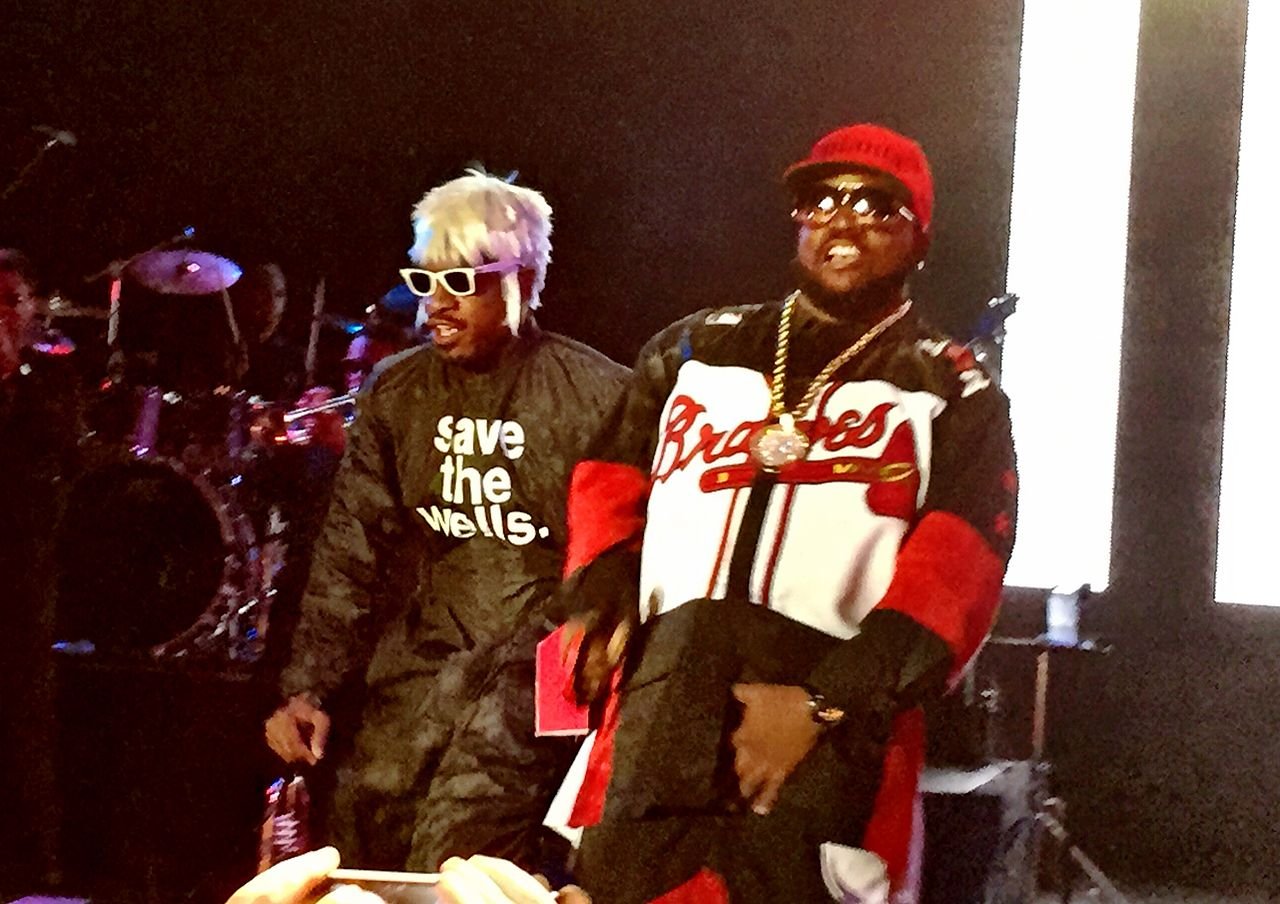
February 1994 produced something else entirely, and almost nobody was ready for it. OutKast — André 3000 and Big Boi out of East Point, Georgia — released Southernplayalisticadillacmuzik and immediately became the punchline nobody had prepared. The rap industry was New York. Occasionally it was Los Angeles. It was not, under any circumstances, Atlanta. Critics were polite. Radio was lukewarm. The establishment shrugged.
A year after their debut, OutKast accepted a Source Award for Best New Artist and André 3000 walked to a microphone in a room full of booing New York rappers and said, plainly and without apology: The South got something to say. It became one of the defining moments in hip-hop history — a declaration that a region the genre’s establishment had written off was not only competing but was about to run the whole thing. By the early 2000s, Atlanta would own rap music outright. In February 1994, in a studio with Organized Noize, it planted the flag nobody noticed yet.
Southernplayalisticadillacmuzik drew on funk, soul, and regional character in ways that didn’t sound like anything from either coast. The production was warm and slow-burning, built for Georgia summer heat rather than New York winter concrete. Songs like “Player’s Ball” and “Git Up, Git Out” suggested an entirely different emotional register — looser, more groove-oriented, built on community rather than individual narrative. It was hip-hop in a different key, and 1994 was generous enough to make room for it alongside everything else happening that year.
The Rest of the Catalog
1994 was generous even beyond its headline acts. Warren G’s debut Regulate…G Funk Era, released that June, produced one of the year’s biggest radio hits and stood as G-funk’s commercial high-water mark — the sound Dr. Dre had created on The Chronic two years earlier distilled into a single perfect summer anthem. “Regulate,” featuring Nate Dogg, spent weeks near the top of the charts. The video played constantly on MTV. It became the soundtrack to car rides and backyard cookouts for an entire generation of kids who’d never been anywhere near Long Beach, California.
Method Man released Tical in November 1994, the first proper solo Wu-Tang album after Enter the 36 Chambers had detonated the previous October. RZA’s production was dense and narcotic — Staten Island fog filtered through industrial paranoia — and Method Man’s voice, one of the most distinctive the genre has ever produced, made it feel like a complete personality rather than just a debut record. It didn’t need to be a commercial smash. It needed to exist, and it did.
The thread connecting all of these records isn’t geography or label or production style. It’s seriousness of intent. The artists who defined 1994 were working toward something — not fame exactly, not money exactly, but the feeling that they had something the world hadn’t heard yet and genuinely needed to hear.
Why 1994 Doesn’t Come Back

Every generation believes its music was the real music. Gen X gets accused of this constantly. But the case for 1994 isn’t nostalgia — it’s arithmetic. In a single calendar year, hip-hop produced multiple debut albums that rank among the greatest records in any genre. Illmatic appears on every serious list. Ready to Die appears on every serious list. Southernplayalisticadillacmuzik changed regional American music in ways that are still being felt. The circumstances that made this possible were specific and unrepeatable.
A generation of MCs had grown up with hip-hop but had no template for what their version of it should look like. Producers were still figuring out what the form could carry. The music industry hadn’t yet learned how to optimize creativity out of the process. The internet hadn’t arrived to flatten taste into algorithms. A kid in Queensbridge and a kid in Atlanta were making music with no real certainty it would reach beyond their immediate world. That uncertainty produced urgency. You can hear it in every Nas bar on Illmatic, feel it in the way Biggie stacks syllables on Ready to Die like he’s constructing something that needs to hold weight.
The Golden Age of hip-hop runs from roughly 1986 to 1998, and arguments can be made for 1988 or 1993 as its defining years. But 1994 is the year that looks most like a generation saying everything it needed to say at once — a 20-year-old from the projects, a 22-year-old from Brooklyn, two kids from Atlanta who came to New York and got booed. Between them, they built the architecture the rest of the decade, and in many ways the rest of the genre, would live inside. That’s not nostalgia. That’s just what happened.
Sources
- Illmatic — Wikipedia
- Ready to Die — Wikipedia
- Southernplayalisticadillacmuzik — Wikipedia
- Rolling Stone
The Retro Almanac
A monthly roundup of "on this day" highlights from that month, decades back — plus first dibs on new retro merch drops. No spam, just the good stuff.