Golden Girls: How 4 Women Rewrote 80s TV
NBC’s programming chief Brandon Tartikoff greenlit the show in the mid-1980s when the conventional wisdom in Hollywood said older women couldn’t carry a primetime comedy. The pilot drew nearly 25 million viewers on a Saturday night. Tartikoff later admitted he had no idea what he’d greenlit — he just knew the script was funny.
The Night NBC Took a Gamble Nobody Expected
Television in 1985 was a young person’s game. The network that gave America Miami Vice — which premiered the year before on the same night of the week — was about to discover that an audience who’d grown up in the 1940s and 50s still watched primetime television. A lot of them.
The Retro Almanac
A monthly roundup of "on this day" highlights from that month, decades back — plus first dibs on new retro merch drops. No spam, just the good stuff.
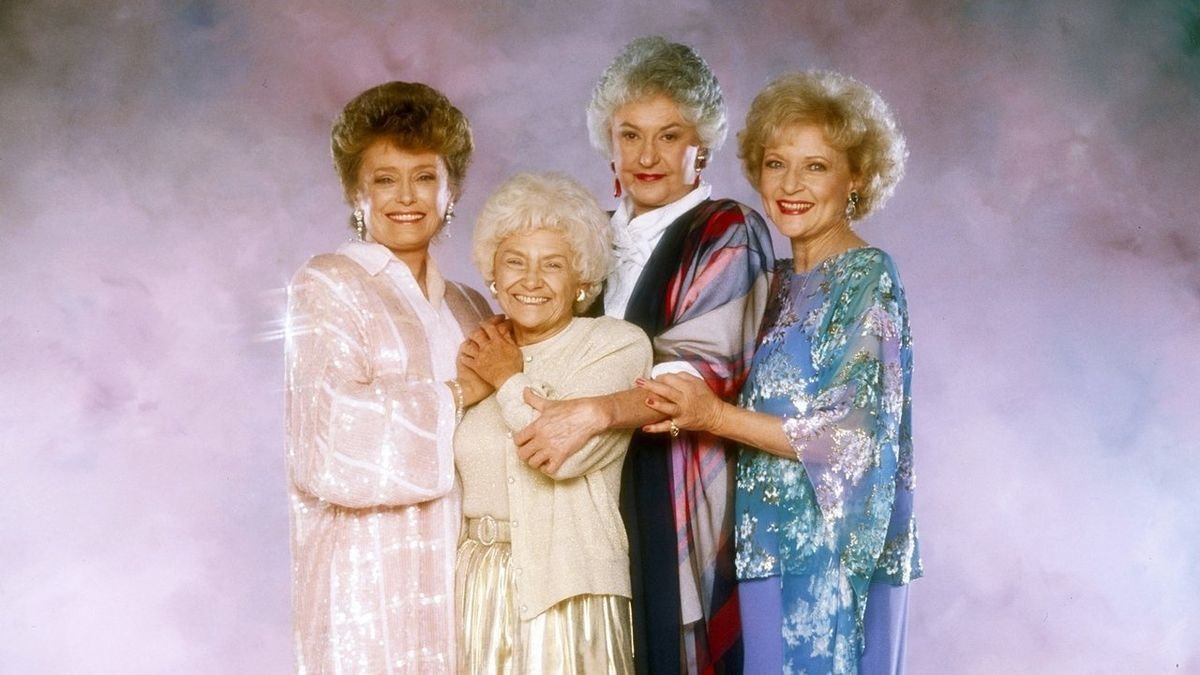
The Golden Girls pilot aired September 14, 1985, and pulled a number that stunned NBC’s research department. It debuted as the top-rated new comedy of the season and stayed near the top of the Nielsen charts through all seven of its seasons. At its Saturday night peak, the show was drawing audiences that dwarfed what NBC was getting from shows aimed at viewers half the age of Dorothy, Blanche, Rose, and Sophia.
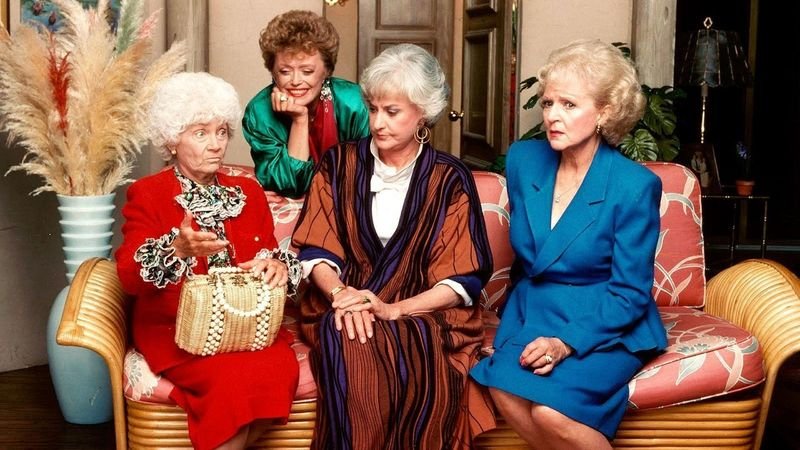
The premise was deceptively simple: four older women — a wry substitute teacher, a man-hungry Southern widow, a sweet-natured Minnesotan, and the teacher’s sharp-tongued Sicilian mother — share a home in Miami and eat a remarkable amount of cheesecake. What made it work was that the writers never condescended to the characters or the audience. These women had opinions, complicated histories, active romantic lives, and razor-sharp comedic timing. NBC had been skeptical. The audience was not.
The Emmy Sweep That Set a Record
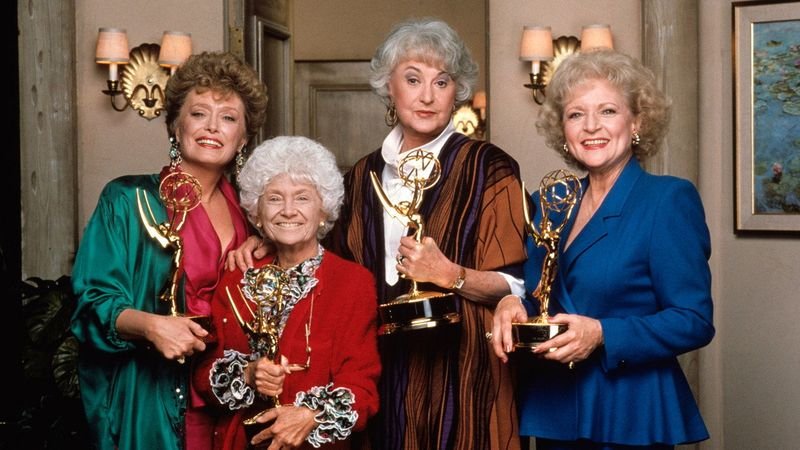
In 1986, the Television Academy handed out Emmys for the 1985-86 television season. The Golden Girls walked away with Outstanding Comedy Series. It won again in 1987. And again in 1988. Three consecutive wins for a show that the industry had written off before it aired.
More remarkable: all four lead actresses won Emmy Awards for their roles in the show. Bea Arthur (Dorothy) won Outstanding Lead Actress in a Comedy Series. Betty White (Rose) won. Rue McClanahan (Blanche) won. Estelle Getty (Sophia) won — becoming the first performer to win an Emmy for a role where she was younger than her character.
No show in Emmy history had swept all four lead acting categories in a single comedy series. It hasn’t happened since.

The Age Trick That Fooled the Entire Country
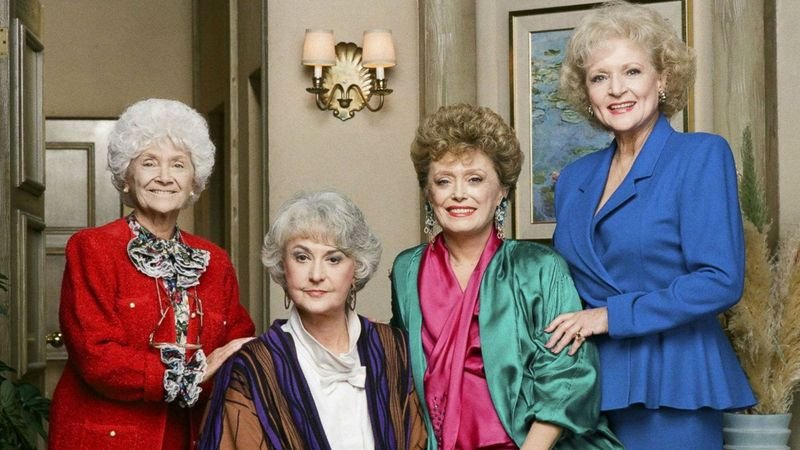
Estelle Getty was 62 years old when the show premiered. She played Sophia Petrillo, Dorothy’s 79-year-old Sicilian mother. The age gap between the actress and the character was 17 years — but the more disorienting fact is this: Getty was actually one year younger than Bea Arthur, who played her daughter.
Getty was born July 25, 1923. Arthur was born May 13, 1922. The woman playing the elderly Italian mother was born after the woman playing her middle-aged daughter.
The makeup department worked around this every day. A white wig, prosthetic wrinkles around the eyes and mouth, and about 45 minutes in the chair transformed Getty into Sophia before each taping. Then the show went on hiatus after its first season, and Getty had a facelift. When she came back for Season 2, she looked younger than she had at the start of the series. The makeup team had to essentially start over. The process got longer. The wrinkles got more elaborate. Nobody in the audience noticed any of this, which was the point.
The character’s backstory gave Getty room to explain Sophia’s unfiltered bluntness: a stroke before the series begins had damaged the part of her brain responsible for her social filter. Everything she thought came directly out of her mouth. It was the writers’ cleverest structural decision — it freed the character from the constraints that would have made a woman of Sophia’s generation hold her tongue. Sophia held nothing.
They Swapped the Roles — And That’s Why It Worked
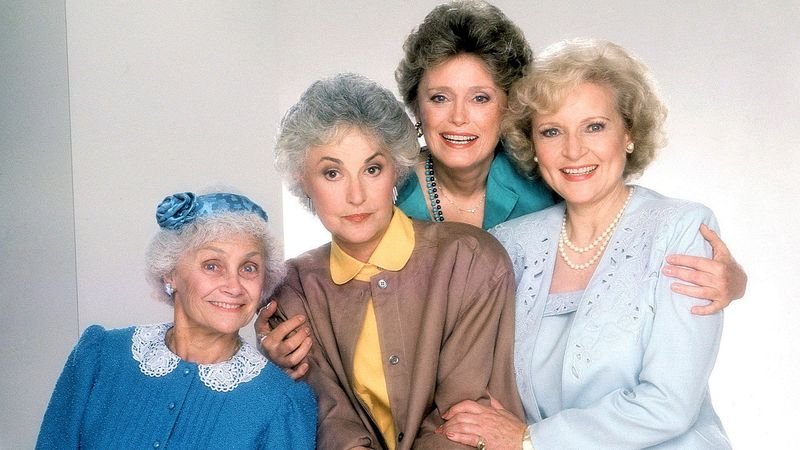
Betty White spent the better part of the 1970s playing Sue Ann Nivens on The Mary Tyler Moore Show — a cheerful, sexually aggressive character with a talent for deadpan humor. When Susan Harris was casting The Golden Girls, the obvious move was to cast White in the Blanche role, the man-hungry Southern widow with the elaborate romantic history. White was offered the part.
She turned it down. She’d spent seven years playing that archetype. She wanted Rose — the sweet, slightly slow-on-the-uptake Minnesotan from St. Olaf who told incomprehensible stories about her hometown and believed everyone she met was fundamentally good.
Rue McClanahan had the opposite problem. She’d played warm, emotionally open characters throughout her television career, including Vivian on Maude. She was handed Blanche Devereaux — the vain, man-obsessed Georgia belle — as a deliberate casting against type. The producers wanted both actresses playing outside what audiences expected from them. The result was that neither character felt like a performance. They felt like people.
That Theme Song Was Seven Years Old
Andrew Gold wrote and recorded “Thank You for Being a Friend” in 1978. It hit number 25 on the Billboard Hot 100 that year — a warm, slightly wistful pop song about gratitude and friendship that most people forgot about within a few years. Gold had moved on to other projects.
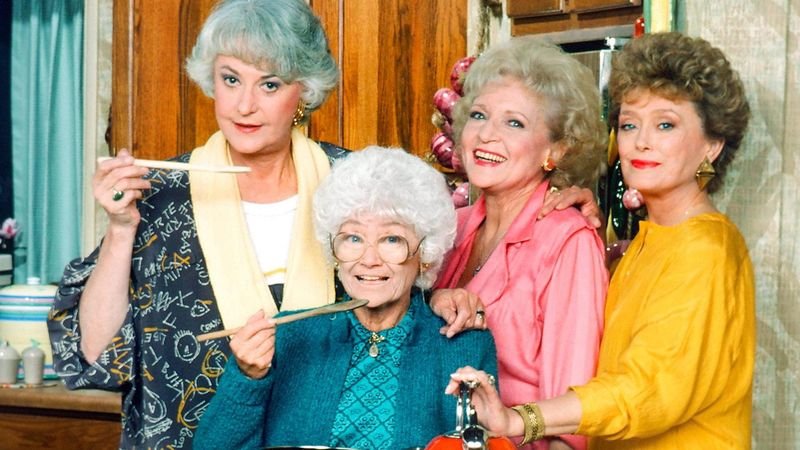
When Susan Harris and her team were developing the show’s title sequence in 1985, they went looking for existing music rather than commissioning something original. “Thank You for Being a Friend” fit the tone exactly. Singer Cynthia Fee re-recorded a shortened version for the opening credits, and the song was resurrected for one of the most-recognized television theme songs of the decade.
The version most people know isn’t Andrew Gold’s original. It’s Fee’s recording, about 45 seconds long, layered over footage of the four women eating at an outdoor café in Miami. Gold has said publicly he didn’t expect anyone to remember the song seven years after he wrote it. It’s now the first thing anyone thinks of when they think of the show.
The Episodes That Made NBC Uncomfortable
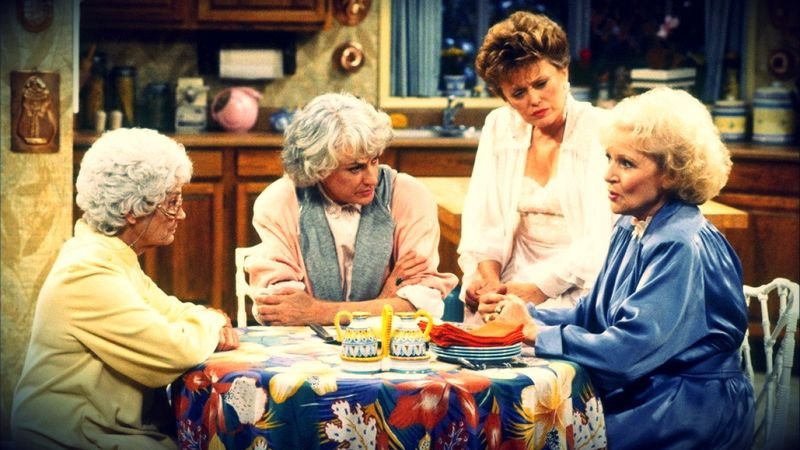
By 1990, The Golden Girls was in its fifth season. The writers decided to do an AIDS episode. This was still television in the era when major networks treated the subject as radioactive. The episode, “72 Hours,” put Rose in the waiting room of a clinic after discovering that she may have contracted HIV from a blood transfusion years earlier. The show did not resolve it with easy comfort. It made the audience sit with the uncertainty that millions of real people were living with.
That episode was not an outlier. The show had written about aging parents with dementia, breast cancer, prescription drug addiction, and gay rights — often more directly than any other show on primetime television at the time. Dorothy’s friend Jean was a lesbian, which the writers addressed without the winking discomfort that usually surrounded the subject in 1980s comedy. Sophia supported her without a second thought. It wasn’t presented as a Very Special Episode. It was just one part of the world these women lived in.
Susan Harris, who created the show, had a track record of pushing network comedies into uncomfortable territory — her earlier work on Soap had broken similar ground. With The Golden Girls, she had an audience that trusted the characters enough to follow them into serious material. The show never lost that trust across seven seasons.
Why It Never Actually Left
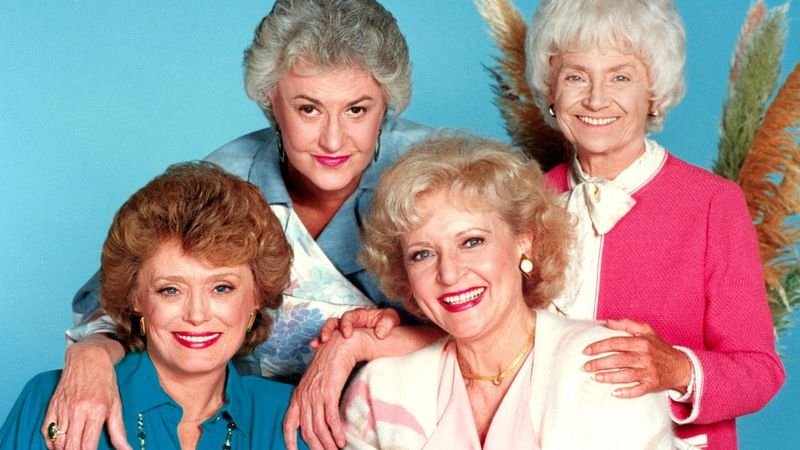
The series finale aired May 9, 1992. Bea Arthur had decided to leave, the writers wrapped Dorothy’s storyline with a marriage, and the network said goodbye to one of its most reliable ratings performers. Two months later, The Golden Palace spinoff launched with the remaining three cast members and a new hotel setting. It lasted one season.
But the original series never really went away. Lifetime picked up the reruns almost immediately after the NBC run ended, and a whole new generation of viewers found the show on basic cable through the 1990s. Gen X kids who’d watched it with their parents as kids were watching it alone at midnight. Then streaming arrived and the audience grew again.
By the time Betty White — the last surviving Golden Girl — died on December 31, 2021, one month before her 100th birthday, the show was getting more streaming views than many current productions. White’s death brought a wave of people back to the series who hadn’t thought about it in years. The numbers spiked. New viewers found it for the first time. The same thing that had happened with Lifetime in the 1990s happened again with Hulu in 2021.
Forty years after it premiered, NBC’s unexpected Saturday night gamble on four women over 50 remains one of the most-watched comedies in American television history. The cheesecake probably helped. But the writers and four extraordinary performers who never once played their characters for easy sympathy — that’s what kept it running.
For more 80s primetime nostalgia, read about Cheers, the Boston bar sitcom that ruled Thursday nights during the same era, or revisit The Cosby Show, which anchored NBC’s Thursday lineup while Golden Girls owned Saturday. And if you want the full picture of what 1985 primetime looked like, Miami Vice premiered the year before and reshaped what television could look like on a Friday night.
Sources
- The Golden Girls — Wikipedia — Series overview, Emmy history, episode count
- Estelle Getty’s Facelift Made Makeup Harder — Cheat Sheet — Prosthetics and aging makeup behind the scenes
- Surprising Secrets of the Golden Girls Cast — Parade — Casting swap between Betty White and Rue McClanahan
- Thank You for Being a Friend — Wikipedia — Andrew Gold original 1978, Cynthia Fee TV version history
- The Golden Girls — Britannica — Social issues and cultural impact
The Retro Almanac
A monthly roundup of "on this day" highlights from that month, decades back — plus first dibs on new retro merch drops. No spam, just the good stuff.