
Isabella Stewart Gardner Museum Heist | The $500 Million Art Theft Still Unsolved After 36 Years
On the night of March 18, 1990, two men in Boston Police uniforms buzzed the side entrance of the Isabella Stewart Gardner Museum and said they were responding to a disturbance call. It was 1:24 AM. The security guard on duty — Rick Abath, a 23-year-old Berklee music student working a graveyard shift — broke protocol and let them in. Eighty-one minutes later, thirteen pieces of art worth more than half a billion dollars were gone.
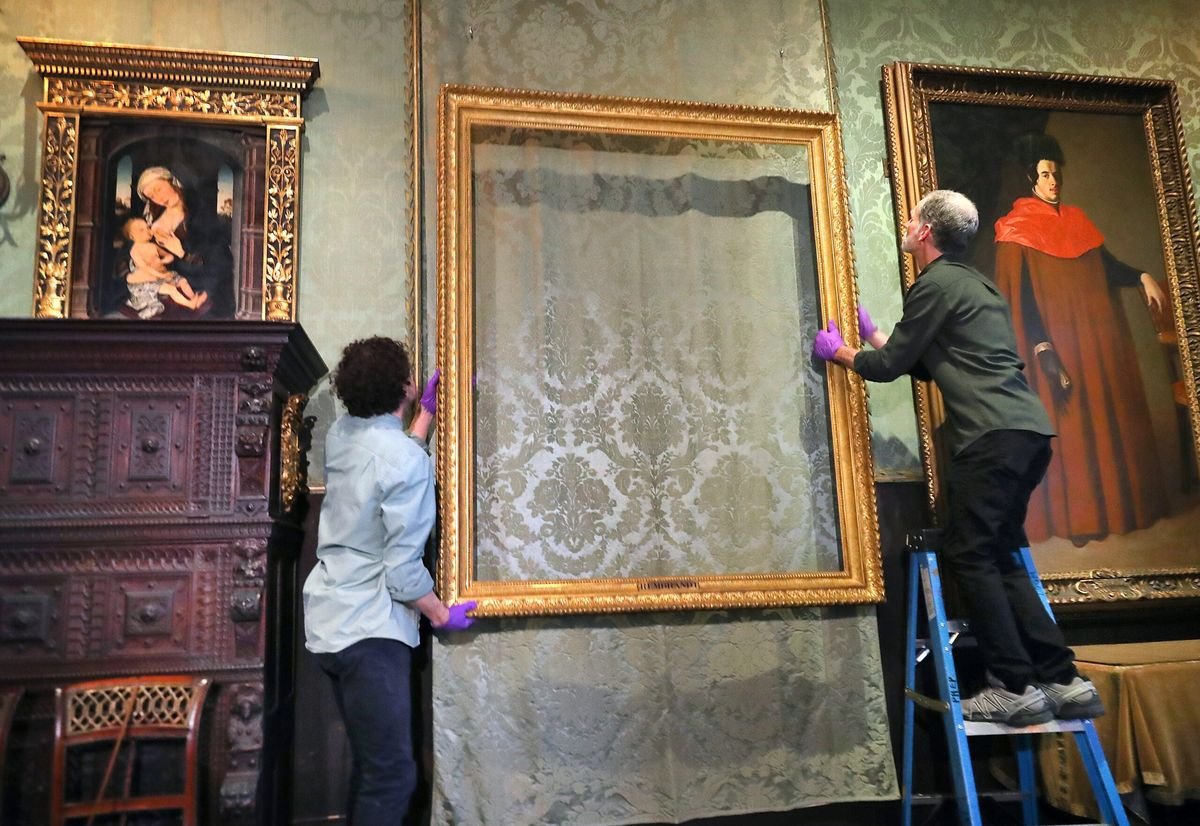
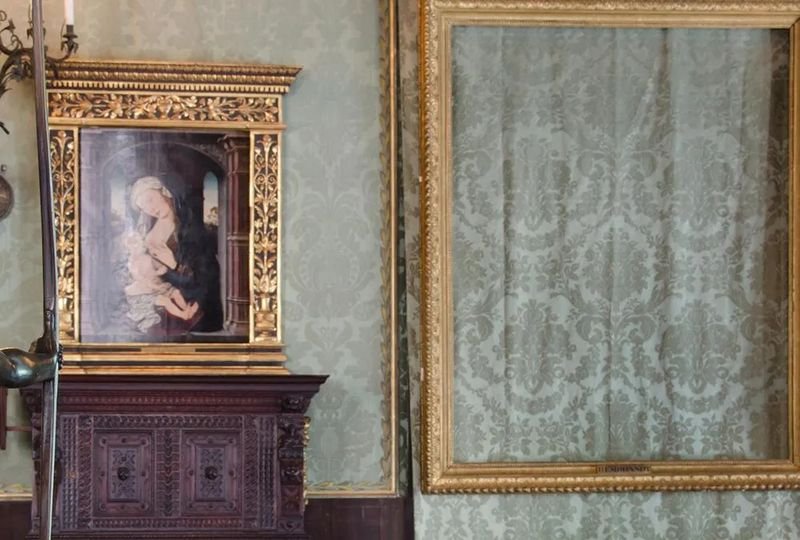
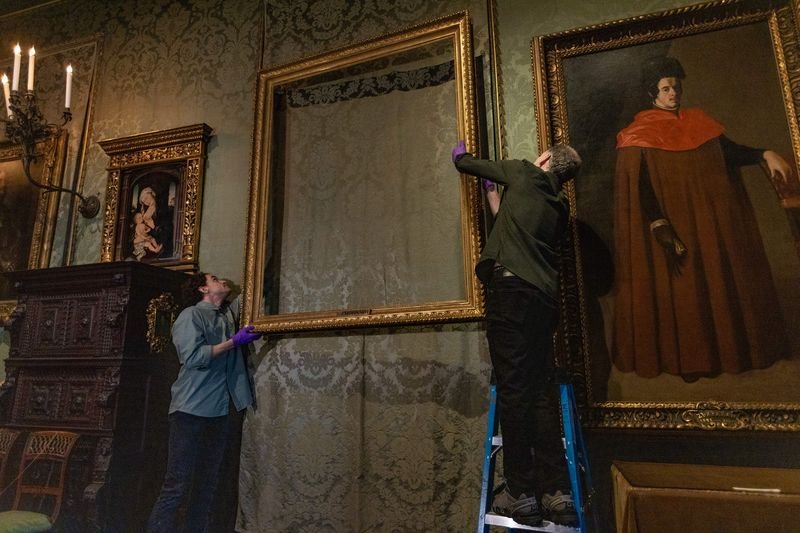
Thirty-six years later, not a single canvas has been recovered. The frames still hang on the Dutch Room walls, empty, like teeth knocked out of a smile. The reward sits at $10 million. The case file at the FBI’s Boston field office remains the largest property crime in American history.
The Retro Almanac
A monthly roundup of "on this day" highlights from that month, decades back — plus first dibs on new retro merch drops. No spam, just the good stuff.
The 81 Minutes That Robbed Boston Blind
The thieves moved with a confidence that has fascinated investigators for decades. After flashing fake badges and convincing Abath to step away from the security desk — the only spot in the building with the silent alarm — they ordered him to wave the second guard up from his rounds. Both guards were handcuffed, taped at the wrists and eyes, and walked to the basement, where they were left strapped to pipes. Then the two men got to work.
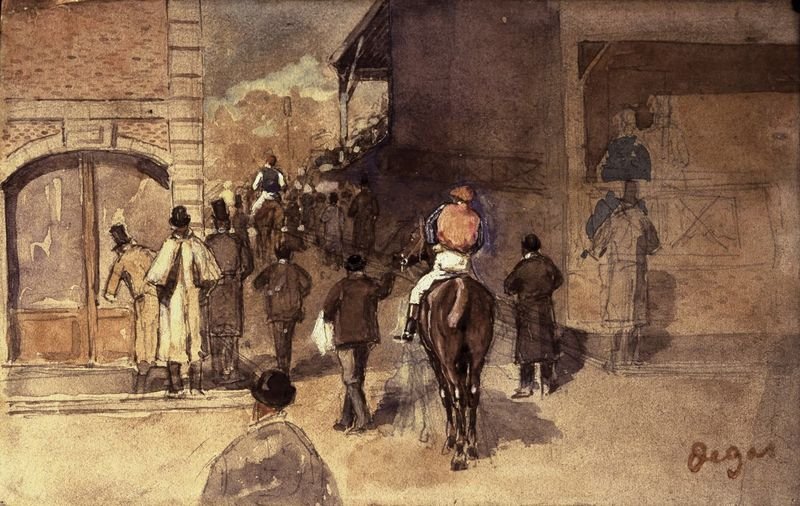
They moved through the museum in a pattern that made no sense to art critics and even less sense to the FBI. They cut Rembrandt’s Storm on the Sea of Galilee — the master’s only known seascape — straight out of its frame with a blade. They did the same to A Lady and Gentleman in Black. They smashed the case holding Rembrandt’s tiny postage-stamp self-portrait but left the painting behind. They walked past a Titian and a Botticelli worth tens of millions and grabbed a finial from a Napoleonic flag instead. They took a beaker. They took five drawings by Degas that scholars have called “minor” in the same breath as describing them as priceless.
Motion sensors on the museum’s floor recorded every step. The thieves made two distinct trips back to their car. They were polite to the guards, even gentle. One of them told Abath, “You’ll be famous.” Abath didn’t sleep that night. He has never stopped being a suspect.
Why The Concert Is the Most Valuable Painting Nobody Can See
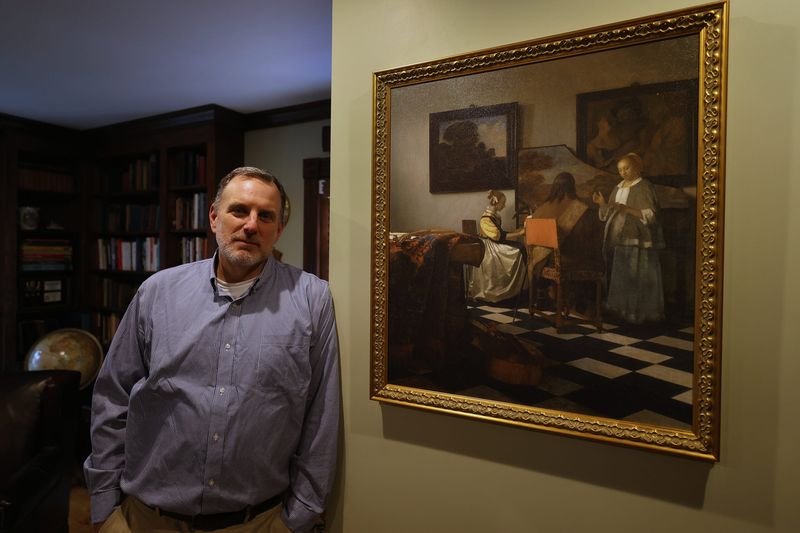
The headline piece was The Concert by Johannes Vermeer. Painted around 1664, it is one of fewer than 36 surviving Vermeers in existence. The FBI’s last public estimate placed its current value north of $250 million. By most accounting, that makes it the single most valuable stolen object on Earth. A Vermeer has not come on the open market since 2004, when one sold for $30 million at Sotheby’s — and that was a comparatively minor work. The Concert is a masterpiece. It would obliterate any auction record if it ever surfaced legally, which is exactly why most experts now believe it never will.
That same year — 1990 — the art world was experiencing a price tsunami. Two months later, in May, Vincent van Gogh’s Portrait of Dr. Gachet set a then-record price of $82.5 million at Christie’s, helping push estimated values across the entire stolen Gardner haul into the half-billion range. The thieves picked the wrong target at exactly the wrong moment, and the inflated valuation has shadowed every recovery attempt since.
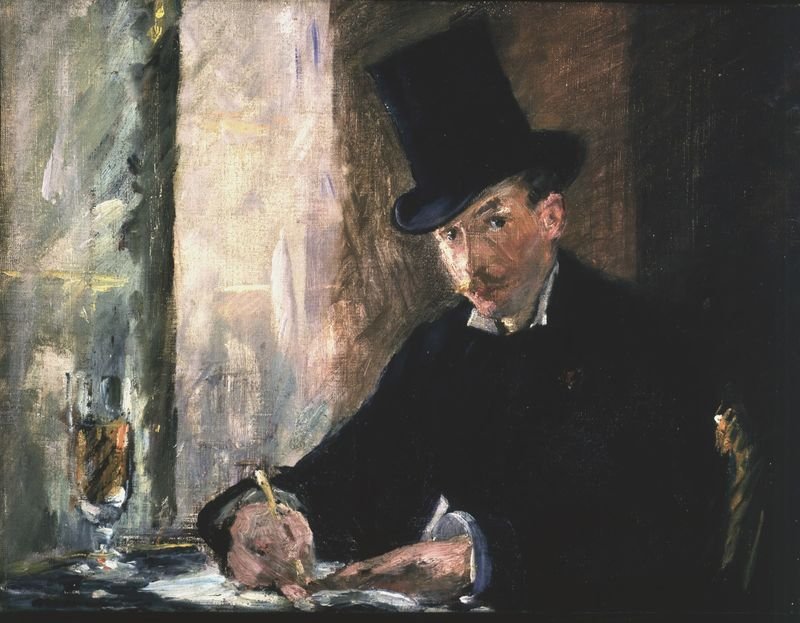
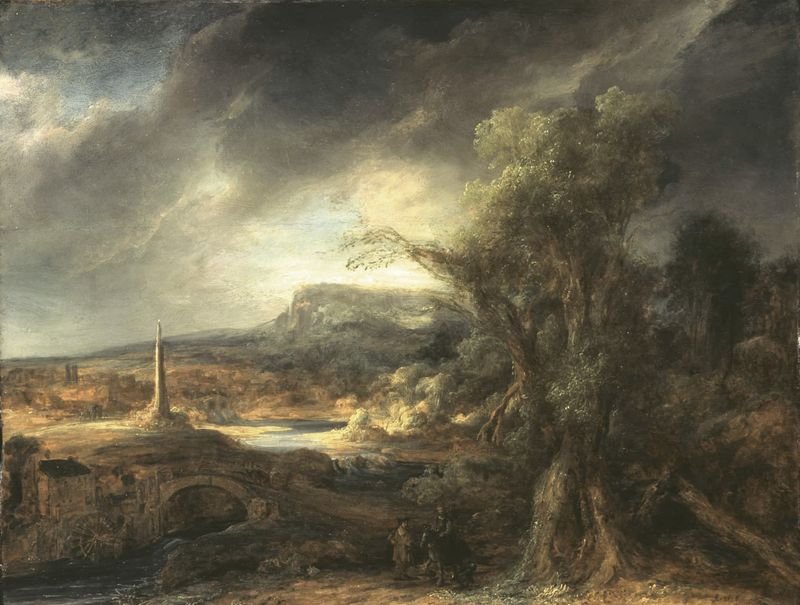
The full list reads like a wishlist from a museum catalog: three Rembrandts, the Vermeer, Manet’s Chez Tortoni, five Degas works on paper, a landscape attributed to Govaert Flinck (now believed to be by Rembrandt himself), a 3,000-year-old Chinese bronze beaker, and an eagle finial from the top of a Napoleonic flag. Total appraised loss in 1990 dollars: roughly $300 million. Today’s number: somewhere north of $500 million, depending on which insurance actuary you ask.
The Mob Theory That Has Refused to Die
The FBI publicly identified its primary suspects in 2013. The bureau said it had “high confidence” it knew who pulled the job — a Boston-based criminal crew with ties to the Philadelphia and New England mafia. The names floated by investigators include Carmello Merlino, a Dorchester garage owner who died in federal prison in 2005, and David Turner, a Merlino lieutenant who was serving a 38-year sentence on an attempted armored car robbery and who refused to talk until his death in 2024. Another suspect, Robert Gentile, was a New England mob enforcer who failed multiple polygraphs about the case before dying in 2021.
The trail went cold the moment the paintings entered the underground. According to the Gardner Museum’s own theft page, the bureau believes the art moved south through Connecticut into Philadelphia in the early 1990s before vanishing somewhere into the broader European black market. Investigators have chased leads in Ireland, Japan, France, and Saudi Arabia. None has produced a single canvas.
The mob theory is the cleanest narrative on offer, which is exactly why some art crime specialists distrust it. Career mafiosi don’t usually rob museums. They rob banks, hijack trucks, run sports books, and shake down restaurants. They don’t typically come prepared to cut a 17th-century canvas from its stretcher bars with surgical precision. Anthony Amore, the museum’s longtime head of security, has spent two decades chasing the case and has said publicly that he believes the thieves knew very little about what they were stealing. They left $400 million worth of pieces on the walls — including a Michelangelo drawing and a Raphael — that any educated thief would have grabbed first.

The Rick Abath Problem
Rick Abath died in 2024 at age 57. He never recovered from the night of the heist. He failed multiple polygraphs over the decades. He gave dozens of interviews. He spoke at universities. He maintained, until the end, that he had nothing to do with the theft. He also could not explain why, an hour before the thieves arrived, motion sensors recorded him opening the Blue Room door — the only room in the museum where a stolen item was taken without crossing any motion sensor at all.
The Manet sketch Chez Tortoni hung in that Blue Room. Of the thirteen stolen pieces, it is the only one the thieves removed from a room they never physically entered, according to the floor sensor logs. That single anomaly has fueled three and a half decades of speculation. Either Abath was a witting participant who took down the Manet himself before letting the thieves in, or the sensors malfunctioned, or someone else was already inside the building. None of the explanations satisfy.
How the Empty Frames Became a Memorial
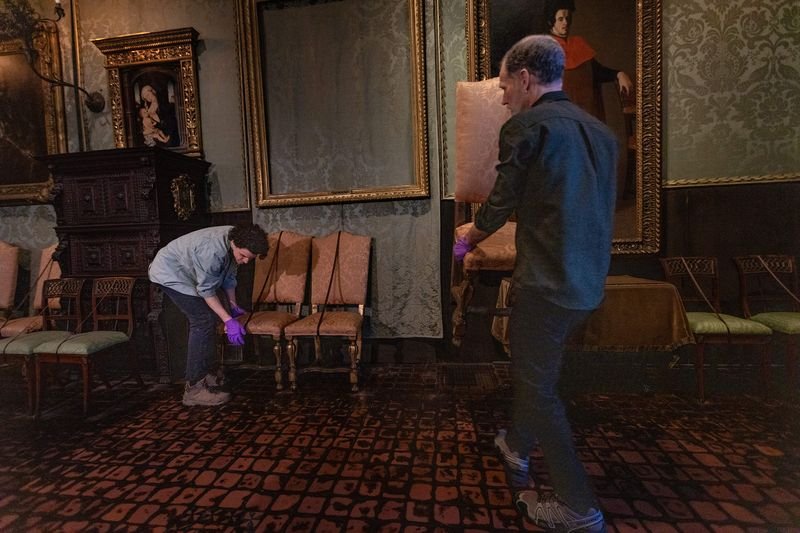
Isabella Stewart Gardner died in 1924, and her will did something unusual: it forbade the museum from ever rearranging her collection. The paintings hang where she hung them. The furniture sits where she sat it. When the thieves cut the canvases from their frames, the museum couldn’t replace the works, couldn’t slide other paintings into the gaps, couldn’t even rehang what was left. So the frames stayed. They have hung empty since 1990, a visual scar that visitors encounter the moment they walk into the Dutch Room.
In 2025, the museum spent months restoring those frames — not to fill them, but to preserve them. As WBUR reported in March 2025, conservators removed decades of grime and stabilized the gilt edges. The decision to refurbish the empty frames was as much an emotional statement as a curatorial one. The museum is saying, in effect, that it still expects the paintings to come home.
Why the $10 Million Reward Hasn’t Worked
The reward started at $1 million. It moved to $5 million in 1997. In 2017, the museum doubled it to $10 million for information leading to recovery of all 13 works in good condition. The number is staggering — possibly the largest single reward ever offered for stolen property — and yet no credible tip has produced a canvas.
Part of the problem is the law. Massachusetts has a 25-year statute of limitations on theft, which means anyone who comes forward today with information cannot be charged with the original crime. The federal statute also expired years ago. The U.S. Attorney’s Office in Boston has publicly stated it will grant immunity to anyone who returns the works. None of it has mattered. The art is either gone, destroyed, sitting in a climate-controlled vault somewhere, or — the theory many investigators now privately believe — was traded for years inside criminal networks as collateral on drug deals until the trail simply ended.
Art crime expert Robert Wittman, the FBI agent who founded the bureau’s Art Crime Team, has said the longer a piece is gone, the less likely it is to surface. The decade after a major theft is the prime recovery window. After 20 years, most stolen art is either destroyed by panicked thieves who can’t fence it or hidden so deeply that recovery requires either a deathbed confession or an unrelated investigation that stumbles across it. The Gardner pieces are now 36 years gone.
The Cultural Aftershock Still Echoes
The Gardner heist arrived at a moment when the country’s appetite for crime stories was about to explode. Within a decade, The Sopranos would launch and turn organized crime into prestige television. Documentary streaming would put true crime on the menu for an entire generation. The Gardner case has been the subject of multiple Netflix series, a Smithsonian documentary, a popular podcast called Last Seen, and at least three book-length investigations. It sits in the cultural memory next to D.B. Cooper and the Zodiac — an unsolved that refuses to fade.
The heist also reshaped museum security across the world. Until 1990, the Gardner had two unarmed college students on overnight duty and no panic button at the second-floor desk. Within a year, every major American museum had reviewed its protocols. Motion-activated cameras, armored doors, biometric locks, and silent alarms tied directly to police precincts became standard. The crime cost the museum its collection, but it gave every other institution a wake-up call paid for with somebody else’s masterpieces.
That same year — March 1990 — was a strange hinge point in pop culture history more broadly. Three months earlier the Berlin Wall had fallen. Two years later, South Africa voted to end apartheid on the very same calendar date, March 18, 1992. The world was turning over fast, and the Gardner thieves rode out of Boston with their paintings into a country that was suddenly too distracted to chase them properly. The same culture that gave us the last gasp of the arcade era and the first wave of cable news was about to inherit a mystery it could not solve.
Will the Paintings Ever Come Home?
The honest answer from the people who have chased this case the longest is: probably not. Anthony Amore still answers phone tips. The FBI still maintains the case as open. The Gardner still hangs the empty frames. But the most likely outcome is that the canvases were destroyed within a decade of the theft, when whoever held them realized they could never be sold and panicked.
The next most likely outcome — and the one collectors quietly root for — is that one of them appears in some Swiss vault during an estate auction in the 2040s and the museum recovers a single piece for show. The full set walking back through the door is the kind of ending that exists only in heist movies. The real story stops here, in 2026, with thirteen frames still empty, ten million dollars still on the table, and the silence on Palace Road still unbroken. Somewhere in the world, three Rembrandts and a Vermeer are either rotting in a garage or watching dust settle on a wall nobody is allowed to see. The Boston Police never got that disturbance call. There was no disturbance. Just two men with fake badges, a Saturday night, and the patience to walk out of America’s most beloved private museum with half a billion dollars under their arms.
Sources
- FBI — Isabella Stewart Gardner Museum Heist — Official case file and current investigative status
- Isabella Stewart Gardner Museum — The Theft — Museum’s official account, list of stolen works, $10M reward
- WBUR — The 13 Artworks Stolen That Night — Detailed breakdown of each missing piece with images
- WBUR — Empty Frames Restored on 35th Anniversary — 2025 conservation effort on the empty frames
- Smithsonian Magazine — What to Know About the Gardner Heist — Five key facts and suspect timeline
- Boston.com — 35 Years Later — Local coverage with current FBI status
- Wikipedia — Isabella Stewart Gardner Museum Theft — Encyclopedic overview with full bibliography
Browse retro and vintage-inspired apparel at the RetroRadical shop →
The Retro Almanac
A monthly roundup of "on this day" highlights from that month, decades back — plus first dibs on new retro merch drops. No spam, just the good stuff.