Skip-It Toy: 9 Wild Facts From the 90s
A working Skip-It in decent shape sells for around $120 on eBay today, which is a wild number for a toy that most kids destroyed within a summer. Between 1990 and 1992, it was close to unavoidable: a bright plastic hoop clipped around an ankle, a ball on a cord doing lazy circles around a sneaker, and a digital counter that turned recess into a leaderboard. Here’s the real story of where the Skip-it toy came from, why it disappeared, and the genuinely strange Hollywood connection almost nobody who owned one ever heard about.
What Was Skip-It, Exactly?
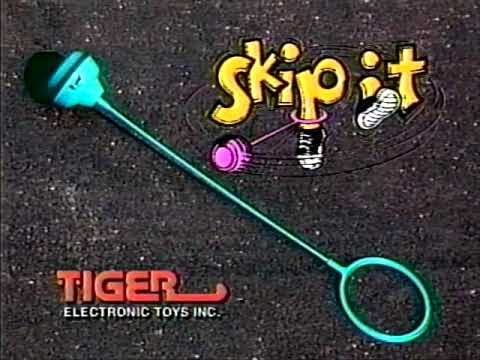
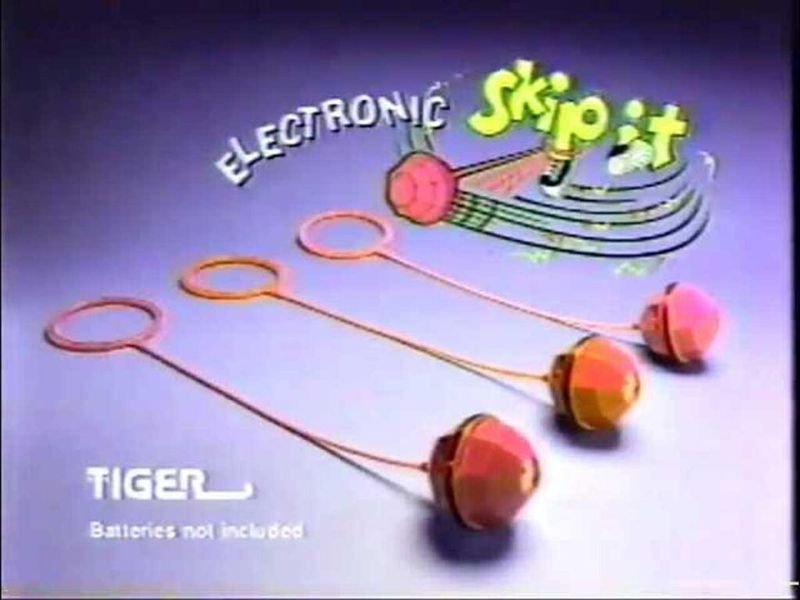
The mechanics were almost insultingly simple. A plastic ring slipped over one ankle, connected by a short rigid arm or cord to a weighted ball on the other end. The kid hopped in place on the free foot while the ball swung a full 360 degrees around the planted ankle, and the goal was just to keep clearing it, skip after skip, without tripping. Tiger Electronics built a mechanical digital counter into the ball itself, so every clean pass ticked the number up by one — turning a solo backyard activity into a running score you could brag about, or lose to your little sister.
It Wasn’t Actually a New Idea
Here’s the part most nostalgia posts skip entirely: Skip-It didn’t invent the ankle-toy concept, it perfected the marketing of it. A toy called Jingle Jump was trademarked back in 1963, and in 1975 the Chemtoy Corporation released Lemon Twist, which swapped the ball for a lemon-shaped weight and became a legitimate 1970s fad in its own right. Twinpak’s Footsee, born out of company co-founder Bob Asch watching a similar street game played in Jerusalem, hit shelves the same year and ended up in a 1968 legal settlement with a nearly identical toy called Skipit. The ankle-hoop-and-ball idea, in other words, had already been reinvented at least three times before Tiger Electronics ever touched it.
The Retro Almanac
A monthly roundup of "on this day" highlights from that month, decades back — plus first dibs on new retro merch drops. No spam, just the good stuff.
Tiger Electronics Turned It Into a Money Machine
Tiger Electronics — the same Illinois company that would later make Furby a household name — bought the American rights to Skip-It from the Paul E. Price Company in 1988. They released their version in late 1989, and it took a year or so to catch fire. The real push came through a wave of Nickelodeon commercials and National Tiger Challenge promotional events that put the toy in front of exactly the right audience at exactly the right time. Once it landed, the Skip-It toy stayed hot from roughly 1990 through 1992, riding the same wave of bright-plastic, batteries-optional toys that also made things like the Big Wheel and Garbage Pail Kids into ’80s and ’90s staples. It even snuck into pop culture beyond the toy aisle — a Skip-It shows up in the background of the 1993 Hong Kong martial arts film Butterfly and Sword, of all places, which is the kind of trivia that only means anything to someone who owned one.
The Counter Was the Genius Move
Plenty of ankle toys came before Skip-It. None of them had a scoreboard built into the ball. Tiger Electronics added a mechanical digital counter, patented in 1990 by toy designers Avi Arad and Melvin R. Kennedy, and that single feature is arguably the whole reason Skip-It outlasted Lemon Twist and Footsee in the culture’s memory. A toy that just measures your coordination is fine. A toy that keeps score, publicly, in a number your friends can see over your shoulder, turns into a competition — and competitions are what actually spread on a playground. Later “Micro Spin” and electronic versions leaned even harder into this, adding brighter counters and flashier readouts to the same core mechanism.

Nickelodeon Made It a Playground Religion
Ask anyone who grew up in this window and they can still hum the jingle: “the very best thing of all — is the counter on this ball.” That line ran constantly during Nickelodeon’s daytime block, alongside spots on Disney Afternoon and Saturday morning cartoons, and it worked exactly the way Tiger wanted it to. Kids didn’t just want a Skip-It, they wanted to beat a specific number, and that turned it into a group activity instead of a solitary one. One collector recalls trading her Skip-It for higher-score bragging rights with a friend for an entire afternoon, falling repeatedly, and discovering that a long enough streak put you into a kind of trance where one lapse in concentration ended the run. That’s not incidental marketing copy — that’s genuinely how the toy played.
The Bruises Were Real — and Part of the Fun
Nobody advertised this part, but every kid who owned one found out fast: a weighted ball spinning at ankle height, swung hard by an overconfident 8-year-old, will absolutely clip a shin. Bruised ankles and scraped shins were basically a rite of passage, not a defect — and honestly, that’s a big part of why the toy worked. There was real physical risk in chasing a high score, which is exactly the kind of low-stakes danger that made ’90s playground culture what it was, long before liability warnings started swallowing every toy box. A Skip-It with training-wheel safety padding wouldn’t have sold nearly as well.
The Skip-It Co-Inventor Who Secretly Built the MCU
This is the fact that makes Skip-It genuinely interesting instead of just nostalgic. Co-inventor Avi Arad, an Israeli-American toy designer working at Tiger Electronics, built his reputation in the toy industry off products exactly like this one — practical, inexpensive, built around a single addictive mechanic. That reputation got him signed to an exclusive deal with Toy Biz in the early 1990s, a company partly owned by Marvel Entertainment Group. When Marvel filed for bankruptcy in 1996, Arad and Toy Biz co-founder Isaac Perlmutter acquired the company outright, and Arad spent the next decade pushing Marvel toward something almost nobody in the industry believed in: producing its own movies instead of licensing characters out cheap. In 2005, backed by a $525 million financing deal, that bet became Marvel Studios — and its first release, in 2008, was Iron Man.

Arad served as chief creative officer of Marvel Entertainment through that entire run and also produced the 2002 Sam Raimi Spider-Man film that proved comic-book movies could be genuine box-office giants years before the MCU existed. So the next time someone tells you a $10 plastic ankle toy from Tiger Electronics has nothing to do with a $30 billion movie franchise, you can tell them the same guy who patented the counter on your childhood Skip-It also greenlit Robert Downey Jr. in a metal suit.

Why Skip-It Disappeared
Skip-It didn’t get killed off by a scandal or a recall — it just did what every toy fad does once the market gets saturated. By the mid-1990s, nearly every kid who wanted one already had one, knockoff versions were flooding dollar stores at a fraction of the price, and Tiger Electronics’ attention had shifted toward its next big swing, which would eventually become Furby. Surviving original units mostly got left in yards, chewed on by dogs, or tossed once the counter stopped clicking, which is exactly why so few clean examples exist today and why collectors will pay real money for one that still works. It’s the same arc almost every early-90s toy fad followed — huge for eighteen months, replaced by whatever came next, and then quietly gone from shelves by the time the Teenage Mutant Ninja Turtles craze or the next Saturday-morning obsession rolled through.
It’s Actually Back Right Now
Skip-It never fully stayed dead. Hasbro released a Twister Rave Skip-It spinoff in 2013 with LED lights that lit up as your streak grew, and more recently, Just Play brought the toy back under license with a version that counts skips up to one million and adds built-in lights and sounds. The Toy Insider featured the relaunch as a genuine callback for parents who grew up with the original, which tells you the counter-and-competition formula from 1989 still works on kids in 2026 exactly the way it worked on their parents.
What’s telling is what the relaunch didn’t change. Thirty-plus years of toy design later, Just Play still built the new version around the exact same hook Tiger Electronics landed on in 1990: a number you can beat. No screen, no app tie-in, no online leaderboard — just a ball, a cord, and a counter daring you to go one skip further than you did yesterday. Toys with more moving parts than that have come and gone by the dozen since; this one keeps getting rebuilt because the core idea never needed fixing.



Frequently Asked Questions
Who invented the Skip-It toy?
Tiger Electronics released its version of Skip-It in 1989 after acquiring U.S. rights from the Paul E. Price Company in 1988. The digital counter that made it famous was patented in 1990 by toy designers Avi Arad and Melvin R. Kennedy.
Is the Skip-It toy the same as Lemon Twist?
No, but they’re close cousins. Lemon Twist was a similar ankle-and-ball toy released by Chemtoy in 1975, and toys like Jingle Jump and Footsee predate both of them by decades. Skip-It’s main innovation was the built-in digital skip counter.
Is Skip-It still made today?
Yes. Just Play currently sells a relaunched Skip-It with lights, sounds, and a counter that tracks up to one million skips, and Hasbro released a Twister Rave LED version back in 2013.
How much is a vintage Skip-It worth?
Working original Skip-Its from the early 1990s have sold for around $120 on eBay, with mint, boxed examples commanding more due to how few survived intact.
What is the connection between Skip-It and Marvel movies?
Skip-It co-inventor Avi Arad later became chief creative officer of Marvel Entertainment and founder of Marvel Studios, producing the 2002 Spider-Man film and the 2008 Iron Man movie that launched the Marvel Cinematic Universe.
Sources
- Skip-It — Wikipedia — origin, Tiger Electronics acquisition, and predecessor toys.
- Avi Arad — Wikipedia — biography and Marvel Studios/Toy Biz career history.
- TIME: History’s Best Toys — Skip-It — inclusion among the 100 greatest toys of all time.
- The Toy Insider: Skip-It relaunch — details on the current Just Play version.
The Retro Almanac
A monthly roundup of "on this day" highlights from that month, decades back — plus first dibs on new retro merch drops. No spam, just the good stuff.