Big Wheel: How the Plastic Trike Ruled Every 70s Driveway
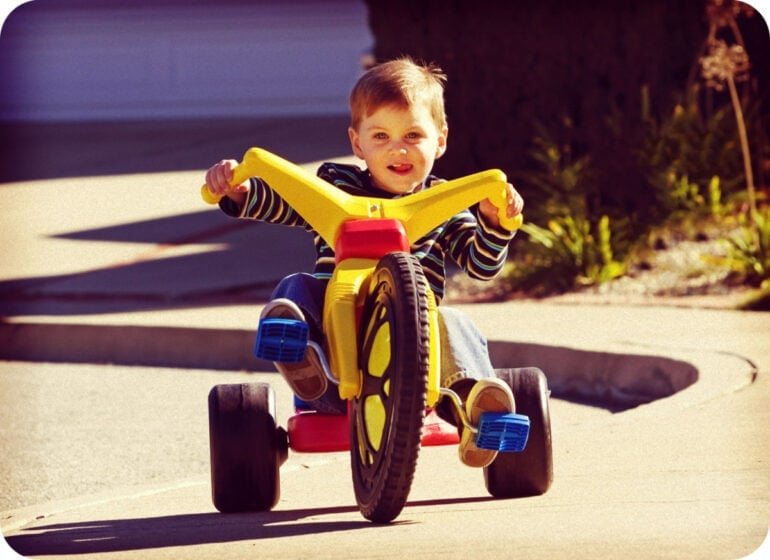
Before skateboards ruled the sidewalk and before every kid on the block had a bike with a banana seat, there was the Big Wheel toy: a low-slung, plastic trike with a front wheel the size of a manhole cover and a sound that could be heard three houses down. It looked nothing like a real tricycle, it terrified parents’ driveways with skid marks, and it became one of the best-selling toys of the 1970s almost by accident. Here’s the wild true story of how a dismantled trike became a childhood icon — and why it’s rolling right back into stores in 2026.
The Toy That Started as a Tricycle Taken Apart
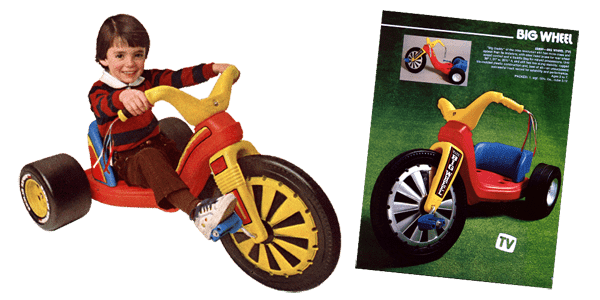
The Big Wheel toy wasn’t dreamed up on a blank sketchpad. In the late 1960s, designer Ray Lohr at Louis Marx & Company took a standard tricycle, physically disassembled it, and reassembled the parts in an inverted configuration — a huge front wheel, a low plastic seat, and short legs stretched out flat in front instead of tucked underneath. Marx debuted the finished toy at the 1969 New York Toy Fair, and by that Christmas it was under trees across the country for around $15.
The Retro Almanac
A monthly roundup of "on this day" highlights from that month, decades back — plus first dibs on new retro merch drops. No spam, just the good stuff.
Low, Loud, and Weirdly Safe
The genius of the Big Wheel toy wasn’t just the size of that front wheel — it was how close to the ground the whole thing sat. The seat rode just inches off the pavement, which gave the trike an extremely low center of gravity. Consumer groups at the time actually pointed to this as a selling point: a Big Wheel was harder to tip over than a traditional tricycle or a kid’s first bike, and if it did go over, the fall was shorter. Combine that with molded, shock-absorbing plastic construction, and Big Wheels and their imitators reportedly outsold conventional tricycles by roughly 5 to 1 in major U.S. markets by the mid-1970s.
The other thing that low plastic front wheel did was announce your arrival. Drag your sneaker against the pavement mid-turn, or just ride at full speed, and the hollow plastic wheels produced a distinctive scraping roar that’s practically the sound of a 1970s or 1980s American driveway. It’s the same joyful chaos that made toys like Rubik’s Cube and the Etch A Sketch era-defining — simple mechanics, maximum noise.
Then Marx Made It Meaner: The Green Machine
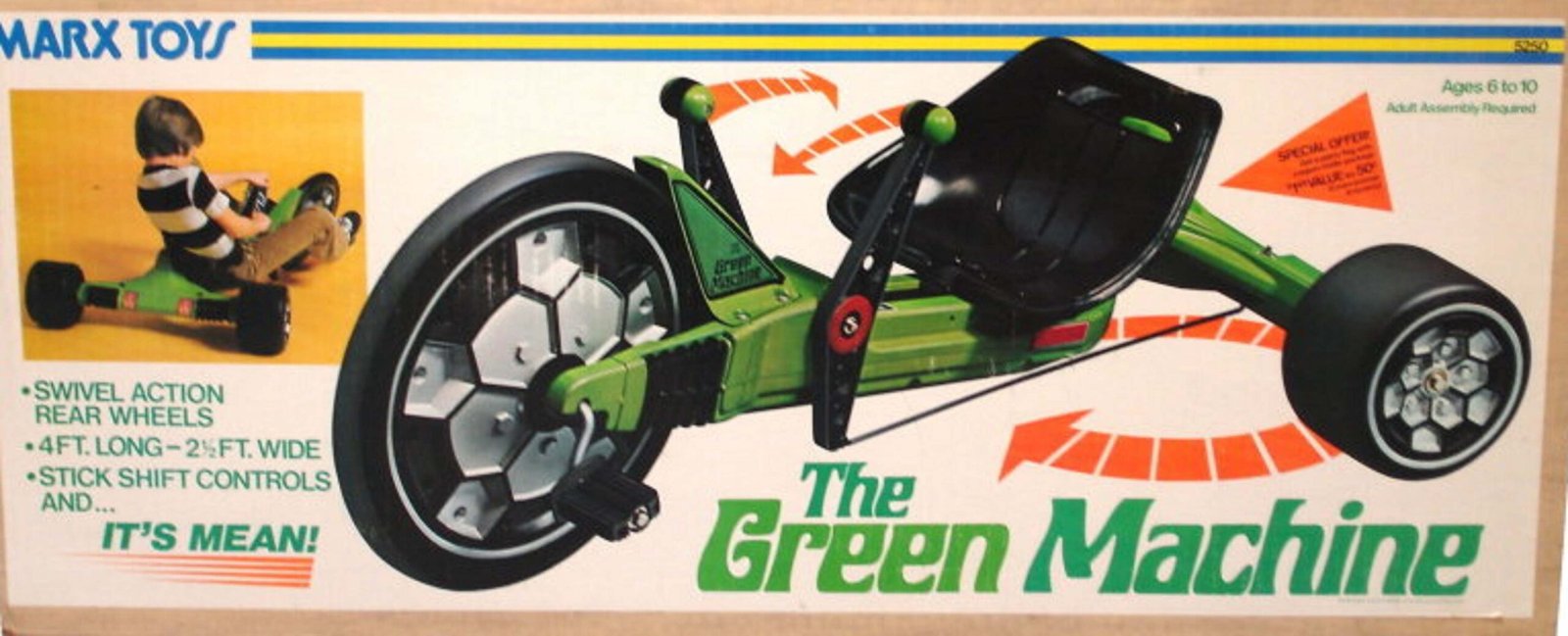
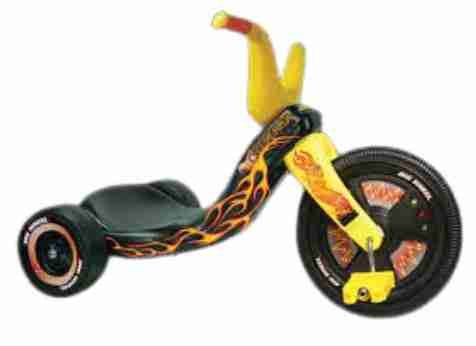
By 1975, Marx wanted to sell the same low-riding thrill to slightly older kids, so they built the Green Machine — a Big Wheel spinout with no handlebars at all. Instead, two lever-style “stick shift” handles connected to the rear axle let riders independently control each back wheel. Yank one back and slam the other forward, and the Green Machine would spin its rear end out in a gravel-spitting 180. It was loud, it was a little dangerous, and kids loved it precisely because of that.
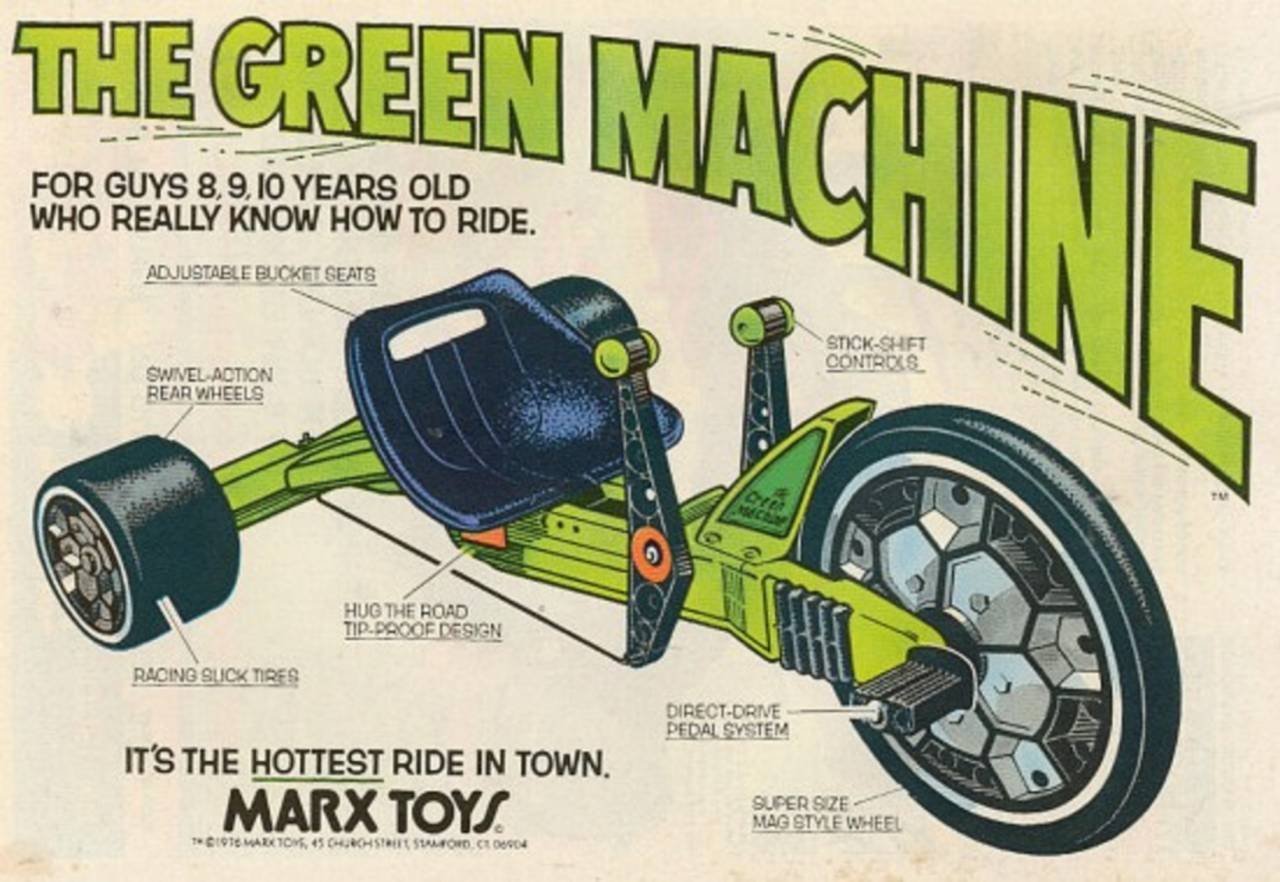
Marx kept iterating: a 1979 model called the Shadow added an airfoil-style rear spoiler for a more aggressive look, a 1977 Sears-exclusive version called the Batman Machine slapped Dark Knight branding on the frame, and a color variant known as the Blue Max rounded out the lineup. Every one of them was really just the Big Wheel toy’s DNA, remixed for kids who wanted more spinouts and fewer training wheels.
Stephen King Put One in a Haunted Hotel
The Big Wheel toy’s most famous screen appearance isn’t a commercial — it’s horror. In Stanley Kubrick’s 1980 film “The Shining”, young Danny Torrance rides his Big Wheel through the empty, patterned hallways of the Overlook Hotel, the plastic wheels alternating between a dead scrape on tile and dead silence on carpet. Kubrick shot those corridor scenes with an early Steadicam rig mounted to a wheelchair so the camera operator could match Danny’s exact riding speed take after take. Actor Danny Lloyd was reportedly promised he could keep the tricycle after filming wrapped — he says it never showed up.
From Bankruptcy to a Brand-New Owner
The Big Wheel toy’s business history is almost as bumpy as its ride. Louis Marx & Company filed for bankruptcy in 1978, and the Big Wheel brand was sold off to rival toy maker Empire Industries, which kept producing it for decades — until Empire itself went bankrupt in 2001. The brand got a reboot two years later in 2003, and in 2021, classic toy company Schylling Inc. acquired the rights to keep it rolling. In 2009, the Big Wheel earned a permanent spot in the National Toy Hall of Fame at The Strong museum, cementing it as an official piece of American childhood.
Big Wheel Is Rolling Back Into Stores in 2026
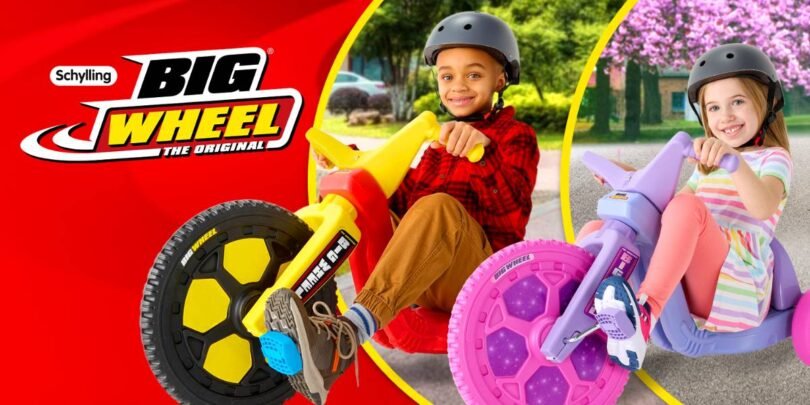
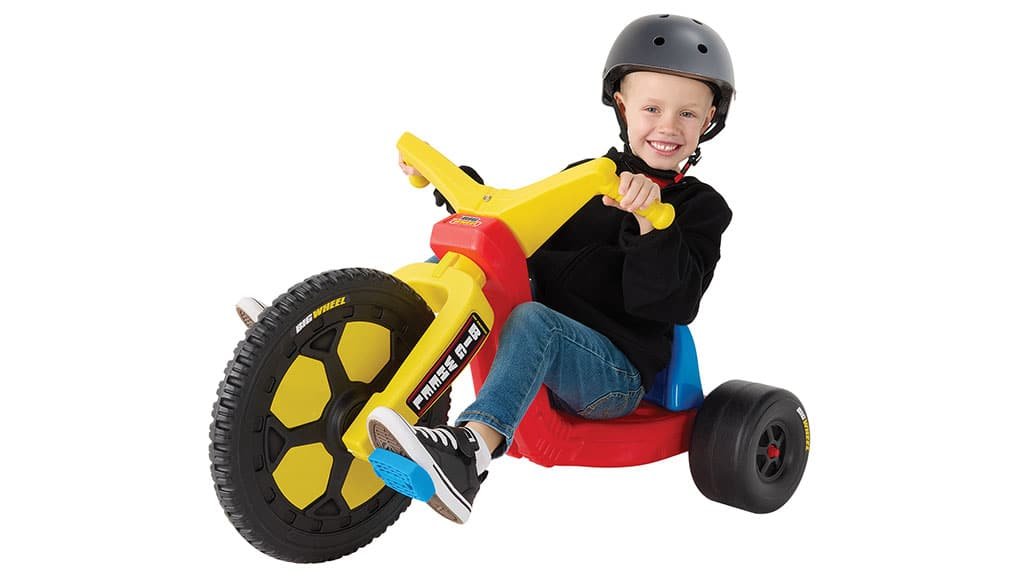
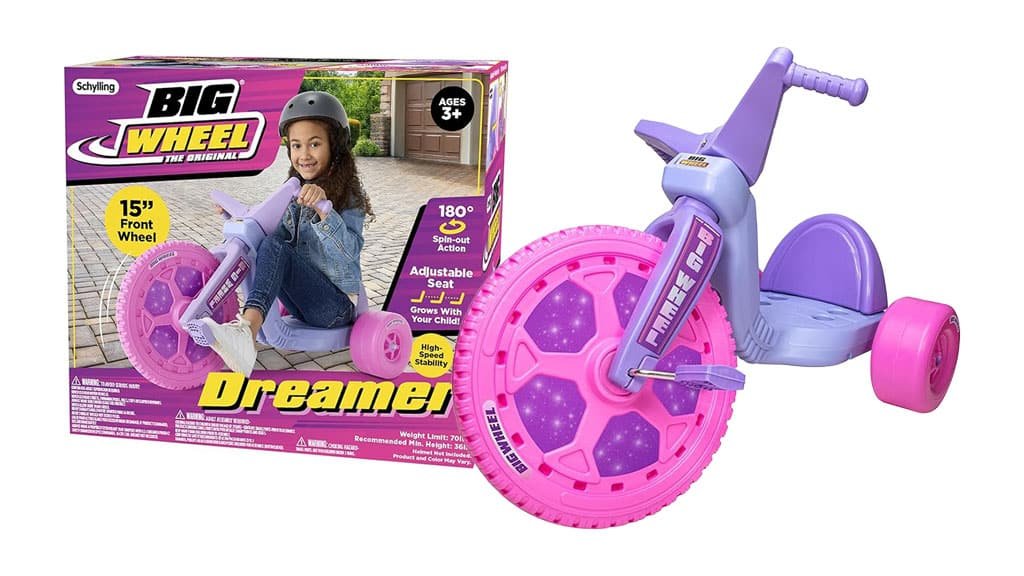
Here’s the fresh part of the story: the Big Wheel toy isn’t just a museum piece. For National Bike Day in 2026, Schylling launched two new models — the Big Wheel Chopper and the Big Wheel Dreamer — each with an oversized 15-inch front wheel, an adjustable seat that grows with the rider, wide rear wheels for stability, and the same 180-degree spin-out action that made the Green Machine famous half a century ago. The design has barely changed since 1969, because it never really needed to.
Why the Big Wheel Toy Still Hits Different
Part of what makes the Big Wheel toy endure is that it never tried to be more than what it was: a cheap, loud, slightly reckless way to feel fast when you were four feet tall. No batteries, no screen, no app — just a giant plastic wheel, a seat inches off the ground, and a driveway to burn rubber on. Fifty-plus years, one bankruptcy, one horror movie cameo, and a brand-new owner later, that pitch still works exactly as well as it did in 1969.
Like a lot of the plastic toys that defined the era — the Slinky included — the Big Wheel toy proved that the simplest mechanical idea can outlast every “smarter” toy that comes after it.
Grown-Ups Never Actually Stopped Riding Them
The Big Wheel toy didn’t stay a kids-only ride. In San Francisco, an annual event called Bring Your Own Big Wheel has drawn costumed adults to race modified, kid-sized Big Wheels down the famously crooked, steep block of Lombard Street for well over a decade. On the more extreme end, “drift triking” grew out of riders wrapping the rear wheels in slick PVC pipe so an adult-size Big Wheel-style trike could kick its back end out and slide through turns — a hobby serious enough that Red Bull sponsored an official downhill drift-trike race, the Trike Strike, down a mountain road in Brazil, with competitors hitting speeds over 50 mph on what is essentially a grown-up version of a 1970s toy.
What a Vintage Big Wheel Is Worth Today
Here’s the twist nobody saw coming: the same cheap plastic trike that got dragged across every driveway in America is now a legitimate collector’s item. Most original Big Wheels from the 1970s were ridden into the ground and tossed out, so surviving examples in good shape are genuinely scarce. A mint, unused Big Wheel still sealed in its original box is considered something close to a holy grail among vintage toy collectors — listings for pristine boxed units have asked as much as $2,500, especially for deluxe versions that came with extras like hand brakes and saddle bags. Even well-loved, played-with units in working condition regularly sell for real money on eBay, which is a strange kind of respect for a toy that was never meant to survive childhood, let alone fifty years past it.
Frequently Asked Questions
When was the Big Wheel toy invented?
The Big Wheel toy was invented in the late 1960s by designer Ray Lohr at Louis Marx & Company and debuted at the 1969 New York Toy Fair, reaching store shelves in time for Christmas that year.
Why was the Big Wheel considered safer than a regular tricycle?
Its extremely low seat height and wide front wheel gave it a low center of gravity, which made it harder to tip over and reduced the severity of falls compared to a traditional tricycle or bike.
What is the Green Machine?
The Green Machine is a 1975 Marx spinout variant of the Big Wheel toy that replaced handlebars with two independent steering levers, letting riders control each rear wheel separately to perform sliding 180-degree spinouts.
Is the Big Wheel toy still made today?
Yes. After passing from Marx to Empire Industries and through a 2003 reboot, the brand was acquired by Schylling Inc. in 2021, which released new Chopper and Dreamer models in 2026.
Is the Big Wheel in the National Toy Hall of Fame?
Yes, the Big Wheel was inducted into the National Toy Hall of Fame at The Strong museum in 2009.
Is a vintage Big Wheel worth anything today?
A well-preserved original Big Wheel can fetch a solid price among collectors, and a mint, unused unit still in its original box has sold for as much as $2,500 due to how rarely they survived childhood intact.
The Retro Almanac
A monthly roundup of "on this day" highlights from that month, decades back — plus first dibs on new retro merch drops. No spam, just the good stuff.