Married with Children: How Al Bundy Broke Every TV Rule
No other show in the 1980s launched a network, survived a national boycott, and turned a broke shoe salesman into a Gen X icon — all in the same four-year stretch. When Married with Children debuted on Fox on April 5, 1987, it was one of two shows keeping a brand-new broadcast network alive. The other was The Tracey Ullman Show. Only one of them built a franchise that lasted 259 episodes.
FOX Had Nothing Until Al Bundy Showed Up
When Rupert Murdoch launched the Fox Broadcasting Company in the spring of 1987, it wasn’t really a network yet — it was a collection of UHF stations, a lot of ambition, and exactly two primetime shows. Married with Children was the riskier bet of the two. A sitcom about a perpetually broke, publicly humiliated shoe salesman in Chicago, married to a woman who consumed bonbons and watched talk shows while dinner never got made, had zero aspirational characters and no lesson in sight.
Fox had nothing to lose. The Big Three — ABC, NBC, CBS — owned every warm-glow primetime slot on the dial. Fox went the other way deliberately. Married with Children was cheap, loud, and confrontational in exactly the ways network television wasn’t supposed to be.
The Retro Almanac
A monthly roundup of "on this day" highlights from that month, decades back — plus first dibs on new retro merch drops. No spam, just the good stuff.
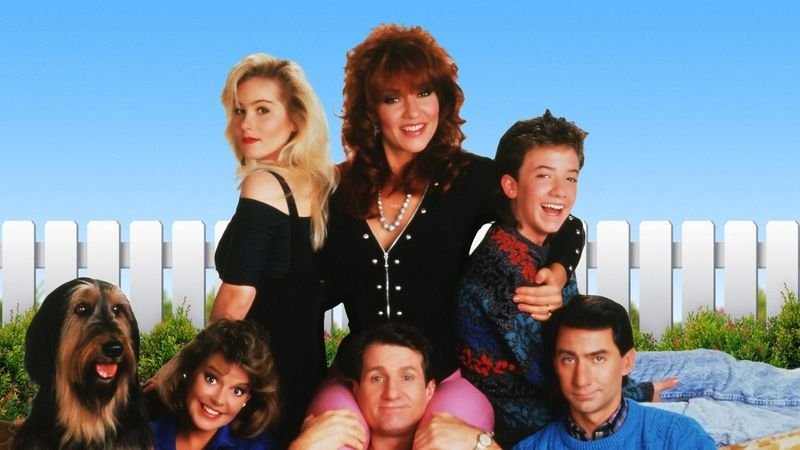
The full early cast, including neighbors Steve and Marcy Rhoades, helped Fox launch its first primetime lineup in April 1987.
Deliberately the Anti-Cosby Show
By 1987, The Cosby Show was the biggest sitcom in America — a polished, aspirational portrait of a professional Black family that every network executive was scrambling to copy. Married with Children was the direct counter-program. Where the Huxtables were doctors and lawyers, the Bundys were a shoe salesman and a woman who hadn’t cooked a meal in a decade. Where Cosby’s kids navigated wholesome dilemmas, Kelly Bundy was cheerfully unconcerned with education and Bud was scheming. Where Cliff Huxtable dispensed wisdom, Al Bundy stewed in resentment on a La-Z-Boy.
Fox pitched the show internally as “the anti-Cosby.” Creators Michael G. Moye and Ron Leavitt wanted a family sitcom that showed the other American family — the one where nobody learned anything at the end of the episode. If you want to understand what the show was doing, read our breakdown of The Cosby Show first, then watch the two back-to-back. The contrast is the entire joke.
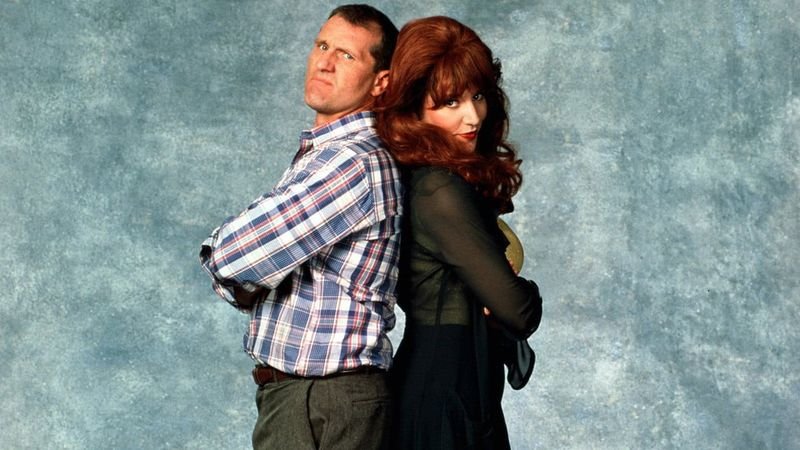
Ed O’Neill and Katey Sagal as Al and Peg Bundy — the deliberate antithesis of the aspirational TV couples of the 1980s.
Ed O’Neill Actually Played Football
Before Ed O’Neill put on the red apron at Gary’s Shoe Store, he had a genuine shot at professional football. O’Neill was drafted by the Pittsburgh Steelers in the 1969 NFL Draft as a linebacker out of Youngstown State. He was cut during training camp and spent time in semi-professional football before moving to acting. That football history informed everything about how he played Al Bundy — the specific slump of a man who was genuinely good at something once, and has spent the years since living in the distance between then and now.
It’s why the show’s central joke lands. Al Bundy’s constant references to his high school glory — four touchdowns in a single game for the Polk High Panthers — hit differently when the actor playing him had his own version of that story. O’Neill understood the specific weight of athletic nostalgia from the inside, and it showed in every scene where Al stared at the wall instead of answering a question.

The Boycott That Made Al Bundy Famous
In January 1989, a Michigan housewife named Terry Rakolta watched an episode titled “Her Teeth Were Stained But Her Heart Was Pure,” which featured a subplot set in a lingerie shop. She found it obscene, wrote letters to every advertiser on the show, and launched a national campaign. McDonald’s, Kimberly-Clark, and Procter & Gamble pulled their ads. Fox got nervous.
Then the coverage exploded. Millions of Americans who had never seen Married with Children tuned in specifically because someone was trying to ban it. Ratings climbed. New advertisers took the vacated slots at higher rates. Fox executive Barry Diller later observed that Rakolta’s campaign turned a moderately successful show into a genuine cultural phenomenon. She had made Al Bundy a star by trying to kill him.
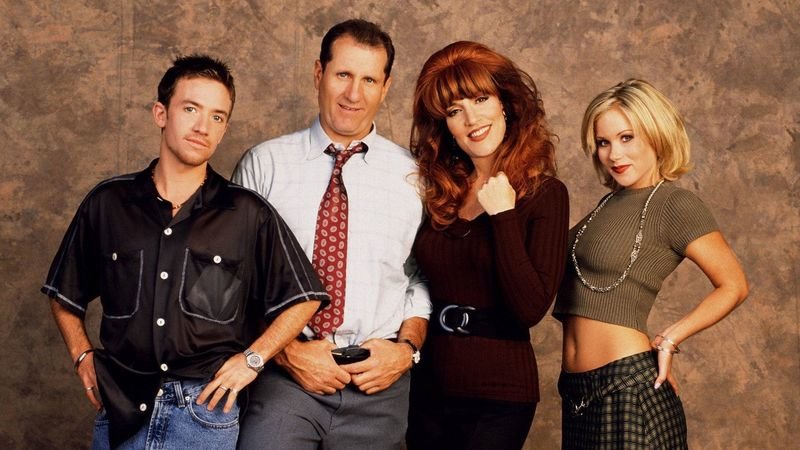
By the early 1990s, the boycott had backfired and the Bundys were a household name across America.
Four Touchdowns. Polk High. The Game That Never Gets Old.
No joke in the show’s 11-season run got more mileage than a single beat: Al Bundy, unprompted, in the recliner, recalling the day he scored four touchdowns in one game for the Polk High School Panthers against Andrew Johnson High. The game was never shown. No one within the show ever confirmed it. Nobody cared, because the repetition was the joke itself.
That fictional game, played sometime in the mid-1960s by an Al Bundy who was fast and worth something, became the emotional center of the entire series. Every time Al told the story, it landed the same way: a man who peaked at 17 and spent the next 30 years measuring the distance between who he was and who he’d become. For a show with no lesson at the end of every episode, that was the closest thing it had to a thesis.
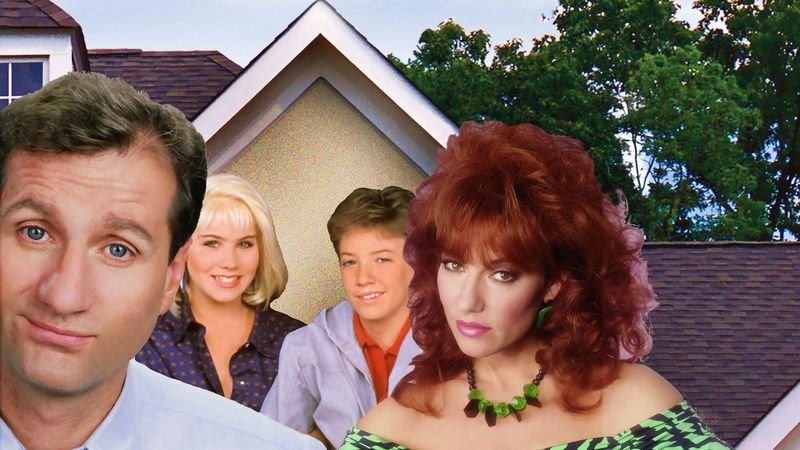
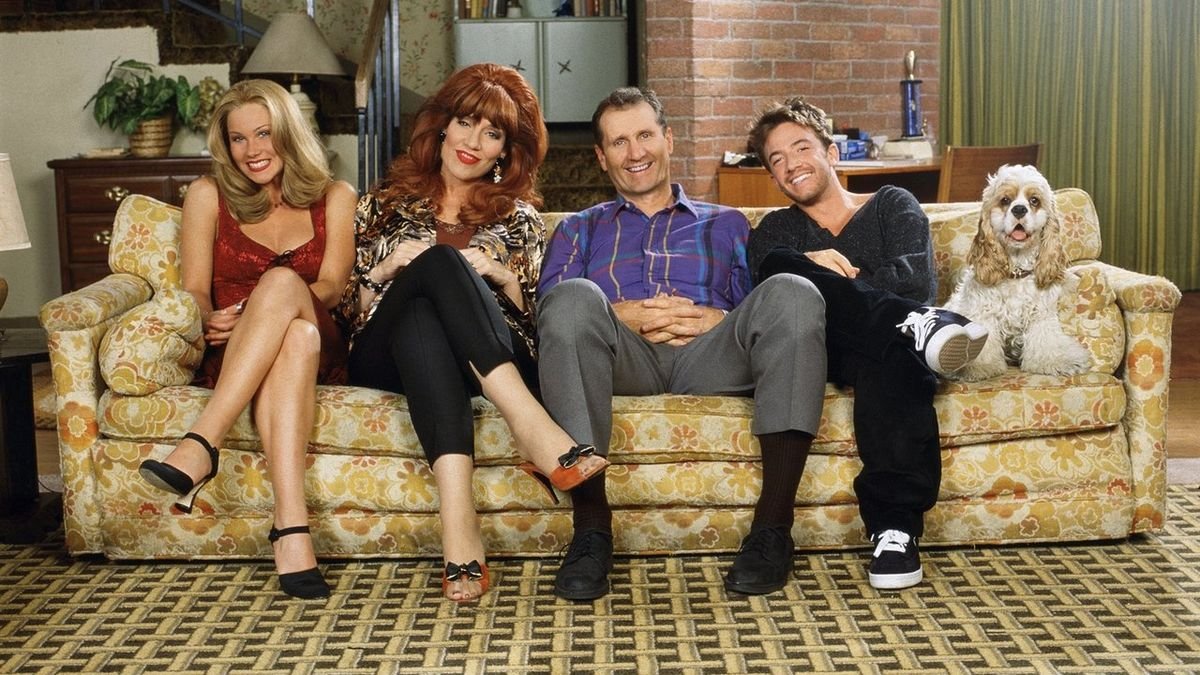
The Bundy family in their earlier years — before the boycott, before the fame, when the show was still Fox’s long shot.
The Neighbors Were Half the Comedy
The real comedy engine wasn’t the Bundys alone — it was the Bundys against their neighbors. Steve and Marcy Rhoades (later Marcy D’Arcy, after Marcy’s second marriage to Jefferson D’Arcy in Season 4) served as the sitcom’s straight couple, the ones against whom the Bundys could be maximally awful. Amanda Bearse, who played Marcy, brought a specific brand of appalled horror to every scene that worked as the audience’s entry point when the jokes went particularly dark.
Bearse came out publicly as a lesbian in 1993 — one of the first actors in a major primetime show to do so. She continued on Married with Children through its final season in 1997 without incident. For a show that spent 11 years wallowing in its own worst impulses, that backstory says something real about how the production actually ran behind the cameras.

Ed O’Neill’s Al Bundy became one of the defining comic characters of the 1980s and 90s — the everyman who never got any better.
Christina Applegate at 16
Kelly Bundy was Christina Applegate’s real breakout. She was 16 when the show premiered in April 1987, and had already spent most of her life in front of cameras — she appeared in a Days of Our Lives diaper commercial as an infant. But Kelly Bundy gave her the platform. The character was written as dim, vain, and casually amoral in ways that could easily have been mean-spirited, but Applegate played her with physical comedy instincts that made Kelly genuinely funny instead of just the punchline.
Applegate later received a Primetime Emmy nomination for Samantha Who? and became one of the most consistently working comic actors of her generation. Her acclaimed performance in Netflix’s Dead to Me draws a straight line back to the cheerleader outfit and Jersey Shore hair she wore at Polk High. For her and for David Faustino, who played Bud, the show was the entire foundation of what came next.
Katey Sagal’s Hardest Season
Season 8 opened with a pregnancy storyline for Peg Bundy. The writers hadn’t originally planned it — Katey Sagal was pregnant in real life, and the show folded it in. Then, in November 1991, Sagal suffered a stillbirth. The pregnancy arc was dropped mid-season, and the writers resolved the dangling storyline through a dream sequence that reframed the whole thing as Al’s nightmare.
It’s an odd corner of the show’s history — a moment when the cheerful meanness of the Bundys ran headlong into real grief. Sagal has spoken about the period in interviews as one of the hardest of her life. The production’s response, while awkward, at least kept her from having to perform those scenes through the loss.
11 Seasons and a Cancellation Nobody Saw Coming
Married with Children ran from April 5, 1987 to June 9, 1997. That’s 11 seasons and 259 episodes — long enough to watch Bud and Kelly grow from teenagers into adults, long enough to outlast a national boycott, long enough for Fox to become a real network on the back of what the show helped build. The series holds the record as Fox’s longest-running live-action sitcom.
Fox cancelled the show midway through what would have been Season 12. The final episode — “How the West Was Bung” — was never written as a series finale. The production didn’t know it was coming. The episode aired, the credits rolled, and Married with Children ended without a proper goodbye. For a show that spent 11 years refusing to wrap anything up cleanly, that felt almost appropriate.

The Bundys through to the later seasons — 259 episodes and still no lessons learned.
The Theme Song That Frank Sinatra Never Intended for This
“Love and Marriage” — Frank Sinatra’s 1955 recording — became one of the most unlikely TV themes of the 1980s. The song was originally written for a televised production of Thornton Wilder’s Our Town, but Married with Children repurposed it as an ironic frame around the most dysfunctional household on American television. Sinatra’s warm big-band delivery playing over footage of the Bundys making each other miserable was the joke before the episode even started.
What Married with Children Actually Built
Married with Children didn’t invent the dysfunctional family sitcom. Roseanne premiered three months earlier in 1988 and holds the stronger claim to that innovation. But Married with Children did something Roseanne couldn’t: it ran on a network that barely existed, survived a coordinated national boycott, and demonstrated that Fox could hold its own against the Big Three through tactical outrageousness rather than polish.
Every Fox show that came after — The Simpsons, In Living Color, Arrested Development — owed something to the shoe salesman from Jeopardy Lane. The same way Cheers built its empire on bar-stool philosophy and Seinfeld built its on the comedy of nothingness, Married with Children built a network on the inverse of aspiration. Al Bundy never grew. Never learned. Never changed.
The show is currently streaming on Peacock. It holds up better than it has any right to.

The show that launched a network — and never once pretended the Bundys were anything other than what they were.
Sources
- Wikipedia — Married… with Children — Episode count, cast history, and network background.
- Mental Floss — 15 Things You Might Not Know About Married…with Children — Behind-the-scenes production facts.
- The New York Times — Terry Rakolta Coverage (1989) — Advertiser pullout and ratings response.
- Biography.com — Ed O’Neill — Football background and acting career.
- IMDb — Married… with Children — Full series details and cast information.
The Retro Almanac
A monthly roundup of "on this day" highlights from that month, decades back — plus first dibs on new retro merch drops. No spam, just the good stuff.